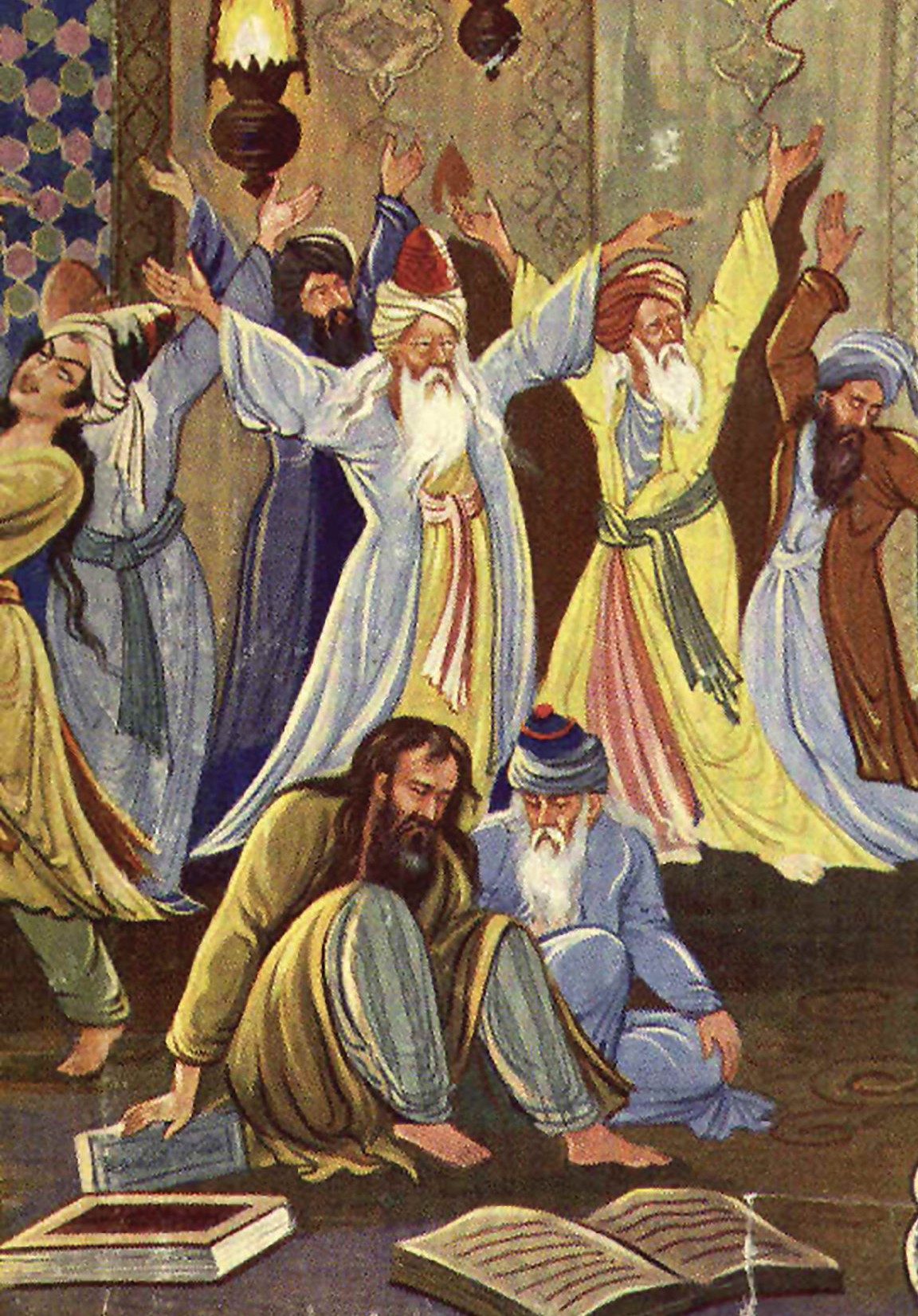
Jalal-ad-Din Rúmi
1207–1273, Current-day Turkey
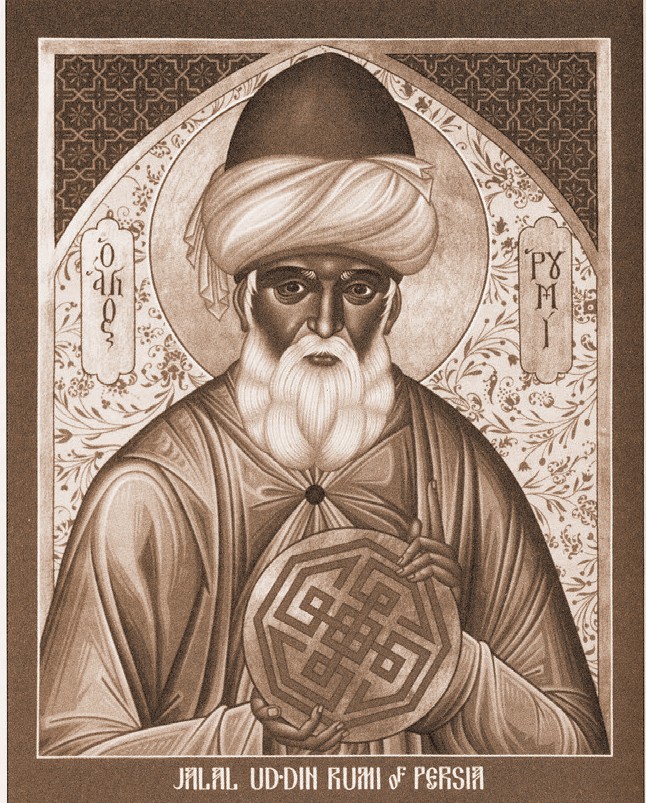
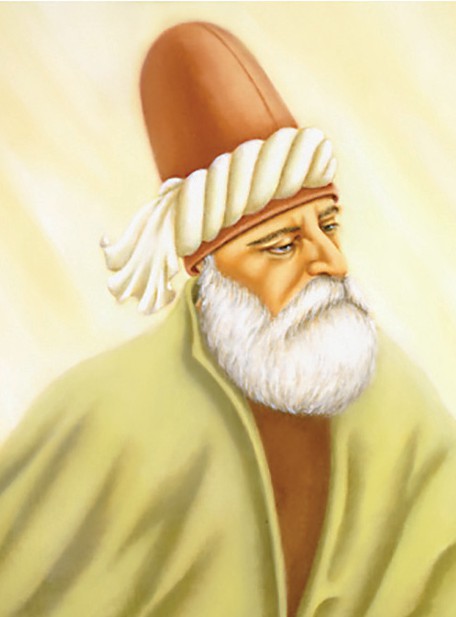
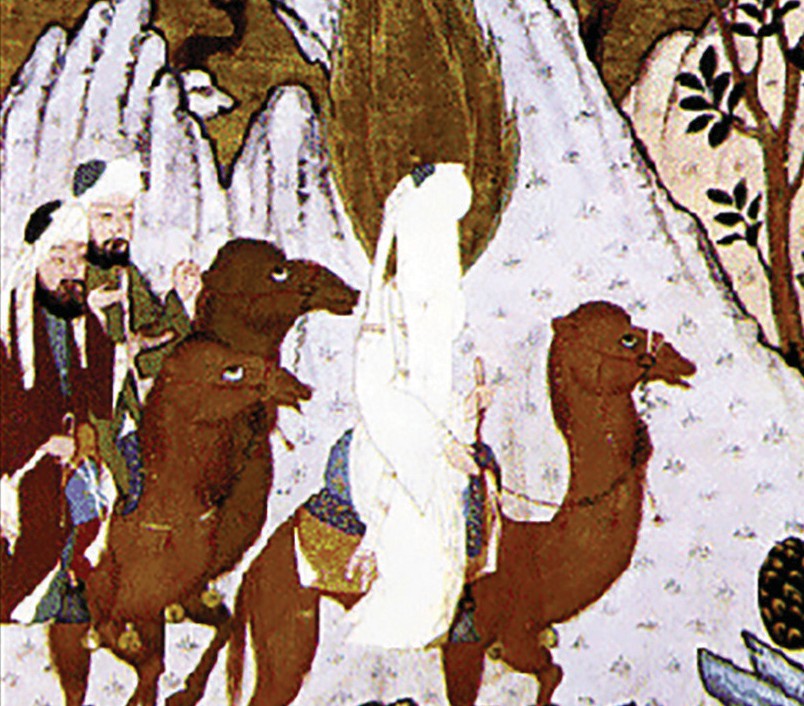
Jalal-ad-Din (Jelaluddin) Muhammad Rúmi was a unique poet of the Sufi path, the founder of the Order of the Whirling Dervishes (Mevlevi) and one of the best-known Sufi masters. He was born on the 30th of September, 1207 in the city of Balkh in the current-day Afghanistan. In the Persian world he was known as Mawláná (Mevlana), which means “our master”. His father was also an exceptional Sufi teacher. Around 1220, Rúmi’s father, family and some of his disciples journeyed to the west, most likely in order to avoid the Mongol invasion. In the course of their travels, they met the Sufi poet Farid al-Din ‘Attar, who prophesied the following to Rúmi’s father when he saw the boy: “Your son will soon set fire to all who seek the spirit on Earth.” As they continued their travels, they reached Baghdad and went on a pilgrimage to Mecca before settling in Konya, in the current-day Turkey. Here it was that Rúmi’s father was acknowledged and finally died in 1231 as a respected master. Rúmi became acquainted with his father’s legacy through one of his disciples, Burhán al-Din before becoming a Sufi master himself nine years later. During this period, he journeyed to Damascus, where he spent several years. From 1240, he established and led his own school in Konya. His life was devoted to learning, meditation and the aid of the poor. He was soon surrounded by over 400 disciples.
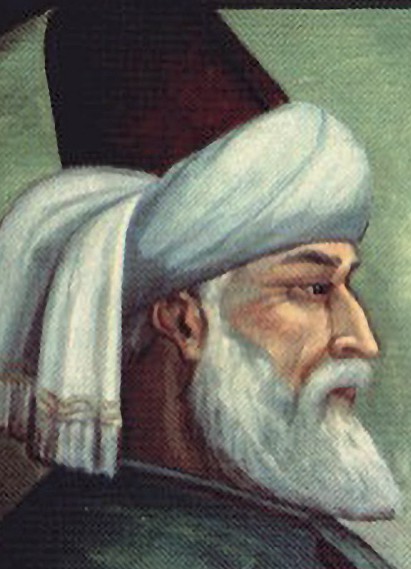
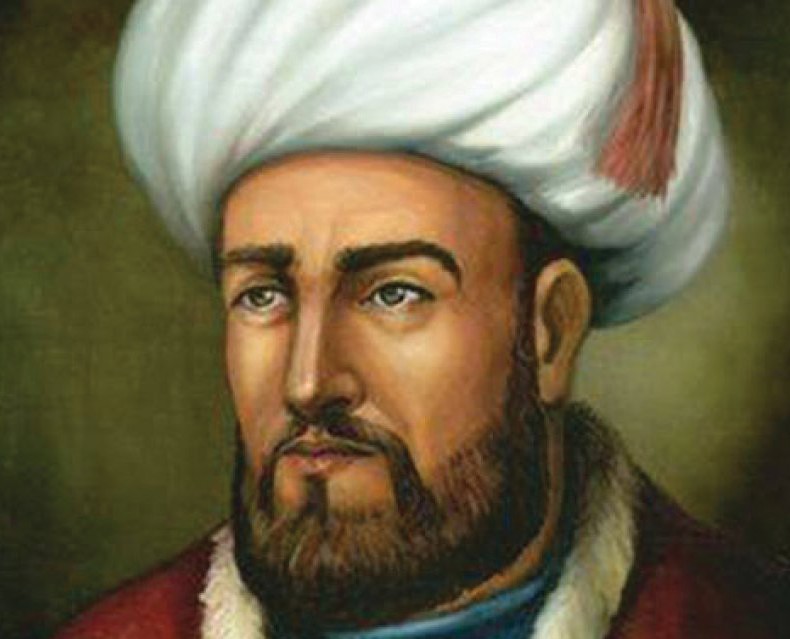
In 1244, he met Shams al-Din Tabrizi (whose name meant: “the day of faith”), a wandering Sufi mystic, who sought the master of Konya after receiving a divine message. This peculiar encounter turned the previously level-headed, calm Rúmi into an intoxicated poet. From this point on, his poetry became a song of adoration for the love of God. The mystical friendship between the two masters was so legendary in the history of Sufism that it became a saying in the eastern world. They became inseparable and spent much time with each other without saying a word, shrouded in deep, magical silence. However, Rúmi’s disciples were unable to accept this relationship and thus on the 5th of December, 1248, some of his jealous disciples murdered Shams. For two years, Rúmi traveled the world in search of his friend who he thought had gone missing, before arriving in Damascus and crying out: “Why should I seek? I am the same as He. His essence speaks through me. I have been looking for myself!” He then returned to Konya, where he began openly speaking of his teachings, forming the spiritual, whirling dance of the dervishes. This round dance performed in ecstasy helped the disciples attain an euphoric state, who were thus called dervishes.
His main works include Masnavi-ye-Manavi, which many refer to as the “Persian Koran”, Diwan-e Shams-e Tabriz-i, which contains the verses Rúmi wrote to Shams, in which the author identifies himself with Shams, and the Fihi Ma Fihi, the collection of his metaphysical teachings. He dictated his meticulously constructed couplets to his scribe without the slightest effort, while whirling and dancing in his courtyard. These poems include some of the most magnificent works of world literature. As a teacher, Rúmi became a Sufi grand master. Sufism is an esoteric school of Islam, which proclaims complete devotion to God. Its central issues include unity with God and the holy war or Jihad which every man must fight with the evil that lurks within his soul. The Sufis regarded the love of God – which purges all evil – as being more valuable than any form of knowledge, whilst renouncing material goods and striving for holiness. They were named Sufi after their rough-spun (súfa) clothes. Rúmi returned to God on the 17th of December, 1273. To this very day, this date is a significant holiday of the Mevlevi order. His grave in Konya, in the current-day Turkey is still a frequented pilgrimage site.
“O Love, O pure deep Love, be here, be now, Be all – worlds dissolve into your stainless endless radiance, frail living leaves burn with your brighter than cold stares – Make me your servant, your breath, your core.”
(an excerpt from Jalal ad-Din Rúmi’s prayer)
“Through Love all that is bitter will be sweet. Through Love all that is copper will be gold.
Through Love all dregs will turn to purest wine. Through Love all pain will turn to medicine.
Through Love the dead will all become alive. Through Love the king will turn into a slave.”
“Be like the sun for grace and mercy. Be like the night to cover others’ faults. Be like running water for generosity. Be like death for rage and anger. Be like the Earth for modesty. Appear as you are. Be as you appear.”
“You cannot know before you descend to your self. Lo, the tree doesn’t believe in fire until it is burnt…”