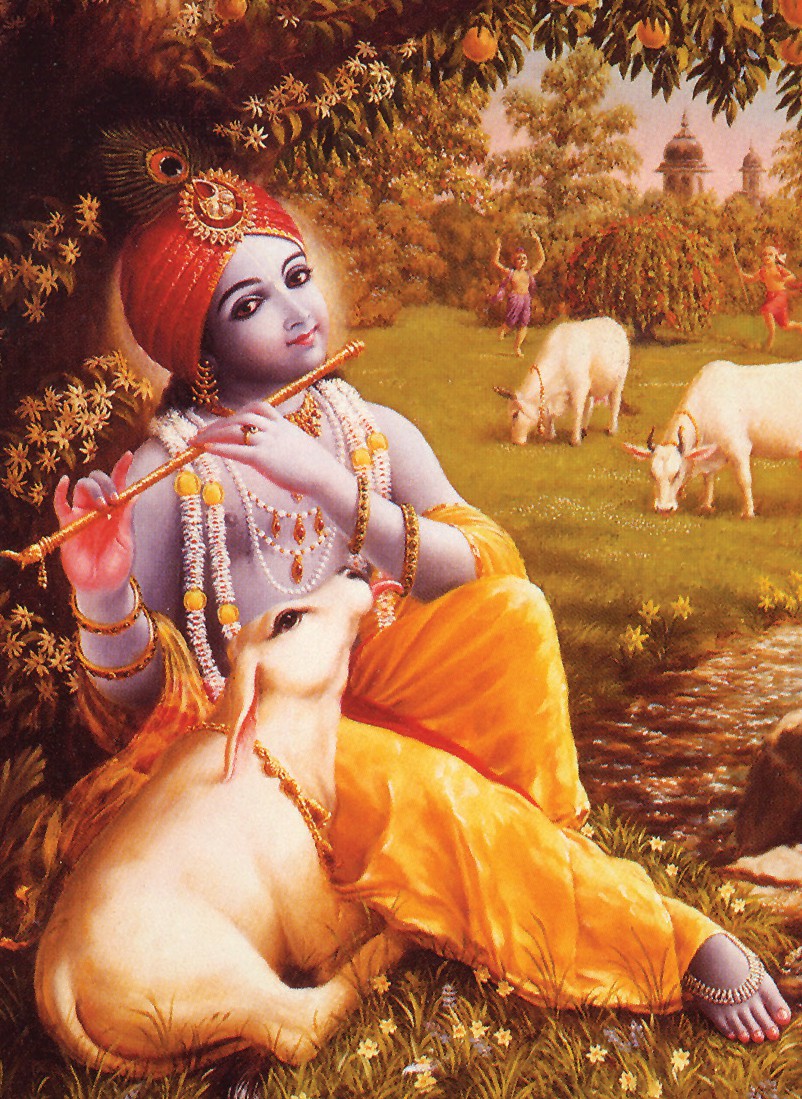
Krishna
3228-3103 B.C., India
Krishna was born in the 4th millennium B.C. in Mathura, India, located in the region of the current-day Uttar Pradesh state. Some regarded him as an earthly-born divine being, whilst others think of him as a high-level spirit and some of his disciples venerate him as the Supreme Being of God. His birth was most certainly one of the most significant events on Earth. A number of other exceptional spirits were born at the same time as Krishna, and thanks to the blessed presence of the masters, major changes began taking shape on Earth. Many researchers regard the death of Krishna as the onset of the “dark age” of humanity, the Kali Yuga. According to a Hindu religious text, the Vishnu Purana, Krishna was unborn and undying, since the divine spirit is unborn and undying as well. According to another scripture, the Brahma Samhit, everything originates from Krishna, but Krisha originates from nowhere. The pursuits of his life are also known as God’s play on Earth. Krishna was of royal blood and his uncle, Kamsa was the king of Mathura. According to tradition, Krishna was immaculately conceived. At the time of his birth, all was filled with peace and joy and Krishna’s earthly incarnation was a cause for great celebration. Some think that Krishna came for the prayers of the deities, to provide protection against the demons that spread through the world. Since they predicted that Krisha would kill his evil uncle, his uncle imprisoned Krishna’s parents – Vasudeva and Devaki – before the birth of their child and thus Krishna was born in prison. Krishna – who, as the child of Devaki, was also known as Devakinanda – appeared to his parents in a higher transcendental form and thus his father and mother could awaken to the being of their child in the form of a deep, spiritual experience. After the infant conveyed a number of important matters to his parents, he asked his father to hide him from his pursuers. The guards miraculously fell asleep and their chains broke free and the door to their prison opened.
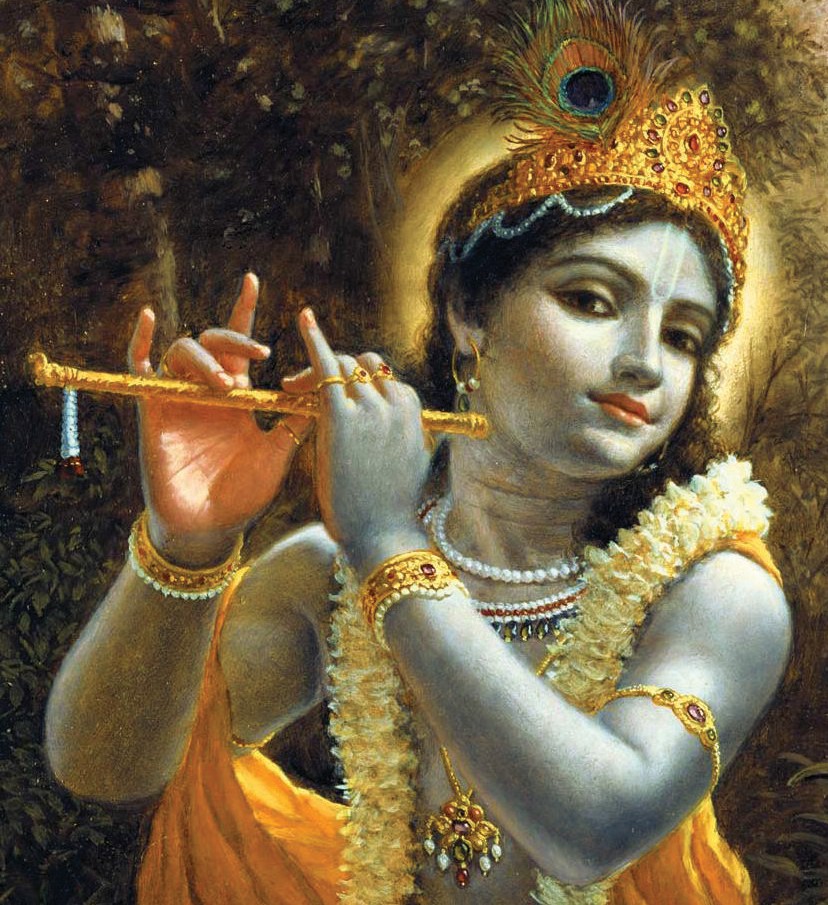
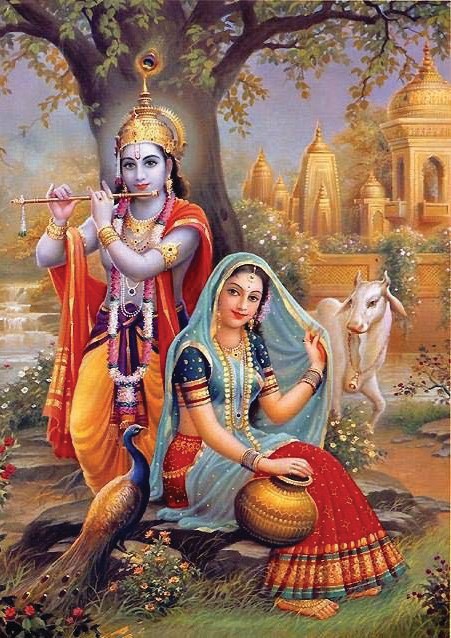
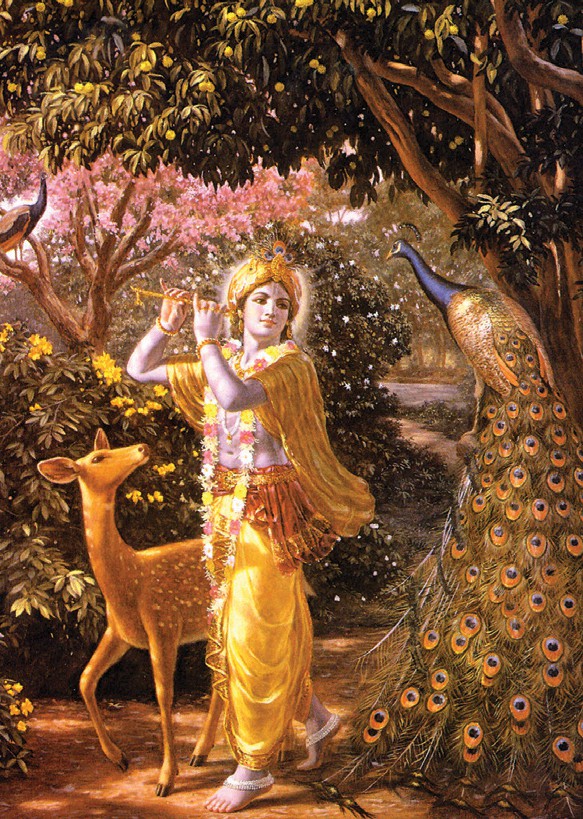
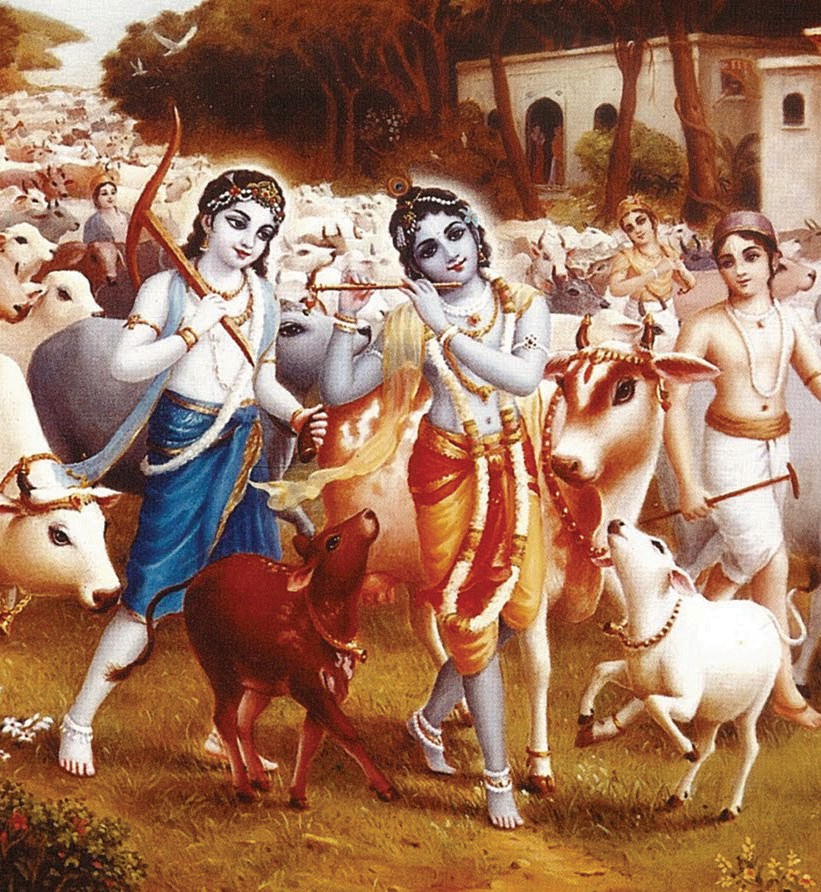
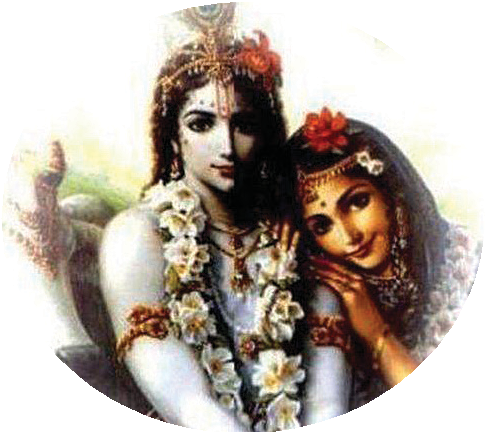
The child was taken to the city of Gokul, where they swapped him with another baby. He lived here until he was 3 years of age and here it was that the oft-mentioned event took place when he showed his foster mother the entire universe in his open mouth. According to some sources, in his attempt to destroy Krishna, Krishna’s evil uncle killed every new-born baby. Krishna was taken to Vrindavana when he turned three, where he grew up amidst herdsmen and shepherdesses. According to the legends, the Gopi (shepherdesses) were so deeply attracted to Krishna that they abandoned their husbands and families just to be with him. Krishna became the honorary husband of all the maids, however, only Radharani is regarded as his eternal companion, who is the manifestation of endless love for God. Krishna is often depicted as a beautiful shepherd playing the flute.
Krishna later journeyed to Mathura, where he lived until he turned 28 and fulfilled the prophecy, killing the evil King Kamsa and his brothers with the help of Balarama. As the ruler of Mathura, he protected the region and chased the demons away from it and as a warrior, he led a number of successful military campaigns. Krishna later established a kingdom in the city of Dwaraka, within the state of Gudjarat, where he established a grand dynasty and according to traditions, he married 16,108 women, who gave birth to his 161,080 sons. He conveyed his most important teachings to his disciple, Arjuna, which are collected in the holy book of The Bhagavad Gita. Another work, the Srimad Bhagavatam, focuses on the pursuits and miraculous events of his life. His teachings are captured by countless Vedic scripts and several religious school devoted to Krishna. Many of his followers claim that the humanity of our age can only be helped by complete devotion to Krishna and the voicing of the divine mantras. The significant locations of his life have become pilgrimage sites, for example, Vrindavana is visited by millions of pilgrims every year. Krishna most likely departed from the Earth in 3103 B.C.
“When a man dwells in his mind on the objects of sense, attachment to them is produced. From attachment springs desire and from desire comes anger. From anger arises bewilderment, from bewilderment loss of memory; and from loss of memory the destruction of intelligence, and from the destruction of intelligence he perishes.”
“Just as a man discards worn out clothes and puts on new clothes, the soul discards worn out bodies and wears new ones.”
“The Spirit, which pervades all that we see, is imperishable. Nothing can destroy the Spirit. The material bodies which this Eternal, Indestructible, Immeasurable Spirit inhabits are all finite.”
(excerpts from the Bhagavad Gita)