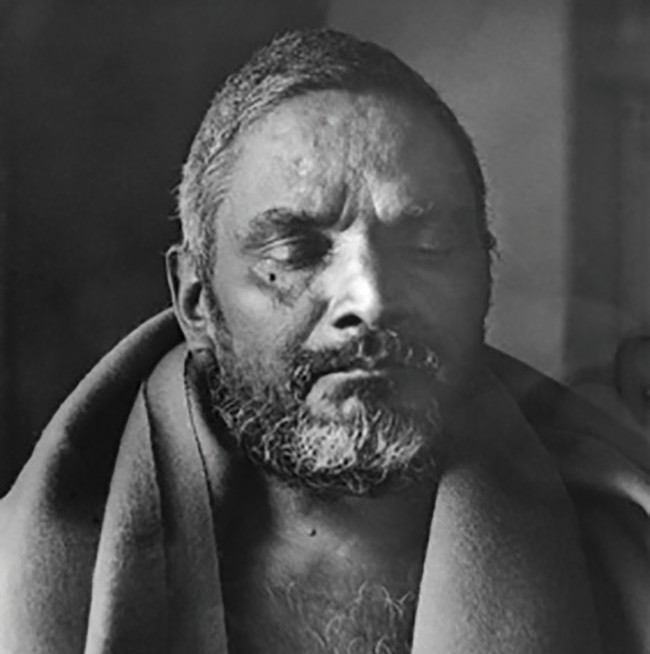
Nityananda
1896–1961, India
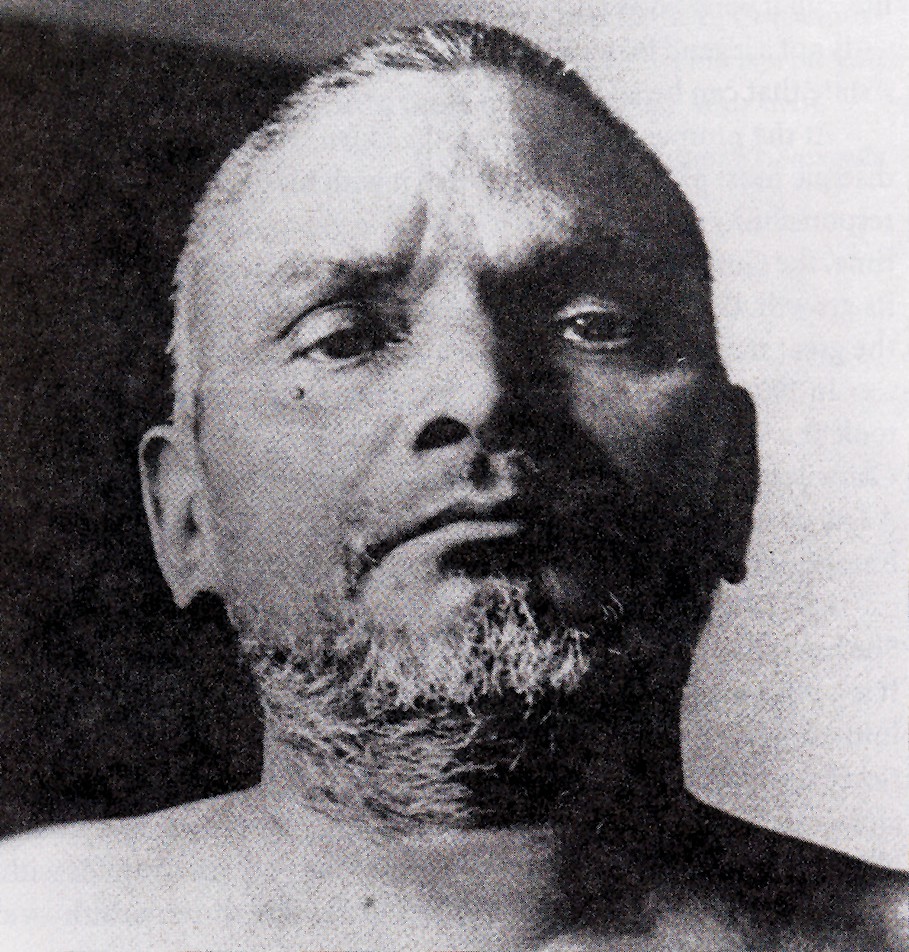
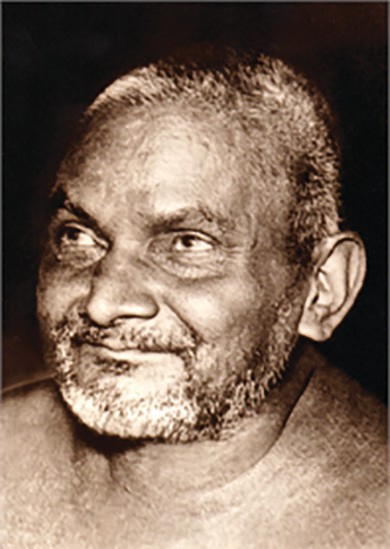
Bhagawan Nityananda, also known as Bade Baba, is one of the best-known saints of India, who is thought to have had the pure consciousness of the enlightened since birth. He was born around the year 1896 in Southern India – the baby was found in the jungle by a woman collecting firewood, who was then raised for some time by a servant girl before being adopted at the age of six by a Brahman lawyer. When they found him, he was a sickly boy, but after a mysterious stranger gave special advice for his curing, the baby miraculously recovered. Even as a young child, he gave complicated and precise metaphysical instructions to his tutor. He left his family when he turned ten and wandered through Northern India and the Himalaya for six years. He reached Ceylon, Singapore and Burma and lived the life of a hermit in the outlying regions of Southern India before settling in Ganeshpuri in 1936, close to the Bimeshwar shrine. Nityananda’s life is characterized by the mysterious events of masters who are above the laws of the world. When wandering, he crossed 60 kilometers a day at a breakneck tempo, before disappearing and reappearing in entirely different regions. He was capable of appearing at any given location, if a number of different people wished to meet with him. He lived a rather simple life: he wore a single loin-cloth and ate very little food. If no one brought him any food or drink, he wouldn’t eat or drink for days. He wasn’t bothered by heat or cold and he often lied motionlessly for days, staring at the sun.
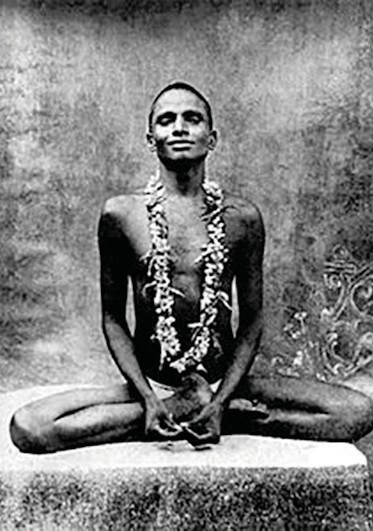
Although he spent most of his time in silence, when questioned, he gave abstract philosophic explanations, delivered in a way that could be understood by all. He usually kept his eyes closed, but when he opened them, they glowed with great power. When he once witnessed several men burning the body of a criminal doused with kerosene, he looked on in stoic composure, while replacing the criminal’s pain to the perpetrators in order to make them realize their erroneous ways. He was once attacked by an assassin with a knife, yet the person’s hand became twisted and unmovable until Nityananda touched him. Once the attacker was imprisoned, he fasted for days in order for them to release the man. However, his moral greatness and his enduring efforts to help mankind outshine the miracles he performed. Whenever he could, he always healed the needy. His followers often placed money at his feet, which he used to arrange banquets for the poor. They noted that the food never ran out at these banquets until everyone had enough to eat. During the course of his wandering years, he ordered the construction of cave homes, and renewed hospitals for the poor, dug a well for a church and once he settled down, he had a road built to his ashram in the jungle. He often paid his workers by asking them to open their palms, which he closed… and their daily wages spilled from their closed palms.
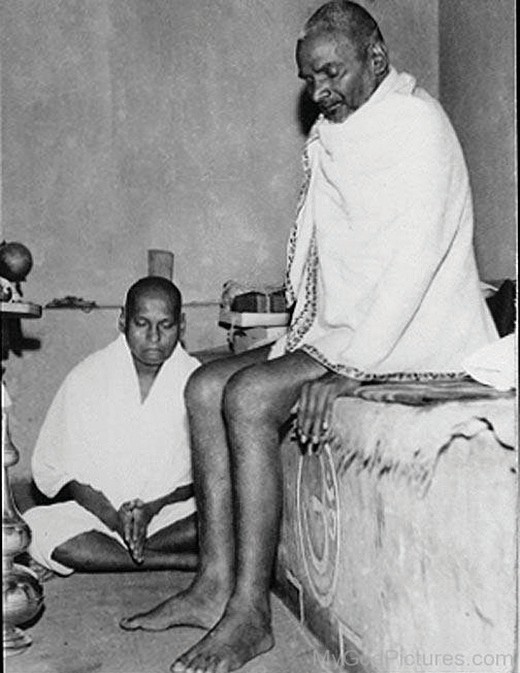
He had thousands of followers, who regarded Nityananda as a master from a high-level spiritual domain known as Siddha Loka. During his initiations, he induced a miraculous change in his disciples without any ceremony simply though a single word or gesture.
For him, spiritual and worldly life were one and the same. He even answered questions that people asked concerning their worldly lives. He possessed detailed information on all subjects. All forms of religions were equally important for him. When one of his disciples asked him to reveal God to him, he had the following to say: “Just look around! All is God! All is God!” Following his death in 1961, his work was continued by Muktananda. They established a spiritual center in Ganeshpuri known as the Gurudev Siddha Peeth, which has since become the center of Siddha Yoga.
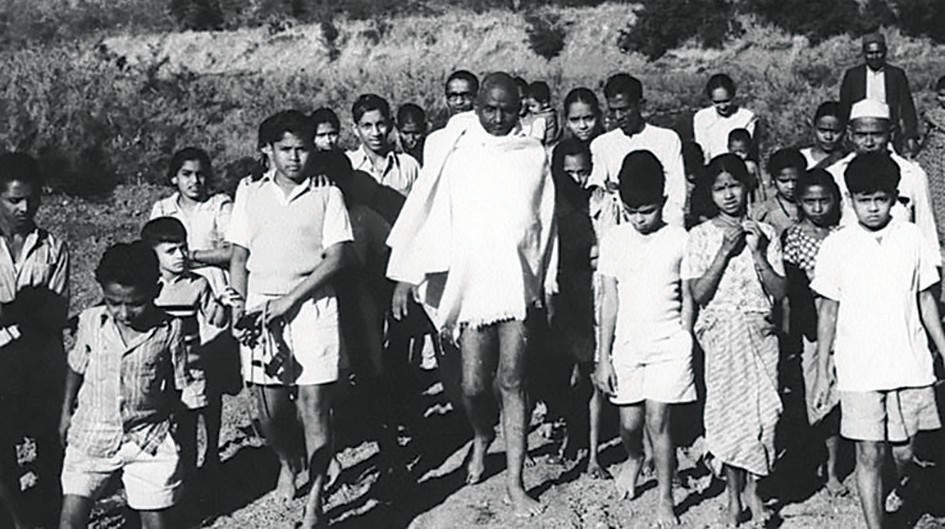
“Once I went with my Guru for a walk along the bank of a river. Near the road was a huge rock. he said, “Do you see this rock? See the miracle? See the doing of the universal Consciousness? Here it has become a rock, here it has become a human being, and here it has become a tree. But although it has become all this, it does not lack Consciousness in its fullness.”
(excerpt from Muktananda’s book entitled Play of Consciousness)
“A disciple must face many ordeals: these can be ordeals of the mind, the intellect or the physical body. There are many different ordeals. In truth, God always puts us to the test: every single event of our lives is a test. Every thought that arises in our mind is a test, which reveals our reaction to it. Thus we must always remain vigilant and objectively view the world around us and regard everything as a gift, an opportunity to improve ourselves so we can rise to ever higher levels.”
(Bhagawan Nityananda)
“One must seek the shortest way and the fastest means to get back home, to turn the spark within into a blaze, to be merged in, and to identify with the greater fire which ignited the spark.”
(Bhagawan Nityananda)