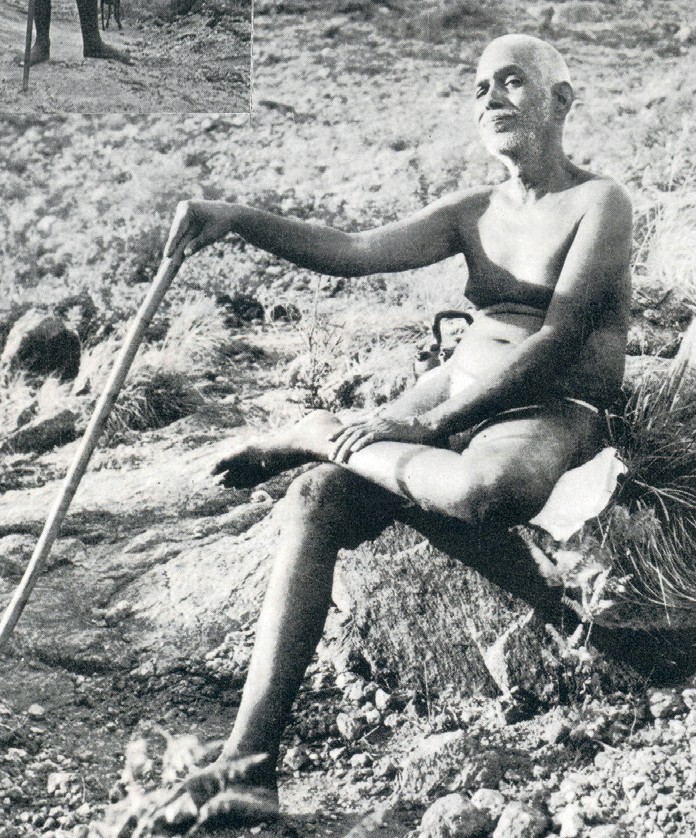
Sri Ramana Maharshi
1879–1950, India
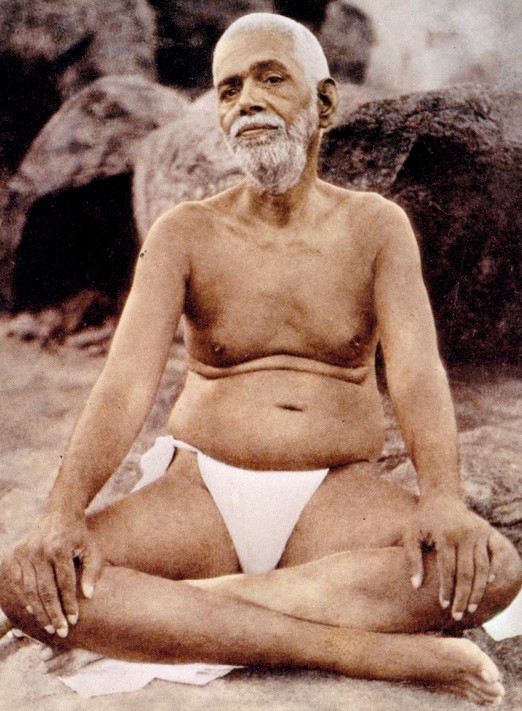
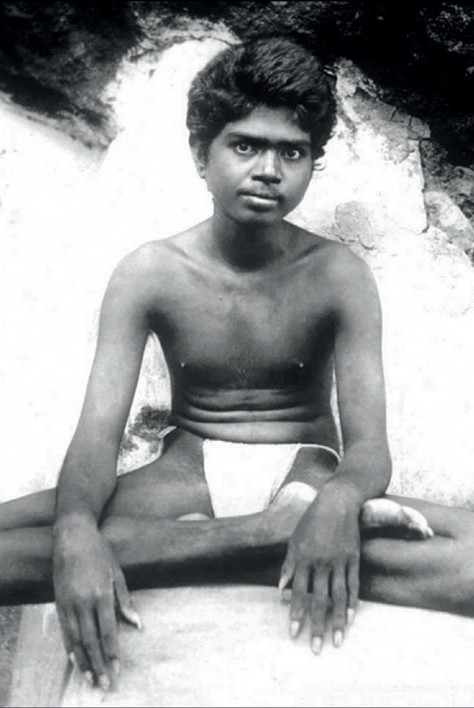
Venkataraman is numbered amongst the great gurus of twentieth-century India, also known as the future Bhagavan Sri Ramana, who was also called Maharsi or Grand Master. He was born in the South Indian village of Tiruchuli, as the second child of a family of priests on the 30th of December, 1879. When he was sixteen he experienced death in an entirely healthy state. He was unable to move his body for an extended period of time, whilst remaining fully conscious of everything that took place within himself and his surroundings. Thus he understood that a man’s spirit is independent of his body. He was henceforth characterized by a sense of never-waning spiritual consciousness, tranquility and equanimity. A few months later he departed to the holy mountain of Arunachala, where he spent the rest of his life. He left a farewell note to his relatives in which he wrote: “I have departed to seek out my Father according to his directives…” Once he arrived at the village of Tiruvannamalai at the foot of the mountain, he gave away his clothes and the rest of his money, spending almost all of his time at the local temple, in the state of Samadhi. His ecstasy was so deep that he wasn’t even bothered by the ants gnawing at his fingers.
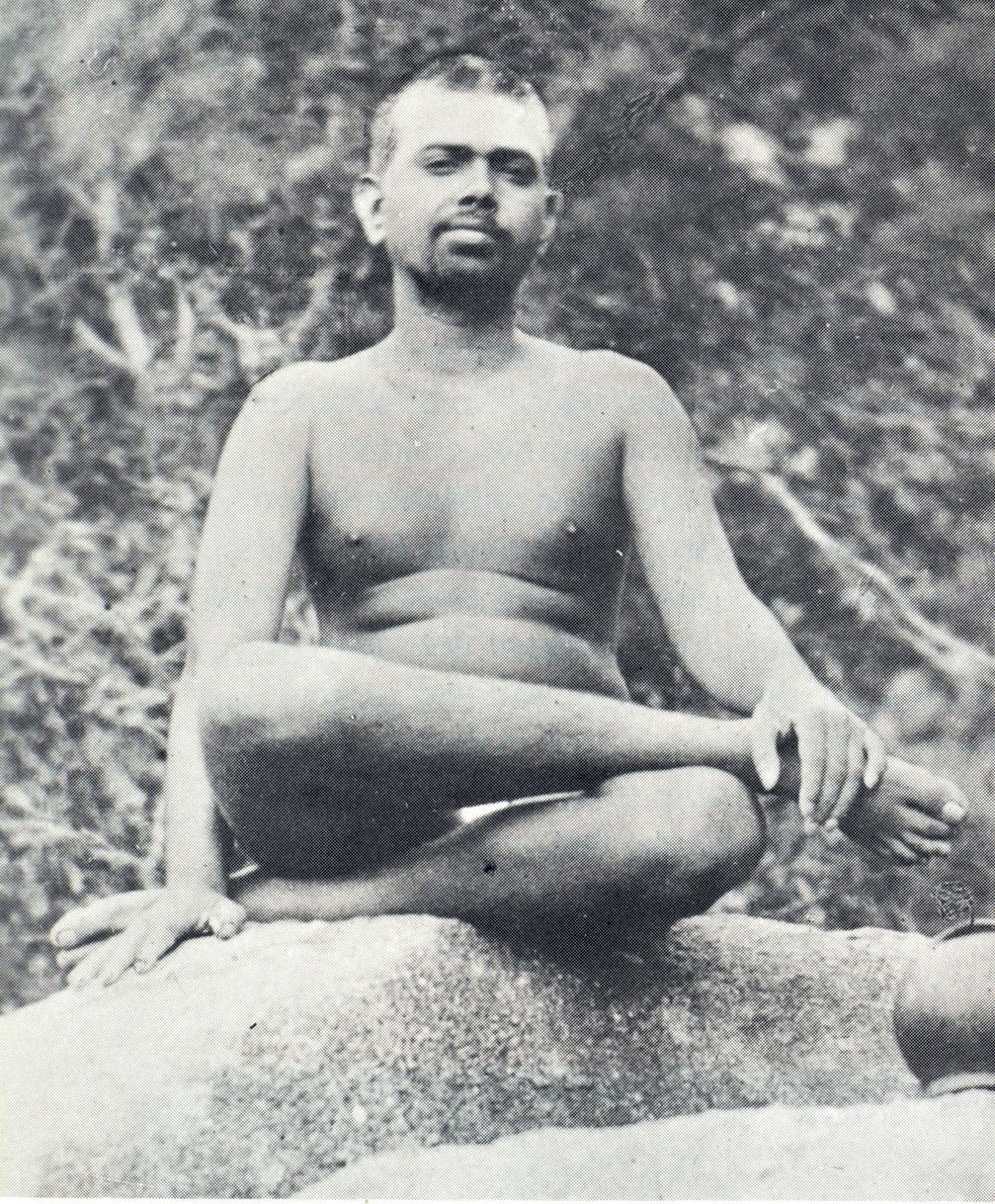
He then moved to the mountain Arunachala, living in various caves on the mountain, mainly the Virupaksha Cave and the future Skandha ashram before moving back to the foot of the mountain in 1922 to the region of the current-day Sri Ramana ashram. Some sensed the holiness of the silent, unclothed young man and remained next to the guru as disciples, bathed in the blessed magnetism of the force that emanated from Ramana. Although Ramana never took part in any serious training, he proved to be wise and skilled in all spheres of life. He was capable of giving advice to everyone and understanding the depths of the human soul as well as being aware of everything that took place in the world. A series of miracles unfolded in his surroundings and due to his being the obstacles melted away from people’s enlightenment. He was only joined by a few people at first, yet by the end of his life his ashram was flooded by people from all over the world who wished to see him.
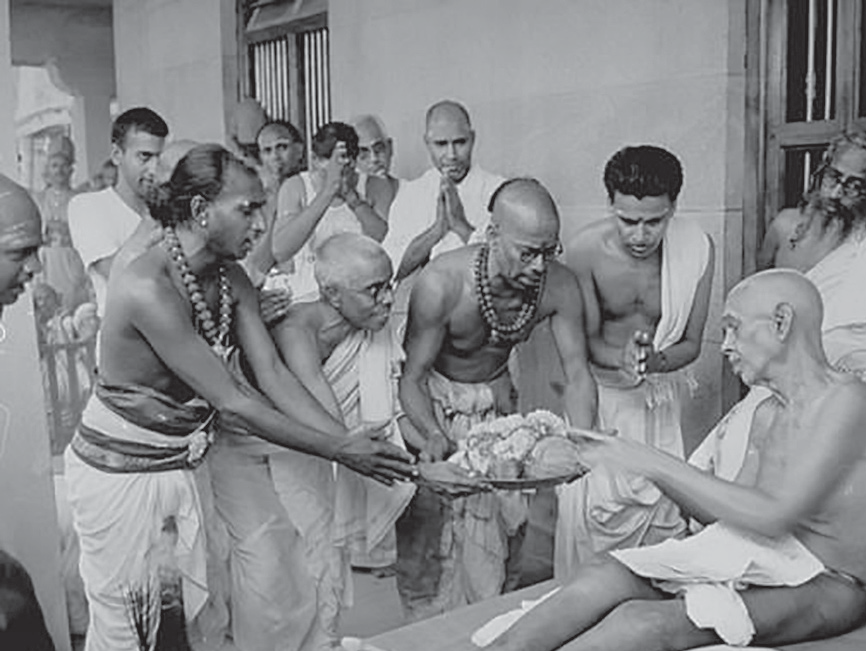
Almost every prominent dignitary in India – statesmen, scientists, artists – visited Ramana, since after spending a few days in his presence, they were charged with the power to fulfill their tasks. Although he never officially accepted any disciples and didn’t give any initiations, his devoted faithful were guided by his all-encompassing attention and care. According to his disciples, God manifested himself through Ramana. His life can be regarded as an extended sacrifice for mankind, which practically became martyrdom in his final years. Similarly to other great saints, he took on some of the consequences of the negative acts of humanity, which manifested in his illnesses, which he endured with endless patience. Sri Ramana Maharshi departed his body on the 14th of April, 1950. At the exact same moment, a slow-moving, bright comet appeared in sky, moving from south to north before disappearing behind the peak of Arunachala. His blessings have stayed with us: there are countless stories of his miracles and continued presence. Hundreds of books are filled with his advice and his miraculous tales. One of the key elements of his teachings is the vast knowledge of understanding the Self. He taught that God and perfection lies within us and we are continuously surrounded by mercy. Life is a chance for manifestation coupled with perfect salvation, the divine Self, our eternal and immortal part. His disciples still have a significant influence on the world, vested with the power of their master. His personality is the focal point of the Ramana Movement, with Tamil Nadu as its center, in Tiruvannamalai at the foot of the Arunachala mountain, operating in the form of a number of charity organizations.
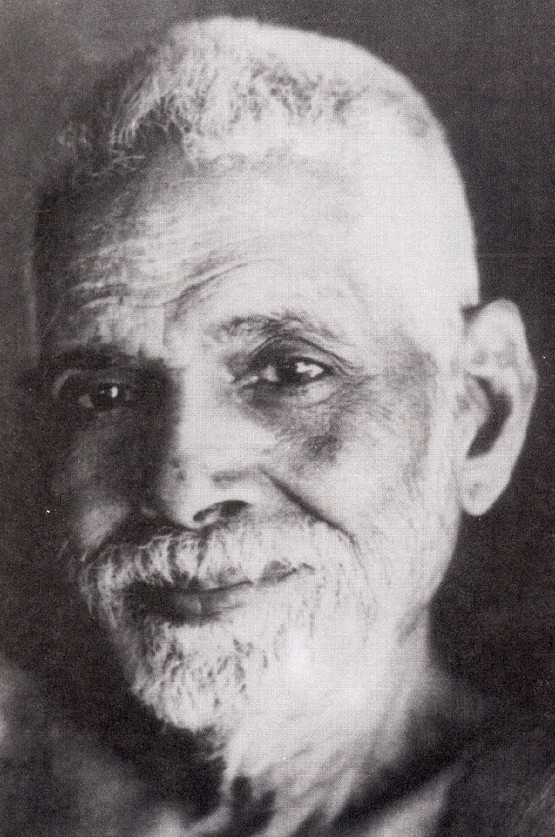
“Birth and death pertain only to the body and this is an illusion. The fact is that there is neither birth nor death. He who achieves self-realization will no longer regard himself as being separate from the world.”
(excerpt from Sri Ramana Maharshi from the anthology entitled Absolute Consciousness)
“Detachment is the illusion that we are not the same as God.”
“Do not forget that you are really the infinite, pure Being, the Self Absolute!”
“Who am I?’ is not a mantra. It means that you must find out where in you arises the ‘I’-thought, which is the source of all other thoughts… If you focus your attention on such investigations, you may purge all thoughts leaving only the Self, as it always was.”
(excerpt from the anthology entitled Absolute Consciousness)
“Trust God! If you surrender yourself to him, you will surely be able to firmly give in to His will and you will not be saddened when things do not happen as wished.”
(excerpts from the anthology entitled Conscious Immortality)