
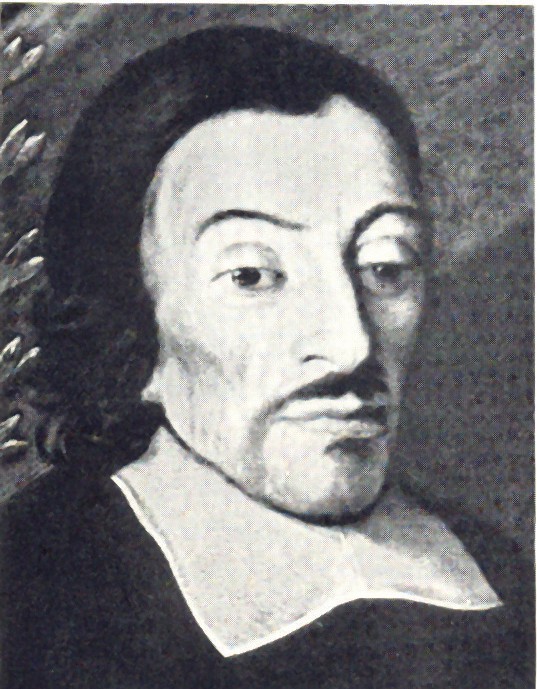
Angelus Silesius
1624–1677, present-day Poland
Angelus Silesius is one of the outstanding figures of Christian mysticism. The Silesian mystic poet, God’s “Silesian emissary”, was born Johannes Scheffler in Breslau (present-day Wroclaw) on 25 December 1624 in a well-to-do Lutheran family. He later converted from Lutheran to Catholic faith, yet the knowledge he imparted was akin to esoteric Rosicrucian gnosis and Eckhartian mysticism. His short, mystical, rhymed poems represent a combination of metaphysical traditions and mystic gnosis in lyrical form. According to many religious scholars, Angelus Silesius was one of the most outstanding teachers, while others refer to him as an initiate. He studied medicine at his hometown university and later obtained a doctoral degree in philosophy in Padua.
Even at a young age, he was passionately interested in metaphysical and theological research and was deeply impressed by the writings of Christian mystic Jakob Böhme. He continued his studies at the Leiden University in the Netherlands and had ties to the followers of Böhme in Amsterdam. After returning to Silesia, he was appointed court physician to the Duke of Württemberg-Oels. In this period, one of his closest friends was Abraham von Frankenberg, Böhme’s personal disciple and biographer, from whom he inherited his entire library including a number of unique manuscripts, through which he familiarised a number of mystic teachings from the likes of Eckhart von Hochheim, Johannes Tauler and Jan van Ruysbroeck. However, the Lutheran authorities did not approve of his mystic beliefs. As a young man, he was far more interested in the unity with Christ and the inner mystic life of man than church dogma and various ethical rules.
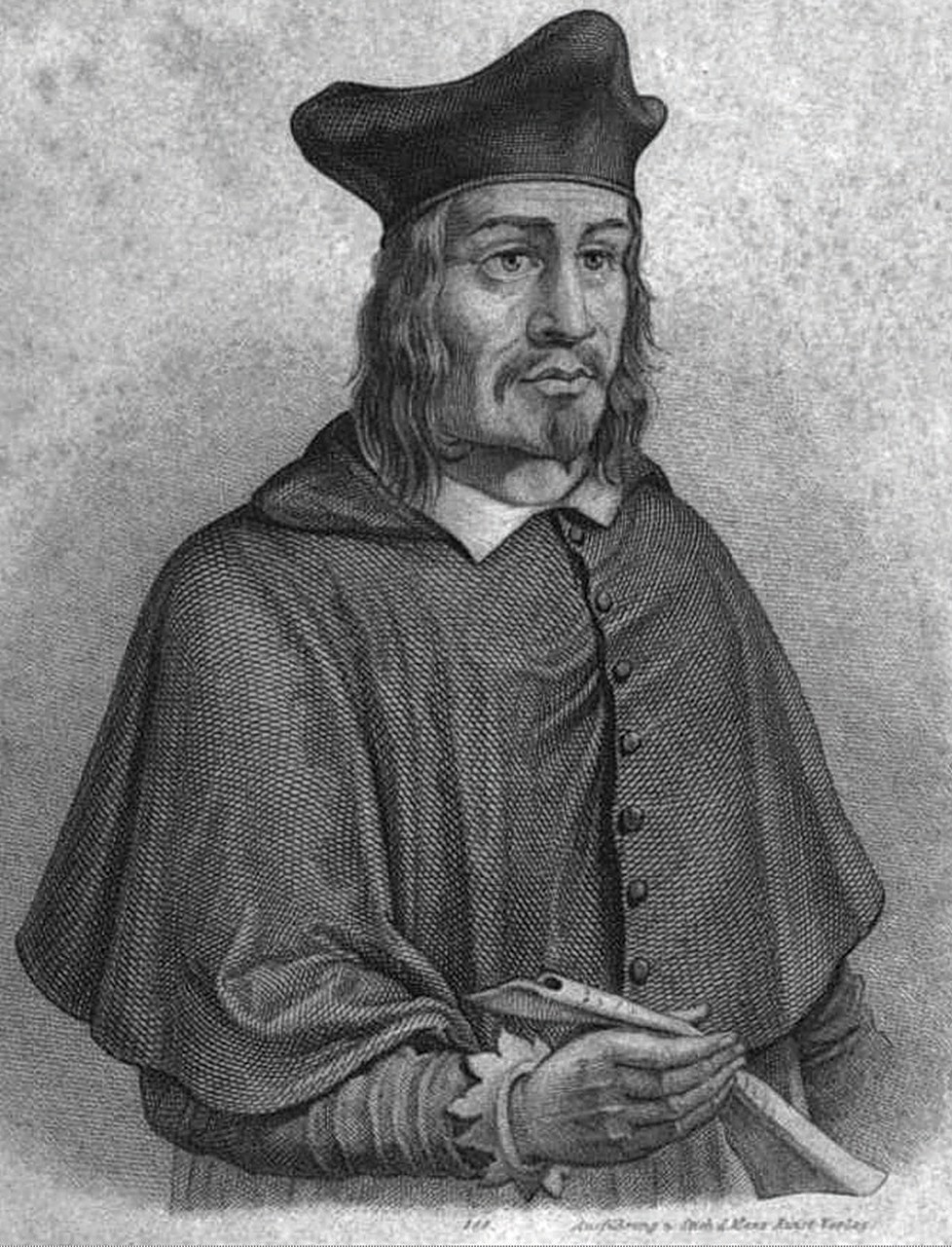
This dispute led to Scheffler converting to Roman Catholic faith in 1653, at twenty-eight years of age. He achieved the highest accolades in his profession by appointment as Imperial Court Physician to Ferdinand III, the Holy Roman Emperor, yet he soon resigned from this position when he joined the Franciscan Order, donating his wealth to charity. In 1661, he was ordained as a priest and lived in the Jesuit monastery of his hometown until his death on 9 July 1677. Thanks to his efforts, the Catholic faithful of Breslau were again allowed to celebrate Holy Thursday from 1662, which was forbidden after the Reformation. On the very first celebration, he allegedly carried the tabernacle himself. In this period, he wrote a number of sharply worded critiques against the Protestant views. These writings were in stark contrast to his rhymed distichs, which didn’t have an offensive tone at all.
He penned his works under the name of Angelus Silesius (literally, the Silesian angel or messenger) and that is how he is remembered. He published his lyrical works with the permission of the church, in two volumes in 1657, with the support of the Jesuits. His work entitled Heilige Seelenlust (The Soul’s Holy Desires) consisted of nearly two hundred religious hymn texts, and a number of these beautiful hymns were later included in Protestant publications. He published his couplets written in Alexandrine couplets in Cherubinischer Wandersmann (The Cherubic Pilgrim). He was suspected of heresy due to this latter publication, which forced him to continue his work in the utmost secrecy.
His works spread throughout the world after his death, and had a particular impact on people’s thinking. Angelus Silesius became one of the most widely known Christian mystics, while The Cherubic Pilgrim is undoubtedly regarded as one of the most beautiful mystical writings of all time. His work is highly regarded in both esoteric and exoteric Christian circles. He was so captivated by the thought of the union with God that nearly one thousand seven hundred of his couplets deal with and address this mystic union in a deeply emotional manner, yet with wit and humour. His rapture of divine unity is similar to that of the Sufi Rumi, who also wrote thousands of couplets on this single theme. Angelus Silesius, however, calls people to action; just as Böhme, he does not believe in salvation by faith and grace alone, but rather encourages inner effort: “As thou dost seek, so shalt thou find / As thou dost knock and dost implore / So shall the gift be unto thee / And so the opening of the door.” His poems are often characterised by a paradoxical nature. It is not enough to merely grasp their meaning, but perhaps one must experience them with a pure mind and tender heart.
“Christ could be born a thousand times in Bethlehem – but all in vain until He is born in me.”
“God is my final end, does he from me evolve, then he grows out of me, while I in Him dissolve.”
“God is a spirit, a fire, a being and a light. And yet at the same time he is also none of these.”
“God dwelleth in a light toward which there is no path; He must become that light who need of vision hath.”
“The oil of my lamp and the fuel of my faith are in the heart of Jesus and thus inexhaustible and perpetual.”
“God is an endless force that what it wills attaineth, that formless, without goal, still as it is remaineth.”
“The hen is in the egg; the egg is in the hen; two are in one and yet one is in two again.”
“O Man, as long as you exist, know, have, and cherish,
You have not been delivered, believe me, of your burden.”
“God in all that is His to the presence of the number one in all the other numbers.”
“God is my final end; Does he from me evolve, Then he grows out of me, While I in Him dissolve.”
“Hush sinner, and condemn not Adam, and not Eve. Had they not fallen first, you would have, that believe.”
“‚Twould seem that reaching heaven of much less effort is, than by the toil of sinning to enter hell’s abyss.”
“I say that nothing dies; rather, another life by dying is bestowed, though it be lived in strife.”
“Strange that at heaven’s doorway so few crave to go in! None wish to shed thereon their old and outworn skin.”
(excerpts from The Cherubic Pilgrim)



