Carlo Carretto
1910–1988, Italy
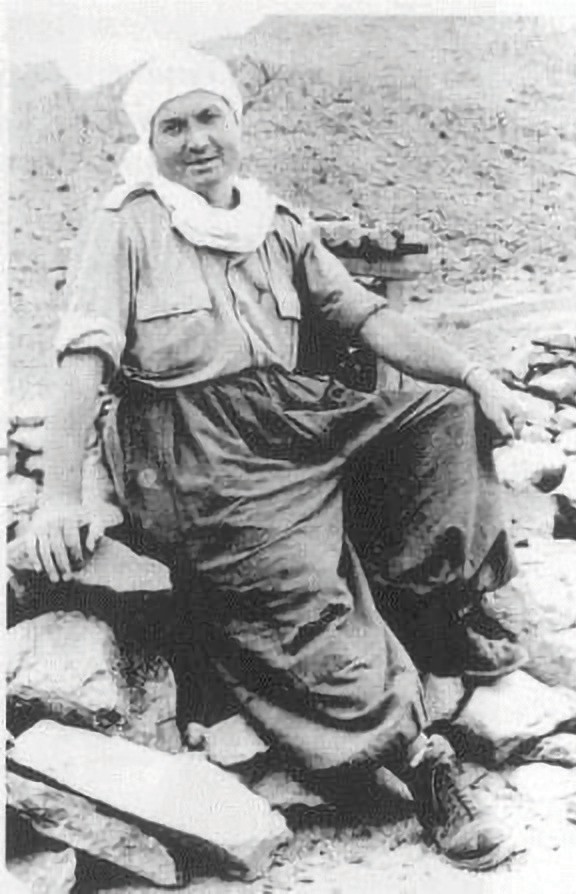
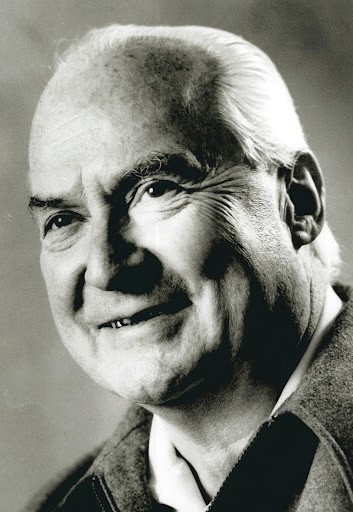
Carlo Carretto, an outstanding figure of 20th century “Christian dialogue” and a key figure of Christian spiritual literature, capable of addressing laymen, clergymen, educated and uneducated alike, was born on 2 April 1910 as a member of Catholic family with eight children in Alessandria, Italy. Two of his sisters became nuns, one of his brothers went on to become a bishop, while he himself was raised in a Salesian oratory. An inner voice led him to give up on his plans of establishing a family of his own and devote his life to service. He studied in Turin, earning a PhD in philosophy and pedagogy. In 1932, he joined the Catholic Action Youth Organisation (GIAC), where he worked for a time as a lay missionary, and later as head of parish and a national leader: he published writings, organised gatherings, travelled throughout the country while openly standing up for the organisation’s principles. His writings were translated to a number of languages. His works are deeply human and personal, exploring the pivotal questions of life and Christian renewal. Therefore, Carretto’s activities – who worked a secular Christian and not a priest – were closely tied to the reforms of the Second Vatican Council. This resulted in formulating the idea of a new, dynamic Church, engaged in dialogue with all groups of people with an openness to their problems, supported by active reforms according to which the clergy must not be separated from the people, stating that their task was to go among the people and partake in the fate of the poor and needy. Carretto, whose writings also greatly influenced young intellectuals, fought for a Church – often in the harshest terms – that would remain faithful through all its endeavours to the Gospels and the way of love. As a kindred spirit to Thomas Merton, he helped bring people – Christians and non-Christians – together. As the President of the GIAC, he was even involved in politics as a Christian Democratic. However, at the pinnacle of his life’s work he still felt that something was missing. As a result of a major spiritual crisis and a strong inner urge, he resigned as national president and spent nearly two years in retreat and contemplation.
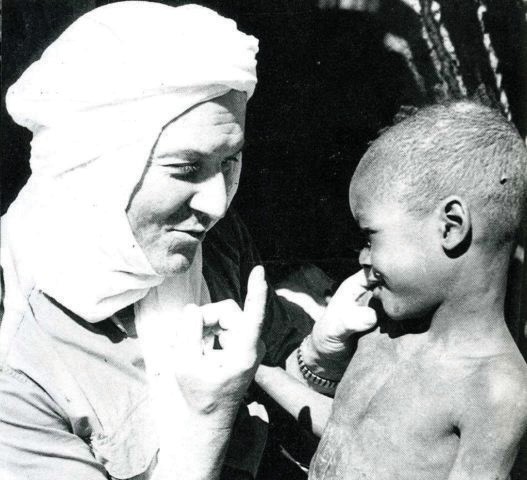
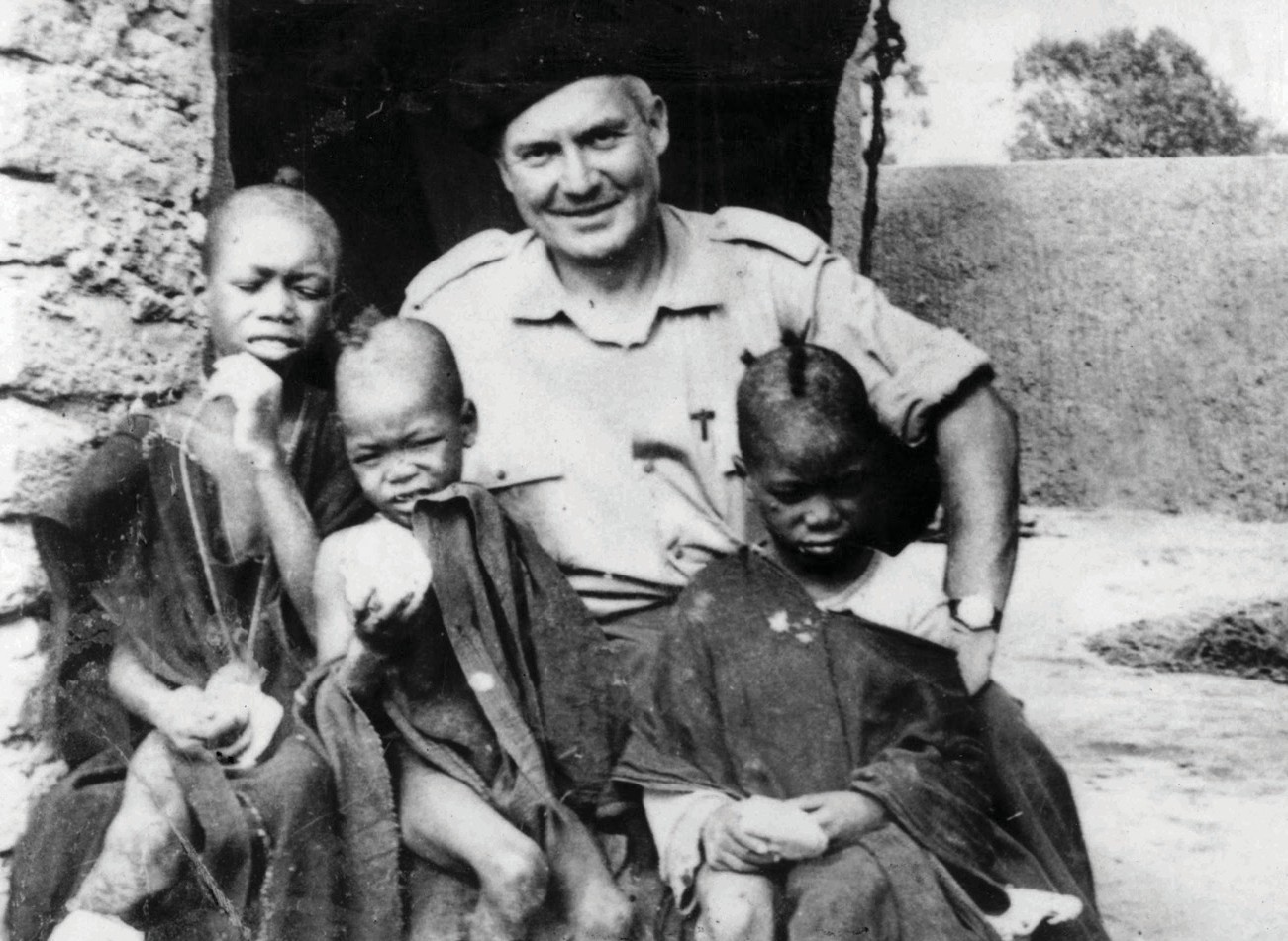
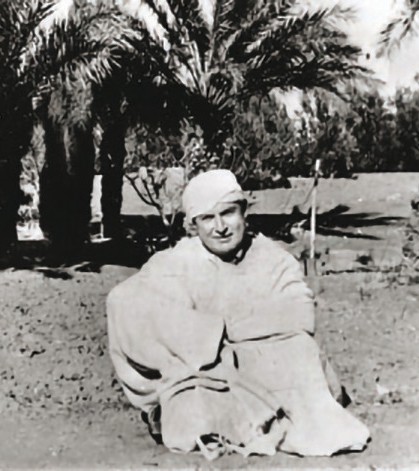
In 1954, he was summoned by an inner voice that called to him: “Leave everything, come with me into the desert. I don’t want your action any longer, I want your prayer, your love.” As a result of this, he decided to leave everything and answer the call by joining the Little Brothers of Jesus established by Father Charles de Foucauld. First he worked as a manual labourer, though he was terrified by the suffering, the heavy physical work and his own weakness. The gruelling and underpaid work and living a labourer’s life was his form of voluntary atonement. After a week, he realised that he could not endure even for a short time what the lowest freight handler has to deal with for years. At forty-four years of age, he bid his former life farewell and lived an eremitical life in the Sahara Desert for ten years, where silence and poverty were his greatest instructors. Living the life of the most destitute, he underwent a deep transformation, following the advice of his master of novices: “Carlo, you must break away!” In the ‘purgatory’ of the desert, his ego, sensing his own misery, was freed from his lack of love and arrogance. Carretto later said that he recognised his capacity for all forms of sin.
When he saw a dying woman, still shivering and feverishly ill, spreading her blanket over her child, he understood that only one thing truly matters in life: love. After finding peace and God in his desert existence, he realised that he must find the Almighty in his fellow human being as well. Therefore, after ten years of absence, he returned to his homeland: following in the footsteps of his role model, St Francis of Assisi, he moved to Spello, near Assisi, where he set up a prayer centre in an abandoned monastery to combine his experience and a form of renewed spirituality with modern life. Carretto was searching within himself for ways of becoming both ‘human’ and following Christ, and for the possibilities of renewing modern Catholicism. This led to the establishment of the Little Brothers of the Gospel Monastic Community of Spello, which remains active to this day, open to all and providing help for those seeking devotional silence and spiritual renewal. Carlo Carretto passed away on the feast day of his role model, St Francis of Assisi on 4 October 1988.
“Prayer takes place in the heart, not in the head.”
“The streets of my city have become the corridors of my mental monastery.”
“God gives himself to those who devote their life to Him.”
“I seek to build community with others. I don’t want to be alone anymore. I want to find my way with others to live my life with them.”
“God’s call is mysterious: it comes in the darkness of faith. It is so fine, so subtle, that it is only with the deepest silence within us that we can hear it. And yet nothing is so decisive and overpowering for a person on this earth, nothing surer or stronger.”
“As long as there is a single person on Earth who is hungry, you are there. As long as there is a single person on Earth who is suffering, You are there. As long as there is a single person who must be set free, You are there. And if I want to be with You, I have to be with that man. There is no escape! I cannot deceive myself. But I no longer want to do so, because I now understand.”
(Carlo Carretto’s prayer to Jesus)
“It is impossible to pray to a personal God – that is, love a personal God – and remain indifferent to your suffering brethren. It is impossible. Anyone who prays without suffering for his suffering brothers is praying to a pole, a shadow, not to the living God.”