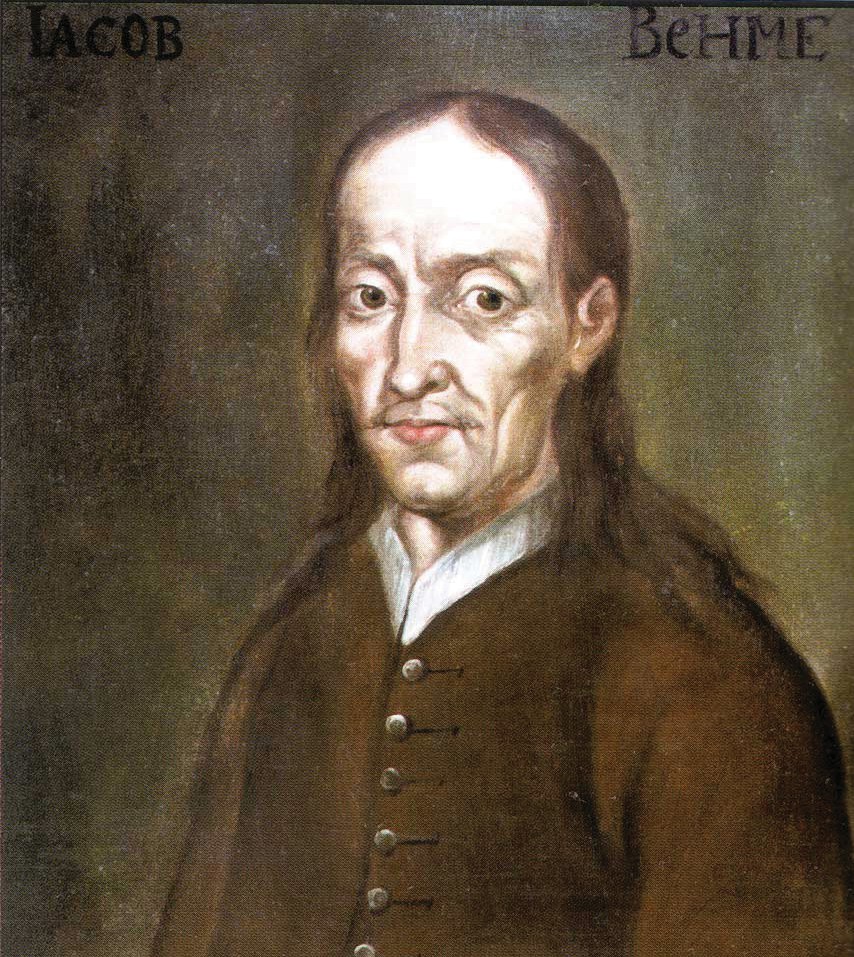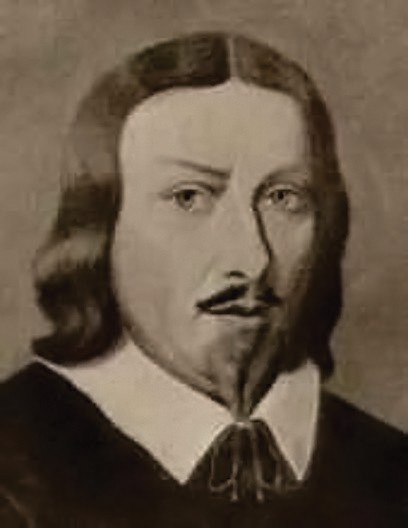
Jakob Boehme
1575, present-day Czechia – 1624, present-day Germany
Jakob Boehme, known as the cobbler of Görlitz or the „Teutonic philosopher”, was born in 1575 in Alt Seidenberg, a village on the border of Saxony and Bohemia, as the fourth child of a Lutheran peasant family. Boehme, who passed away at only forty-nine years of age and started writing at the age of thirty-nine is considered one of the greatest Christian gnostic writers. Hegel referred to him as the first German philosopher, Béla Hamvas called him the deepest and most difficult author in the world, while others consider him a prophet and a mystic. Many sought to discredit and defame him, indicating that he was an uneducated simpleton who wrote his works as a medium. However, autobiographical notes and biographies show that he was a deeply devout and humble Christian, a true follower of Christ – some religious scholars say he was a Rosicrucian following the path of esoteric Christianity – who consciously educated himself in the philosophies of his time. Personally, he indicated that all the things he was privy to and noted down were disclosed by the Holy Spirit.
Even as a child, he had a vision that led him to a cave filled with treasure. In his first work entitled Aurora, he described another pivotal experience that he witnessed as an apprentice cobbler. A mysterious stranger beckoned to him and spoke the following words: “Jacob, thou art yet but little, but the time will come when thou shalt be great and become another man, and the world shall marvel at thee. Therefore be pious, fear God, and reverence His Word; especially read diligently the Holy Scriptures, where thou wilt find comfort and instruction, for thou must endure much misery and poverty, and suffer persecution.” Indeed, he had to endure much suffering in his later life and we know that he was repeatedly threatened by the Inquisition. The fact that he did not end up in prison or on the scaffold was mainly due to his early death and the fact that his brief literary career coincided with the Thirty Years’ War.
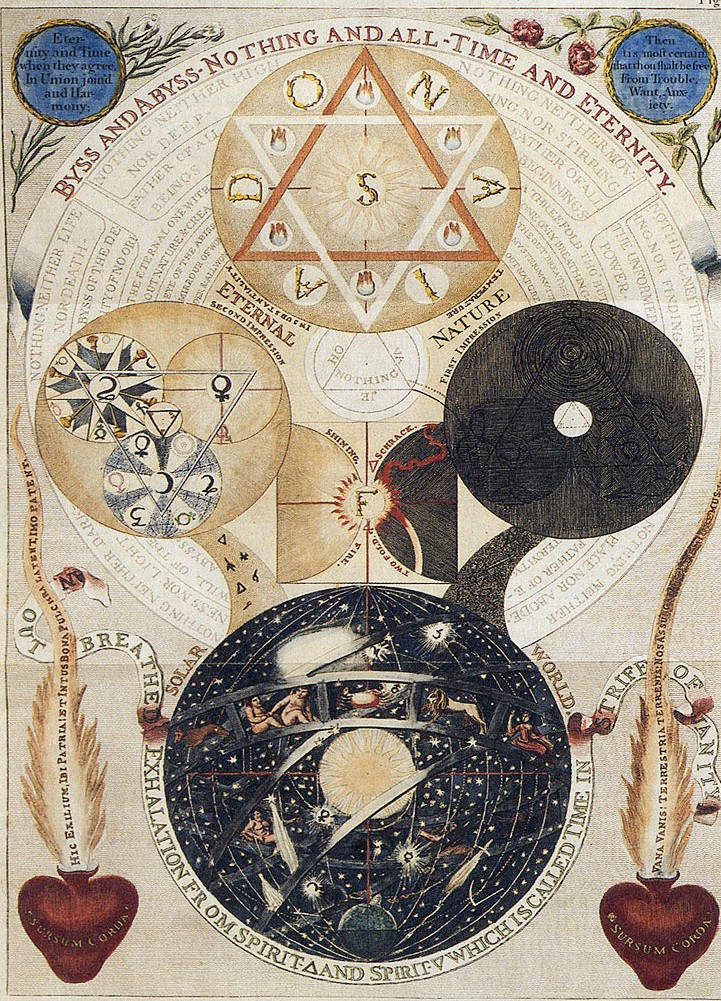
Böhme’s next pivotal experience came at thirty-three years of age: for several days, he felt he was surrounded by divine light and in his records, he indicated that he felt as though he could peer into nature’s book. Two years later, in the 1600s, he had another spiritual vision when he focused on the sunlight shimmering in a pewter dish, leading to an enraptured state similar to those experience by mystic saints. Religious scholars have described this experience as Boehme’s enlightenment, in which the initiate is capable of unlocking the secrets of the higher worlds. He wrote the following about the experience: “I saw in myself the three worlds – the Divine or angelic world; the dark world, the original of Nature; and the external world, as a substance spoken forth out of the two spiritual worlds.”
Boehme had this spiritual experience in the main site of his life, in Görlitz, where he lived with his wife and three children. It is important to point out that he waited twelve years after the experience before recording his thoughts on the incident. He matured the impulses that had come to him and consulted with several of his contemporaries following esoteric paths. When his first work was published, he was branded a heretic by the local Lutheran priest and was imprisoned for some time. Following his release, he continued his mission despite various warnings and went on to write over twenty different works complete with charts and diagrams that greatly influenced future thinkers and philosophers. He worked with incredible speed. His writings were similar to those of Thomas à Kempis, Master Eckhart and other great Christian mystics. According to religious scholars, Boehme was one of the first great teachers of the new age who attempted to describe high-level spiritual experiences. He himself indicated that these inner experiences revealed much more to him than if he had completed the most prestigious studies of his time.
Boehme spent the years of 1619 to 1620 in Prague – which, oddly enough, coincided with the short reign of Frederick V of Palatinate, the Electoral Palatine of Bohemia, who fought for the independence of the Czechs. In the last year of his life, Boehme was faced with a new series of attacks. He travelled to Dresden to clear his name, yet he fell ill the same year and was unable to recover from his sickness: he passed away in Görlitz in 1624. Allegedly, his final words were: “Now I go hence, into Paradise.” Boehme’s teachings have been incorporated in the teachings of several spiritual currents and his work has had a profound influence on our cultural development. Sadly, the pastor of this great Christian master refused to give his last rites, and his own ignorant contemporaries desecrated his tomb.
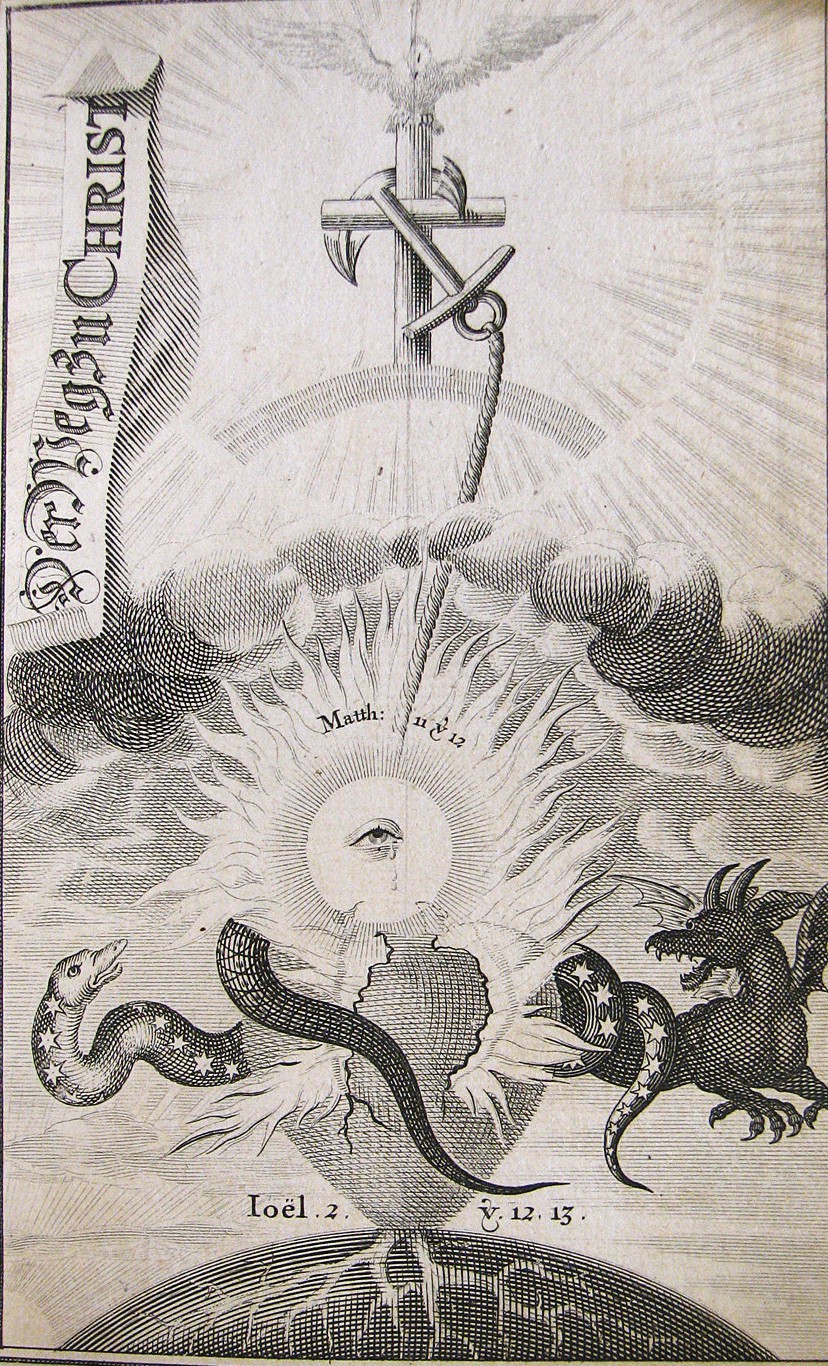
“The last trumpet calls for seriousness and determination. Without firm resolve, hell shall not be destroyed, nor the kingdom of heaven taken by force.
(excerpt from Boehme’s Christosophia or The Way to Christ)
“In Man lies all whatsoever the sun shines upon, or Heaven contains, as also Hell and all the Deeps; he is an inexhaustible Fountain that cannot be drawn dry.”
(excerpt from Boehme’s Election of Grace)
“When Man will enter upon Repentance, and with his Prayers turn to God, he should, before he begins to pray, seriously consider the State of his own Soul. How it is wholly and altogether turned away from God, become faithless to Him, and only bent upon this temporary, frail, and earthly Life; bearing no sincere Love towards God and its Neighbour, but wholly lusting and walking contrary to the Commandments of God, and seeking itself only, in the temporal and transitory Lusts of the Flesh.”
(excerpt from Boehme’s Christosophia or The Way to Christ)
“The gate was opened unto me, so that in one quarter of an hour I saw and knew more than if I had been many years together at a University; at which I did exceedingly admire, and I knew not how it happened to me; and thereupon I turned my heart to praise God for it. For I saw and knew the being of all Beings; . . . also the birth or eternal generation of the holy Trinity; the descent, and original of this world.”
(excerpt from Boehme’s theosophical letter to Caspar Lindner from 1621)