Joseph of Cupertino
1603–1663, present-day Italy
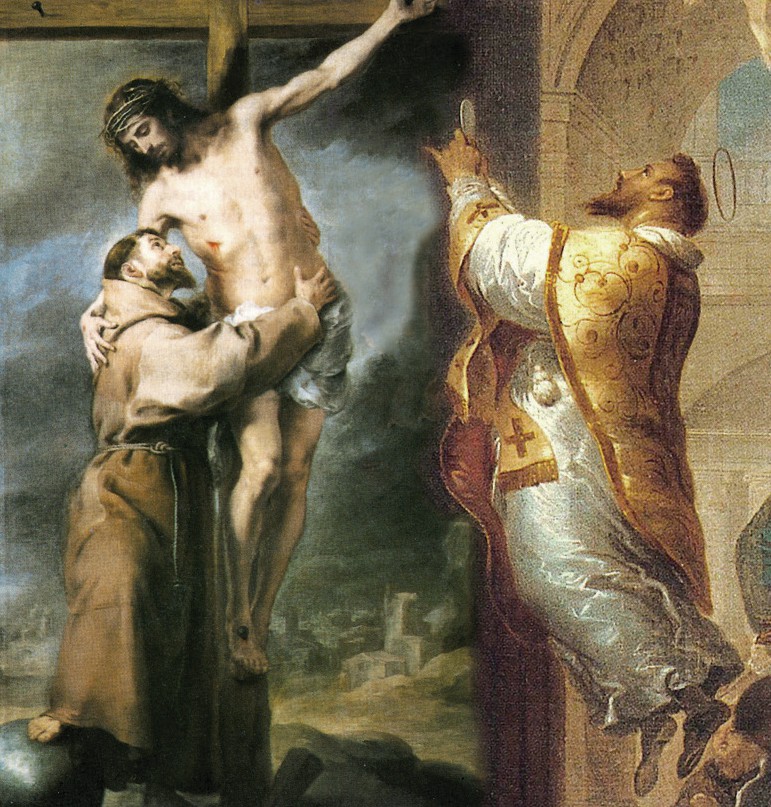
Giuseppe Maria Dessa, a key figure of Christian mysticism and a Conventual Franciscan friar was born in Copertino, is South Italy on 17 June 1603. His life is a fine example of how, with God’s help, even the clumsiest man can become a model of mysticism and virtue. His father passed away prior to the birth of his son. Due to their debt, their house was seized and Joseph was born in a stable. He was a sickly, weak, clumsy boy who was considered a simpleton even by his own mother. He was unable to keep up with the others at school and had no particular interests and instead just stared hazily into the distance.
As a young man, he was an apprentice to a cobbler, yet even the simplest tasks prove to be too daunting for him. His mother took him to a Capuchin monastery, where he was also ‘distinguished’ by his clumsiness, and was soon dismissed. Finally, he was taken in by the monastery of the Third Order of Saint Francis in Grotella. He worked as a mule driver and they gave him the lowliest of tasks. In the meantime, Joseph underwent an internal transformation: he strove to become ‘more decent’ and to carry out his duties as best as he could. He observed a peculiar form of asceticism: he shunned meat and ate all nature of grasses, dried fruits and legumes, yet made them unpalatable by the application of some bitter powder. For years, he went without bread and wine, growing ever thinner and paler of complexion. He fasted almost continuously with often the communion wafer serving as his only food – which seemed to miraculously strengthen him. He wore a cilice and iron chains covered his body. He whipped himself bloody and slept on a bed of straw without blankets or sheets.
His great role model was Saint Francis of Assisi. His pious behaviour made his superior decide to have him trained as a monk, yet in order to do so, he had to pass two challenging examinations. As he couldn’t truly understand the scripture or comment on them, he didn’t stand a chance, yet he still miraculously managed to complete his examination: he would concentrate for hours on a short passage and pray that he would be questioned about this part of the text. His wish came true and he was ordained as a priest in 1628. However, his abilities were not boosted even after the exams and he faced a number of spiritual ordeals: he was not spared by the great test of the journey to purification, spiritual drought. Despite his prayers, he was consumed by a growing sense and fear and trepidation. At the lowest point, a monk suddenly appeared in his cell and handed him coat. No one saw the person who brought him the coat and Joseph’s troubles ceased from that moment on, as if they had suddenly disappeared.
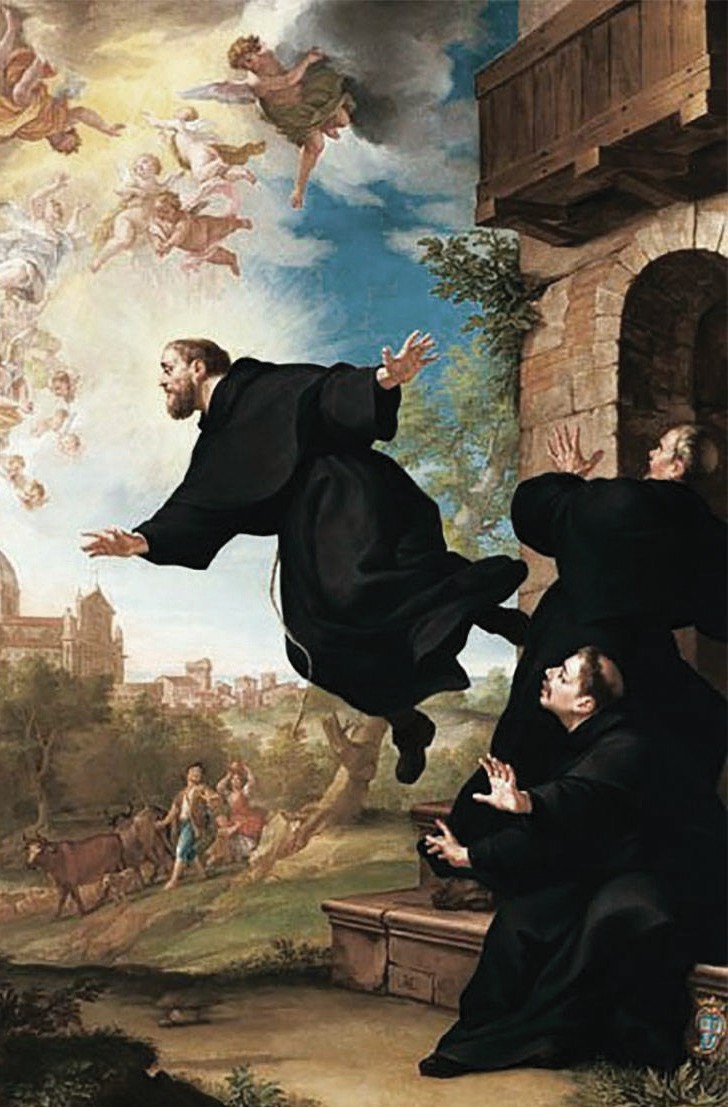
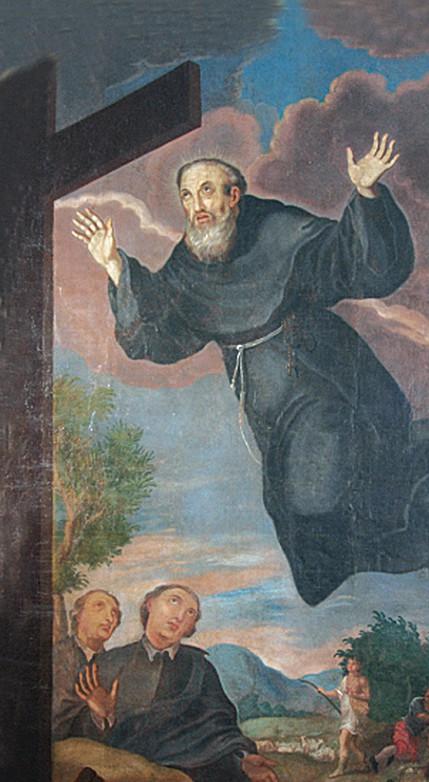
From this point, his became a series of ecstatic rapture. In elation, he sang, danced and leapt to and fro in joy and even began levitating. He was oblivious to the outside world, despite the fact that his fellow monks often harmed him: they burned, stabbed and dragged his body across various surfaces on the ground. The records of Joseph’s canonisation trial tell of his extraordinary flights, witnessed by thousands of people. These began with a dance-like movement, before Joseph began calling out in a bird-like voice and flying into the air, levitating for minutes on end. He displayed a number of other miraculous abilities: he imbued the atmosphere around him with an unusual magnetic power; he could influence the weather with his prayers; he appeared in two places at the same time; he could understand the language of animals; wild animals were tamed in his presence; he sensed the presence of sin; he saw events take place at a distance and had healing powers.
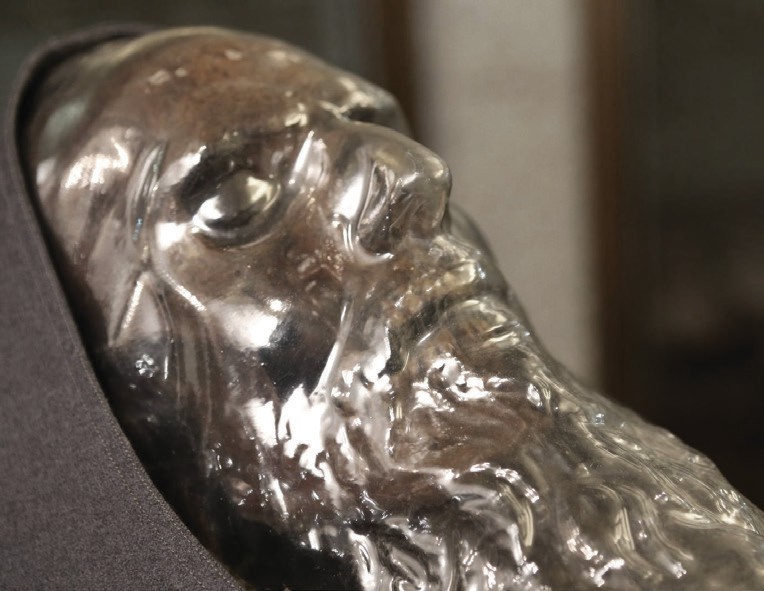
He was also known as the ‘apostle of the empire’ due to the masses he attracted. For a while, he lived in Assisi, yet despised the luxurious lifestyle of the monks that went against the intention of Saint Francis. Many were envious of his abilities and his activities attracted the attention of the Inquisition. He was subjected to multiple prosecutions, and although they found nothing wrong with his pious life, he lived out his final years almost as a prisoner: he was not allowed to receive visitors or leave the monastery. He retired his soul to the Maker on 18 September 1663 at the monastery in Osimo. He asked his companions to unceremoniously bury his body in a secluded place. Upon autopsy, no blood was found in his ventricles and his heart was completely drained, which was attributed to the supernatural flames that consumed him. He is recognised as the patron saint of aviation and pilots, astronauts, mental handicaps, examinations, and students.
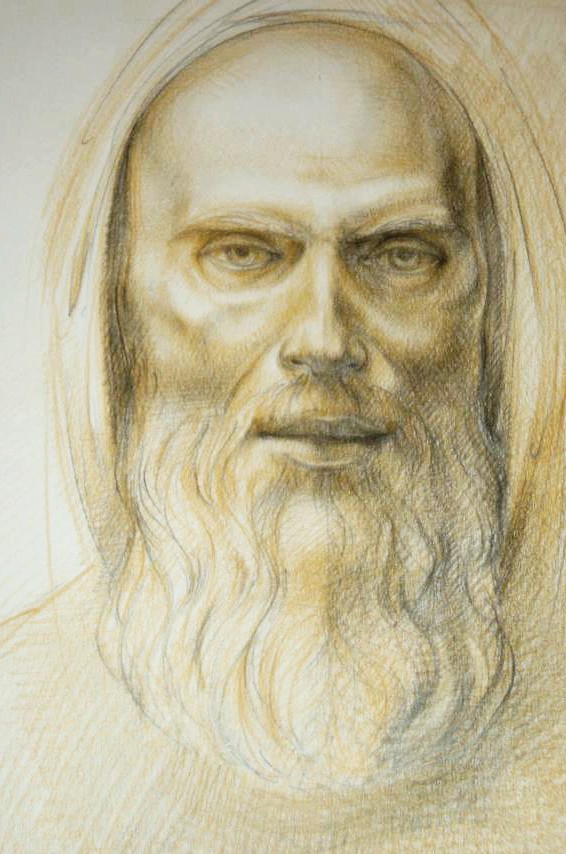
“A servant approached Joseph and told him that his mistress was in severe pain, to which Joseph simply replied ‘Go home! The pain is gone, your mistress is well again.’ And so it was.”
“The soul is like a queen with the bodily senses as her servants. When the soul enters the king’s dwelling, the senses remain outside and are not moved by any stimulus. And the soul itself rests in complete possession of its Creator.”
“My Mother is capricious: I bring her flowers, and she does not care for them; cherries, and she will not accept them. I ask her, then, what she desires, and she answers: „It is the heart which I care for; I feed upon the homage of the heart.”
“The little donkey begins to climb the hill,” said Joseph of Cupertino once he sensed the end was nigh. On the precipice of death, he said: the bark does not want to come off the tree. In his final days, he lay in ecstasy, consumed by an inner fire, singing: ‘Love my soul, love!’”
“Jesus crucified, receive my heart, and kindle in it the fire of your holy love.”
(The final words of Joseph of Cupertino before his passing)