
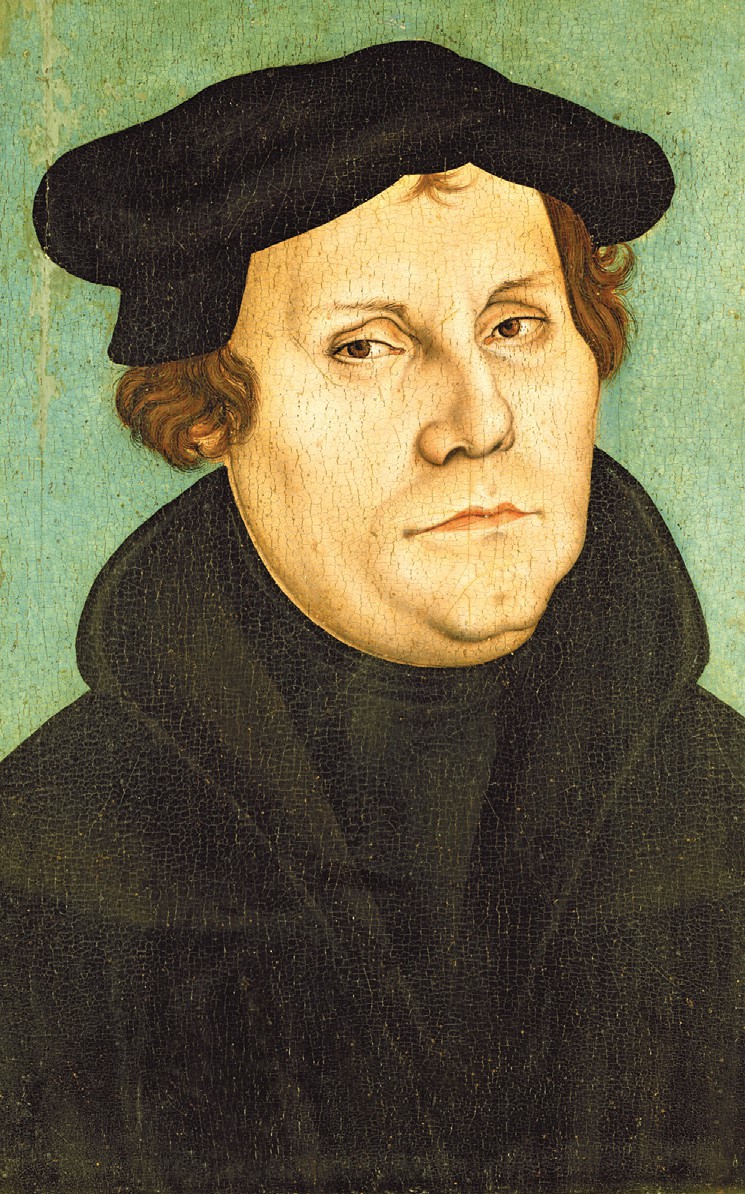
Martin Luther
1483–1546, present-day Germany
Martin Luther, the great religious reformer and founder of Lutheranism, was born on 10 November 1483 in Eisleben, Saxony. His impoverished parents financed his education as they intended to raise him to be a lawyer. Yet when Martin read the Bible, it awakened in him a sense of piety and guilt and his greatest desire became to cleanse himself and strive for a life of moderation. After completing his law studies as a magister in 1505, he defied his family’s intentions by entering St. Augustine’s Monastery in Erfurt. As a Doctor of Theology, he became a professor at the Wittenberg University. During his trip to Rome, he was shocked to see how the clergy had deviated from the principles of the Gospels.
He believed that many priests lived in opulence, surrounded by material goods, in a position superior to the people. He was deeply shocked by the Church’s practice of indulgence, allowing the faithful to purchase forgiveness with money. In addition, they hindered people’s access to the Bible on the basis that it was too complicated for everyday people to comprehend. For Luther, who lived in the spirit of regular fasting, prayer and self-denial, this came as a huge disappointment. His observations, in which he called attention to these evils, were set out in ninety-five theses, which he posted on the door of the All Saints Church in Wittenberg. The theses miraculously spread throughout the German-speaking areas in a matter of days, followed by the entire Christian world.
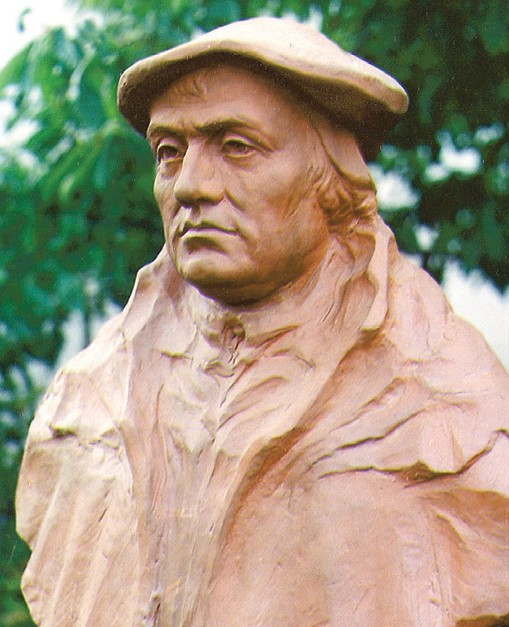
Luther suddenly found himself up against the Roman Catholic Church and the Emperor, yet he was still unwilling to revoke his theses. First the Church and then the Emperor excommunicated him and lay out provisions for the persecution of him and his followers. He was always on the run – hiding under the alias of Junker Jörg (George Knight) – and his life was in constant danger. He nevertheless stood up for his principles with great enthusiasm and passion. On 10 December 1520, he publicly set fire to the papal bull excommunicating him and other papal decrees. He was soon followed by huge crowds, and even the Elector of Saxony stood by him. Despite Luther’s best intentions, tempers flared up. Peasant riots broke out, and despite his outspoken opposition to violence, more than a hundred thousand people died in the riots, and there were even fears of a religious war.
Luther and a growing number of his followers fought determinedly to reform the Church peacefully, yet the Catholic Church was unwilling to make any compromises and the idea of establishing a new church arose. This eventually led to yet another great schism of the Christian Church (the third major schism, following the split between the Eastern Orthodox and Roman Catholic Churches, and the drifting apart of the exoteric and esoteric Christian churches and movements). Luther translated the Bible into German, which was tantamount to a declaration of war for the Church. Based on the theses formulated by Luther and his friend Philipp Melanchthon, the foundations of a renewed Christianity, the Lutheran Church, were established with the proclamation of the Apostles’ Creed (Confessio Augustana) via the Augsburg Confession in 1530. The most important principles of the new denomination include, for example, following the living Christ, the guiding role of the Gospels, the compatibility of family and Christian life and the devotional nature of work and vocation.
An exemplary family man, Luther had seven children, and following the death of his sister, he took on the responsibility of raising seven more children. It was not only external attacks that he had to deal with throughout his life: in his final years, he was plagued by diseases. Since his childhood, he had been haunted by devils and evil spirits, and even had to battle with recurring bouts of depression. He finally passed away on 18 February 1546. He spoke the following words of prayer on his deathbed: “Into your hands I commend my soul. Thou hast redeemed me, O faithful God,” before adding: “We are all beggars. This is true!” He was laid to rest in the crypt of the All Saints Church of Wittenberg. Even following Luther’s death, the Reformation was faced with numerous difficulties and splintered into several major movements. The members of these movements were known as Protestants due to their opposition to the papacy. The Church founded by Luther also underwent a great schism, splitting into the Calvinist Reformed Church and the so-called “Lutheran” Evangelical Church. Today, there are millions of Reformed faithful. Although many have tried to unite the various denominations, this has yet to take place.
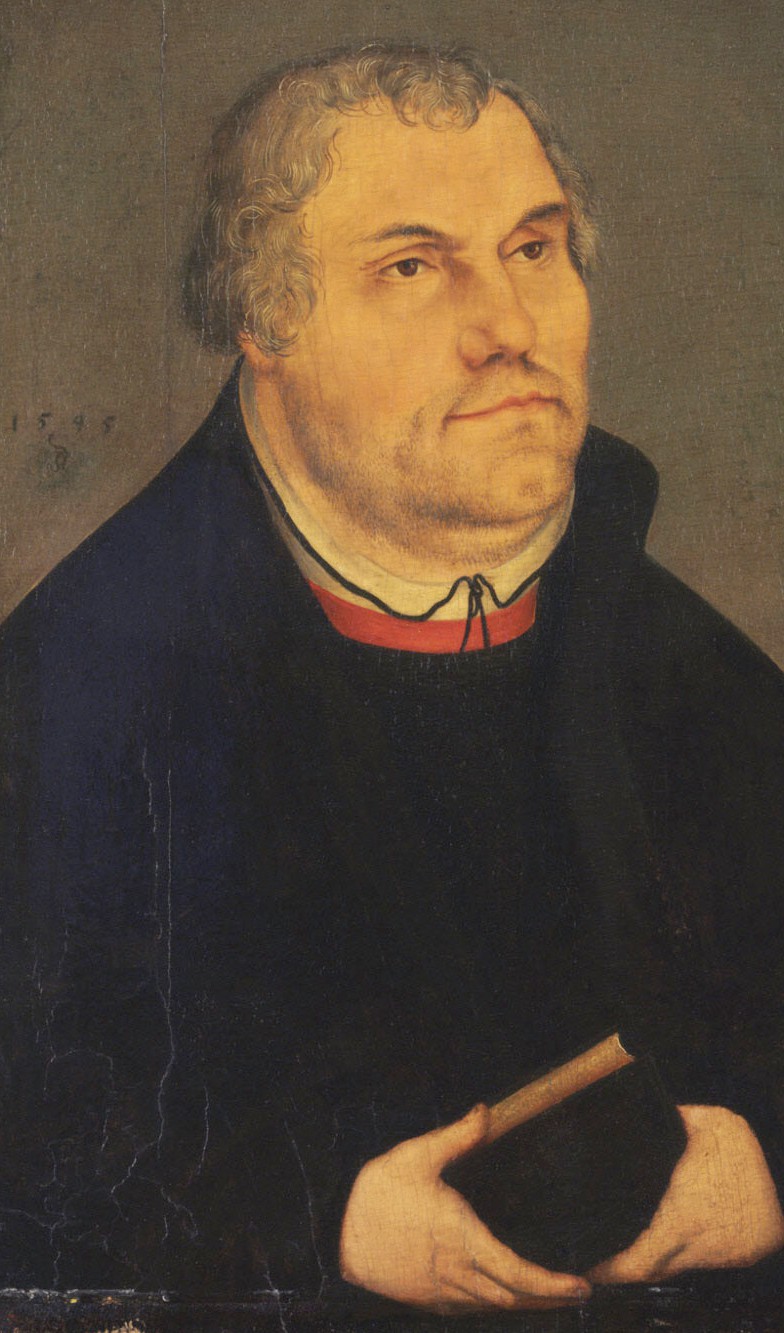
“Even if there is a single person you have unfriendly feelings for, you are worth nothing, even if you do wonders!”
“When our Lord Jesus Christ says ‘repent’ then he wants the entire lives of his followers to be repentance.”
“Heresy can never be restrained by force. One will have to tackle the problem in some other way, for heresy must be opposed and dealt with otherwise than with the sword. Here God’s word must do the fighting. If it does not succeed, certainly the temporal power will not succeed either, even if it were to drench the world in blood.”
“Whenever we are assailed by something, our most loving Father simply wants to use this one trouble to show us how many other troubles are threatening us, which would reach us if He did not stand in their way.”
“…Where there is, therefore, a greater evil, there is also more of divine help.”
“So great is human pompousness that if God wishes to break it, he must use all his creatures that are repugnant to man. That is why mosquitoes, lice and fleas bite, sting and torment us. And the wiles of the devil are no more for God’s use. For if he does not always show himself as a good Father to us, it is to break our pride.”
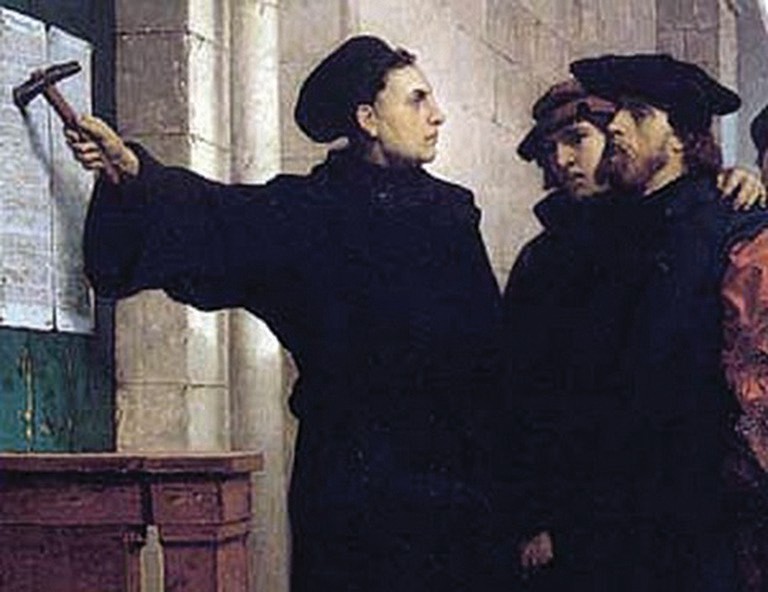
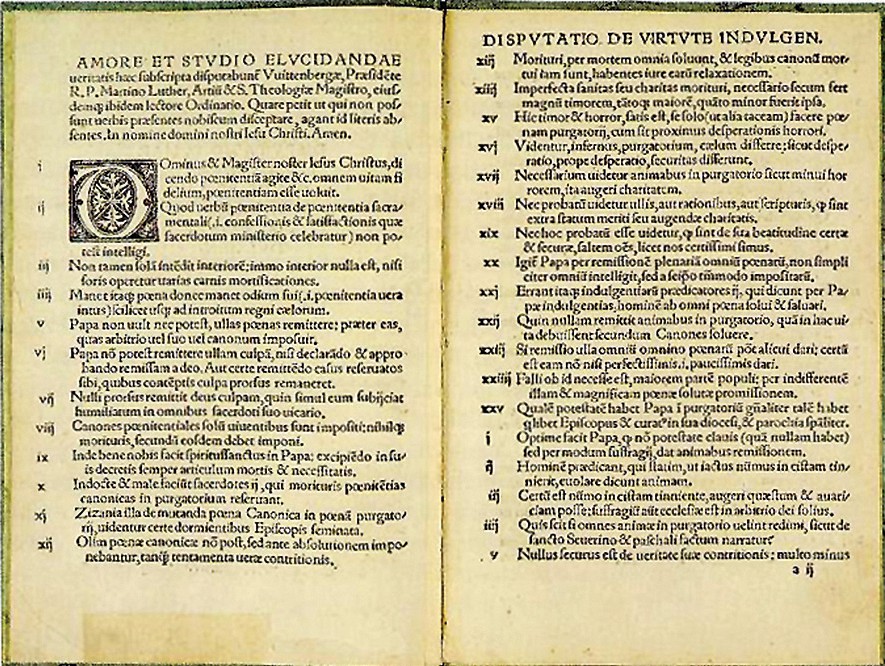
The 95 theses of Martin Luther



