
Martin of Tours
around 316, present-day Hungary – 397, present-day France
Martin of Tours, defender of the poor and one of the most popular Christian saints, miracle worker and healer was born around the year 316 in the Pannonia province of the Roman Empire in Savaria (Szombathely), in the area of the present-day Hungary. It is said that he was so pure of spirit that the power of Christ could penetrate him to the core. With this power, which could only be accommodated by deep compassion, pity and humility, he raised the dead, healed the paralysed and performed countless other miracles. Through these deeds, he became closely tied to the plight of the poor in Christian traditions. He himself came from a poor family. At the age of fifteen, he joined the army at his father’s will, yet still studied the catechisms in his spare time.
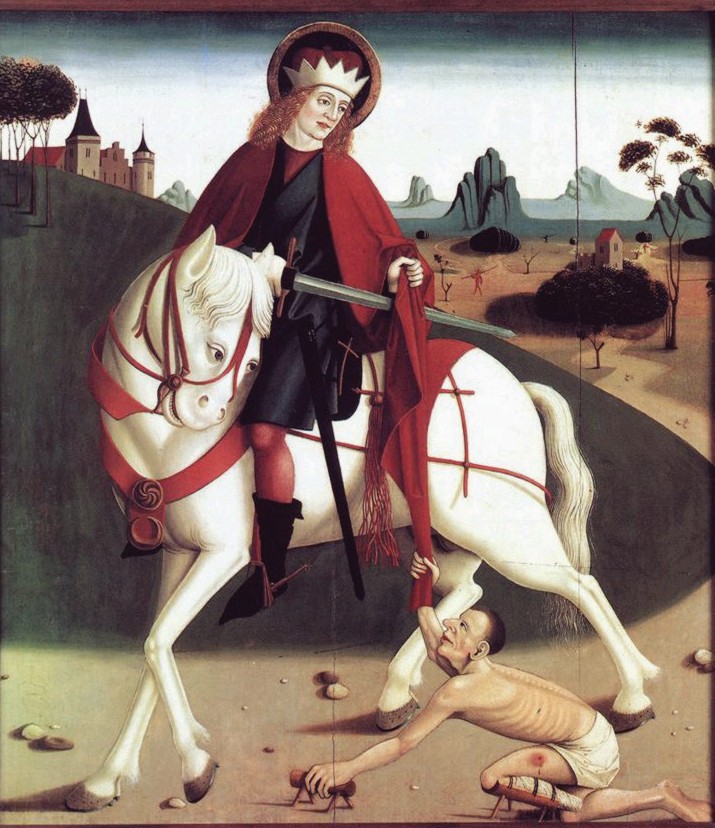
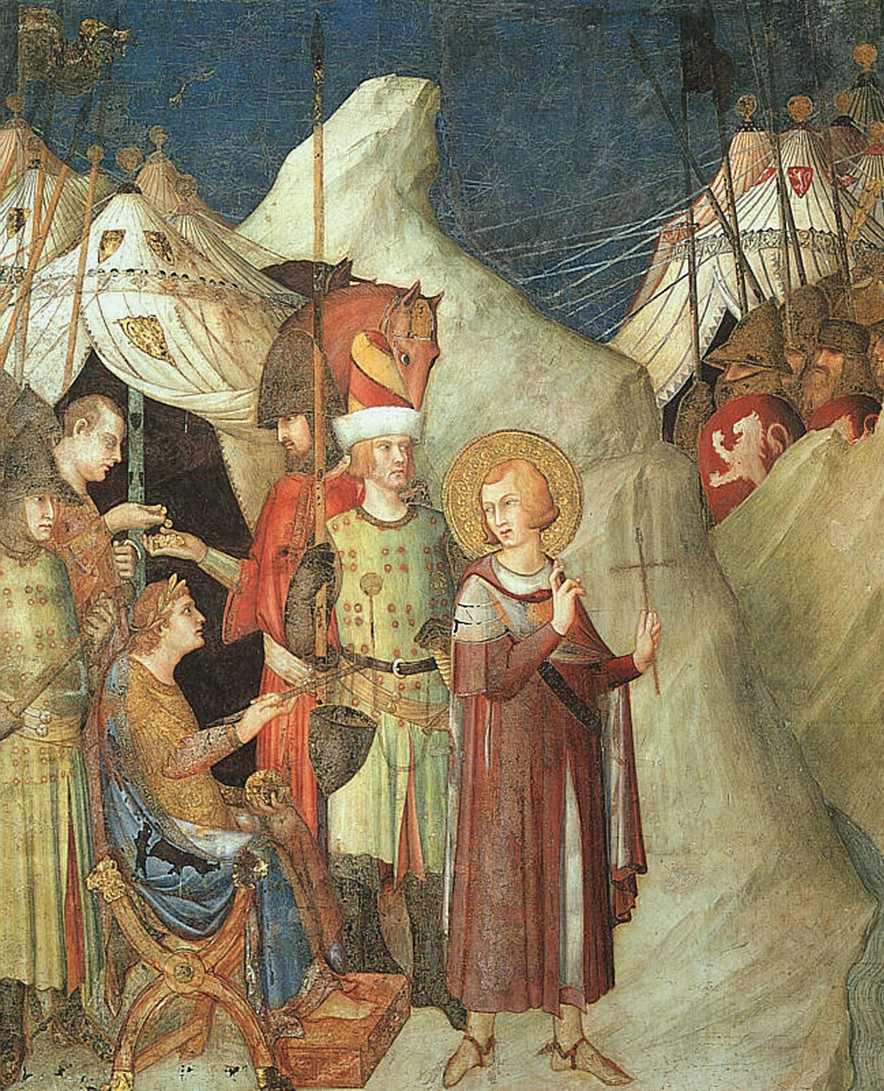
When he was fifteen years of age, he experienced a pivotal moment in his life when he gave half his cloak to a naked beggar at the gate of Amiens on a bitter cold day. After the event, the Saviour appeared to him and told him that the penniless beggar was actually none other than Christ himself. Under the influence of his experience, Martin decided to be baptised and forsake his livelihood and left the military. As a testimony to his deep faith and determination, he wished to take part in his final battle unarmed, standing in the frontline, yet the two opposing parties unexpectedly made peace. Thereafter, Martin devoted his life to God with a clear conscience. The way he gave the half of his warm cloak to a beggar despite the fact that he was also an extremely poor man has become one of the most important symbols of Christianity.
As he left the military, he wished to seek out his great role model and one of the greatest thinkers of the time, Bishop Hilary of Poitiers. This was a test of Martin’s perseverance, for it often happened that wherever he arrived, Hilary seemed to leave the place just before him. During his wanderings, he found himself for a time on an island in Italy called Insula Gallinara, or Hen Island – a desolate, barren piece of land where he set out with his companion – a fellow priest – to live a repentant, contemplative life. They lived mostly off the vegetation, yet on one occasion, Martin consumed poisonous roots that made him fatally ill. In agony, he asked for God’s help and he miraculously recovered.
After a long period of wandering, he finally met his master, who set extremely strict and ascetic rules for him, yet Martin uncompromisingly obeyed them. This marked the beginning of a series of mysterious events in his life. One of his contemporaries named Sulpicius Severus gave a detailed account of these events in his biography full of wonderful stories. For example, Martin raised the dead by praying and squeezing their bodies until they were revived. On more than one occasion, the spiritual power of God manifested itself through him in such a way that he could move objects without touching them. His attackers would fall to the ground at the flick of his hand. According to his biography, he was capable of taming fire and mastering the ethereal forces of nature. He could quell the elements and tame wild animals with the sign of the cross.
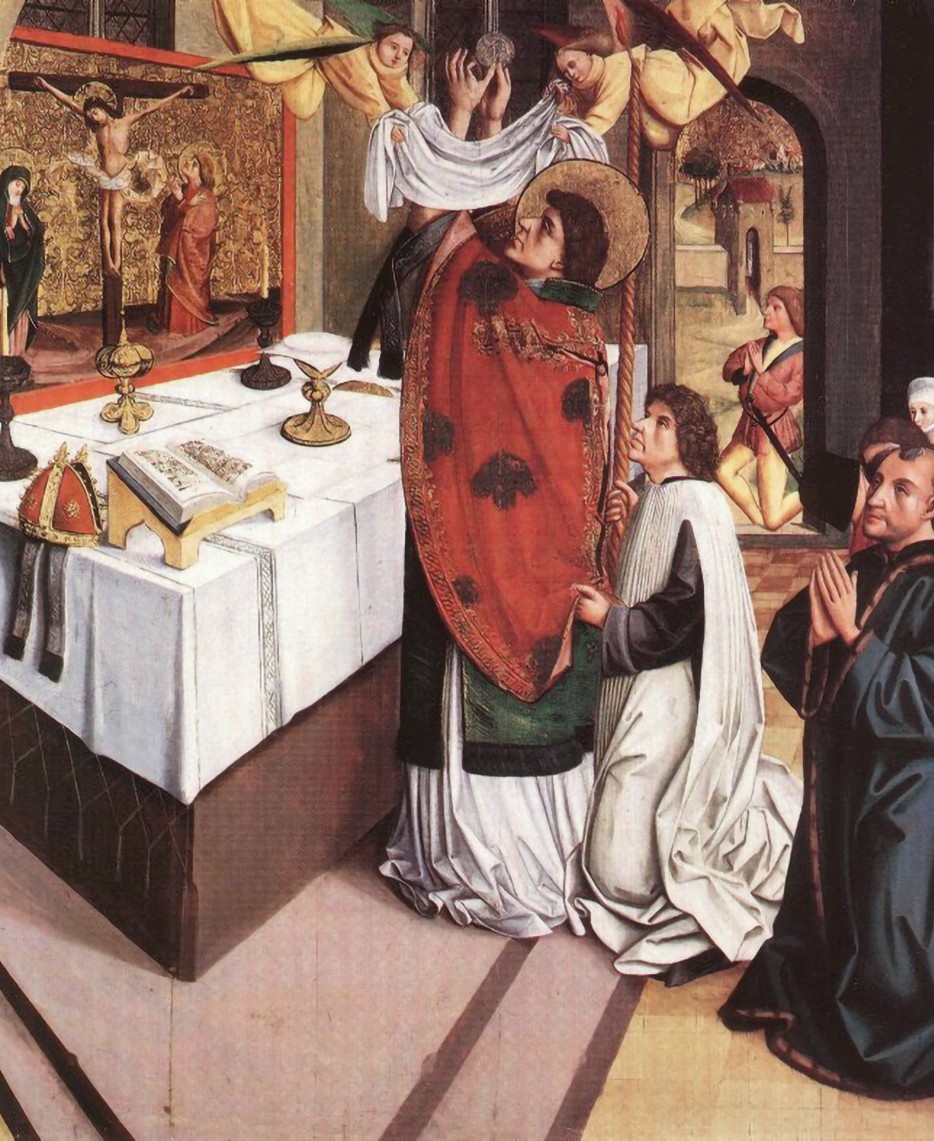
He had a reputation as a famous exorcist – he could see both good and evil spirits – and there are countless miraculous healings associated with him. Although he did not wish to hold an ecclesiastical office, he was still appointed Bishop of Caesarodunum (Tours) in the Gallo-Roman region. Legend has it that he attempted to hide from those seeking to elect him in a pen of geese, yet the geese exposed him with their cackling. Even as a bishop, he led a strict life of austerity, setting an example of how to live a saintly life retaining his ecclesiastical dignity. He lived in a cave, and those who chose to follow him in his asceticism settled near him. This is how the community of Marmoutier, which still exists to this day, was born.
Martin foretold the exact time of his death, which took place in France in the town of Candes on 8 November 397. His body was carried down the Loire River to Tours – legend has it that on a cold November day, all the fruit trees on the banks of river blossomed as the boat passed by. His popularity increased over the years and he was quickly canonised. The feast day of Saint Martin on 11 November is celebrated with festivities in many countries. In Bavaria, he is revered as the patron saint of children along with St Nicholas, and he is known as a patron saint of both the French and Hungarian people.
“Martin was truly a disciple of Christ, imitating the miracles performed by the Saviour, and which he, by way of example, set before the view of his saints, showed Christ also working in him, who, glorifying his own holy follower everywhere, conferred upon that one man the gifts of various graces.” (excerpt from Sulpicius Severus’ Dialogues)
“…That night in a dream, Martin saw Christ wearing that portion of cloak that he had given the beggar, and heard him saying to the angels that surrounded him, “Martin the catechumen has clothed me with this garment.”
“He happened to see a sheep that had recently been sheared; and, ‚See,’ says he, ‚she has fulfilled the precept of the Gospel: she had two coats, and one of them she has given to him who had none: thus, therefore, you ought also to do.” (excerpt from Sulpicius Severus’ Dialogues)
“My dear sons! It is not fitting for a Christian not to die in sackcloth and ashes. To do otherwise would set a bad example, and that would be a great sin.”
(Martin of Tours alleged final words)



