Moggallana
5-6th century BCE, India
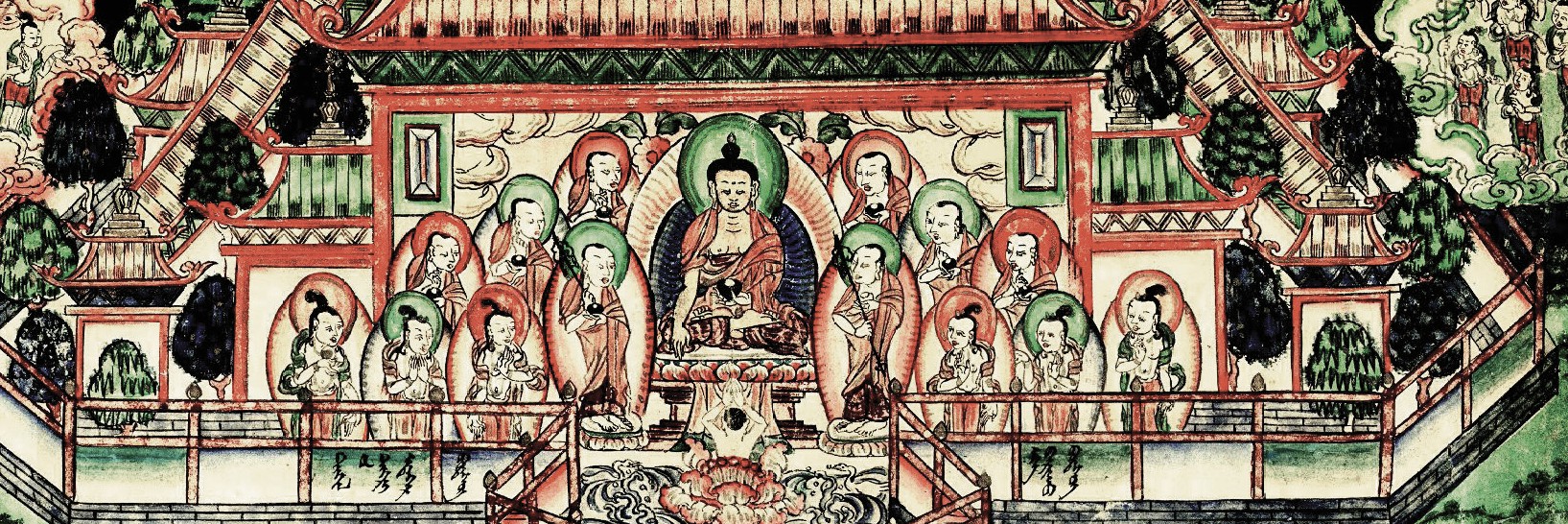
Moggallana (also known as Maudgalyayana) was one of Gautama Buddha’s most outstanding disciples. He was mainly revered for his inner strength and abilities, hence his nickname Maha-maudgalyayana or “the Great Moggallana”. Tradition has it that he was a lifelong friend of Sariputra, with whom they vowed to help one another achieve enlightenment. They both became the Buddha’s disciples and were even distinguished amongst the Buddha’s ten closest ‘apostles’ – they were considered his two most important disciples. In fact, some traditions speak of twenty-two exceptionally important entities who supported Buddhism, who supposedly received the task from the Buddha of disseminating and upholding his teachings on Earth.
The teachings of Moggallana were mainly moral guidelines and the Buddhist traditions place the emphasis on their key role in disseminating the dharma (teachings). It is believed that Moggallana and Sariputta were called to join the Buddha in the bamboo grove known as Veluvala located next to the city of Rajagaha (present-day Rajgir) that was gifted by King Bimbisara to Buddha. The first time they met the Buddha, he stated that “They will be my chief pair of disciples, a goodly pair, the one eminent for his wisdom and the other for his magic power.” According to some religious scholars, the two friends inspired the birth of the two main schools of Buddhism: the establishment of the strict monastic Theravada school is associated with Sariputta, while the Mahayana lineage, which was accessible to the masses, was mentored by Moggallana.
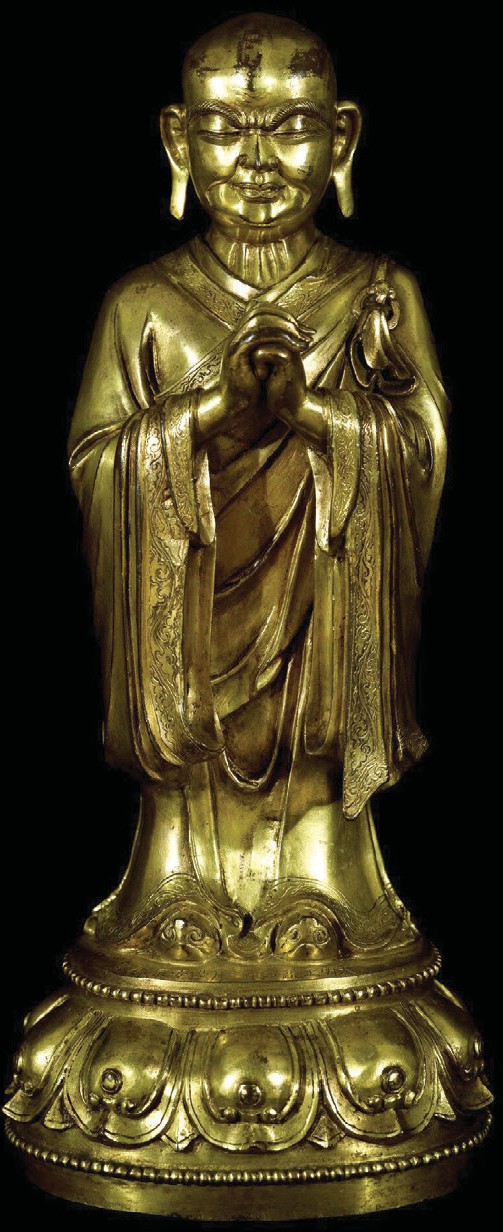
Buddha referred to Sariputta and Moggallana as twin monks. Moggallana was known for his magical abilities, which he used for good at the request of the Buddha. For example, he was once asked by the Buddha himself to discipline the monks who were following worldly pursuits in the monastery that had been converted from his Migara palace, and with a single thump of his foot he is said to have shaken the entire building as if it had been rocked by an earthquake. The monks immediately came to their senses and stopped behaving in a manner unbecoming of their vows. He was also considered a telepath, who had the ability (Siddhi) to read people’s minds. Supposedly they were perfectly attuned with Sariputta and the Buddha and could sense every movement of one another. They could see and hear what was happening to one another and what people said to them.
There are few details recorded of his life in the Buddhist scriptures. Just as in the case of the Buddha’s other important disciples, the emphasis in Buddhist writings was primarily on the teachings rather than the events that took place – therefore few details remained of their lives. Moggallana is said to have come from a prominent Brahmin family, and his relatives were involved in the cultivation of beans. The sources indicate that he was much older than the Buddha and before he was called on by the Exalted One, he was a follower of a sceptic teacher known as Sanjaya. Some sources indicate that seven days after being ordained as a monk he received the grace of attaining most of the miraculous powers that the enlightened Buddha possessed.
It was said that he was capable of fending of the evil temptation of Mara with a force similar to the Buddha. He was also said to have been present in 533 BCE when the Buddha gathered his closest disciples and revealed to them their past and future incarnations and their life’s task. Another significant event is recounted in another story, according to which the Buddha’s rebellious disciple, Devadatta – who was the cousin and brother-in-law of the Exalted One, but who, out of selfish lust for power, attempted to murder his master – was imprisoned for a time. The followers of Devadatta – five hundred monks who left the Sangha – then kidnapped Moggallana and Sariputta. It is said that Sariputta was executed, while Moggallana was only released following much hardship by the intercession of the Buddha. According to another version of the tale, the Buddha himself sent his two main disciples to deal with those who had left the fold and after Devadatta had retired for the day, they convinced those who had left the Sangha to return to the Buddha. Moggallana passed away around eighty years of age, following the departure of the Buddha.
“As forest dwellers and beggars, once we have learned self-control, satisfied with the crumbs of our begged food, we could beat back the temptation of the Evil One. As forest dwellers and beggars, content with the crumbs of our begged food, let us sweep away the Evil One and his armies like an elephant from a reed hut! All of us who, in the shady underbrush of the trees, are ceaselessly striving towards our goal, if we have learned self-control, content with the crumbs of our begged food, we can beat back the temptation of the Evil One. All of us who, in the shade of the shady trees, are ceaselessly striving towards our goal, if we have learned self-control, we can sweep away the Evil One and his armies like an elephant from a reed hut!”
“Oh, monks! Join Sariputta and Moggallana! Follow Sariputta and Moggallana! They are wise monks, compassionate with their fellow monks living a holy life. Like the mother who gives life: she is Sariputta. Like the nurse who nurtures the little child from birth: she is Moggallana. Sariputta teaches the fruit of entering the stream, Moggallana the highest goal.” (Gautama Buddha)
“Moggallana, who was originally a mathematician before joining Buddha as one of his most eminent disciples (…), reflecting on the Teaching, asked, ‘How is it that the path to enlightenment is given, there is a teacher and there are disciples who wish to follow the path, and yet most of them do not reach the goal?’ To which Buddha said:
‘Two men approach you to tell them how to get to the city of Rajagaha. You explain to them in detail the directions, the turns, the crossroads, and the dangers they should avoid. One of the men follows the instructions and successfully reaches Rajagaha. Yet the other does not follow the instructions and gets lost. How can this be?’” (Péter Popper)