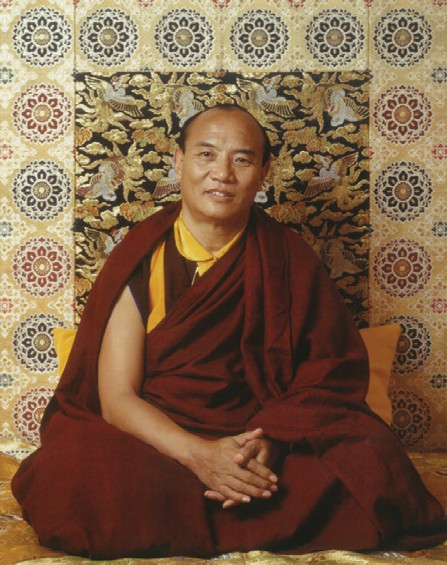
Karmapa
Tibet
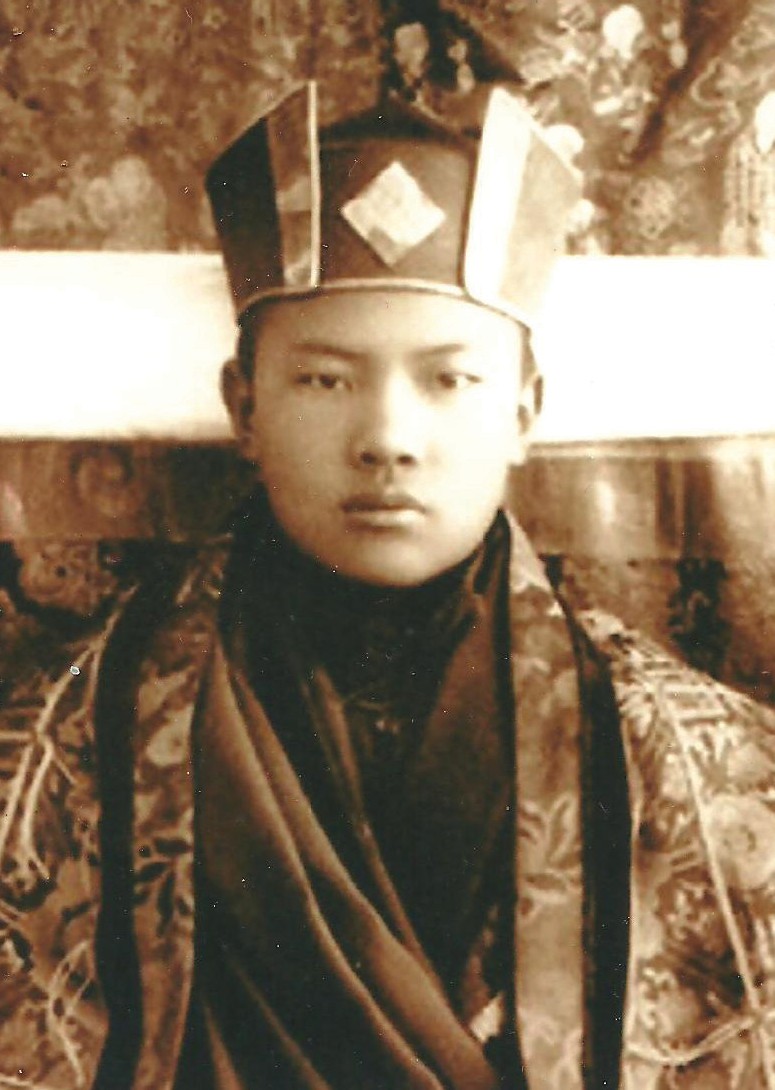
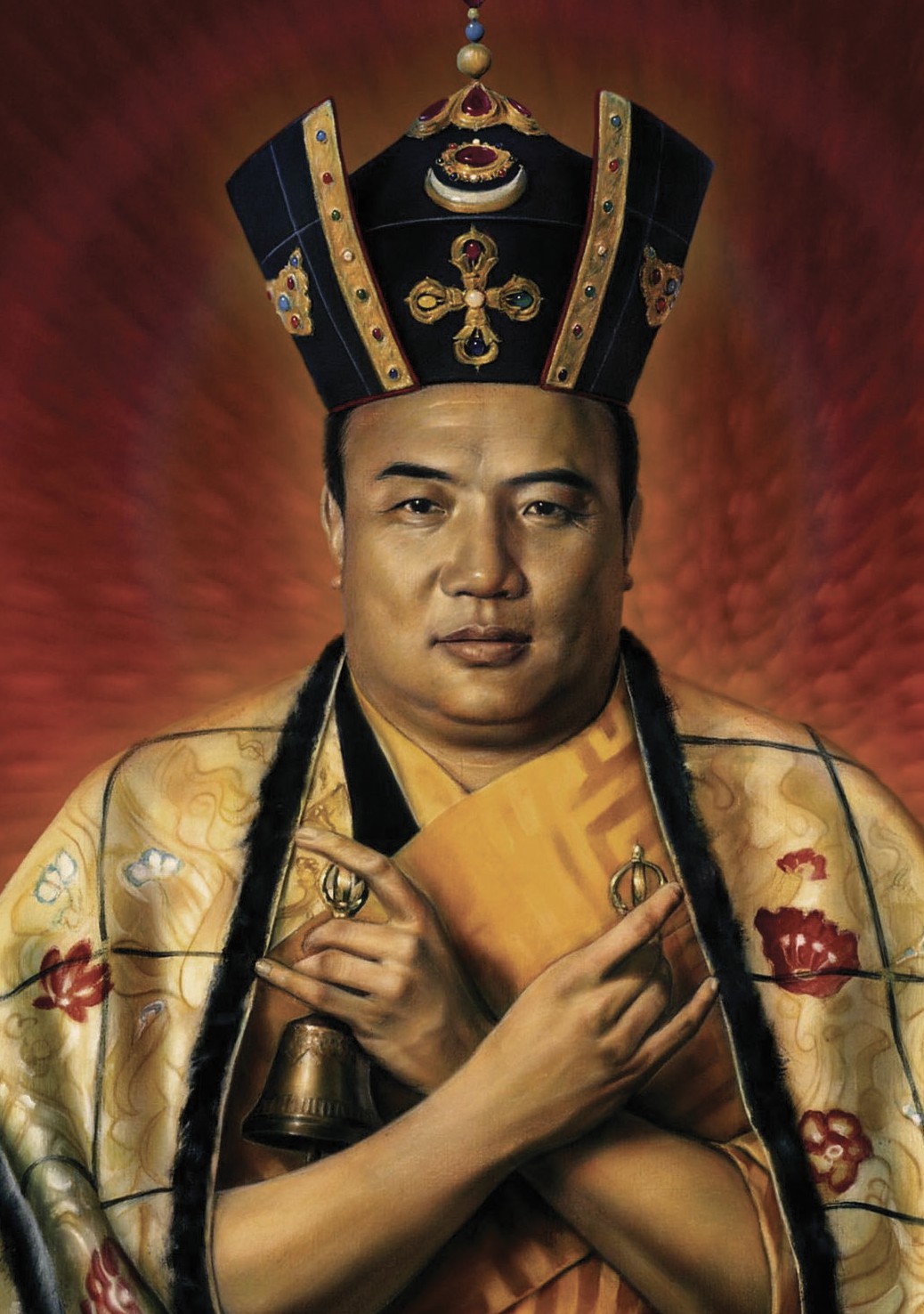
Alongside the Dalai and Panchen Lamas, the Karmapa are the most significant religious leaders of Tibet. As one of the four main schools of Tibetan Buddhism (Gelug, Kagyu, Nyingma and Sakja) the Karmapa is the head of the Kagyu School. The word Karmapa means “the one who carries out activities” and tradition has it that the Karmapa truly embody all forms of Buddha activities. The Karma Kagyu, also known as Kamtsang Kagyu is the most widely practiced branch of the Kagyu school of Tibetan Buddhism, founded in the 12th century by Düsum Khyenpa. He was responsible for the construction of the Curpu monastery in 1189, which served as the first monastery and seat of the school. From this point until the exile to India in 1959, it also served as the centre of the new incarnations.
Apart from the Karmapa, the Karma Kagyu School also recognizes other incarnations, such as the tulkus of the Tai Situpa and Samarpa lines. The Karma Kagyu line emphasizes meditation as a means of achieving enlightenment. These teachings originate directly from the historical Buddha and were passed on verbally from monk to monk. The unbroken chain of these teachings is known as the Golden Rosary. The school is distinguished by its secret meditational techniques, which are passed on verbally by the masters to the disciples. Tilopa, the founder of the school passed the teachings on to Naropa, and then Naropa to Marpa, who conveyed the teachings to Milarepa, who passed it on to Gampopa, and one of his disciples became the first Karmapa. It is believed that His Holiness the 17th Gyalwang Karmapa, Ogyen Trinley Dorje is of the same consciousness as his predecessor.
All Karmapa indicated prior to their death where they will be reborn, into which family, for their next incarnation. There are many incredible stories about how the careful investigations of the committees led to identifying the newborn baby based on the predictions. According to one of the mysterious legends about the Karmapa, a mystical black “Vajra crown” appeared on the heads of all the Karmapa, which is then copied in the form of the Black Hat. As an expression of their compassion and love, the Karmapa have a number of special abilities. It is said of the 1st Karmapa that he provided food and other material aid to the hungry and needy, restored sight to the blind, cured sicknesses, and ended wars. His heart and tongue were found uncorrupted on his funeral pyre, symbolizing his realization and pure speech.
The 2nd Karmapa was something of a child prodigy, who could read and write fluently at the age of six. It is said that he once ‘froze’ an army of 37,000 Mongol warriors. When he later took pity on them and released them, they attempted to murder him in various ways. They forced him to consume poison, but instead of dying, a radiant glow emanated from his body. When they threw him from a cliff, he floated to the ground and when they tried burning him, water flowed from his body. When he was imprisoned without any food or drink, he was nourished by divine beings. The 3rd Karmapa reformed Tibetan astrology, while the 4th was known for his clairvoyance: even as a child, he often stated details of others’ lives that he could not have known.
The Karmapa were protectors of animals and vegetarians and could speak the language of animals. They conferred blessings on the people around them and put an end to epidemics – such as the 6th Karmapa – while others had great impact on Tibetan art with their highly influential religious works. They were well-versed in philosophy and debates and often instructed the Chinese emperors. They could appear at multiple locations at any given time – such as the 11th Karmapa – and were also capable of conveying teachings via meditation. The death of the Karmapa was often signalled by a sweet scent in the air, a rainbow in the sky, or the blossoming of colourful flowers on the ground.
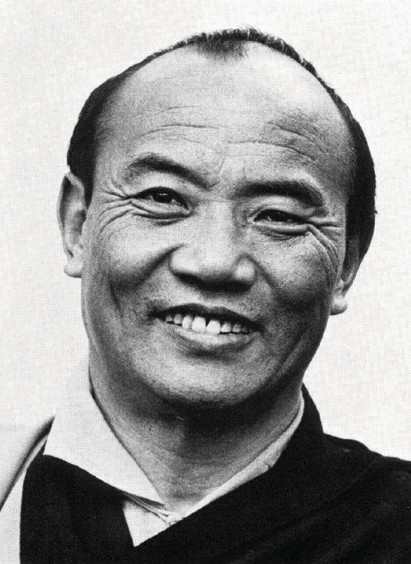
In the case of the 16th Karmapa, Rangjung Rigpe Dorje, who was born in 1924, the extraordinary events were often supported by the written testimonies of thousands of people who witnessed them. It was said that even in his lifetime he fully controlled the laws of the material world. His heart remained warm for three days after his death. What was more important than the physical miracles, however, was the virtuousness of the Karmapa and that they were never self-conscious, but rather attentive to the sufferings of others and constantly laboured to remedy the ordeals of their fellow human beings. They were characterised by a deep sense of compassion, caring and the easing of the hardship of others. In all cases, their lives were focused on aiding humanity and the world around them in the spirit of unconditional love.
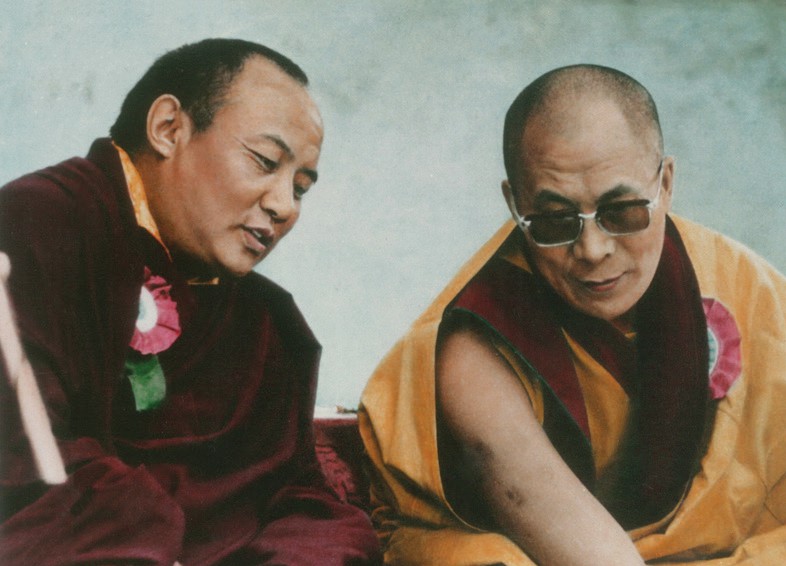
“By the time that I saw him, His Holiness had already had many operations, some parts of his body removed, things put inside him, his blood transfused, and so on. Every day the doctors discovered the symptoms of some new disease, only to find them gone the next day and replaced by another illness, as if all the diseases in the world were finding room in his flesh. For two months he had taken no solid food, and finally his doctors gave up hope. It was impossible for him to live, and the doctors thought the life-supporting systems should be disconnected. But the Karmapa said, »No, I’m going to live. Leave them in place.« And he did live, astonishing the doctors, and remaining seemingly at ease in his situation—humorous, playful, smiling, as if he were rejoicing at everything his body suffered. Then I thought, with the clearest possible conviction, that the Karmapa had submitted himself to all this cutting, to the manifestation of all those diseases in his body, to the lack of food, in a quite intentional and voluntary way. He was deliberately suffering all of these diseases to help minimize the coming pains of war, disease, and famine, and in this way he was deliberately working to avert the terrible suffering of this dark age.”
(An account of one of the disciples on the final months of the 16th Karmapa – an excerpt from Sogyal Rinpoche’s Tibetan Book of Living and Dying)
“I will not stay. I will go to faraway places, To use the results of karma from the past.
The cuckoo bird comes to Tibet in the springtime. On a day when a sad melody is sung six times,
This scenario will occur: People who depend on me will think, “Where is the man, Rigdröl now?.
Isn’t it sad for all of you who depend on me?
(Prediction of the 16th Karmapa in his youth on his future exile)