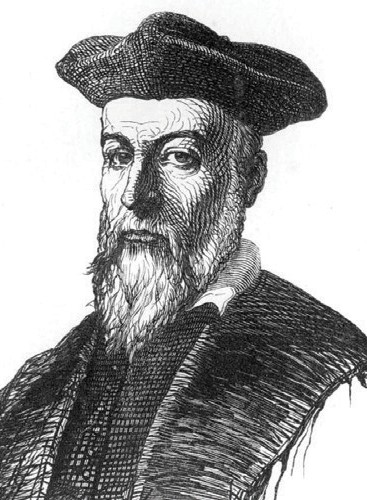
Nostradamus
1503–1566, France
Michel de Nostredame, or more commonly known as Nostradamus, was the most famous visionary prophet of the Middle Ages. Many teachers and saints had special powers, but each of them uncovered different wonders of the world. Although he was known as a visionary of the future, some religious scholars believe that Nostradamus’ true mission was to awaken people’s faith in supernatural powers and the supernatural world. Apart from the surprising accuracy of his prophecies, perhaps more important is the fact that people stop to wonder about the nature of the abilities he displayed.
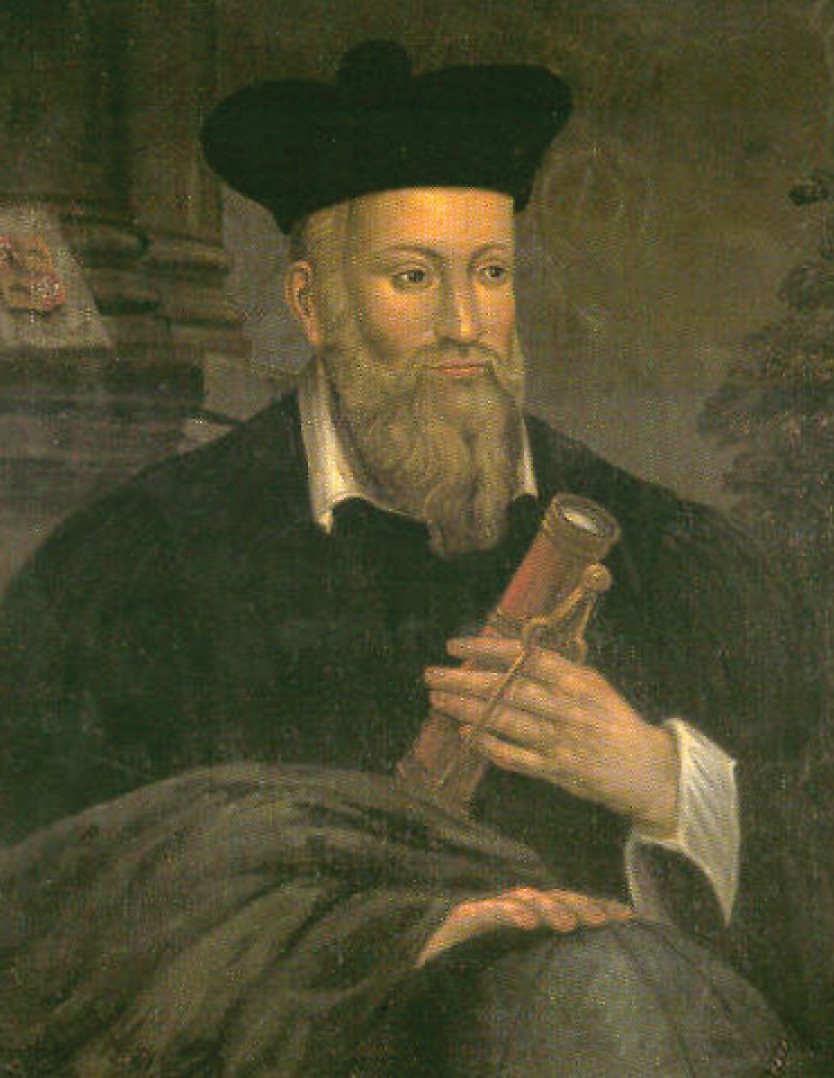
Nostradamus was born in Provence, in the area of the present-day France, in the town of Saint Rémy, on 14 December 1503, into a Jewish family of well-known healers and scientists. Some scholars believe that as a seer, Nostradamus was a modern practitioner of the Jewish prophetic tradition of the Old Testament. Initially, his grandfather taught him astronomy, mathematics, literature and foreign languages before going to study in Avignon and attending university in Montpellier, where he studied natural and medical sciences. When the plague broke out, he took a break from his studies to work as a plague doctor. It is said that he couldn’t be afflicted by the disease and he was a called a ‘worker of miracles’ for the cures he brought about. After the epidemic ended, he finished university and married and became father to a son and a daughter. After a few years of marriage, both his children and his wife fell ill and died.
He then travelled about Europe to develop his knowledge and when the plague broke out in France, he began fighting the disease. This was an extremely difficult and dangerous time, with millions dying of bubonic plague and pneumonic plague, known as the Black Death. Nostradamus worked in the most heavily afflicted cities, particularly in Marseilles. His methods to combat the disease were surprisingly effective. Although he was repeatedly ‘in the trenches’ against the plague, he himself never fell ill. Following the plague, he remarried in 1547 and settled in a town called Salon and had six children. He had already displayed various special abilities ever prior to this. He could see the future and was known for entering into an enraptured state in which, he said, “the outside world ceased to exist around him” and the secrets of the world were revealed to him.
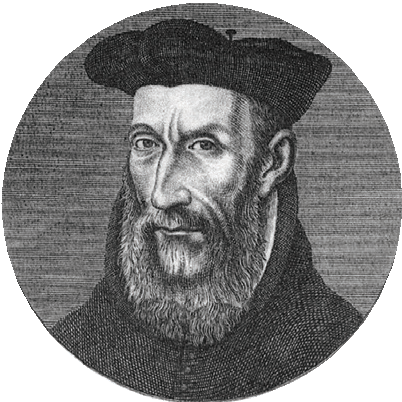
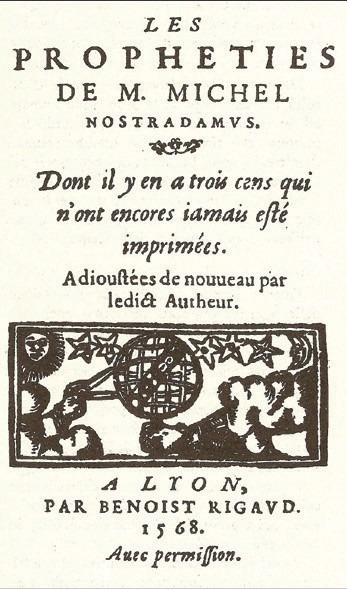
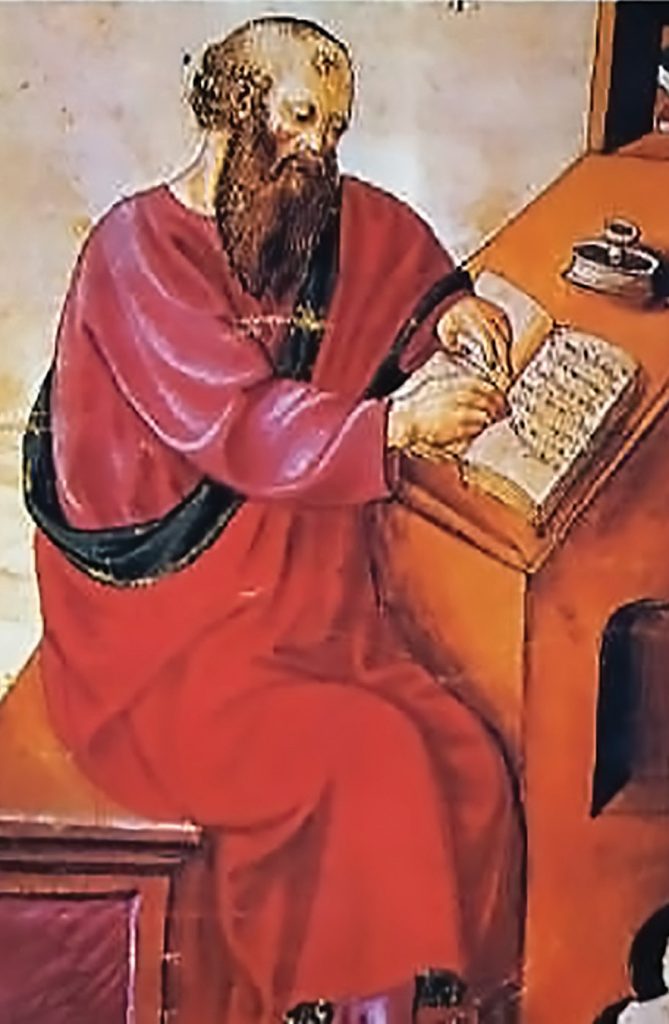
He worked as a doctor and beautician during the day, while he carried out his ecstatic pursuits by night in his attic room, which he had converted into an observatory and where he also wrote his works, which spread throughout the world in the form of his prophetic verses. His so-called Centuries – poems that were deliberately blended in groups of hundreds – were all predictions of the future, written from his own time until 3797 CE. His predictions – as proven by future generations – often came to pass exactly as written. The future of the whole world and of individual nations was revealed to him. Following his first prophecy, which was written with uncanny accuracy that came to pass, which included the circumstances of the death of King Henry II of France, Nostradamus soon became increasingly popular. His peaceful home in Salon was thronged by crowds as people flocked to visit him.
His work earned him many famous admirers and countless enemies. For a time, his prophecies were even condemned by the Catholic Church. Fearing that he would be labelled a magician and a charlatan for the rest of his life, he was forced to retire from the public due to the efforts of his enemies, despite his pure intentions. His death, foretold by himself, came during his voluntary exile, on 2 July 1566, in Salon. According to his prediction, he would be found dead by his bed and desk, and so it was: one night he was overcome by gout, and in the morning he was found dead near his desk. He also foretold that his body would be exhumed. Indeed, his tomb was raided and his bones scattered during the French Revolution.
In addition to his prophecies written in ten groups of a hundred verses, his letters are also extremely important as they were rather revealing about his life and the future. In one of his letters, he indicated that he could have easily included an exact date with all his verses. Yet he believed that knowing the whole truth could be dangerous, so he deliberately mixed up the chronology as he wished to finely obscure his prophecies.
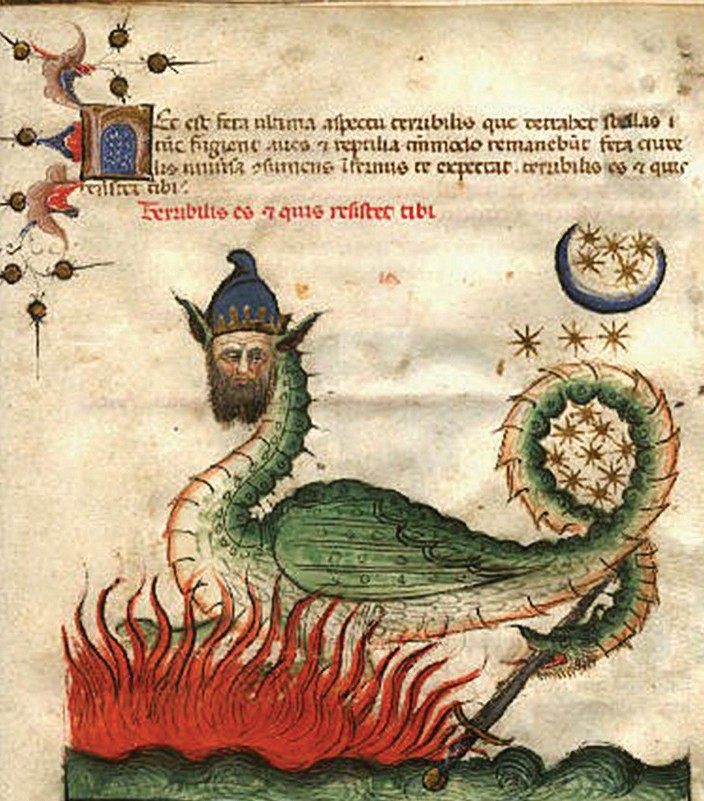
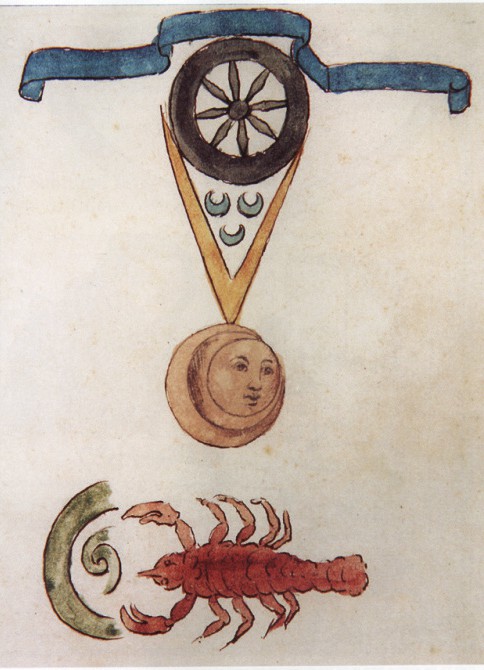
“By the grace of God and the good angels, the Prophets have had committed to them the spirit of vaticination, by which they see things at a distance, and are enabled to forecast future events. For there is nothing that can be accomplished without Him.” (excerpt from a letter of Nostradamus addressed to his son, Caesar)
“All that I have predicted here shall be hidden for many long years.
Happy shall many a man be who shall unlock the secrets of the future.”
“The name of the printing house will be AQVA, but my work will be readable on machines, letter by letter, made up of numbers that the mind cannot even comprehend.”
“Being seated by night in secret study, Alone resting on the brass stool: A slight flame coming forth from the solitude, That which is not believed in vain is made to succeed.
With rod in hand set in the midst of Branchus, With the water he wets both limb and foot: Fearful, voice trembling through his sleeves: Divine splendour. The divine seats himself near by.”