Paul of Thebes
228 –341, Egypt
According to tradition, Paul of Thebes, the great saint of Egypt and the pioneer of desert hermits who is considered the first hermetic Christian saint, was born in 228 CE in a rich, well-to-do family in the area of present-day Egypt. Many religious scholars believe that it was his life example and the inspiring words of his great contemporary and friend, Anthony the Great, which led to the desert becoming populated with hermits. As a gentle young man who loved God above all else, he acquired a thorough knowledge of Greek and Egyptian literature, and was baptised at a very early age. Following the death of his parents and the marriage of his sister, he inherited a great fortune.
When the persecution of Christians commenced by imperial order, he hid in an outlying house, yet was betrayed by his brother-in-law. Leaving all his possessions behind, the fifteen-year-old fled to the mountains to await the end of the persecutions. He wandered for many months, gradually venturing deeper into the desert until he discovered a place he grew fond of and eventually settled there. Later he had no desire to leave it at all, and lived there for nearly 98 years, until his death in 341 CE. Although there are few authentic accounts remaining about Paul’s life, thanks to the famous Bible translator Saint Jerome, several important details of his life have been recorded. We know from Jerome’s biography that Paul found a cave consisting of several rooms that protected him from the extremes of nature. Close to the cave there was a spring and a palm tree, the fruit of which he lived on.
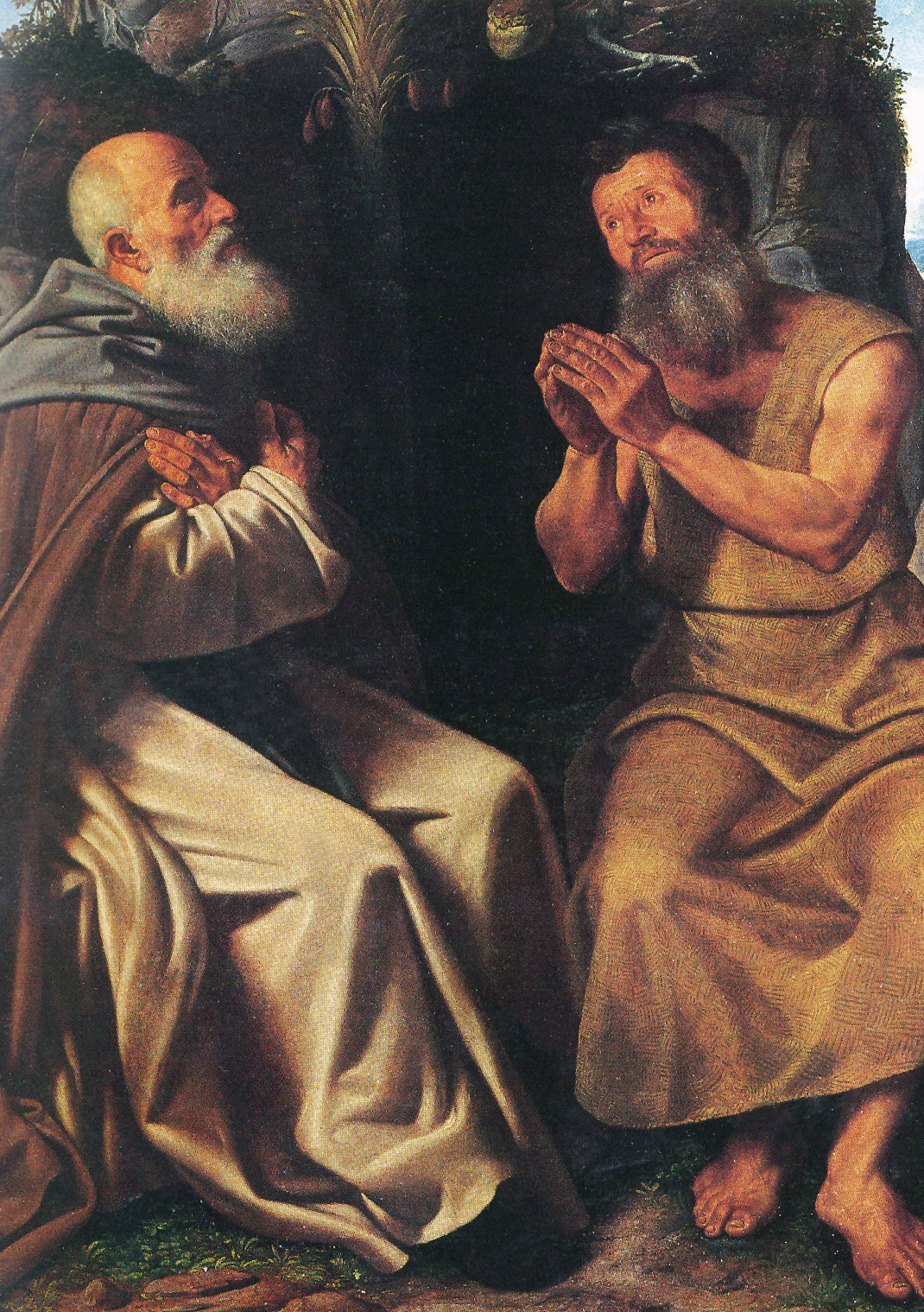
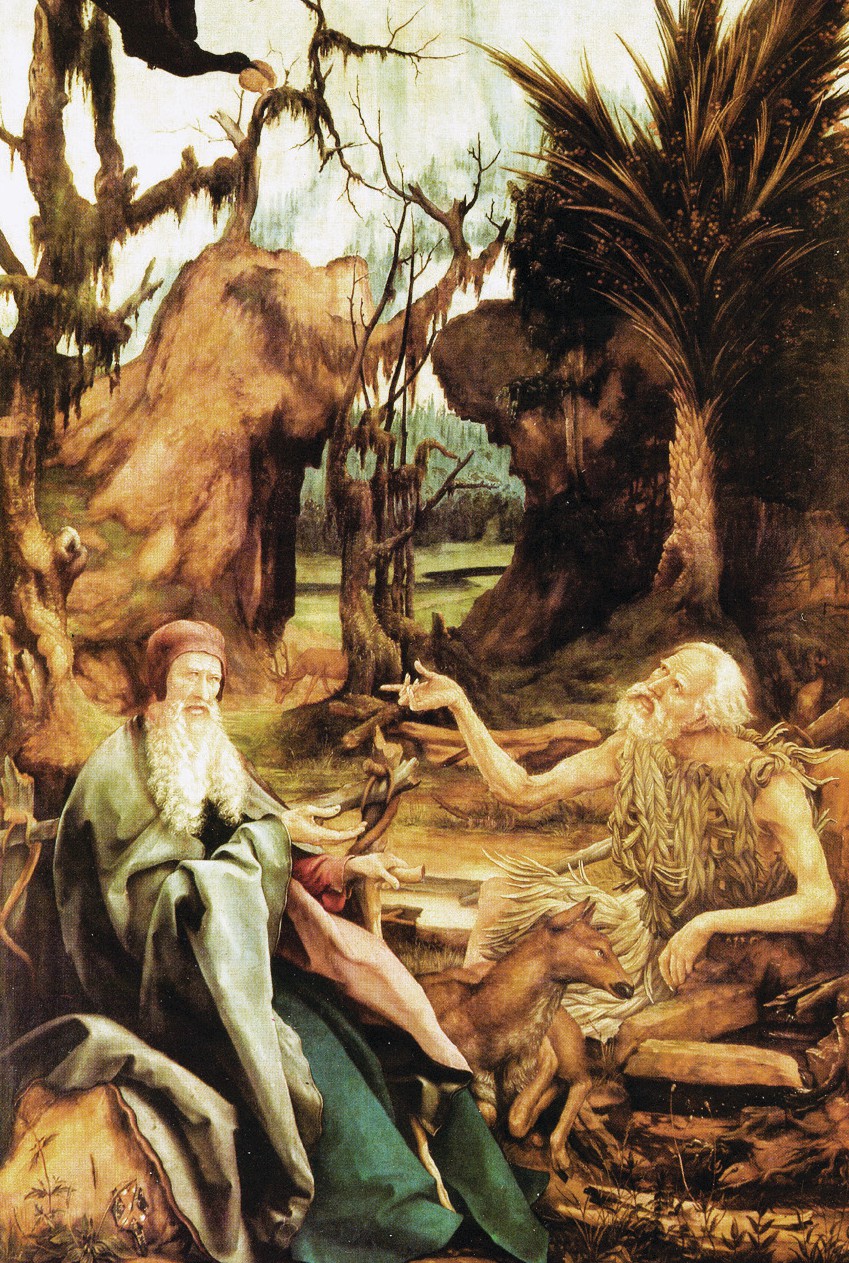
According to St Jerome’s account, for sixty years a raven fed him half a loaf of bread a day, and when Anthony the Great visited him – who also lived in the desert, several days away from Paul on foot – the raven brought him a double portion of bread. They both learned of each other through visions. Their encounter – when Anthony, ninety years of age, visited the one hundred and thirteen-year-old Paul – is a favoured subject of ecclesiastical art and an important event in religious history. During his gruelling journey – as he did not know where Paul lived, he could only rely on his intuition and signs – Anthony was led to the cave by miraculous creatures, where he begged for more than six hours to be admitted.
When Paul finally allowed him to enter his cave, they fell into each other’s arms and called each other by name. After making an offering to God, they spent the night in vigil. The following day, Paul revealed to Anthony the imminence of his death and hinted at Anthony’s duty of burying him. He then bid Anthony return to his own hermitage and asked him to bring him a cloak that Bishop Athanasius had given to Anthony. Anthony, who recognised in Paul his Christly nature, was deeply shocked by the clarity of Paul’s knowledge of the subject, and he obediently returned to his home. As he returned with the cloak, he was informed by an angelic vision of Paul’s death, who retired to the Lord in the company of heavenly beings, prophets and apostles in a blaze of light.
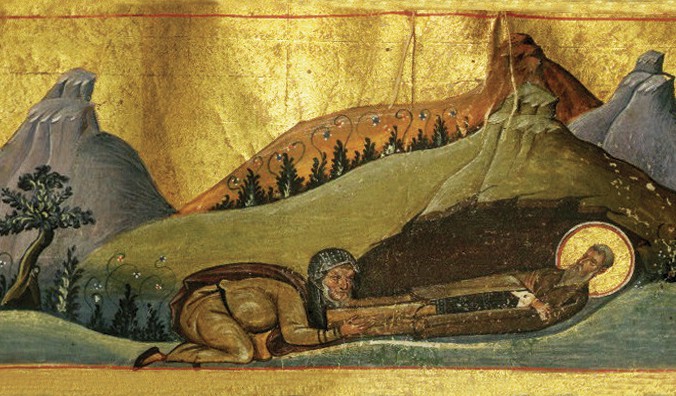
When he finally reached the cave, he found the saint, who, even in death, remained kneeling, raising his hands to the heavens, maintaining his prayerful posture. Two gentle lions appeared for the funeral and used their paws to dig the grave before asking Anthony’s blessing. Following the funeral, Anthony kept Paul’s shirt made of palm leaves, a garment with miraculous powers that he wore on feast days. Tradition has it that the incorrupt body of Paul of Thebes was taken first to Constantinople, then to Venice, and from there to the Pauline house in Budaszentlőrinc. The figure of Paul of Thebes has become closely associated with desert hermitage. He became an example for the hermits of later ages, who followed in his footsteps and became far-reaching representatives of renunciation of worldly means and desires and the gathering of heavenly treasures distanced from the world. The only monastic order founded in Hungary, the Hungarian Pauline Order, also officially adopted the name of Saint Paul, representing the effort of retreating from the world.
“From old time, my brother, I have known thou dwelt in these parts; from old time God has promised thou would come to me. But since the time has come for sleeping, I have ever desired to be dissolved to be with Christ, the race is run, there remaineth for me a crown of righteousness. Thou has been sent by God to shelter this poor body in the ground, returning earth to earth…” (the words of Paul of Thebes addressed to Anthony the Great as recorded by Saint Jerome)
“You don’t need to know your own end, but that of another. All you need to do is to follow the Lamb…” (excerpt from the message of Paul of Thebes to Anthony the Great sent prior to his death)
“What did this old man in his nakedness ever lack? Your drinking vessels are of precious stones; he satisfied his thirst with the hollow of his hand. Your tunics are of wrought gold; he had not the raiment of the meanest of your slaves. But on the other hand, poor though he was, Paradise is open to him; you with all your gold will be received into Gehenna. He though naked yet kept the robe of Christ; you, clad in your silks, have lost the vesture of Christ. Paul lies covered with worthless dust, but will rise again to glory; over you are raised costly tombs, but both you and your wealth are doomed to the burning. Have a care, I pray you, at least have a care for the riches you love.” (excerpt from the biography of Paul of Thebes written by Saint Jerome)