Saint Patrick
around 387, present-day Wales – around 461, present-day Ireland
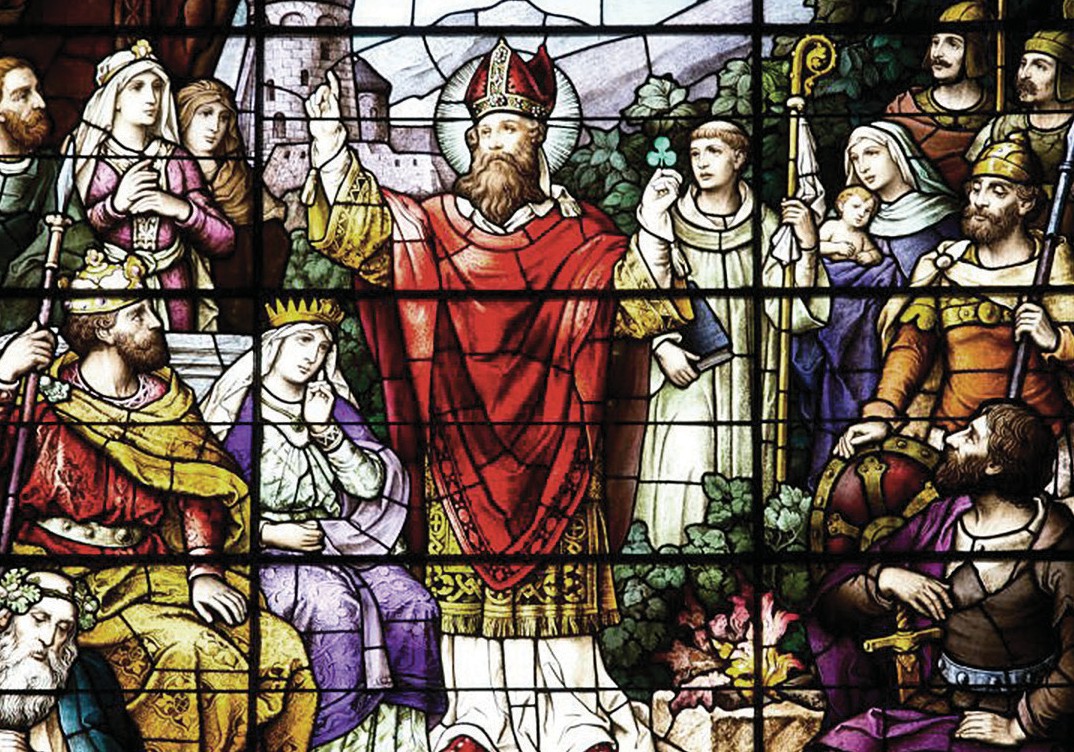
Saint Patrick, the great preaching saint, apostle and patron saint of Ireland was born around the year 387 in the Britannia province of the Roman Empire, most probably in the area of the present-day Wales, as a son of a well-to-do slave-owning pagan family. At the age of sixteen, his life took an unexpected turn: he was captured by raiders who took him to Northern Ireland and sold him as a slave. Patrick later concluded that his youthful misdeeds – “turning away from God, not keeping his commandments, and not listening to the priests who exhorted him to salvation” – were the reason he had to experience this life, as a just punishment.
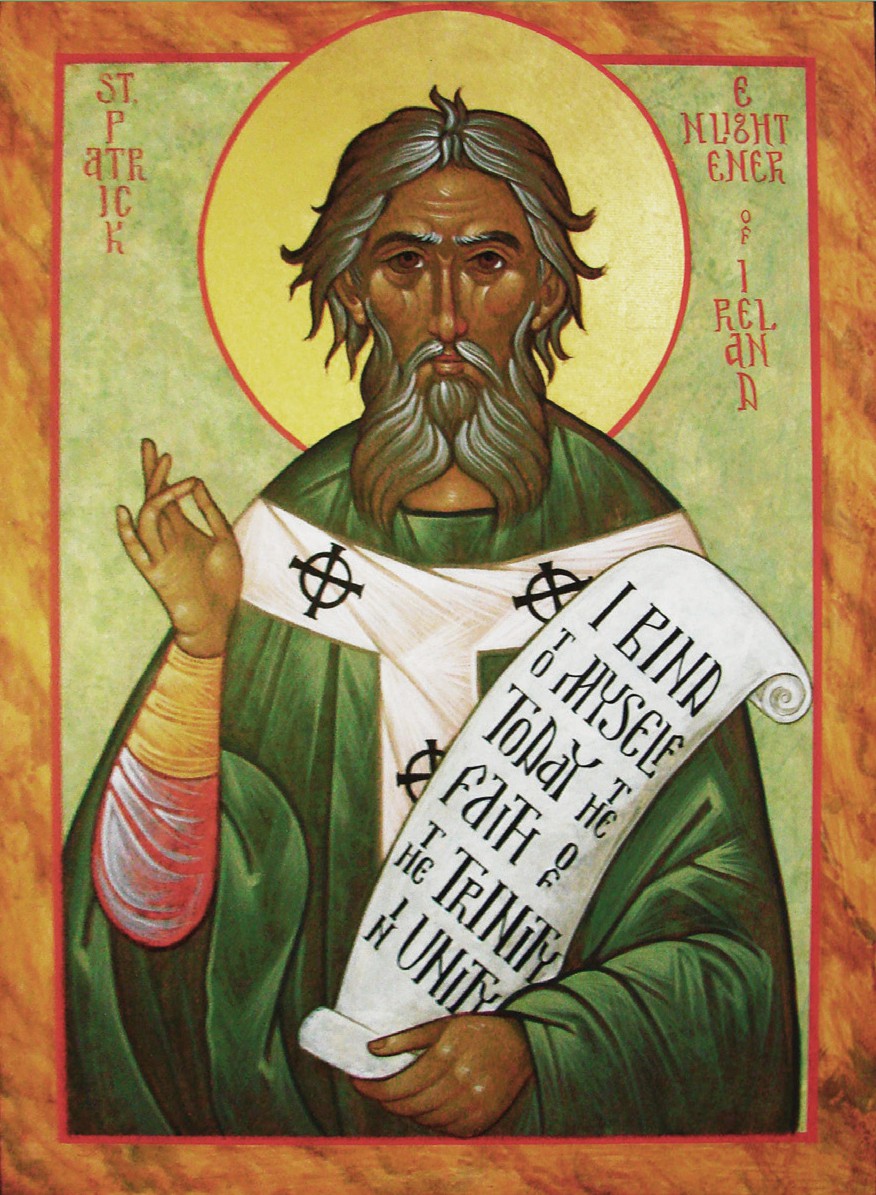
He was a slave for six years, during which the spoiled young man had become hardened to nomadic pastoral life and had time to take stock of his life. He repented deeply, prayed, fasted and underwent a deep inner change. We know from his autobiographical work, Confessio, that after six years of servitude, he heard a voice speak to him: “It is well that you fast, soon you will go to your own country.” He then managed to escape via an adventurous journey, first to Gaul, and from there he intended to return to his parents, yet he heard an inner voice speaking to him – the voice of the Irish people: “We beg you, young man, come and walk among us once more.”
However, he still had to wait a long time to do so: he spent twelve years at the monastery of the Bishop of Auxerre. When Pope Celestine I wished to send a bishop as a missionary to Ireland, Patrick was chosen and his mission was an unparalleled success. Modest, humble and with deep faith, Patrick was authentic for the Irish people, although he still had to face extraordinary difficulties. Christian religion and culture were completely unknown in Celtic lands. The population practised the Druid religion, characterised by a deep love of nature and a pure faith rooted in the ancient traditions of the people. Oddly enough, Patrick began his missionary activities in the land of the Druid high priest who once ruled it so he would have first-hand experiences of the Druid traditions. The unspoiled Celtic culture and religion – one of the famous mottos of which was: “Honour God, avoid evil and be brave!” – served as a good foundation for Patrick to spread Christianity.
This is why, despite many difficulties, he was capable of converting people without bloodshed and with gentle means. Patrick carried out an incredible job between 433 and 441. His success was mainly due to his non-violent efforts – he based his approach on the Irish character and customs to provide them with what Christianity could offer to the world. Because of his superb command of the Gaelic language, Ireland became the first country north of the Alps to develop its own ecclesiastical language and literature. There are countless incredible stories about Patrick’s life, but most probably the truly Christian, peaceful form of conversion that combined the Irish traditions with Christian spirituality is the most important of all of these.
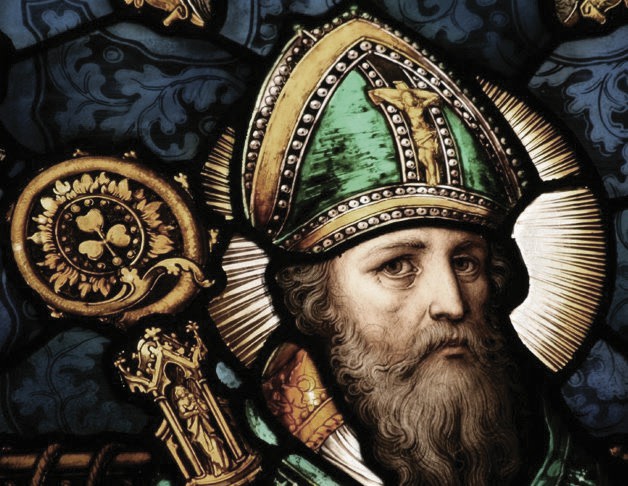
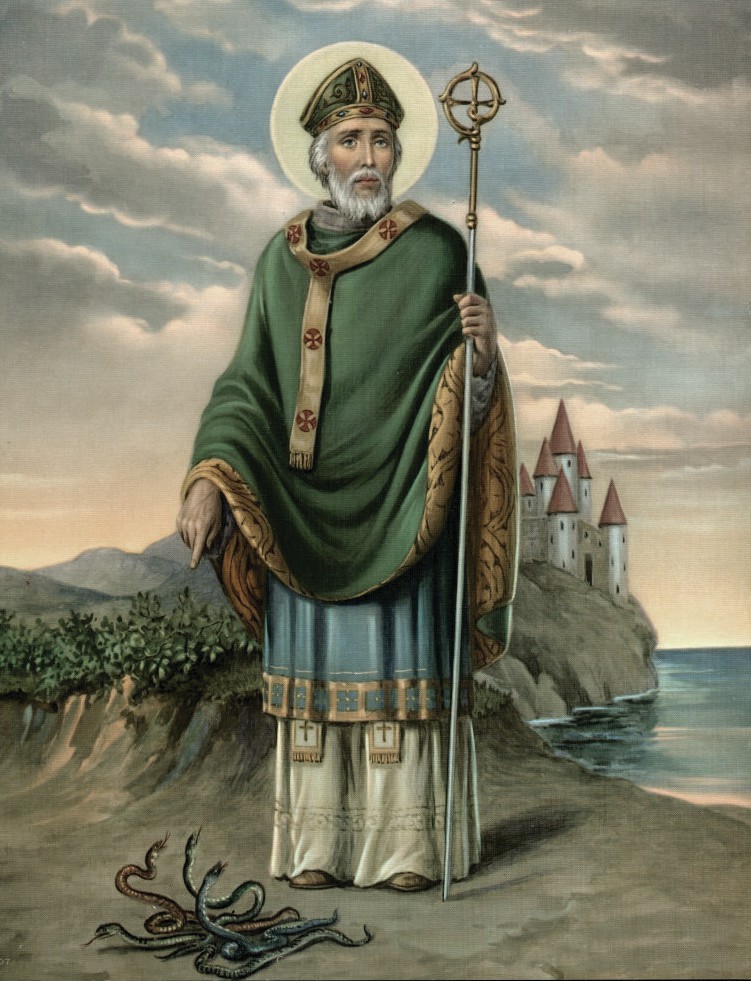
Sixty-nine per cent of the population of Ireland today is Catholic, but it is an important fact that Irish Protestants also recognize Patrick as the founder of their church. One of Ireland’s best-known symbols, the three-leaf clover, is closely associated with his work, as he used it to explain the doctrine of the Holy Trinity. It is said that he drove the snakes from the Emerald Isle and at his word a cleft was opened in the sacred Irish land where the souls could return to the purgatory for purification. There is also a story about how a leader who tried to stop him was unable to raise his sword when he intended to strike him.
Throughout his entire life, Patrick had visions and was guided by inner voices that aided his work. Together with his disciples and followers, he built many churches where entire villages and regions were converted to Christianity thanks to the word of God. An important milestone in his work was when the ruler of Ireland petitioned him to preach the Gospel. Saint Patrick retired to the Lord around the year 461 (or in 493 according to Irish traditions) – the 17 March is the feast day of Saint Patrick. As a result of his exemplary life, the entire spiritual landscape of Ireland was changed. In the Middle Ages, the country was known as the ‘land of the saints’ and its monasteries served as the cultural and scientific centres of the age. St Patrick’s popularity in Ireland remains undiminished to this day.
“I arise today,
through God’s strength to pilot me,
God’s might to uphold me, God’s wisdom to guide me,
God’s eye to look before me, God’s ear to hear me,
God’s word to speak for me, God’s hand to guard me,
God’s shield to protect me,
God’s host to save me from snares of devils, from temptation of vices,
from everyone who shall wish me ill, afar and near.”
(excerpt from Saint Patrick’s breastplate – 4th century CE)
“Before I was humiliated I was like a stone that lies in deep mud, and he who is mighty came and in his compassion raised me up and exalted me very high.”