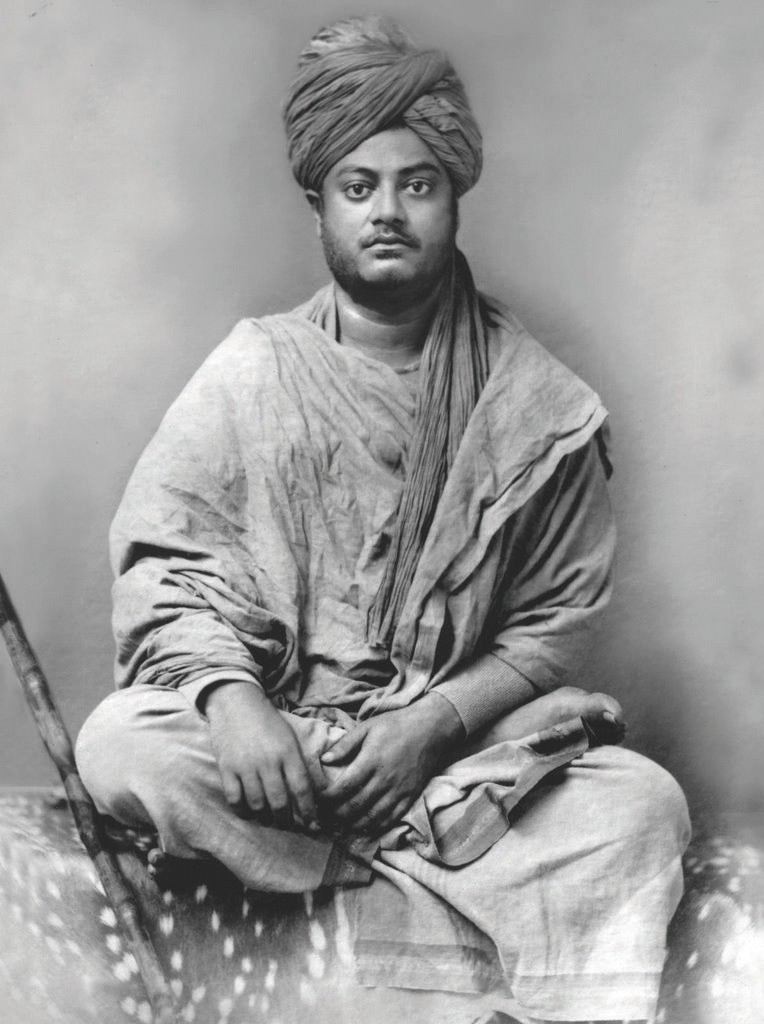
Swami Vivekananda
1863–1902, India
Swami Vivekananda – originally known as Narendranath Datta (Naren) – one of the great proponents of the discourse between Indian and western culture was born on 12 January 1863 in Calcutta (present-day Kolkata) as the oldest son of a kshatriya family. (The warrior caste, responsible for justice and social harmony is the second most prestigious caste according to Indian tradition.) His father was a respectable lawyer and his mother was of noble descent. From an early age, Naren saw a bright spot of light between his eyebrows.
At the age of six, the free-spirited child had to be taken out from school, yet he could recall anything he read. He sang beautifully, was an excellent athlete, entertained people with jokes and anecdotes, and as soon as he returned to school he completed three grades in a single year. At a young age, he came into contact with the movement striving for the religious renewal of India, the Brahmo Samaj (“Worshipper of Brahman”), which sought to purify Hinduism from polytheism and the cult of images, yet he found no answers to his questions about the knowledge of God, therefore he sought out the famous teachers of India, one after the other.
This is how he finally met Ramakrishna in Dakshineshwar, whose presence deeply perturbed him instead of reassuring him. On multiple occasions, Naren lost contact with the outside world at a single touch. This deeply offended the boy’s pride and despite the signs he witnessed he was unable to decide whether Ramakrishna was a holy man or simply possessed. Later, the sanctity of his master was clearly proven to him, but before this he had to undergo a series of tests. His father, who was assumed to be rich left a heavy debt after his death. In his years of deprivation, Naren lost faith for a time before realising in a moment of enlightenment the justice of God and the essence of how karma works – that every deed is reciprocated in kind. He returned to his master, yet without neglecting his family responsibilities while pursuing his spiritual studies.
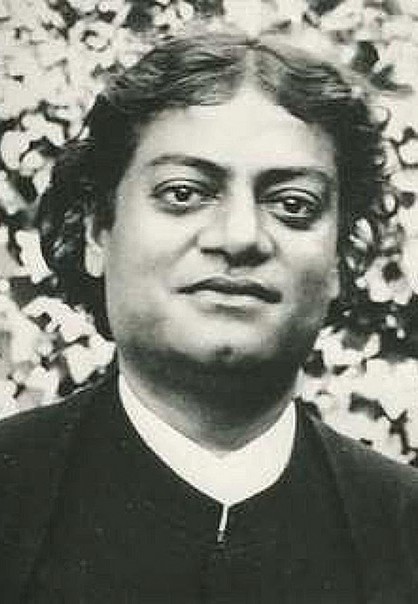
In his later years, he felt the support of his master throughout all his spiritual ordeals, despite the death of Ramakrishna when Naren was only twenty-three years old. From this point on, his life was devoted to carrying out his master’s bidding. Under his guidance, the disciples organised themselves into a small community, before Naren set out wandering for several years as an itinerant hermit, his mind constantly focused on God. In this way, he came to know the misery of ordinary people as well as the painful consequences of ignorance, and that was when his calling in life became clear to him – he recalled his master’s words that spirituality could not be taught to a man with an empty stomach. Although he was greatly hindered by his poor health, he remained incredibly active.
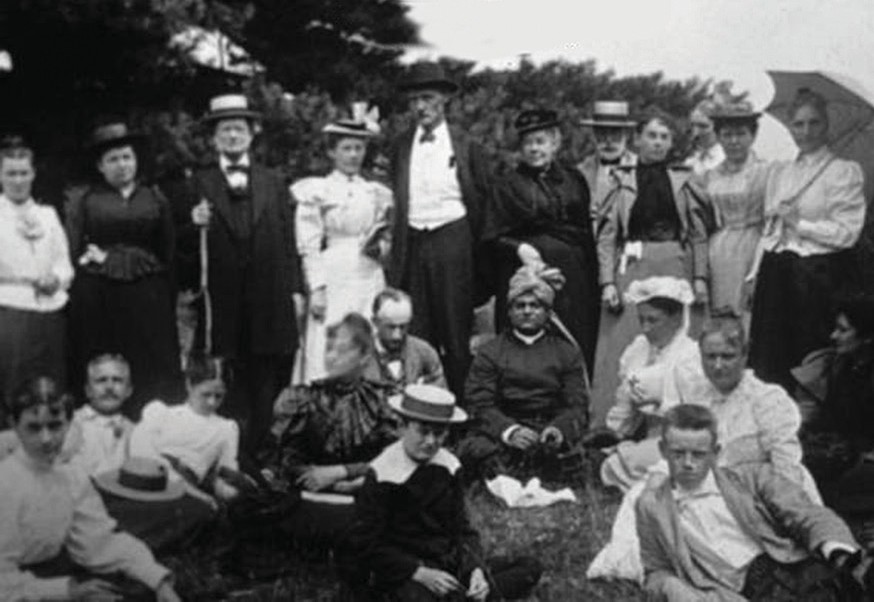
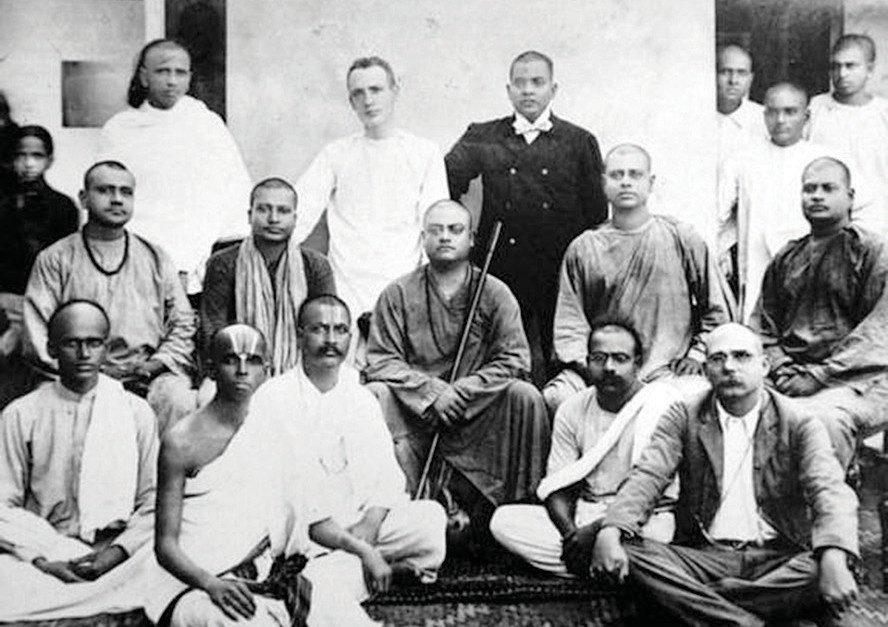
In 1893, he even travelled to America. His speech at the Parliament of Religions in Chicago was a great success. His charming personality and deep wisdom made him the most celebrated speaker at the assembly. Subsequently, he spent four years travelling throughout America and Europe, publishing countless books and establishing the Vedanta Society to pioneer the reconciliation of East and West and gave numerous speeches and lectures promoting ancient knowledge. Finally, he spent the last five years of his life in his homeland. He trained his disciples, established the Ramakrishna Mission to spread his master’s teachings and organised religious centres. At the age of thirty-nine, after years of extreme activity, he left the public scene and retired to the ashram at Belur Math to await death, which finally came on 4 July 1902.
Vivekananda produced eight thick volumes of spiritual works and the institutions he established are still active to this day. Vivekananda brought ancient Eastern wisdom to the western world, yet at the same time he helped illuminate the ancient teachings with the means of western science and thought. He sought to explain in plain language all that the science of spirituality has to say about modern man, no matter where they live on Earth. Beyond his immediate activities, his work has been a major milestone in the reconciliation and unity of eastern and western worldviews.
“My children, the secret of religion lies not in theories but in practice. To be good and to do good — that is the whole of religion.”
“See God in your children. So, in everything. In life and in death, in happiness and in misery, the Lord is equally present. The whole world is full of the Lord. Open your eyes and see Him!”
“It is thought which is the propelling force in us. Fill the mind with the highest thoughts, hear them day after day, think them month after month!”
“…all our misery comes through ignorance, and this ignorance is the idea of manifoldness, this separation between man and man, between nation and nation, between earth and moon, between moon and sun. Out of this idea of separation between atom and atom comes all misery.
But the Vedanta says this separation does not exist, it is not real. It is merely apparent, on the surface. In the heart of things there is Unity still.”
“I believe I have told you that without non-attachment there cannot be any kind of Yoga. Non-attachment is the basis of all the Yogas. The man who gives up living in houses, wearing fine clothes, and eating good food, and goes into the desert, may be a most attached person. His only possession, his own body, may become everything to him; and as he lives he will be simply struggling for the sake of his body. Non-attachment does not mean anything that we may do in relation to our external body, it is all in the mind. The binding link of „I and mine” is in the mind. If we have not this link with the body and with the things of the senses, we are non-attached, wherever and whatever we may be. A man may be on a throne and perfectly non-attached; another man may be in rags and still very much attached.”