Thomas Merton
1915, France – 1968, Thailand
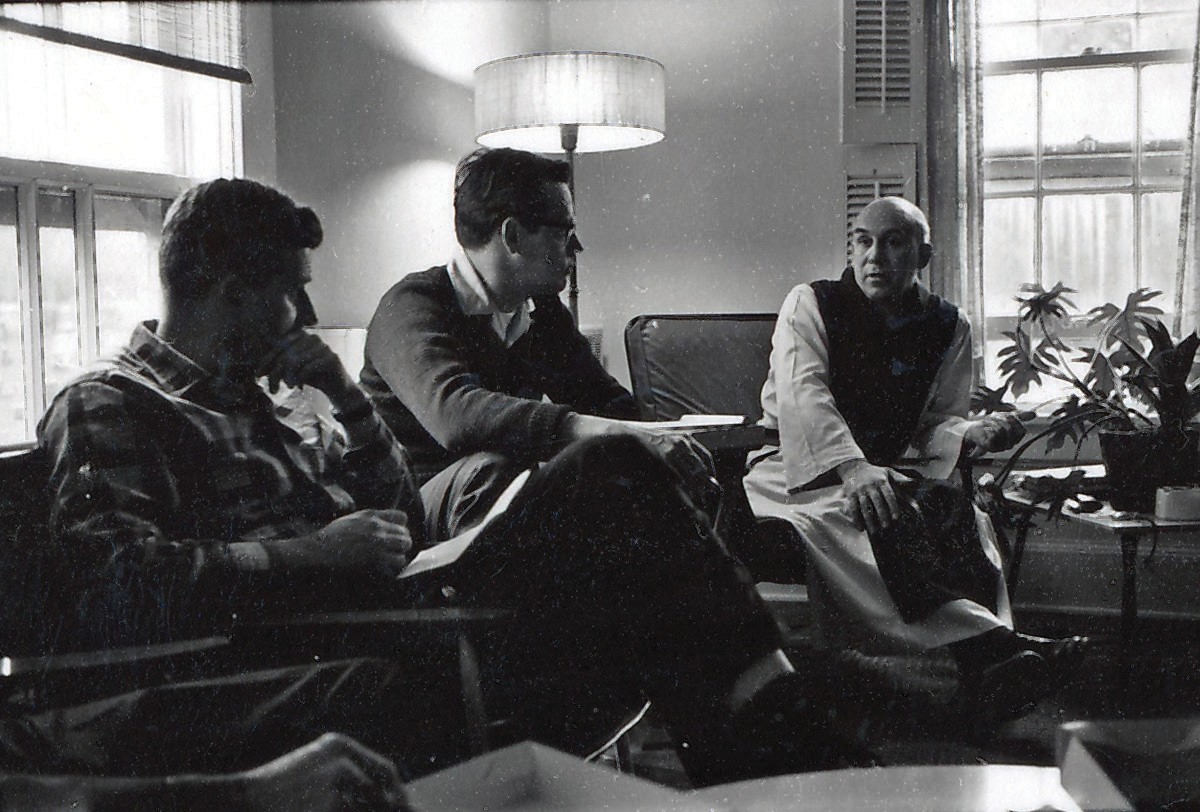
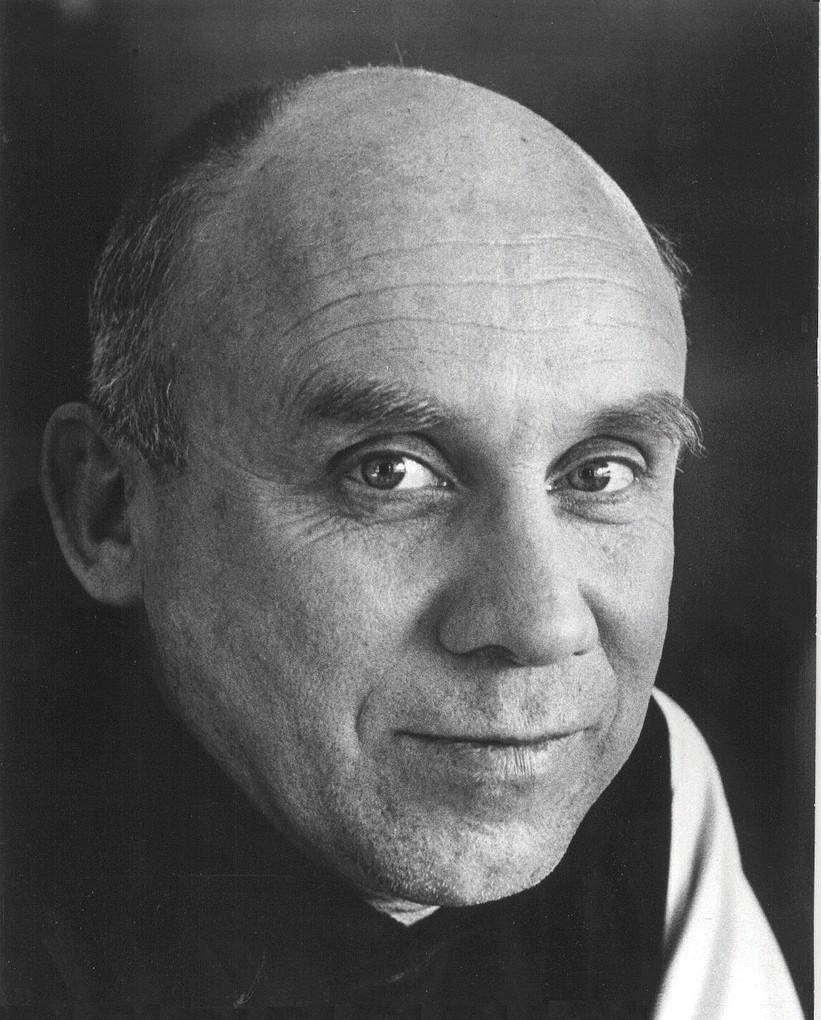
Thomas Merton, the Trappist thinker and a key figure of Christian reform and promoter of spiritual reconciliation between East and West, champion of religious tolerance and known as Father Louis, was born in France on 31 January 1915, during the First World War. His mother was a New Zealand Quaker, whilst his father was an American painter. He had a rather colourful childhood: he attended schools in France, England and America. He lost his mother when he was six and his father when he was sixteen. His long, difficult and troubled youth and the story of his conversion are described in his highly suggestive biography, The Seven Storey Mountain.
His search lasted for twenty-seven years before he finally joined, as a result of a strong inner calling, the Trappist branch of the Cistercian Order that followed the Rule of St Benedict. He spent the next twenty-seven years of his life at the Abbey of Our Lady of Gethsemani in Kentucky, USA, an important Trappist monastic centre. These two distinct, twenty-seven year-long periods gave Merton’s life a peculiar symmetry. He died on 10 December 1968, the twenty-seventh anniversary of him taking his monastic vows. Although the official view is that he was electrocuted, some religious scholars believe that he was murdered for his reform efforts. His unexpected death is one of the greatest mysteries in the history of monks.
Thomas Merton played a particularly important role in the renewal of modern monasticism. He was capable of reconciling within himself the contemplative, introspective life of the Trappists with the events of secular life. In this way, he became a religious innovator, proclaiming and proving the doctrine that it is possible to live in the world without becoming a slave to it. Within the strict Trappist order, Merton’s presence changed everything. Quite unexpectedly, his books became seminal works, influencing the younger generations and triggering a wave of modern-day conversion. Merton quickly gained popularity and he became one of the most influential men of his time. He wrote many poems, books, studies and reviews. He lectured on literature and modern culture, proving that it was possible to lead a colourful life as a monk.
He was a very progressive man who listened to Bob Dylan records in hermitages, and was at once a philosopher, an artist and a Christian. His personal example brought people closer to the Church. He once said: “What can we gain by sailing to the moon if we are not able to cross the abyss that separates us from ourselves? This is the most important of all voyages of discovery, and without it all the rest are not only useless but disastrous.” Merton believed that the closer one comes to God, the greater the love one can show to the things of the world. The promotion of these reforms brought about a veritable spiritual revolution within the Catholic Church.
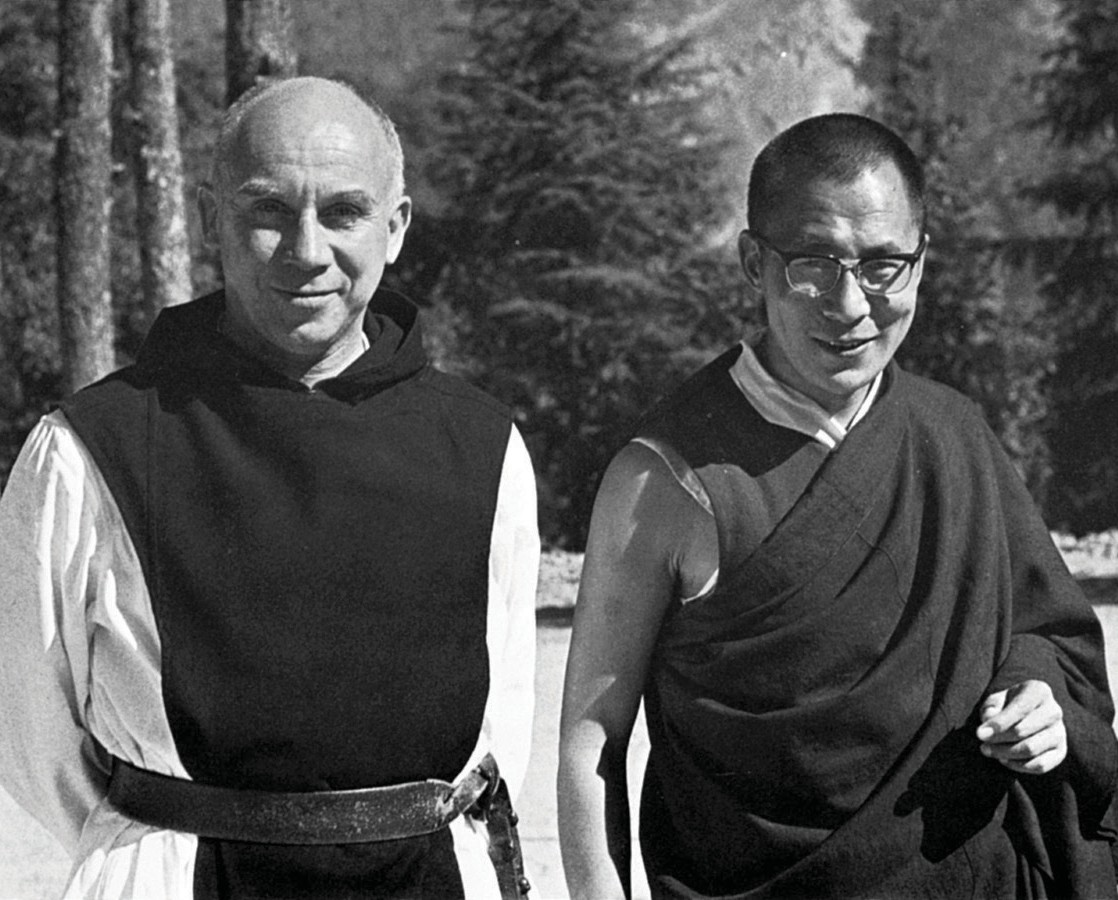
In addition to his efforts to promote monasticism, Merton also came into contact with oriental religions and he wrote a number of key treatises on the importance of reconciliation between East and West. His studies on Zen and other Eastern religions helped foster dialogue between East and West. He maintained key relationships with the representatives of various oriental religions, and the friendly dialogue they engaged in has triggered a mutually beneficial process of tolerance between religions. The final period of his life was spent with constant traveling and meeting with the great figures of the East. Merton quickly won over the people he met, who could sense a strong presence emanating from his being.
In September 1968, he was invited to participate in an interfaith spiritual summit in Calcutta (present-day Kolkata). At the summit, he improvised a beautiful prayer and delivered a captivating speech, which is still remembered fondly today. Shockingly enough, on his way home from the summit, he was unexpectedly electrocuted in Bangkok, allegedly by an electric fan. His death was entirely unexpected and his notes showed that he was full of ambitious plans and tasks to be accomplished. Although his death came as a shock, his face – like those of other greatest saints – reflected profound peace and acceptance. He was buried at perhaps the most important location in his life, the Abbey of our Lady of Gethsemani in Kentucky, USA.
“Free will is not given to us merely as a firework to be shot off into the air.”
“Help us to realize that there can be no understanding where there is mutual rejection. O God, in accepting one another wholeheartedly, fully, completely, we accept You …” (excerpt from Thomas Merton’s improvised prayer at the first Spiritual Summit Conference in Calcutta, India)
“I wonder if there are twenty men alive in the world now, who see things as they really are. That would mean that there were twenty men who were free, who were not dominated or even influenced by any attachment to any created thing or to their own selves or to any gift of God, even to the highest, the most supernaturally pure of His graces. I don’t believe that there are twenty such men alive in the world. But there must be one or two. They are the ones who are holding everything together and keeping the universe from falling apart.”
“True happiness is found in unselfish love, a love which increases in proportion as it is shared.”
“At the center of our being is a point of nothingness which is untouched by sin and by illusion, a point of pure truth, a point or spark which belongs entirely to God, which is never at our disposal, from which God disposes of our lives, which is inaccessible to the fantasies of our own mind or the brutalities of our own will. This little point of nothingness and of absolute poverty is the pure glory of God in us.”
“Only the man who has had to face despair is really convinced that he needs mercy.”