Athanasius the Athonite
around 920–1002/1003 CE, present-day Turkey
Athanasius the Athonite, founder of the monastic community of Mount Athos known as “The Lavra” or “The Garden of the Mother of God”, and a key saint of Orthodox Christianity was born in Trebizond on the Black Sea in the first half of the 10th century as a child of respectable parents. Following his baptism, he assumed the name of Abraamius. He was orphaned at an early age and raised by a nun. At the time, he was taken to Constantinople, where he lived a near-monastic life during his formative years, therefore it is no surprise that upon concluding his studies, he assumed the name of Athanasius and joined the monks at Mount Kyminas instead of taking a job as a bureaucrat. A small group of monks lived in houses close to one another, under the supervision of a more experienced cleric.
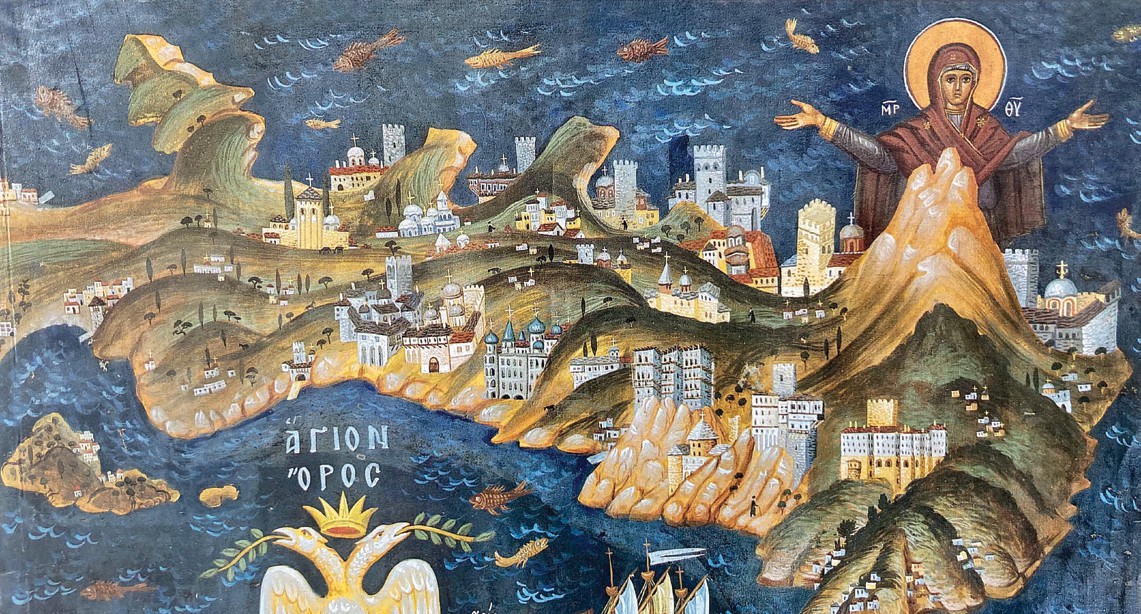
After spending four years here, Athanasius’ wish could finally come true: he received permission to begin living his life as a solitary hermit. Mount Athos and its surroundings, located on a wild, uninhabited peninsula, was already attracting mystic Christians seeking inner silence. Athanasius finally set out here around the year 958. He wished to live a life of total asceticism, dedicated only to God, and this was the perfect place to begin a life of detachment from worldly concerns. The odd paradox of Athanasius’ life is that after longing for solitude and silence he became the founder of one of the most renowned spiritual communities of the Orthodox world.
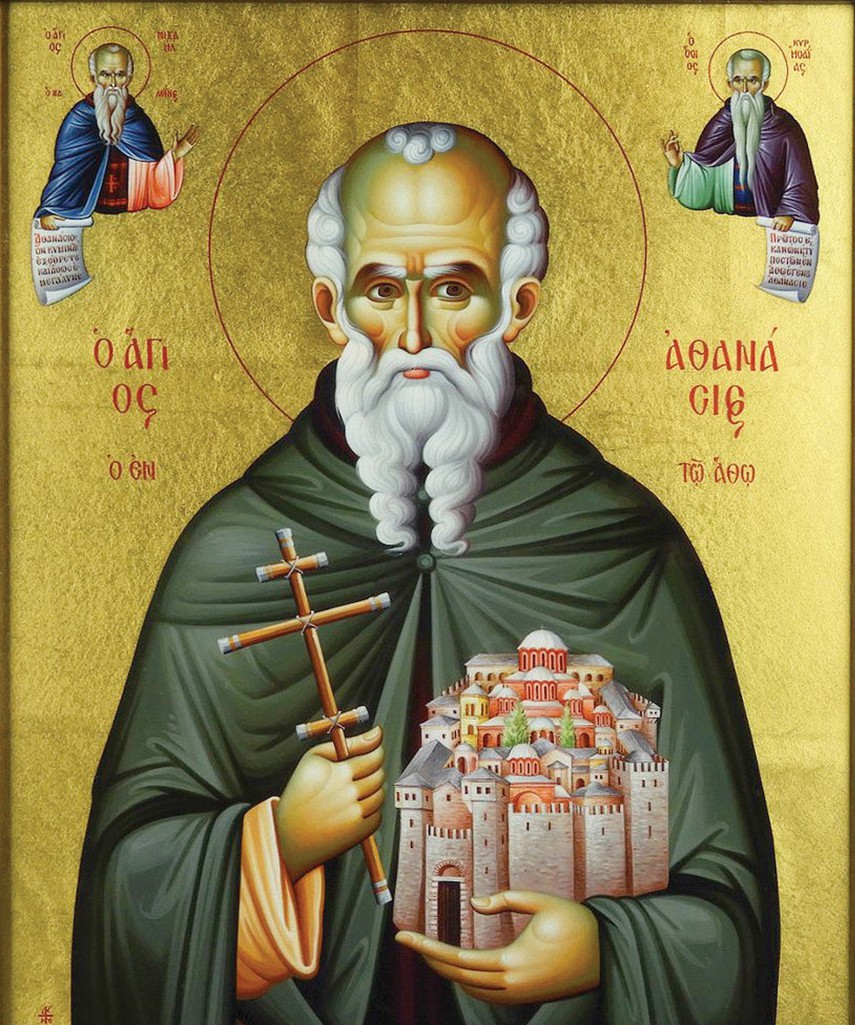
As fate would have it, he became the spiritual mentor of General Nicephoros Phocas, whom he met as a student in Constantinople and whom he accompanied on his journey to Crete in 961 after which he was crowned the Byzantine emperor in 963. At the bottom of his heart, Phocas also longed to live a monastic life, and although his wish was not to be fulfilled, he trusted in his great role model, Athanasius with the task of building a hermitage and subsequently a temple in Athos. Athanasius tried to wriggle out of this assignment, desiring neither fame nor the life of a magistrate. He pretended to be an illiterate castaway, yet once he was recognised, he was flooded by people seeking his help and advice due to his charisma and the stories about him that spread among the people – precisely the kind of people he wished to avoid by hiding in the dense forests of Athos.
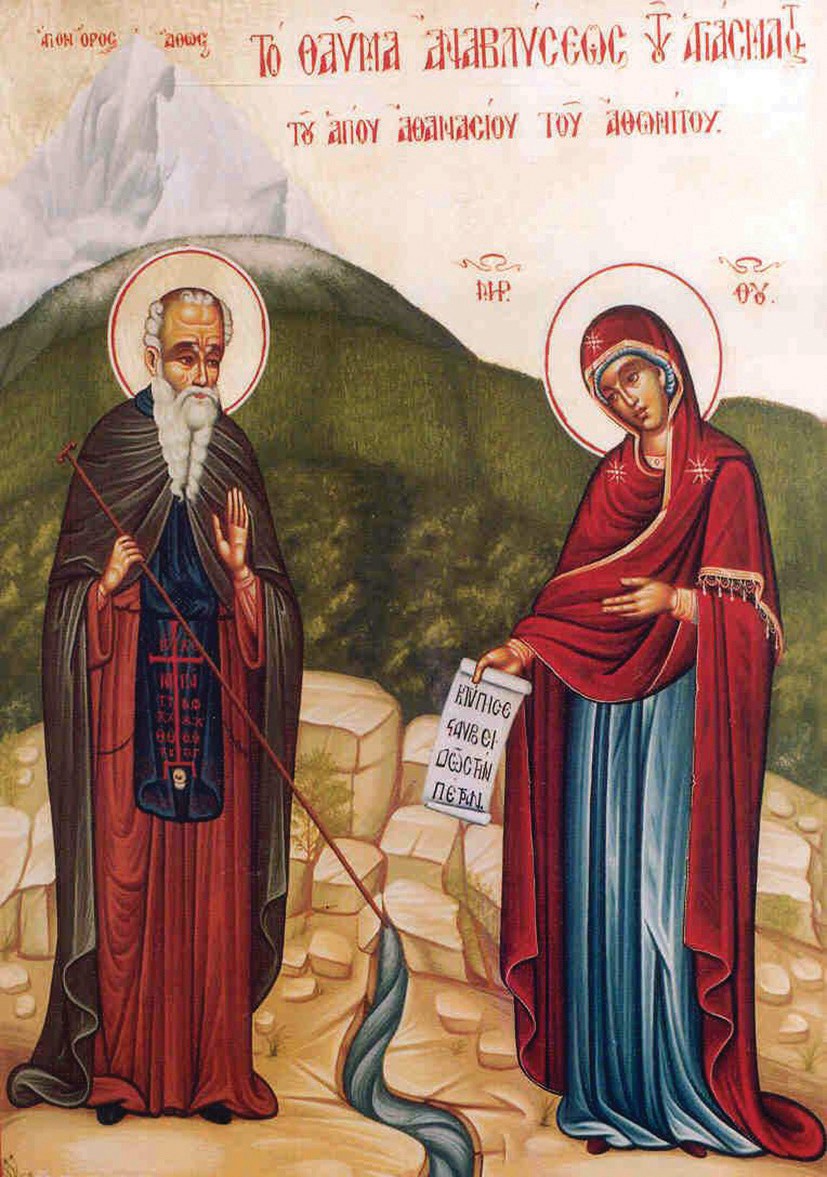
He attempted to retreat from the world in Melana, the “black land”. Yet he was afflicted with a great depression, listlessness, aimlessness, a sort of ‘dark night of the soul’ until he finally surrendered to his fate. He renounced his desire to live alone and towards the end of 962, by imperial order, he began the construction of the first church dedicated to Our Lady – the Great Lavra. This marked the beginning of a huge undertaking while the water was sourced from far away and brought to the top of the Holy Mountain. Thanks to the charisma of Athanasius, many of those who took part in the works became monks themselves. Although the emperor died during the construction, the works continued without interruption.
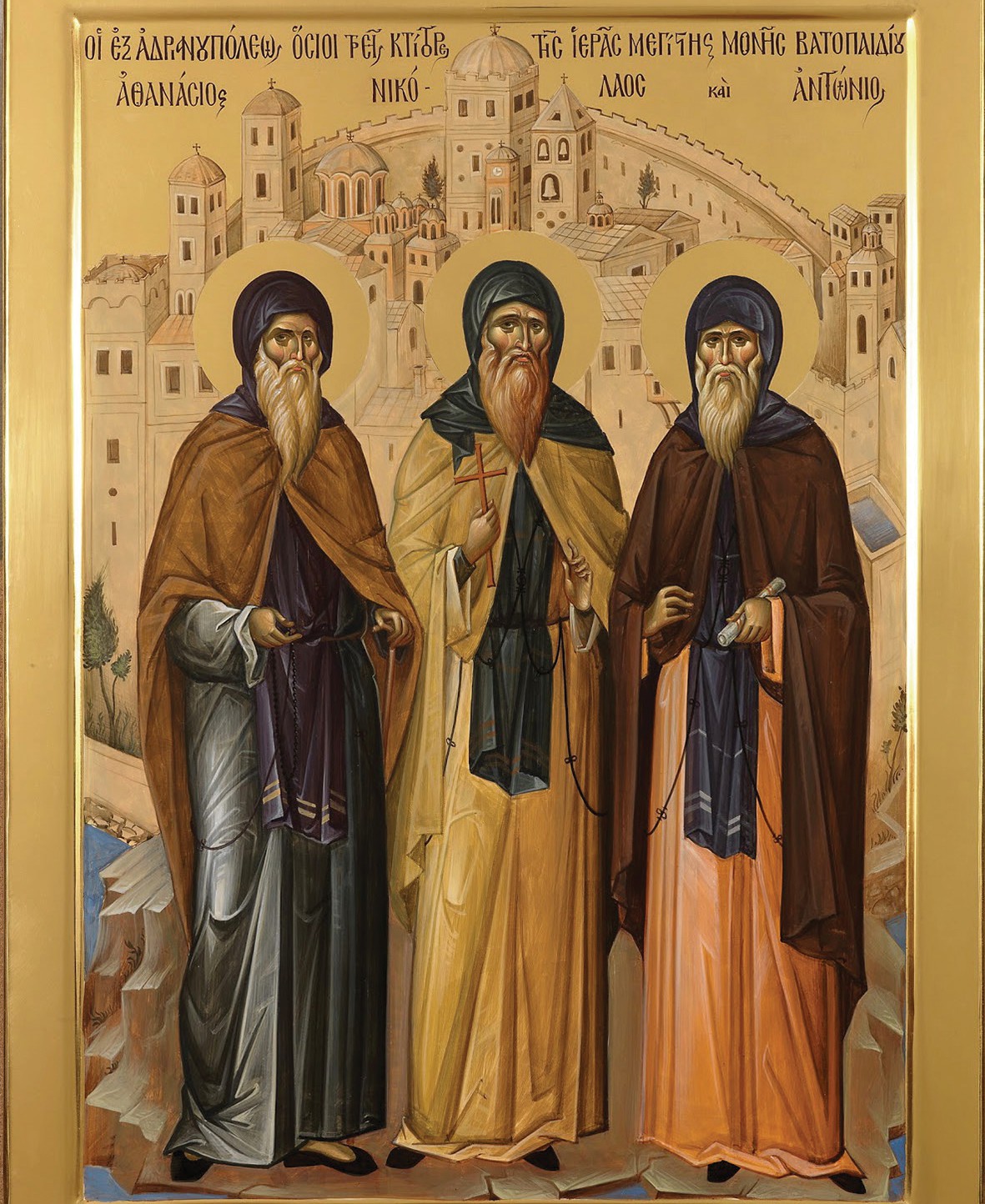
The life of Athanasius raises important questions. Many figures of conservative Orthodoxy have criticised him for establishing the churches, yet there is no doubt that as a result of his reclusive lifestyle Athos continues to serve as a source of spiritual experiences for many visitors. Similarly, there can be no doubt that the work of Athanasius provided a great opportunity for Orthodox hermits to live in a community and find fulfilment through fraternity. Today, the peninsula is home to twenty World Heritage monasteries. There are more than two thousand monks and just as many lay helpers on Athos who, in the words of the elderly monks, are “people who wish to be closer to God.”
The extraordinary life of St Athanasius also exemplifies the renunciation of one’s individual will and the longing for a higher purpose and a life devoted to community. Moreover, he was one of the great practitioners of the monastic ideal “Ora et labora” or “Work and pray”. Athanasius died in 1004 while completing a dome with his own hands, when he and six other of his companions fell from a great height. Even after his death, Saint Athanasius continued to tend to his fellow monks: he is said to have made several unexpected visits to them after his death to comfort or advise them.
“Your body and your soul, nothing else, should be divided up for all your spiritual children, brothers and fathers.”
(Allegedly said by Athanasius the Athonite)
“…whenever Atanasius saw a brother who was tired, weary, or neglected, who was afflicted by sickness or some passion or desire and who was seeking intoxication or otherwise polluting his life, he always took him into his care. Seeing that his soul was overcome by discouragement, he never allowed him to eat without first working, yet as the good physician of souls, he commanded him to go prepare vegetables or slice bread. He sent others to the forge to help the blacksmiths, and at the same time to recollect themselves from evil thoughts, purging themselves with these occupations […] He also ordered them to sing psalms while working and they could not be distracted.”
(Athanasius the Athonite on the healing effect of prayer and work)