Gerasimos of Kefalonia
1506–1579, present-day Greece
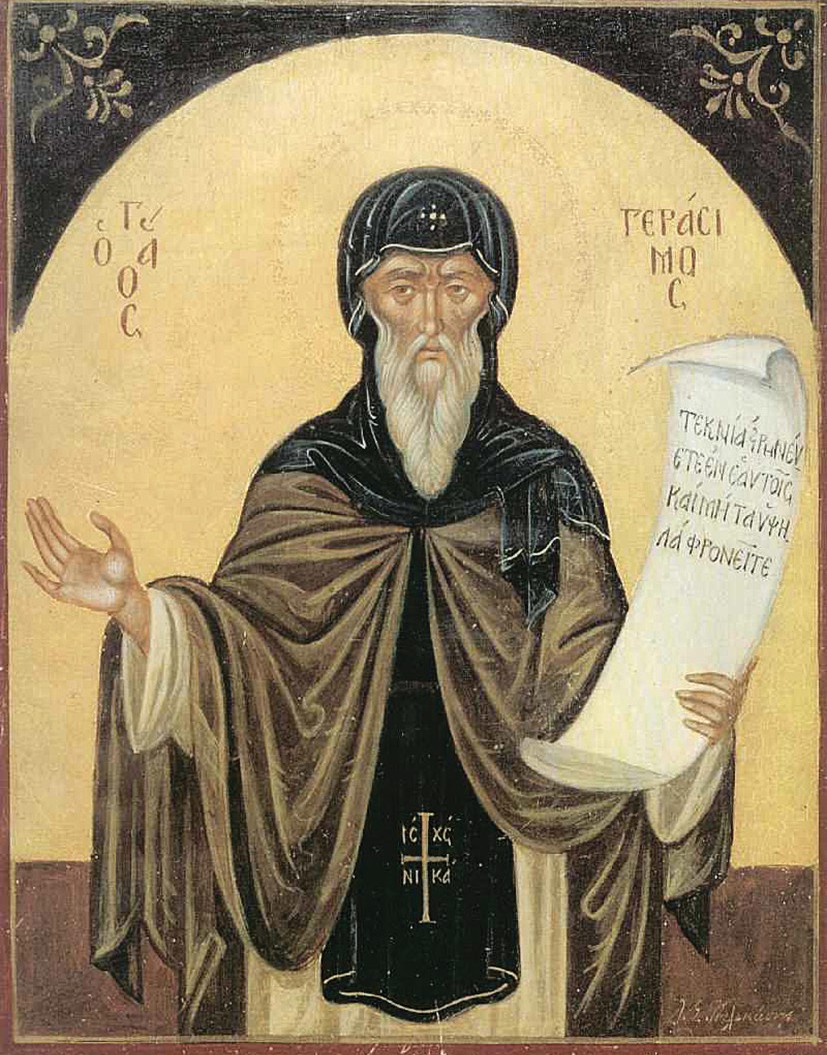
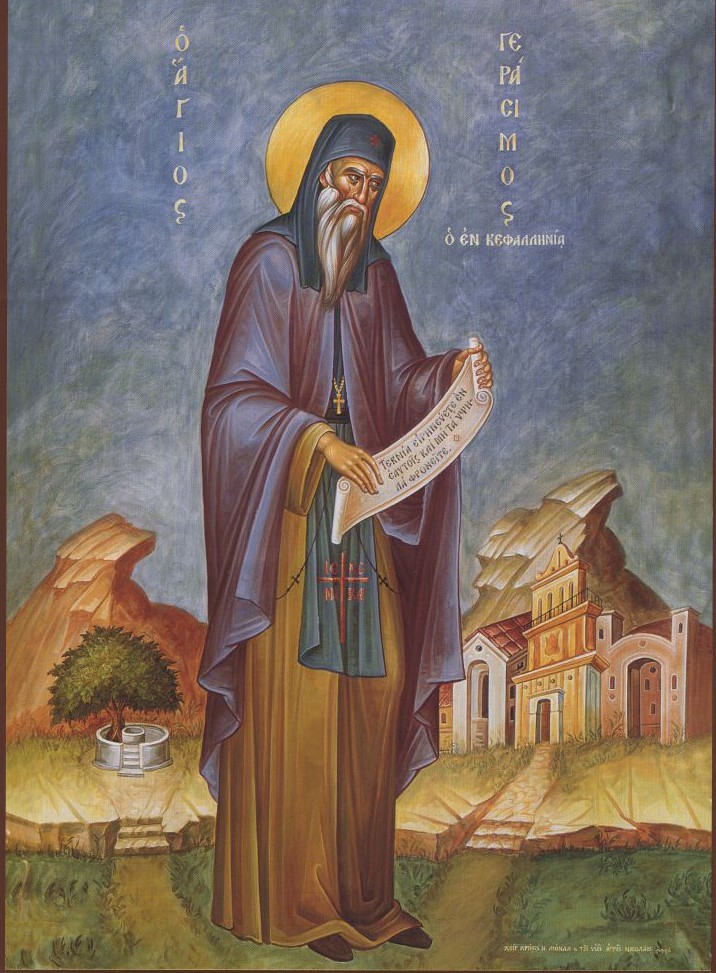
Saint Gerasimos of Kefalonia (Agios Gerasimos), the New Ascetic, a leading figure in Greek Orthodox Christianity, is the patron saint of Kefalonia. He is also known as “the Burning One” or the “Scorcher” by all those whom he delivered from the demons that possessed them. The modern Greek islands have given the world many important Christian saints. One of the most notable of these is certainly the founder of the monastery of Omala, Saint Gerasimos. The people of Kefalonia believe that the saint protected them and the island from many illnesses and evils over the centuries. Many of them named their children after him as a token of their respect. As he visited many places around the world, he is also considered the patron saint of travellers and pilgrims.
Gerasimos was born in Trikala, Corinthia, to a noble family. On his father’s side, he was a descendant of an ancient Byzantine aristocratic family, the Notaros dynasty, many of whose ancestors were martyred for their Orthodox Christian faith during the fall of Constantinople. Their fate, and above all their courage, deeply influenced the young Gerasimos. He considered this his glorious heritage, and he did his best to live a life worthy of it. As a young adult, he left his hometown and became a monk in Zakynthos. Subsequently, he travelled to the holy sites of Greece and Constantinople, and for more than three years he lived as an ascetic in a cave on Mount Athos, seeking spiritual and intellectual guidance, which he was finally granted.
He went on a pilgrimage to Jerusalem with the blessing of the elderly monks and renewed his vows to Christ. He travelled throughout the Holy Land, reaching Damascus, Mount Sinai, Alexandria and Libya. He then served in the Church of the Holy Sepulchre in Jerusalem for 12 years, and spent a short time in Crete, where his presence, his divinely inspired preaching and his miracles were a balm for the local Orthodox Christians who were enslaved by the Roman and later Venetian rule. According to tradition, a church was built in Kydonia above the cave where he retreated to at night. To this day, the people who live there commemorate their beloved saint.
After nearly a year in Crete, he sailed to Zakynthos, where he was entrusted with the care of the child Draganinos Siguros, or Saint Dionysios (Agios Dionysios). This encounter had such an impact on the malleable soul of Draganinos that he followed in the footsteps of his tutor and became the spiritual leader of Zakynthos, and later the patron saint of the island. Gerasimos later travelled to Kefalonia and lived there as a hermit for more than five years in a cave in the village of Lassi. Subsequently, by divine inspiration, he went to Omala and established a monastery for the local nuns, which he called New Jerusalem. The monastery opened its doors in 1561 to serve as a beacon for travellers and a physical and spiritual sanctuary.
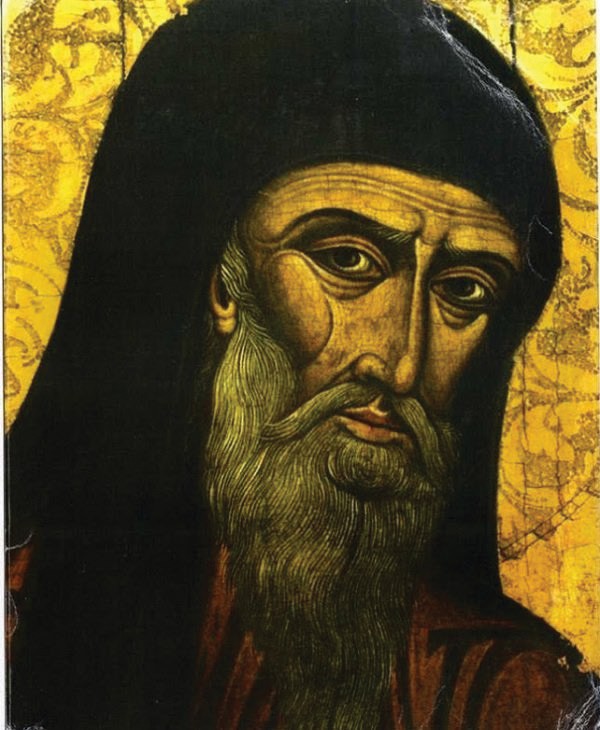
Climbing down a ladder into the three-metre-deep cave beneath the monastery and then crawling into the inner cave, where there is hardly any air, is a harrowing experience. Although it is nearly impossible to sit on the uneven and wet rocks, it is said that Gerasimos often prayed and even slept there. The news of the holy man spread throughout the Christian world. Huge crowds would visit and follow him just to hear his teachings and he was also rumoured to be capable of exorcising demons from the possessed. Not only did he teach his followers and the nuns, he also made it his mission to educate the poor children of the island. He himself followed a very strict prayer regimen. He also exercised restraint in both rest and eating, only consuming as much food as his body required. His hagiographer, Mitrophanis, recorded that he ate cucumbers in one half of the week and unsalted pumpkin the other. He also did regular manual labour, which he claimed helped to develop his mind and body.
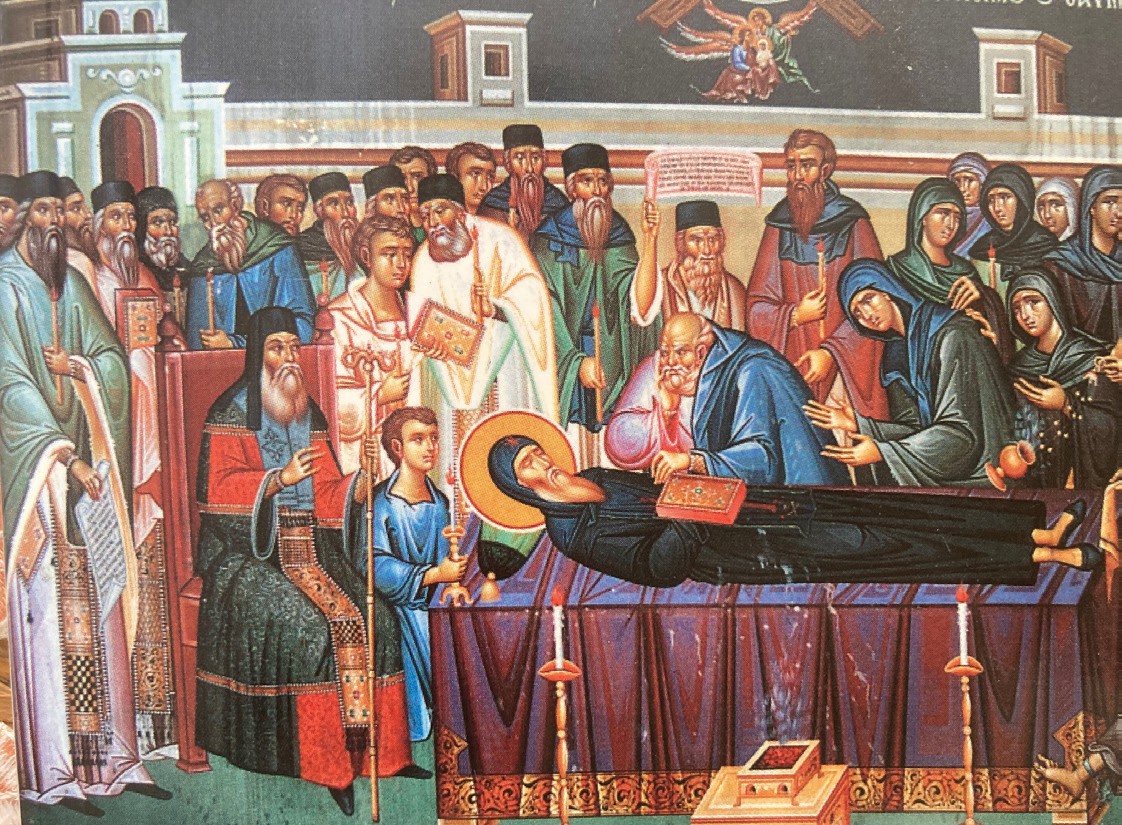
Evidence of his charity can still be admired today in the wells in the monastery garden, which he himself created to supply water to the area. He retired to his heavenly home on 15 August 1579, the feast day of the Assumption of the Blessed Virgin Mary. Each year, his incorruptible remains – preserved as a relic in the monastery he established – are carried to his beloved plane trees as part of a solemn ceremony on 20 October. It was recorded that the teacher, who was canonised in 1622, was recorded as being responsible for miraculous healings during his life and after his death, and his presence is said to be felt in the monastery and on the island to this day.
“Lord, Jesus Christ, have mercy on me and my soul!”
(allegedly these were the final words of Gerasimos of Kefalonia)
The Greek isles have given the world many important Christian saints. These include Saint Gerasimos (Agios Gerasimos), as well as the great saint of Ithaca, Saint Joachim (Agios Ioachim), Saint Dionysios (Agios Dionysios) of Zakynthos and the famous saint of Corfu and Cyprus, Saint Spyridon (Agios Spyridon).
“Children, live in peace and do not be arrogant!”
There is a story from the 20th century of a possessed in Lefkada who was taken to the monastery of Gerasimos in Omala. There he had a dream in which the saint appeared to him and pulled a huge snake out of his mouth, and then, crossing himself over it, the snake vanished into nothingness. “There are two more snakes in you, but fear not, they too will pass,” said the saint, and at the end of the seizure the possession did indeed pass. “Burning, you have burned us!” shrieked the demons.
“In 1560, Saint Gerasimos established the “New Jerusalem” monastery in Omala: his main goal was to care for the poor and the sick. Gerasimos’ miraculous healing powers quickly spread throughout the region, and people from far and wide made pilgrimages to him. The people of Kefalonia frequently named their children Gerasimos as a sign of their respect and love.