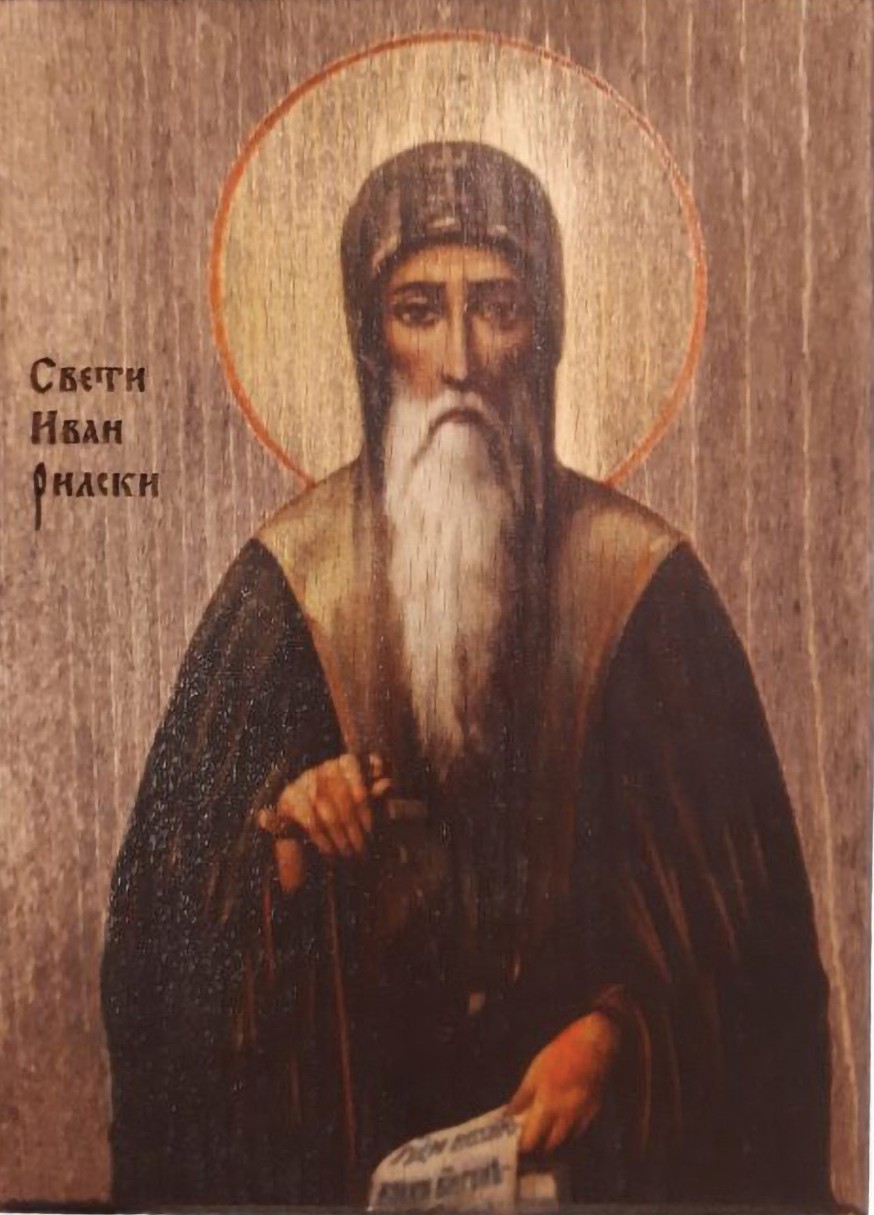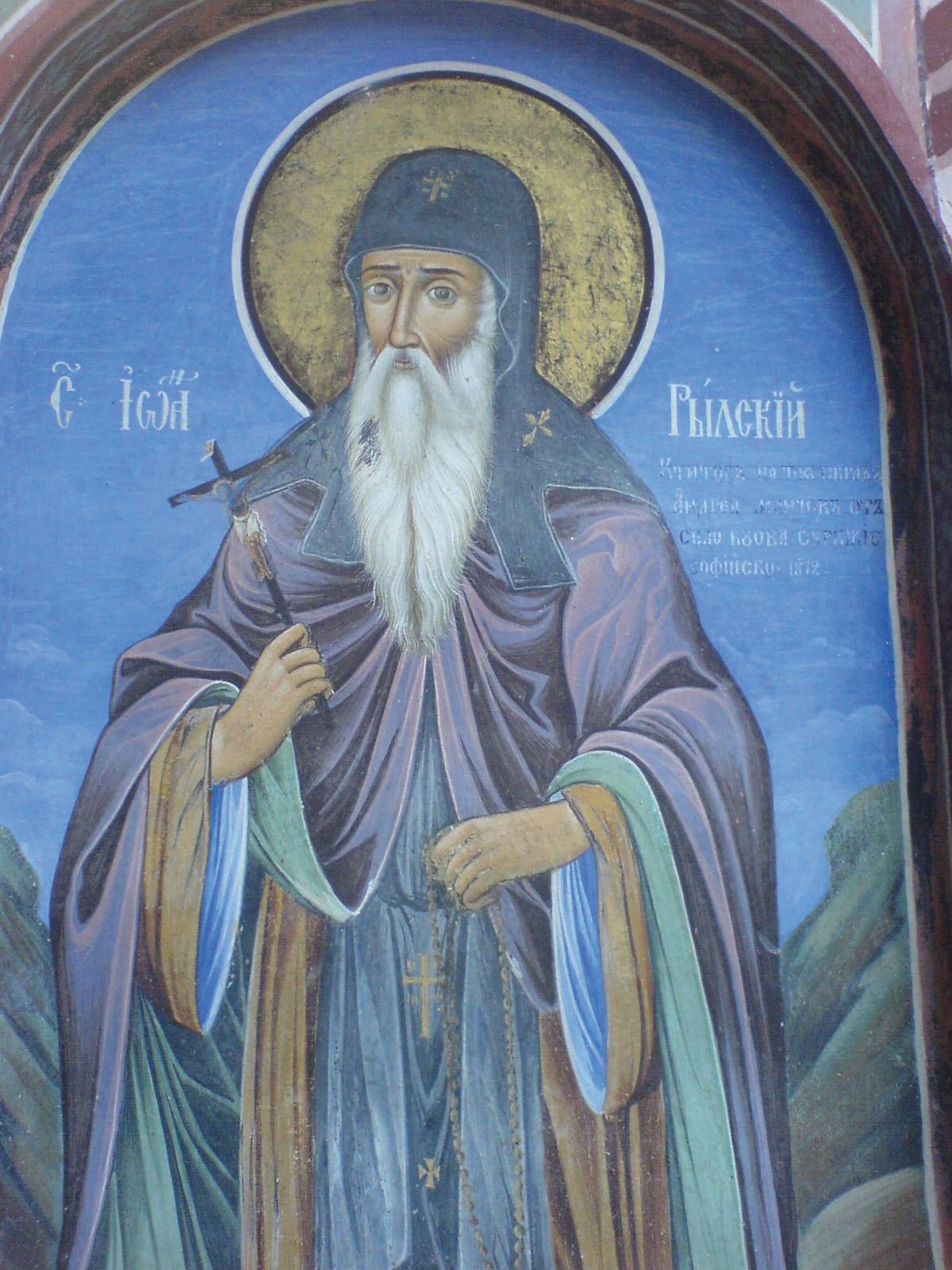
John of Rila
876–946, present-day Bulgaria
John of Rila (or Ivan of Rila), the miracle-working Orthodox saint and father of the Bulgarian hermits, was born into a Christian family in 876 in Skrino, not far from Sredets (present-day Sofia). His parents died early, leaving the religious young man living the life of a shepherd wondering what God’s plan was for him. Tradition has it that his faith was so strong that he brought back a lost calf by walking on the water, praying as he crossed the flooded river. At the age of twenty-five, he gave away all his belongings to the needy and, listening to his inner voice, entered the nearby monastery of St Dimitrii to dedicate his life to God as a monk.
Immersed in the sacred writings, John acquired a great deal of knowledge, yet deep in his soul he longed for the quiet life of a hermit, so he left the monastery, first living in the nearby mountains, heading to the picturesque Mount Rila. He built himself a hut of dry branches, ate wild plants, and spent his days in fasting and prayer. For a while, he lived in the hollow of an oak tree and lived on chickpeas. He also fed the shepherds who came across him in search of their stray flocks. One of the shepherds, despite the warm hospitality, secretly took some of the chickpeas, but when he opened the pods on his way home, he found nothing inside. Understanding the message, the shepherds returned to the hermit, who was waiting for them and forgave them.
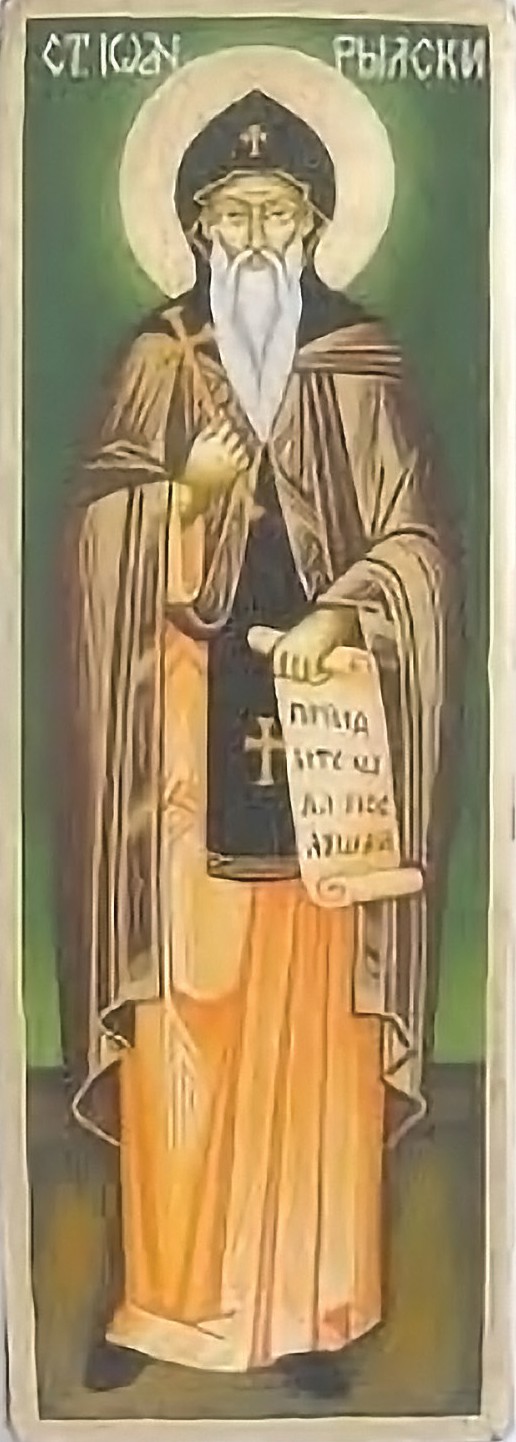
John was occasionally forced to leave his home due to the attacks of bandits. Ever more people came to him with their physical and spiritual ailments, hoping for a cure. He always told them that he could only pray for them and that God was the true source of healing. Yet his prayers led to a succession of miraculous healings. The news of the miracle-worker hermit reached Bulgarian Tsar Peter I, who sent out search parties for him. They found the priest, who shared his little bread with them, which miraculously multiplied, and he was always able to break and give some more to his guests. Afterwards, the Tsar himself visited the saint. As a token of his appreciation, he later sent John fruit and gold, yet he only kept the fruit and returned the gold accompanied with a letter, which the Tsar always carried on his person and read many times.
The hermit was flooded with visitors and he took the monks under his wing, founding the forerunner of the famous monastery of Rila, while his former cave became a sanctuary. In the Testament of John of Rila, one of the greatest works of Old Bulgarian literature, he left his followers guidelines and rules for monastic life. Legend has it that John the Baptist himself informed him of the time of his death. He summoned his disciples, bade them farewell, and on 18 August 946, on the Afterfeast of the Dormition, he retired to his heavenly home, dedicating himself to the Lord. The news of his death spread quickly, and his tomb was visited by pilgrims and the sick, many of whom were miraculously cured.
The body of the saint did not decompose, and even forty days after his death it still smelled pleasant when he appeared to one of his close disciples in his sleep and showed him where to bury his body. His resting place became a source of many miracles. After some time, his grave began exuding wonderful aromas and he appeared again in the dream of his disciples, asking them to take his body to Sredets. When he was reburied, 34 years after his death, his cartilage was still found intact. Subsequently, in 1183, during King Béla III of Hungary’s campaign against Byzantium, he took John’s remains with him from the city, which had been captured by the empire, and deposited them in Esztergom.
The Archbishop of Esztergom was displeased by the growing popularity of the incorruptible saint of the Orthodox Church and forbade his veneration. The archbishop’s tongue then swelled, making him unable to utter a single sound. He was only freed from this condition when he bowed in penitence before the reliquary of John of Rila. King Béla III, after many signs and miraculous events, understood that the body of the saint belonged to his native land, and in 1187 he had it returned in a gilded coffin. Today, St John of Rila is the patron saint of Bulgaria and the monastery of Rila is a World Heritage Site, where nearly a million visitors and pilgrims pay their respects to the great Bulgarian saint every year.
“Because, for the monk, wealth is not silver and gold, but perfect poverty, renunciation of one’s own will and great humility.”
“Living together for the Lord’s sake and bearing the burdens of one another, do not neglect those who live in solitude and wandering over deserts and in mountains, and in dens, and in caves of the earth, of whom the world was not worthy, but supply them as much as you can, in order to hold them as your petitioners before God, for the prayer of the pious may achieve much.”
“Gold and silver are great enemies of the monk and bite those who have them like a snake.”
In medieval Hungarian folklore there was a saying “as long as the song of St John”, which was based on the habit of John of Rila, who used to sing hymns in the wilderness all day long.
“That is why, children, as the Holy Spirit through the mouth of the prophet glorifies the communal life, do you not neglect it either, but on the contrary, confirm it and be like one body in the Lord, which has different members. Some of them form, however, the head which governs, others the feet which toil and bear, so that there is formed from all a single spiritual body in the Lord, created with a single mind and logical spirit, and directed by spiritual reasoning, in no wise having divisions.”