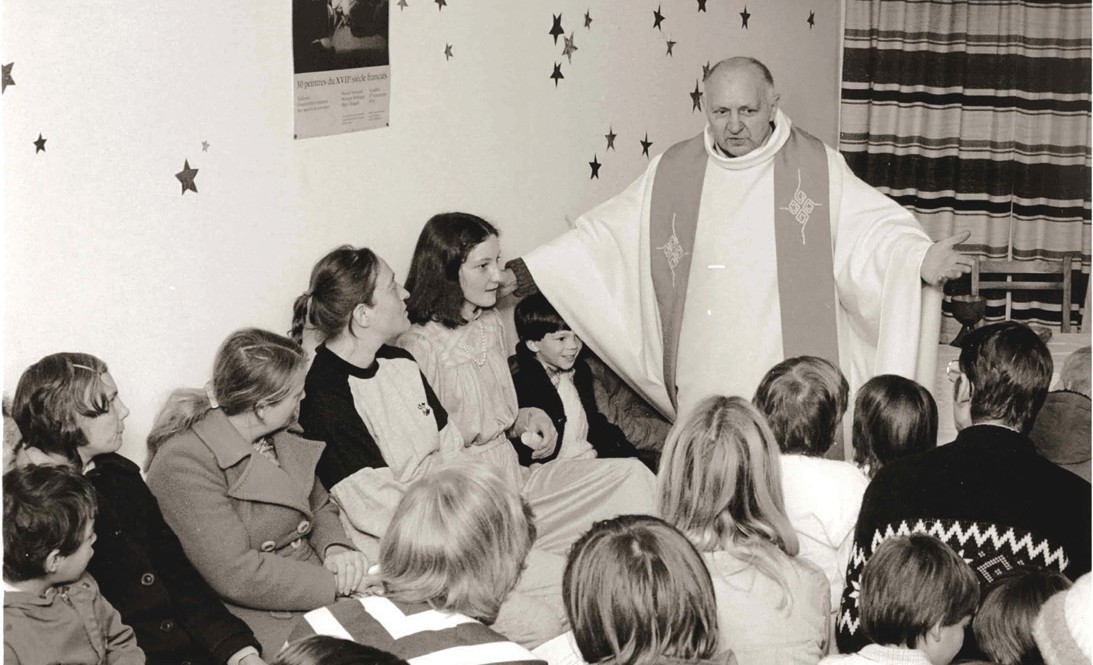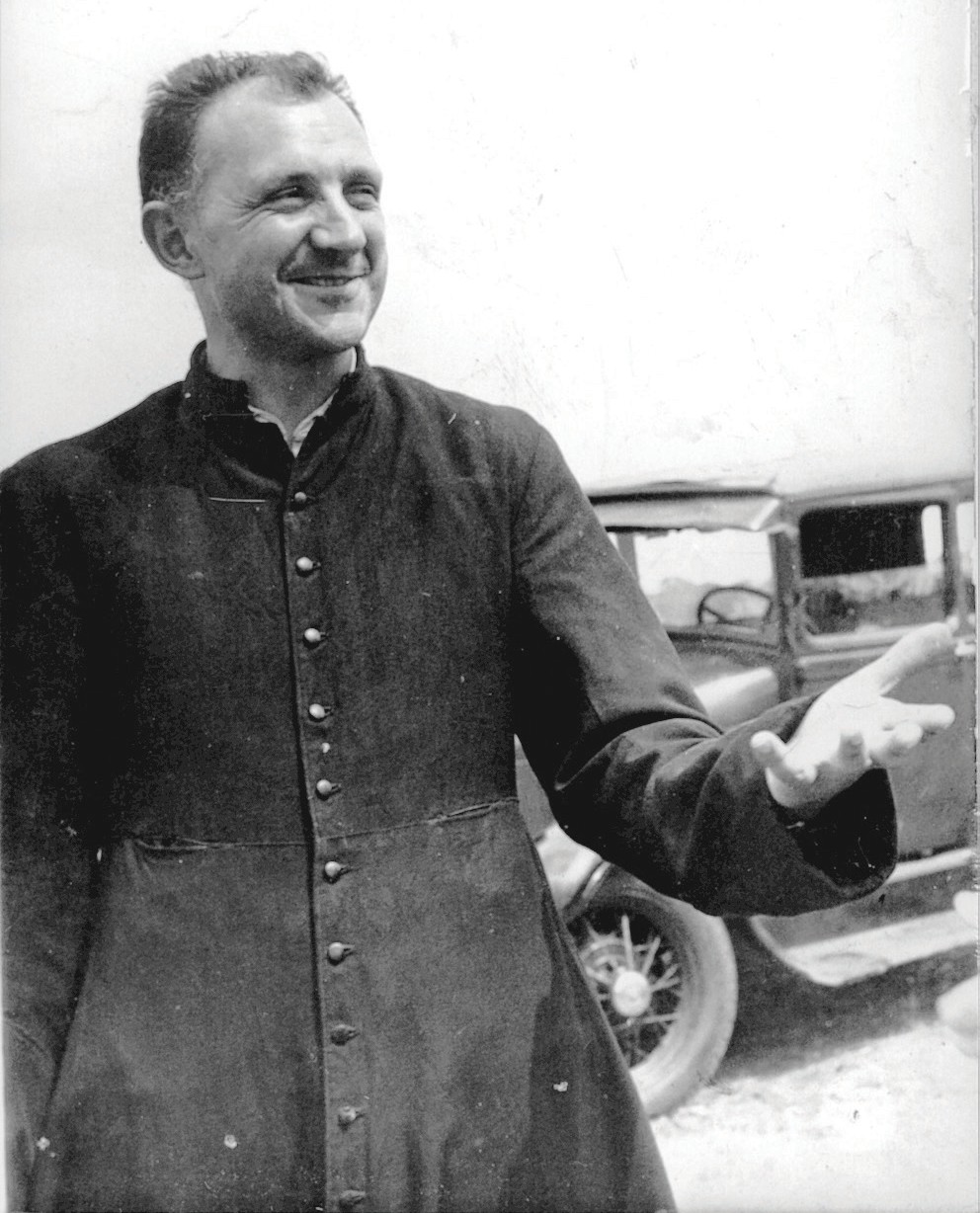
Joseph Wresinski
1917–1988, France
Joseph Wresinski, Polish-born French priest, humanitarian activist, founder of the international ATD Fourth World movement, and spokesman for the destitute, was born in Angers, France to a Polish father and a Spanish mother on 12 February 1917. His father abandoned the family at an early age, and Wresinski experienced poverty and deprivation first hand as a child, but it was these experiences that helped him empathise with the plight of those living in poverty. He became a baker’s apprentice in Nantes, then became involved in the Young Christian Workers’ Movement, whose motto – ‘See-judge-act’ – had a crucial impact on his later life.
In light of the suffering of the destitute, he decided to study as a priest and work to “restore the poor to the church and the church the poor.” The motto that Wresinski chose in 1946 when he was ordained a priest – ‘Row out to deep water and cast your nets’ – clearly mirrors his intention to plunge himself into the ‘deep waters’ of society and ‘cast’ his lot with the poorest of all. Wresinski’s anthropology rests on the double evidence that man is and foremost made in the likeness of God and as such is the bearer of infinite and inalienable dignity, and secondly, that this dignity is manifested first and foremost in the disenfranchised, the most vulnerable, the most destitute.
In 1957, on behalf of his bishop, he worked at the Noisy-le-Grand homeless shelter, founded by Abbé Pierre, near Paris, where 252 families were living in abject poverty. According to Wresinski, there was nothing to unite the people living in the shelter but misery, suffering and pain. Yet he did everything he could to restore their dignity and quickly gained their trust. With all his heart, he wanted the children living there to learn about art, poetry and beauty. They could draw, make toys, organise dance classes and open street bookshops for young people who were illiterate at the time.
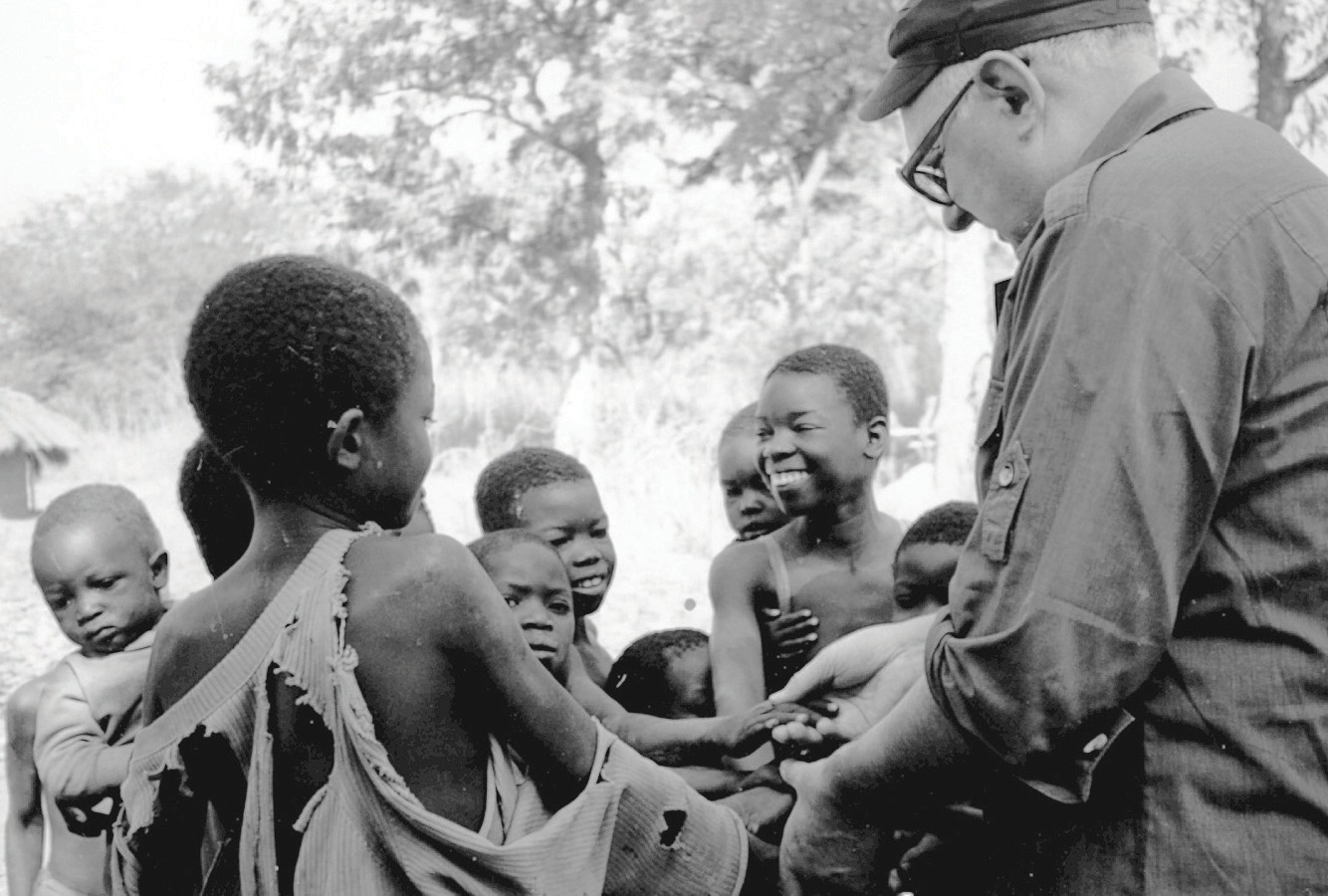
His experiences in the slums led him to embark on what initially seemed like a never-ending task, but later more and more people joined his initiative. He established the international ATD Fourth World movement (which stands for “Aide a Toute Détresse” (Help all in Need) in French or “All Together in Dignity” in English), which was open to anyone who wishes to actively help others. The movement operated on three levels: its volunteers stand for those living in poverty; its so-called allies were prepared to discredit themselves for the sake of others and draw society’s attention to those living in poverty; while those on the decision-making level sought to bring about policy changes that would affect the lives of the poorest.
Wresinski was convinced that the search for a solution and its implementation could only be achieved with the active involvement of all stakeholders. He saw people not as objects of social welfare but as people who were suffering. He openly advocated a ‘theology of liberation’ that opposed the suppression of human dignity and exploitation. His goals were greatly helped by the church renewal efforts of his contemporaries (including Pope John Paul II and Pope John XXIII) and the decisions of the Second Vatican Council. Wresinski established the Standing Conference on Deep Poverty, which operated in over 100 countries in the 1990s. In 1979, he was appointed a member of the UN Economic and Social Council.
In 1987, he presented the report that bears his name to the Council, which became a historic landmark in the fight against poverty. On 17 October 1987, in Trocadero Plaza, Paris he inaugurated the monument commemorating the victims of poverty. Wresinski could not be revived after his heart surgery on 14 February 1988. His final resting place is in Méry-sur-Oise, France, in the chapel of the international centre of the movement he established, which has now grown to a worldwide scale. In 1992, the United Nations declared 17 October the International Day for the Eradication of Poverty. The book containing a series of discussions with Wresinski entitled The Poor are the Church, raises social issues that are still of great importance today, to which Father Wresinski has given authentic answers through his devoted life.
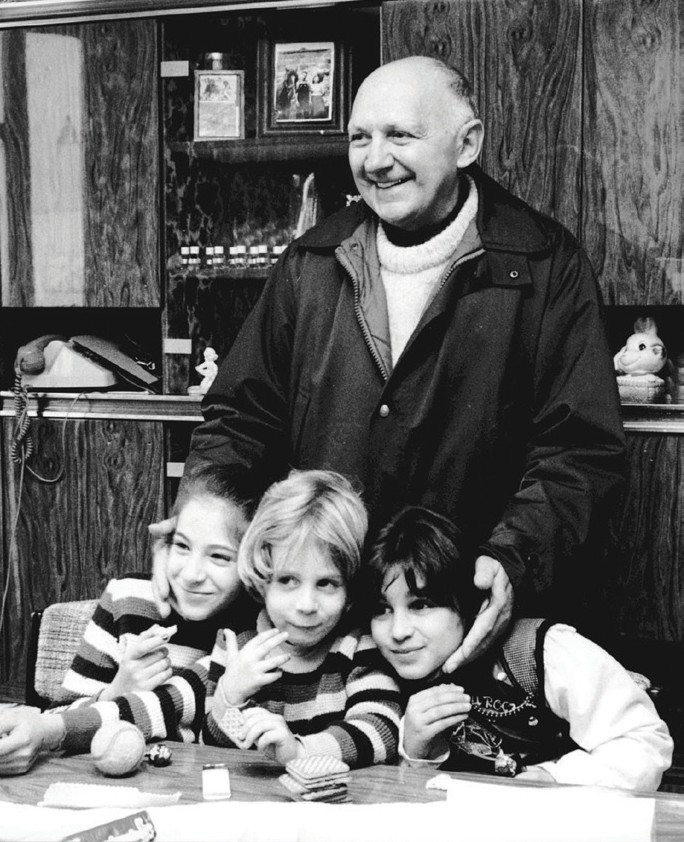
“You impose a way of life on us; you accept we live such a life. We tell you this is how we live, this is the misery we suffer, a misery we refuse and that you have to refuse with us. How can you continue to pray to a God who is forever affronted by the life we’re forced to live, by the unspeakable suffering we endure every day, every single moment of our lives? What we suffer from is not the lack of bread, though we do need bread. We’re talking about the life of indignity you keep us in.”
“Poverty is the greatest disability. And it is the victims of poverty whom the Lord saves first, and through them that grace flows to the church.”
“In fact, we priests are troubled by the fact that at the end of our lives the Lord will say to us, ‘I was there, in that shack, in that slum. I was that family in distress, that uneducated child. You passed me by without slowing your pace and you didn’t recognize me.”
“The poor are the arteries through which the blood flows, which is to wash through the whole body. If the artery becomes blocked, the whole body dies. The poor are the artery of the church and their liberation is a matter of life and death.”
“If someone is disabled, they cannot be expected to walk, but those around them can be expected to help them walk.”
“By focusing on the most oppressed person, we embrace all of humanity in a single person.”