
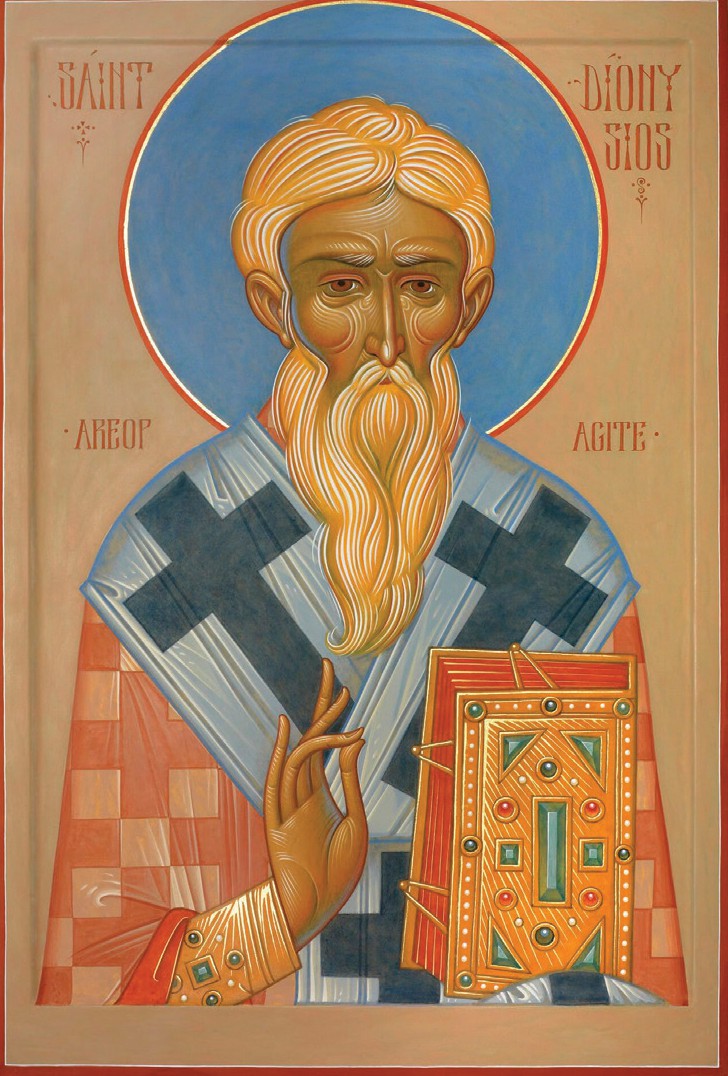
Pseudo-Dionysius The Areopagite
5–6th century CE, Byzantium (present-day Turkey)
Pseudo-Dionysius the Areopagite, the great Byzantine theologian, mystical philosopher and founder of Christian Neo-Platonism formulated the doctrine of angelic hierarchies. To this day, there are countless views and opinions about his mysterious personality, and religious scholars have not reached consensus on the matter. What is undoubtedly more important than his life is his work that has had a major impact on the intellectual life of our times. His treatises represent some of the most important writings in mystical literature.
Some have suggested that he is identical to the Georgian theologian Peter the Iberian. Other research has tied him to the Athenian convert of St Paul in the 1st century CE, Denys the Areopagite. Many figures in religious life have attempted to unravel this mystery, including Pope Saint Gregory the Great, Peter Abelard, Lorenzo Valla and Erasmus of Rotterdam. The mystery surrounding his identity is further compounded by the fact that the martyred bishop of Paris in the 3rd century also bore the same name. It seems likely that we are dealing with two authors born at different times, and that the theologian who lived at the turn of the 5th and 6th centuries was merely continuing and completing the work of his predecessor, who lived several centuries earlier.
Undoubtedly the most important aspect of his work was the precise elaboration of the doctrine of ‘angelic hierarchies’, through which we can understand how God works and helps the world through the angelic orders. Pseudo-Dionysius was the first to elaborate a harmonious system of the higher worlds through the angelic orders. In the doctrine of angelology there are nine levels of angels, which are manifested as the helpers of God who, regardless of their rank, also help humans and harmonise the workings of the heavens.
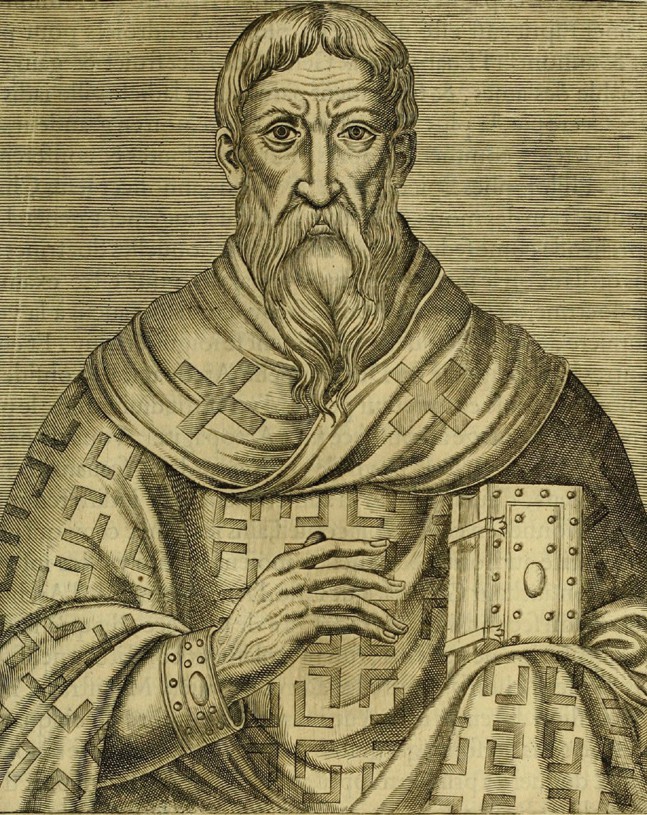
Pseudo-Dionysius divided the angelic orders into three orders, with the Lowest orders consisting of the Angels, Archangels and Principalities. The so-called “Middle orders” consists of the Dominions, Virtues and Powers, while closest to God is the so-called “Highest orders” of the Thrones, Cherubim and Seraphim. The system of Pseudo-Dionysius is still used in both exoteric and esoteric circles and is an important part of Christian theology, although it is not accepted by the Reformed Church.
Many religious scholars believe that this doctrine could not have been developed without clairvoyance. Moreover, Pseudo-Dionysius managed to combine Neo-Platonism with Christian philosophical doctrine, thus serving as a forerunner of the philosophy of scholasticism. His works fall into two categories: surviving writings and writings known only by reference. The former category consists of his letters and known writings on divine names, the Divine Hierarchies, ecclesiastical hierarchy and mystical theology. The group of writings known only by reference include his writings on theology and those that were referenced yet only partially discovered.
His writings, with their lofty tone and adopting a spiritual approach to eternal truths, can be seen as a direct and conscious continuation of the theology of John the Apostle. Saint Gregory Palamas referred to him as the “infallible observer of divine matters”. Bonaventure, Albertus Magnus, Thomas Aquinas, Meister Eckhart, Tauler and countless other mystics drew heavily on his teachings. His theology emphasized that it is possible for man to ascend step by step to God. At the end of the journey, it becomes possible for the seeker to say, like St Paul, “It is no longer I who live, but Christ who lives in me.” Pseudo-Dionysius, who shed light on the world of angels and brought it closer to men, addressed his final letter to the Apostle John.
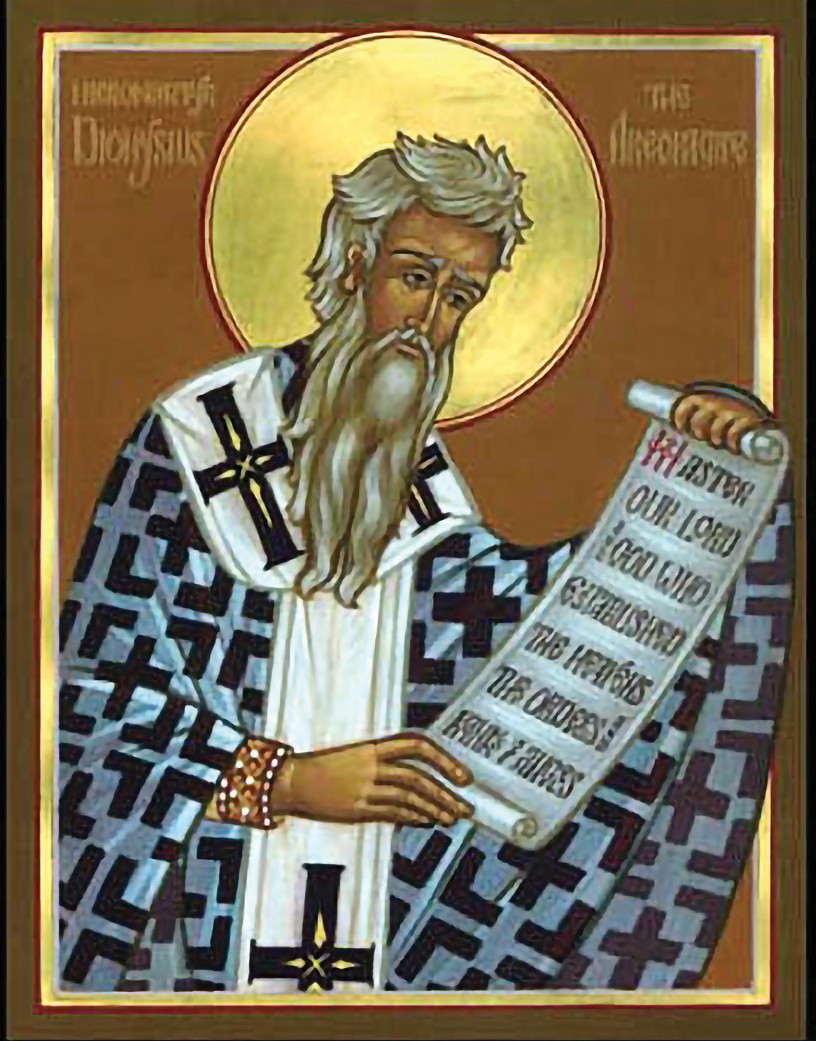
“For all beings are preserved in what is incorruptible of their own nature and indeed are filled with every divine harmony and sacred good form.”
“The Word of God has designated the whole Heavenly Beings as nine, by appellations, which show their functions. These our Divine Initiator divides into three threefold Orders. He also says that that which is always around God is first and is declared by tradition to be united closely and immediately, to Him, before all the rest. For he says that the teaching of the Holy Oracles declares, that the most Holy Thrones, and the many-eyed and many-winged hosts, named in the Hebrew tongue Cherubim and Seraphim, are established immediately around God, with a nearness superior to all. This threefold order, then, our illustrious Guide spoke of as one, and of equal rank, and really first Hierarchy, than which there is not another more Godlike or immediately nearer to the earliest illuminations of the Godhead. But he says, that which is composed of the Authorities, and Lordships, and Powers is second; and, as respects the lowest of the Heavenly Hierarchies, the Order of the Angels and Archangels and Principalities is third.”
“Thus, both nameless and all the names of beings befit the cause of all, being beyond all, precisely so that it would be king of all and all would be about it – being raised to it as cause, source, and limit – and so that it would be “all in all” as the writings say.”
“God is cause and origin and essence and life of all things; and even of those who fall away from It, both recalling and resurrection; and of those who have lapsed to the perversion of the Divine likeness, renewal and reformation; of those who are tossed about in a sort of irreligious unsteadiness, a religious stability; of those who have continued to stand, steadfastness; of those who are being conducted to It, a protecting Conductor; of those being illuminated, illumination; of those being perfected, source of perfection; of those being deified, source of deification; of those being simplified, simplification; of those being unified, unity; of every origin superessentially super-original origin; and of the Hidden, as far as is right, beneficent communication; and, in one word, the life of the living, and essence of things that be; of all life and essence, origin and cause; because Its goodness produces and sustains things that be, in their being.”



