Sergius of Radonezh
1314–1392, Russia
Sergius of Radonezh, the leading figure of the spiritual life of medieval Russia, patron saint of the country, miracle-worker and visionary Orthodox saint who was the first to receive a vision of the Blessed Virgin, was born on 3 May 1314 in Varnitsa, a village near Rostov, into a Bohemian noble family. Upon his baptism, he was given the name Bartholomew, after the apostle of the same name. His parents were aware that they were in the company of a saint. Since the very beginning, the child led an ascetic life: every Wednesday and Friday he refused to take his mother’s milk, and in response his mother gave up eating meat altogether. Subsequently, Bartholomew continued his strict fasting, keeping vigils and forgoing food on Wednesdays and Fridays.
Yet learning to read and write posed a challenge for him. Often reprimanded by his parents and teachers, and ridiculed by his peers, he turned to God for help. Legend has it that one day an angel of God appeared to him in the form of an elderly Starets praying at the foot of an oak tree in a field, and after asking him what he wanted, he said a prayer, blessed him and said the following to him: “Henceforth, my child, God gives you to understand reading and writing, and in this you will surpass your brothers and peers.”
Bartholomew then invited him to his parents’ house, who welcomed him and when offering him food, he said: “The bread of heaven is to be received before the food of the flesh.” He opened the book of Psalms and gave it to the child. To the amazement of his parents, Bartholomew began to read the passages flawlessly. The monk then issued the following prophecy: “Your son shall be great before God and the people. He shall become a chosen habitation of the Holy Spirit.”
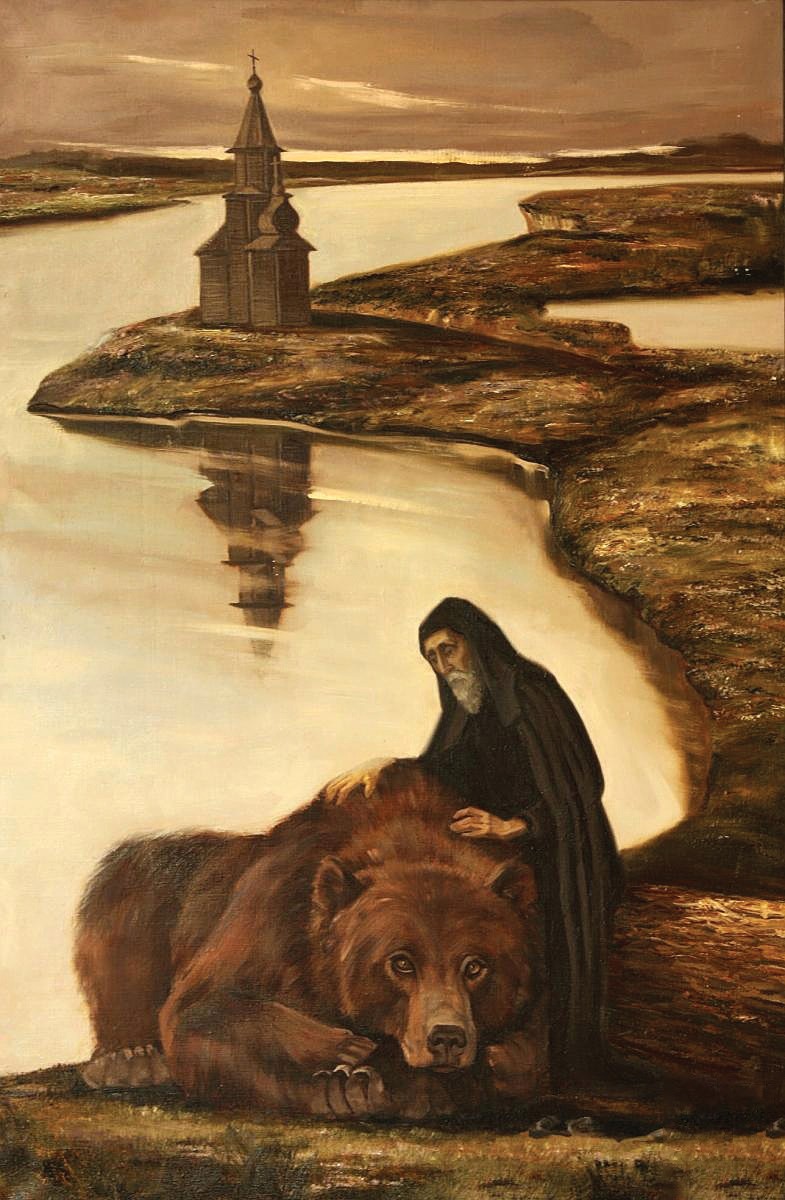
Around the year 1328, the family moved to Radonezh. Following the death of his parents, Bartholomew and his brother Stefan retreated to the nearby forests, where they lived as hermits in extremely nomadic conditions, amidst unbearably cold weather, frequently heavy snow and the presence of wild animals. Here they built a shelter and a small wooden chapel. This served as the foundation of the subsequent Trinity-St. Sergius Lavra (in the present-day Sergiyev Posad). However, his brother soon abandoned the hermitage, and Bartholomew was overcome by anxiety concerning the correctness of his chosen path. Initially, his most frequent visitor was a bear, who came to see him every day and he shared his meagre food with him.
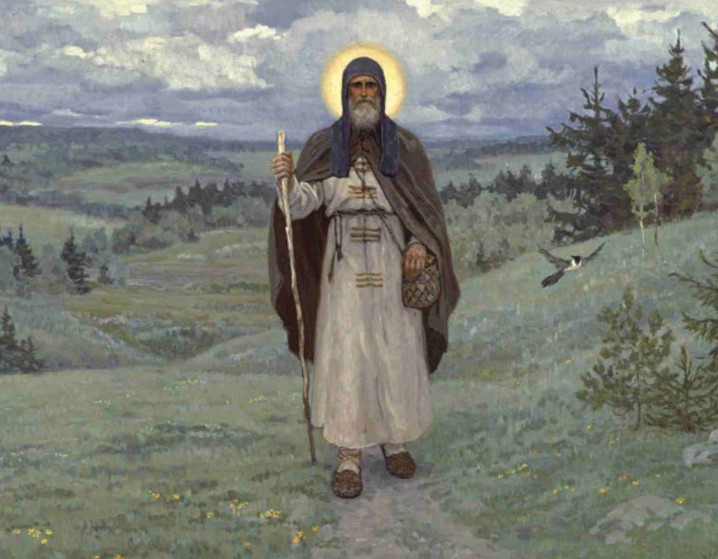
Occasionally, he was visited by an elderly priest named Mitrofan. On one occasion, he brought him monastic robes and, after taking his vows, he granted him the name Sergius, in honour of the martyr of the same name. Once, when Sergius was immersed in prayer, he had a vision of a sky filled with doves, and a heavenly voice spoke to him, informing him that he would have as many disciples as there are birds in the sky. Sergius was granted the gift of miracle-making, and the news of this quickly spread throughout the land. People flocked to him for healing and spiritual advice.
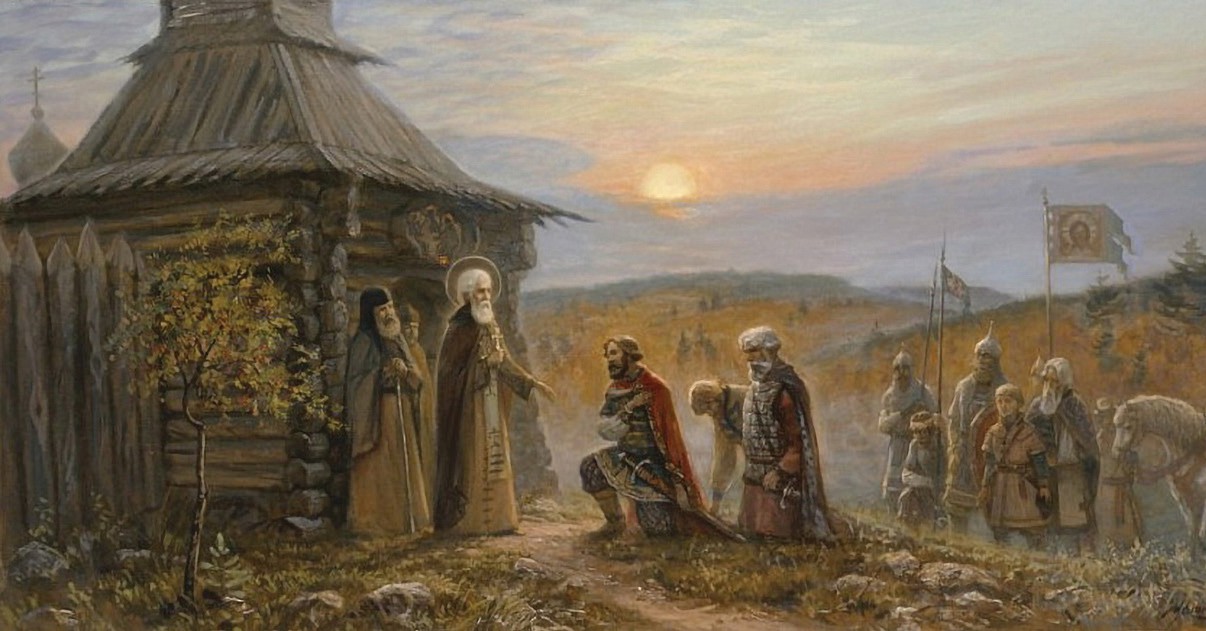
More and more disciples gathered around him, and some of them did not even shy away from hermitage, despite the extreme hardships of the lifestyle Sergius adopted, based on hard physical labour, frequent vigils, prayer and fasting. His hagiographer, Epiphanius, recorded that they were often saved from starvation by divine providence. His companions struggled with the extreme conditions yet in face of their dissention, Sergius stood his ground and established a new monastery along the Kirghiz River. They recorded that he later returned to Radonezh at the request of his superiors, where he restored order. His fame grew when he predicted victory over the invading Mongols in 1380.
Shortly before his death, Metropolitan Alexius, Metropolitan of Moscow – with whom he had a close friendship – asked him to take over the leadership of the Church, yet he refused. He remained a humble monk, renouncing worldly pleasures, bringing joy and confidence through his sheer existence into the lives of the Russian people who had endured a great deal of hardship. He professed to his people with his whole being: “God has not abandoned us!” When faced with difficulties and hardship, all generations of Russians ask for his intercession.
The tomb of Sergius of Radonezh is found in the Trinity-St. Sergius Lavra, which was destroyed by the Mongols and subsequently rebuilt and which has since become a key Orthodox pilgrimage site and one of the spiritual centres of Russian Orthodoxy. Saint Sergius – also known as the igumen of the Russian land – foretold his own death. He retired to his heavenly home on 25 September 1392. A handful of his relics have survived, to which countless miracles have been attributed. After his death, St Sergius appeared to his followers on multiple occasions, and his prophecies were always fulfilled.
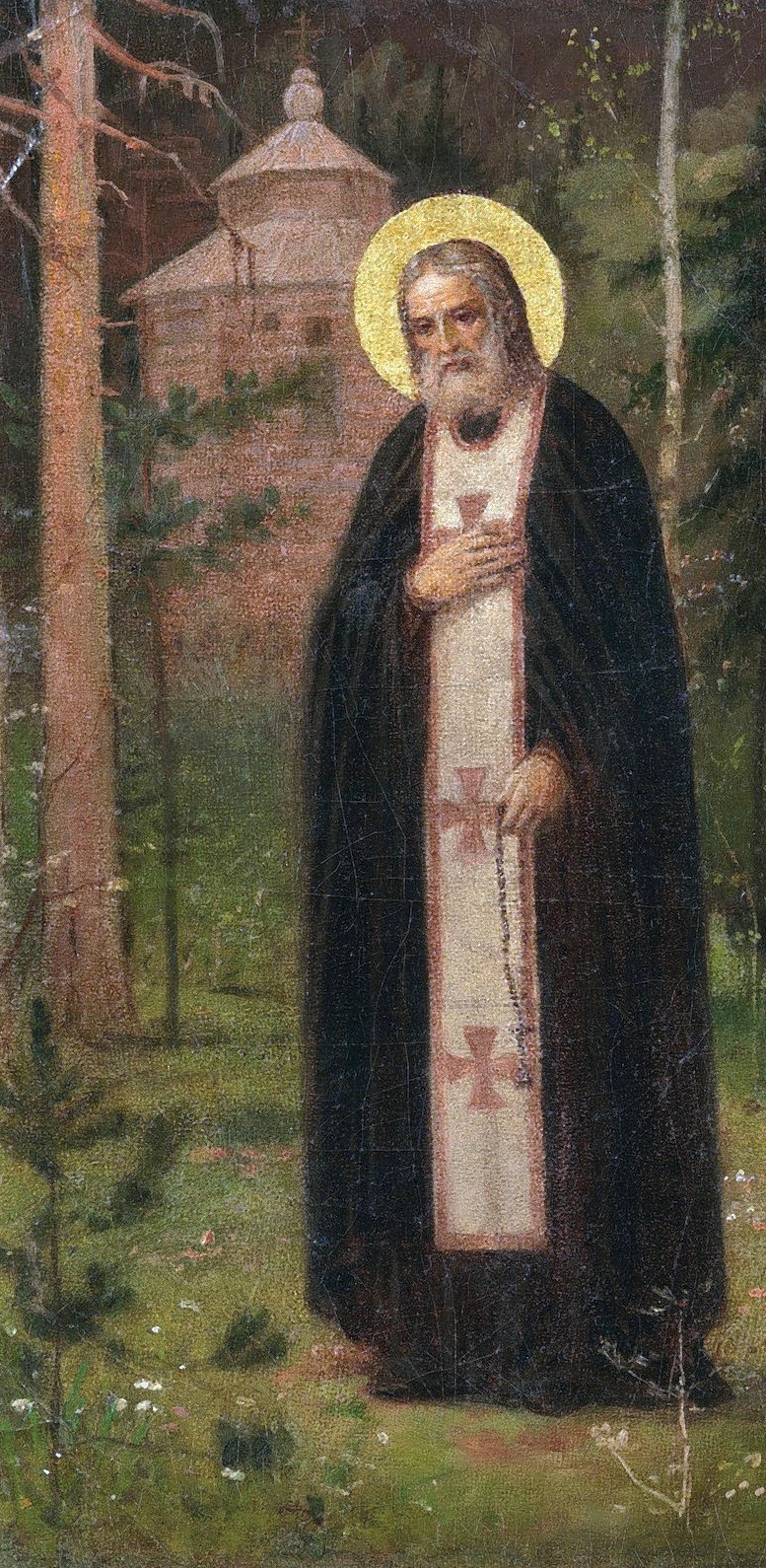
“Above all things have a fear of God, a clean soul and unfeigned love.”
(These were the final words of Sergius of Radonezh)
“Although the saint desires no glory either in life or after his death, he was glorified by the great power of God. Upon his departure, the angels of heaven came to meet him, opened the gates of paradise for him, and led him into the happiness he longed for, the rest of the righteous, the splendour of the angels. He was granted what he always longed to witness: he received the full splendour of the Trinity which is granted to the ascetic and those who fast.”
(The words of Epiphanius of Salamis on Sergius of Radonezh)
“Henceforth, my child, God gives you to understand reading and writing, and in this you will surpass your brothers and peers.”
(The secret master’s promise to the young Sergius)
“As an abbot, Saint Sergius set an example to his brothers in the field of prayer, the love of books (many of which he copied) and in work. He chopped wood, worked in the garden, baked bread […] He displayed gentleness and true humility, imitating his Lord Jesus Christ in all things.”
“The bread of heaven is to be received before the food of the flesh.”
(The words of the secret master of Sergius of Radonezh)
“Your son shall be great before God and the people. He shall become a chosen habitation of the Holy Spirit.”
(The prophecy related to the life of Sergius of Radonezh)