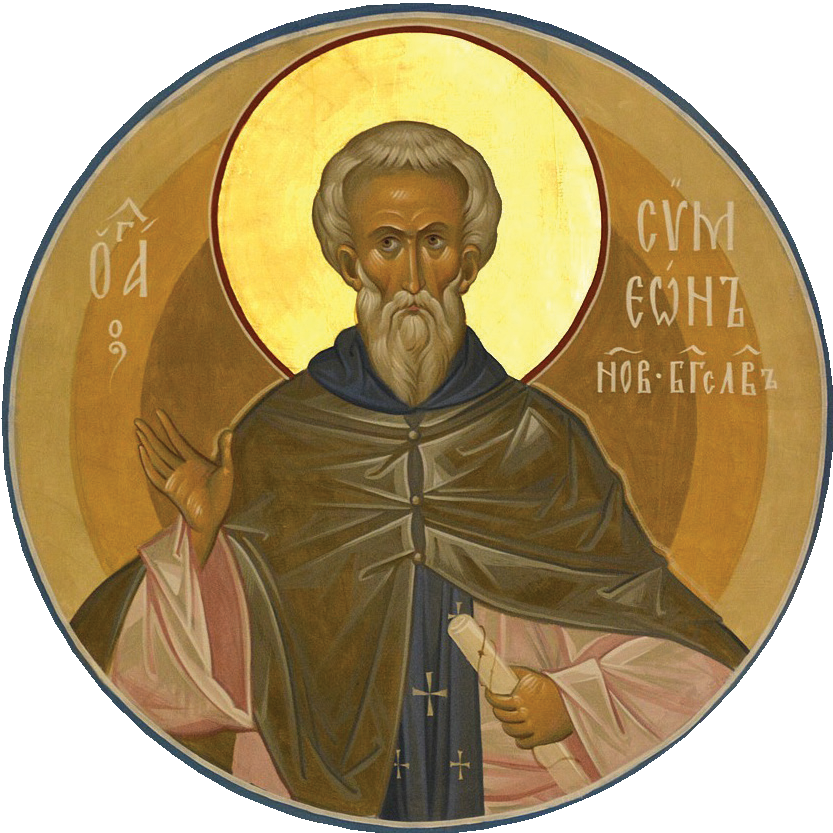
Symeon The New Theologian
949, present-day Turkey–1022, present-day Albania
“Let us seek with all our soul the queen of virtues, repentance. This will first cleanse from their filth all those who practice it. In one stroke, it will cleanse them of their passions, purging them like a sore boil… Behold, this is what the divine fire of repentance accomplishes with tears.”
Symeon, the New Theologian, one of the greatest mystics of the Orthodox Church, was born in Basileion, Galatia on the southern shore of the Black Sea in Asia Minor, into a wealthy family known as the Galatons in 949 AD. He was one of the three saints, along with the Apostle John and St. Gregory of Nazianzus, who were granted the title of “Theologian” in the Orthodox Church. This title refers to a man who has come to witness, through personal experience, how the “Word of Life” lives among us. He struggled to proclaim to the people that those who live a life worthy of this have the opportunity to have mystical experiences and “partake in the divine nature” in their lifetime.
At the age of 11, he was sent to Constantinople, where he received a fine education. His uncle was granted an important position in the court of Emperor Constantine VIII and the well-behaved young man had a bright future ahead of him. Yet the ordinary pleasures of worldly life did not satisfy him, and he longed for something different. At the age of fourteen he met Symeon the Studite, a famous monk from the monastery of Stoudios in Constantinople, who became his spiritual father. He persuaded him to devote his life to prayer and asceticism, yet due to his young age, he also asked him to wait patiently until he could become a monk.
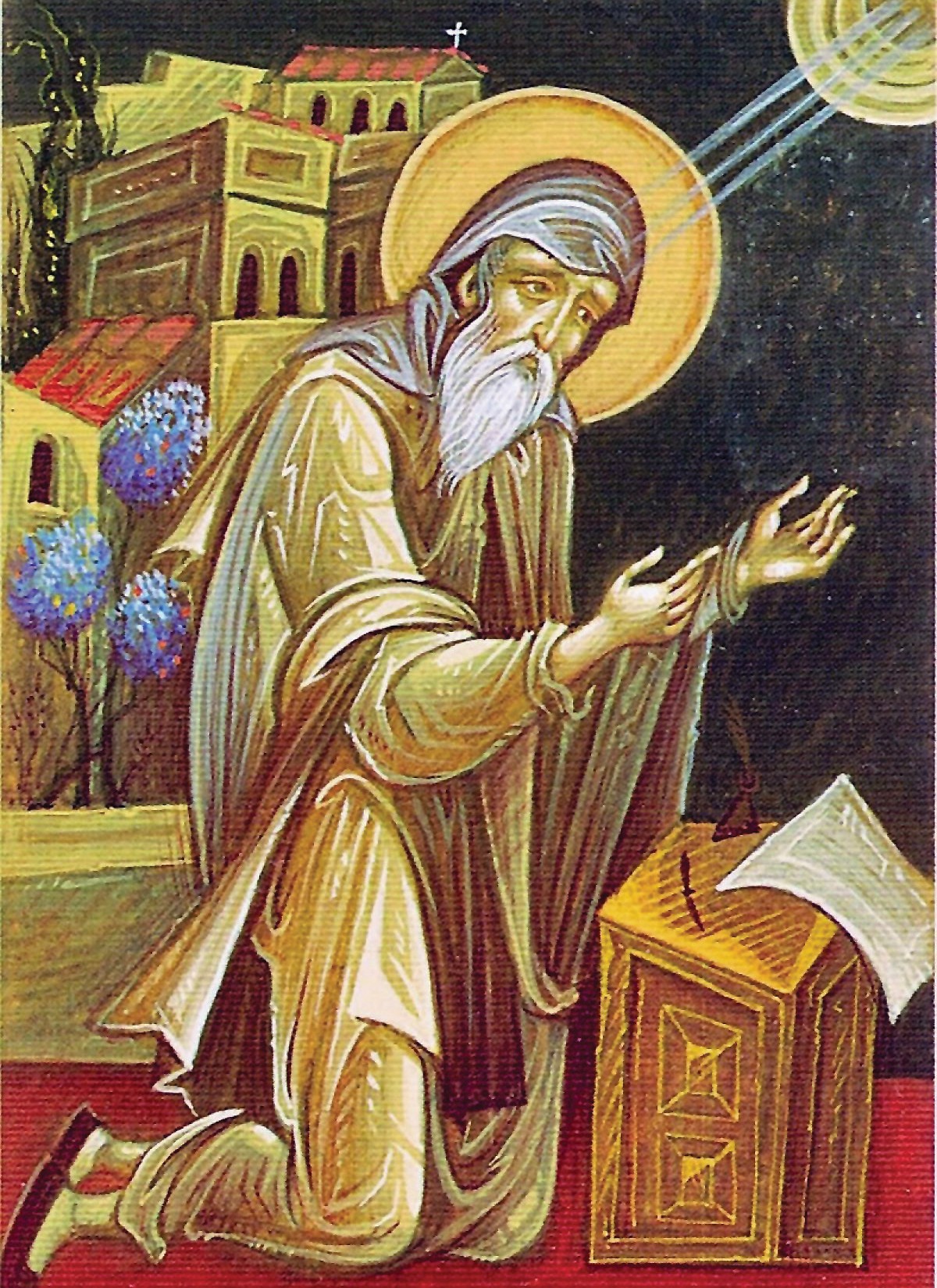
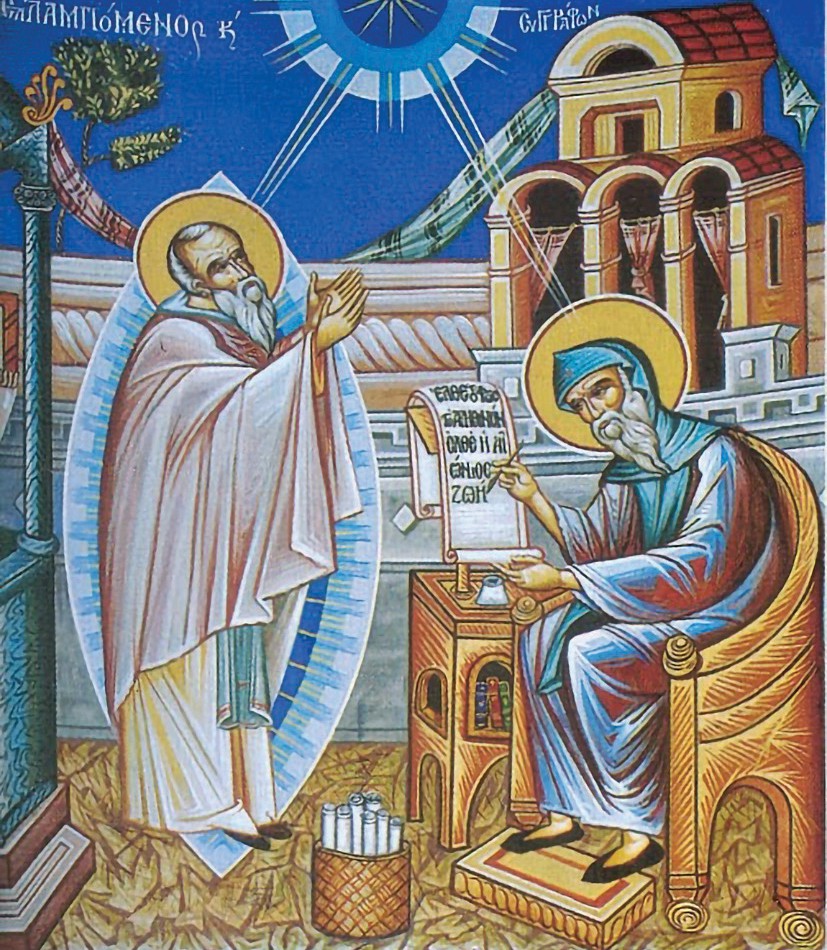
As a result of his long and deep prayers, he had his first significant mystical experience around the age of 20, during which he was surrounded by light from all directions and experienced God’s presence as a bright radiance. In the years that followed, he went through a prolonged spiritual crisis, very similar to what is referred to in Christian mysticism as the “the dark night of the soul”. He himself later referred to this period as “utter darkness” as he became increasingly distanced from his spiritual peace. Finally, after a long and difficult period of brooding, he entered the monastery of Stoudios at the age of 28, where he was introduced to the practice of monastic life by the elderly Symeon. In his spiritual diary he wrote: “only with great agony, tears, strict detachment, perfect obedience and the total abolition of my own will, having taken up and practised many methods of fasting, have I finally been judged worthy, beyond all doubt, to see again a tiny ray of divine light.”
Gradually, under the guidance of his spiritual master, he had ever greater experiences of grace. He recognized and understood that the source of the light he sought was Jesus Christ himself, with whom he entered into an ever more intimate union. “It is I,” says God, “who became flesh for you. And because you sought me with all your soul, behold, you are now my brother, my heir and my friend,” he wrote. Symeon was soon forced to leave the Stoudios monastery due to the jealousy of his companions and the hostility of the abbot and was sent to the monastery of St Mamas. There he was ordained a priest and by the age of thirty he became the abbot of the monastery. He held this position for twenty-five years, and succeeded in transforming a monastery in crisis into a thriving community.
His reform efforts and measures (including the introduction of vegetarian meals and practices aimed at establishing discipline and humility) were sometimes met with resistance. Once, thirty disgruntled monks rebelled and left the monastery. His life and activities, in addition to the autobiographical elements in his writings, were recorded in the notes of his disciple, Niketas Stethatos. Symeon left a number of important works to posterity. His most important teachings were on the transformation of the hardness of the heart, repentance and “holy tears”. It is recorded that he was deeply concerned with ‘holy weeping’, that is, tears of repentance and compassion for others. He himself was often seen weeping. “Blessed are they who ever weep bitterly for their sins, for the light shall seize them and change the bitter into sweet.”
His biographer recorded that while weeping, he once experienced a great transcendent joy and cried out, “What could be greater and more radiant than this?” Christ then appeared to him and said: “Your present joy compared to the joy to come is like the sky drawn on paper compared to the real sky.” His fame spread quickly, yet his teachings, based on his direct experience of God brought him into conflict with key church figures, and towards the end of his life, due to the slander that reached the Patriarch, he went into exile around 1005 and founded the monastery of St Macrina near Scutari (now Shkodra, Albania). He died on the day he predicted, 12 March 1022.
“The tears of mourning for sin will extinguish all the fire of the passions and wash the soul clean of their foulness.”
“Brother, never communicate without tears!”
“You can’t wash dirty clothes without water. Without tears of repentance it’s much less possible for the soul to be cleansed and purified of its stains.”
“The charitable are those who have a constant compassion for the poor, widows and orphans, and who shed warm tears for them.”
“Forget the world and all its inhabitants, and cling only to happy repentance. Weep only for the evil you have done, for it separates you from the Lord of all, Christ God, and from all the saints!”