Darqawi
around 1737–1823, present-day Morocco
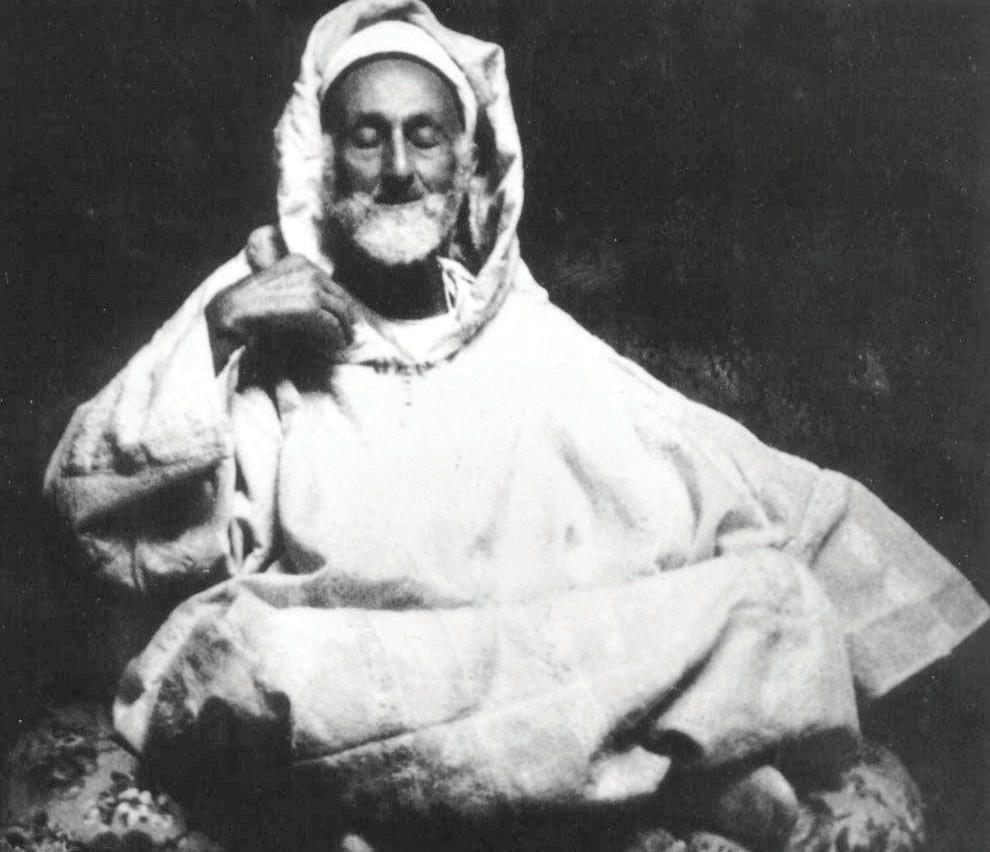
Abu Abdullah Muhammad al-Arabi al-Darqawi, a key figure of Sufism, the mystic branch of Islam, was born around the year 1737 in the town of Bou-Barihb located north of Fez in Morocco. Even amongst his ancestors he had a saint known as a religious leader. He spent his youth studying and visiting the pious, holy men of his time. In his own words, God prevented him from committing sins: as soon as the thought crossed his mind, blisters appeared on his body, but he immediately begged for forgiveness and they disappeared. After he married, he left his family behind and went to study in Fez, where his interest turned to Sufism. With an unquenchable desire, he searched at length for his spiritual master, whom he finally found in 1767 in the reclusive gnostic Sidi Ali al-Jamal.
After seven years of study, he returned to his family, yet remained in contact with his master until his death. Through him he also became a member of a brotherhood, a spiritual current known as the Shadhili. A Shadhili Order operated as a spiritual school secluded from the world. Its members believed in miraculous powers and visited the graves of holy people in hope of a blessing. Darqawi himself experienced a ‘divine revelation’ at the tomb of a 16th century saint. Reverting to traditional values, he worked to purge the order of unnecessary materialistic and spiritual trappings. The goal of the spiritual path, he believed, was divine union with Allah, which could be achieved by extinguishing the ego in God. To do this, the disciple must have spiritual aspirations and honesty, giving up bad habits and abstaining from worldly matters. To appeal to the veils that separate one from God (as he referred to approaching the divine), communal music, dancing leading to ecstasy, fasting, meditation and prayer, and the recitation of God’s name were employed. His practical advice on the path were recorded in the letters entitled The Rose Garden of Remembrance.
Thanks to Darqawi, Sufi teachings were made accessible to all people regardless of social class in the monasteries where communal prayers were held. In addition, Darqawi regularly played a conciliatory role, including on the occasion of tribal disputes, and as a result he was in good contact with all parts of society. His gripping preaching and energetic personality quickly led to a following of over 40,000, resulting in a huge impact on the spiritual, social and political life of many surrounding countries. Yet his activities were not looked upon favourably by religious scholars. Begging in public, carrying around buckets of excrement to break the pride and vanity of the disciples, and the clothing the members of the order wore – consisting of torn clothes and readers – caused consternation, although these only served to reinforce a moral worldview based on poverty in order to defeat the ego.
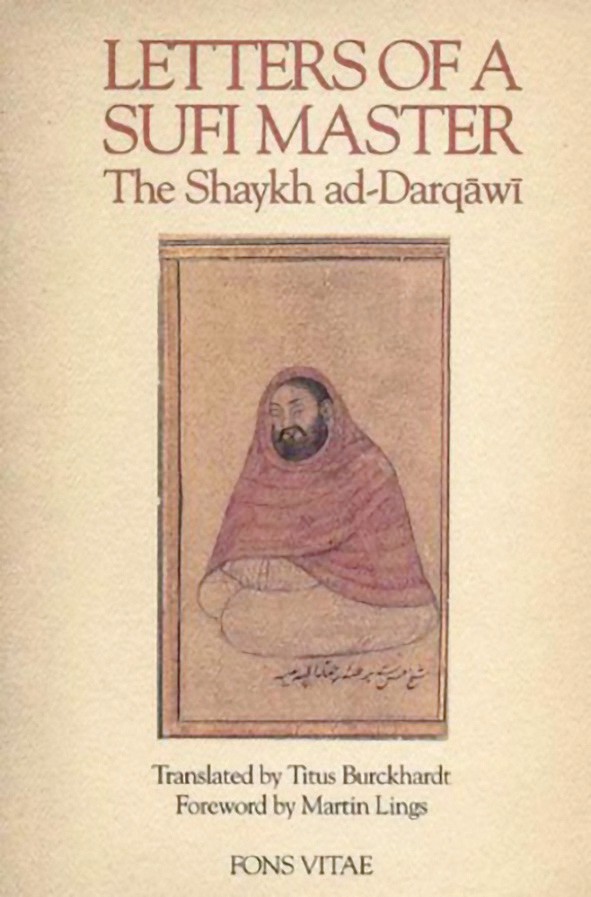
In contrast, other leaders of his order allowed alcohol, tobacco, drug abuse and sexual deviance to take hold, for which Darqawi frequently criticised them. Although his order strongly emphasized keeping a distance from secular matters, a number of his disciples were involved in a rebellious war in Algeria in the name of the path. To settle the matter, the Moroccan sultan called in Darqawi. The conflict was resolved, yet Darqawi was imprisoned for a time for insubordination. The order sought to counter the overwhelming materialism of the time. Scholars refer to the period in which Darqawi was active as the Sufi century or Darqawi century of Africa. Darqawi died around the age of eighty in Bou-Barihb in 1823. His followers founded the Darqawiyya order, which spread first to the surrounding countries of the Middle East and later to many other parts of the world. His son (Mawlay Tayyeb) and grandson (Sidi Ali) were both spiritual leaders in their own right. One of the sub-orders of the Darqawiyya had a number of followers who later became famous, such as the traditionalist René Guénon and Titus Burckhardt. At the time of the First World War, the order had over two hundred thousand members.

“He who is truly free is holy.”
“Whoever desires constant presence should restrain his tongue from speech.”
“Nothing makes us more vulnerable to the attacks against the soul and the devil than worrying about our livelihood.”
“A faqir should not even be satiated with grass. […] Nothing helps the heart to be directed towards Allah as silence and fasting – just as nothing is so conducive to dissipation as too much food and too many words. […] Contemplation is an act of the heart. A single atom of the actions of the heart is worth more than a whole mountain of the actions of the body.”
“That is how it is. The business of dhikr is vast, and the favour of Allah, His generosity, openhandness and mercy is vaster and vaster still. What is that you find that you reject, dislike, abhor, and find heavy except the dhikr of Allah Almighty in the houses as Allah – glory be to Him.”
“Be kind, and you will be met with kindness everywhere; be sullen, and you will be met with sullenness everywhere. […] The friends of God are mirrors to those who look upon them: he whose countenance is sullen sees in them a sullen face. Just as a grim face is incapable of seeing kindness, so a kind face is incapable of seeing sullenness.”
“Allah has opened up such a depth of knowledge in me that if I were asked a thousand thousand questions, I could give the right answer to each one. I have become like a candle that gives off light, and that would not be extinguished even if all the candles in the world were lit by it.”