Abraham
Approx. 2000 BCE, Mesopotamia – approx. 1800 BCE, present-day Palestine
„Are you ‘O Prophet’ not aware of the one who argued with Abraham about his Lord because Allah had granted him kingship? ‘Remember’ when Abraham said, “My Lord is the One Who has power to give life and cause death.” He argued, “I too have the power to give life and cause death.” Abraham challenged ‘him’, “Allah causes the sun to rise from the east. So make it rise from the west.” And so the disbeliever was dumbstruck. And Allah does not guide the wrongdoing people.”
(Quran, Surah Al-Baqarah – 258)
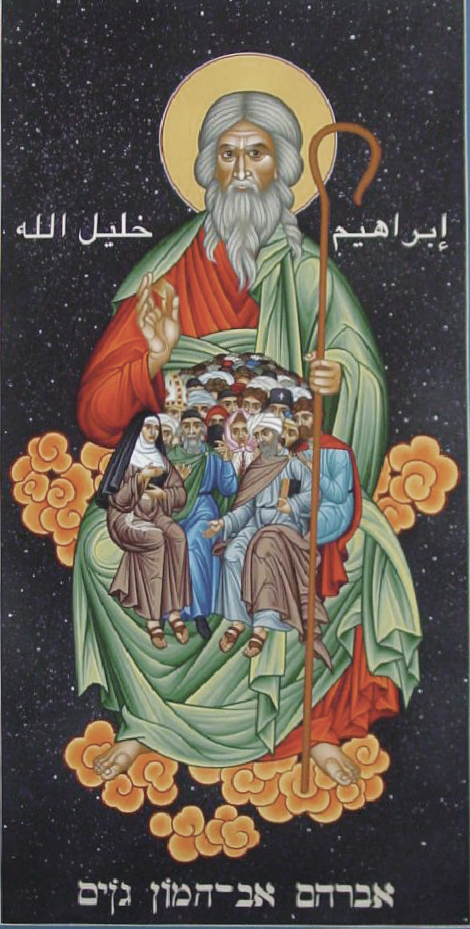
Abraham was the patriarch and prophet of the Jewish people, who is also venerated as the common patriarch of the Abrahamic religions, including Judaism, Christianity, Islam and the Bahá’í Faith. It is believed that God made a number of important revelations through him and all the proclamations of Abraham later proved to be true. Abraham is considered the originator of mathematics by the Jewish people, while esoteric schools of thought point out that from Abraham onwards the human brain has undergone a number of changes that enabled logical thinking in mankind. He was responsible for adopting and founding the Jewish (Canaanite) religion, thus establishing Jewish monotheism. At God’s beckoning, Abraham migrated his people from the Chaldean city of Ur in northern Mesopotamia to Canaan (modern-day Israel). The Lord revealed to Abraham that his would be a mighty people, yet their descendants would live in slavery for four hundred years, until they returned to the promised land of Canaan. This is where Moses later led the Jewish people from Egypt, where he founded the Kingdom of Judah.
God promised Abraham at ninety-nine years of age that his ninety year-old wife, Sarah would bear him a son, who would be called Isaac and who would be the father of many tribes. The Jewish people believe that God made a covenant with Abraham and as a symbol of this, Jewish men would perform the ritual of circumcision. According to Christian faith, this covenant with God was reinstituted by Jesus Christ at the Last Supper. There are at least fifteen million Jews living in the world today (although many keep their faith a secret for fear of persecution). The Jewish people encompass twelve main tribes, of which the most important is the tribe of Judah, from which King David descended. Additionally, Abraham also had a son from his wife’s maidservant, Hagar. The child was named Ishmael, who is revered as the forefather of the Arab nations and many consider him the originator of Arab culture.
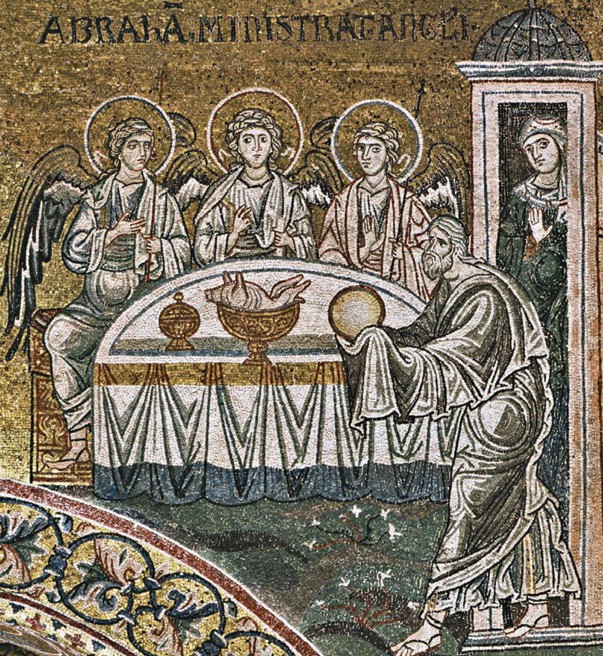
Another important event of Abraham’s life was when the priest-king Melchizedek offered Abraham a meal of bread and wine. Many consider this to be a precursor to the Communion, a ritual renewed by Jesus Christ, the founder of the Christian religion at the Last Supper. To this very day, the practice of receiving communion remains a part of the rite of mass as a form of commemorating the Last Supper. God also promised Abraham that all people on earth will be blessed. The Old Testament also indicates that the Messiah who will redeem all nations of the world would be one of Abraham’s descendants. Christian faith considers Jesus Christ, a member of the seventy-second generation after Abraham to be the Saviour of humanity, while the Jewish people are still waiting for the arrival of the Messiah.
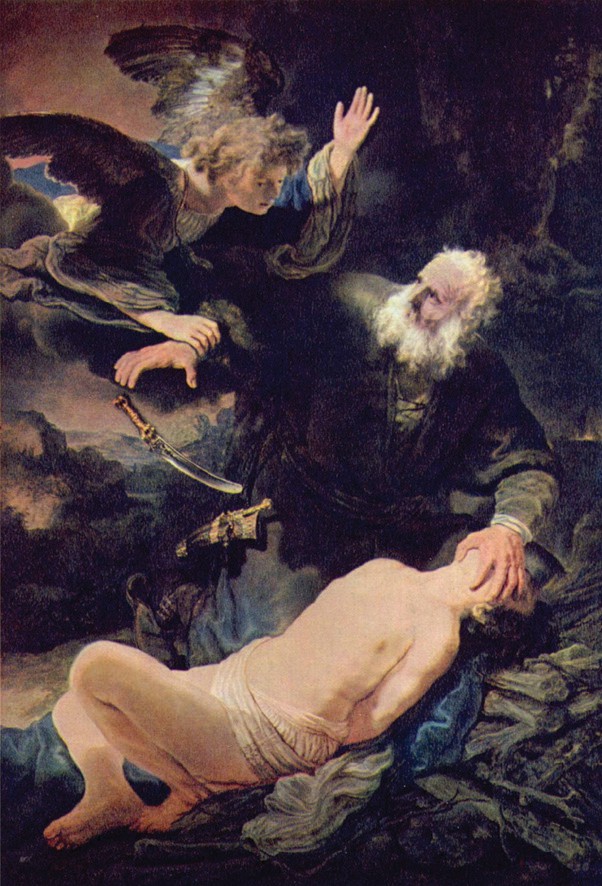
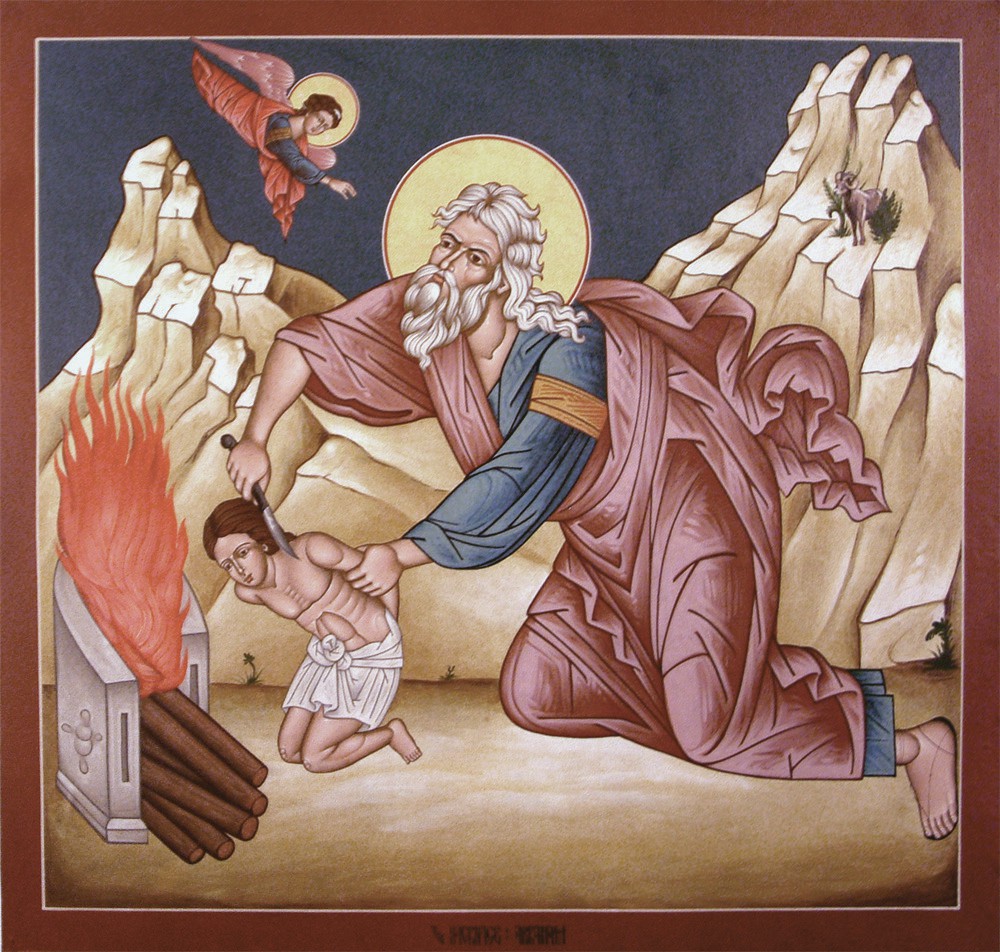
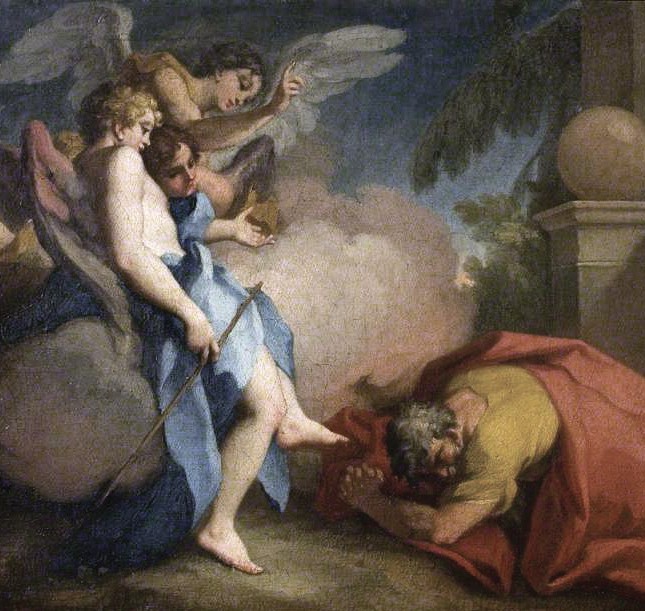
It is important to note that Abraham’s elderly wife did indeed give birth to Abraham’s son at the time indicated by the Lord and their son Isaac would go on to have twin children, Jacob and Esau. Jacob’s twelve sons would later became the fathers of the twelve tribes of Israel. However, Abraham sent away his other son, Ishmael, borne by Hagar. Ishmael would also have twelve sons, who would go on to establish the Arab nations. God put Abraham’s faith to test with his son, Isaac: the Lord asked him to sacrifice his child, and only when he was about to do so did an angel stop him from performing the sacrifice. This clearly illustrates Abraham’s main virtues of humble obedience, unconditional faith in God and hope in desperate situations.
According to the Bible, Abraham lived for one hundred and seventy-five years, and was buried by his sons in a cave in the field of Machpelah, next to his wife Sarah. This cave is considered by many to be a sacred place where Isaac and Jacob were later laid to rest. Tradition has it that Abraham discovered the Cave of the Patriarchs due to the light and sweet fragrance emanating from it. A heavenly voice proclaimed that the cave was the resting place of Adam, and thus it was considered to be a gateway to heaven – in Jewish traditions, this radiant light is considered a sign of divine presence. This burial place is located in the present-day city of Hebron. According to the Kabbalah, this is where the Jewish people living in the four corners of the world are to be gathered in order to reunite Abraham’s people scattered throughout the world.
“I swear by myself, declares the Lord, that because you have done this and have not withheld your son, your only son, I will surely bless you and make your descendants as numerous as the stars in the sky and as the sand on the seashore. Your descendants will take possession of the cities of their enemies, and through your offspring all nations on earth will be blessed, because you have obeyed me…”
(Genesis 22:16–18)
“Against all hope, Abraham in hope believed and so became the father of many nations, just as it had been said to him, “So shall your offspring be.” Without weakening in his faith, he faced the fact that his body was as good as dead – since he was about a hundred years old – and that Sarah’s womb was also dead. Yet he did not waver through unbelief regarding the promise of God, but was strengthened in his faith and gave glory to God, being fully persuaded that God had power to do what he had promised. This is why “it was credited to him as righteousness.”
(Romans 4:18–22)