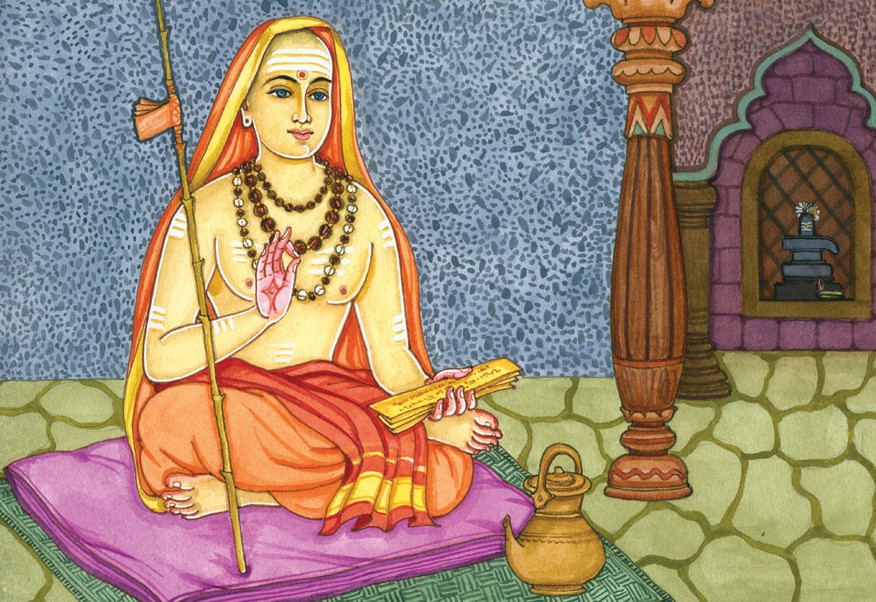
Adi Shankara
788–820, India
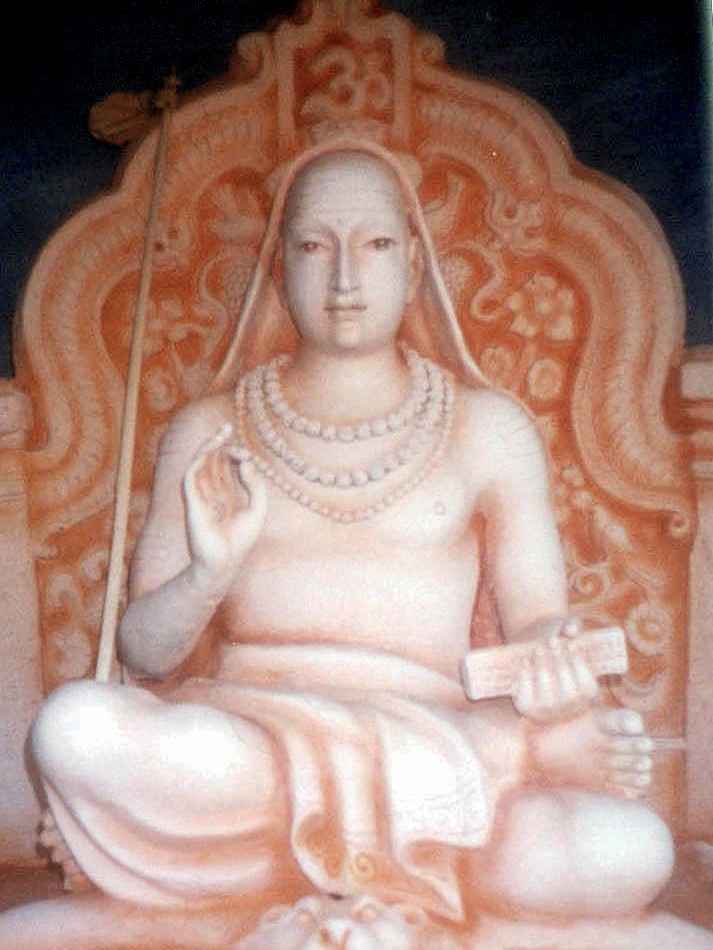
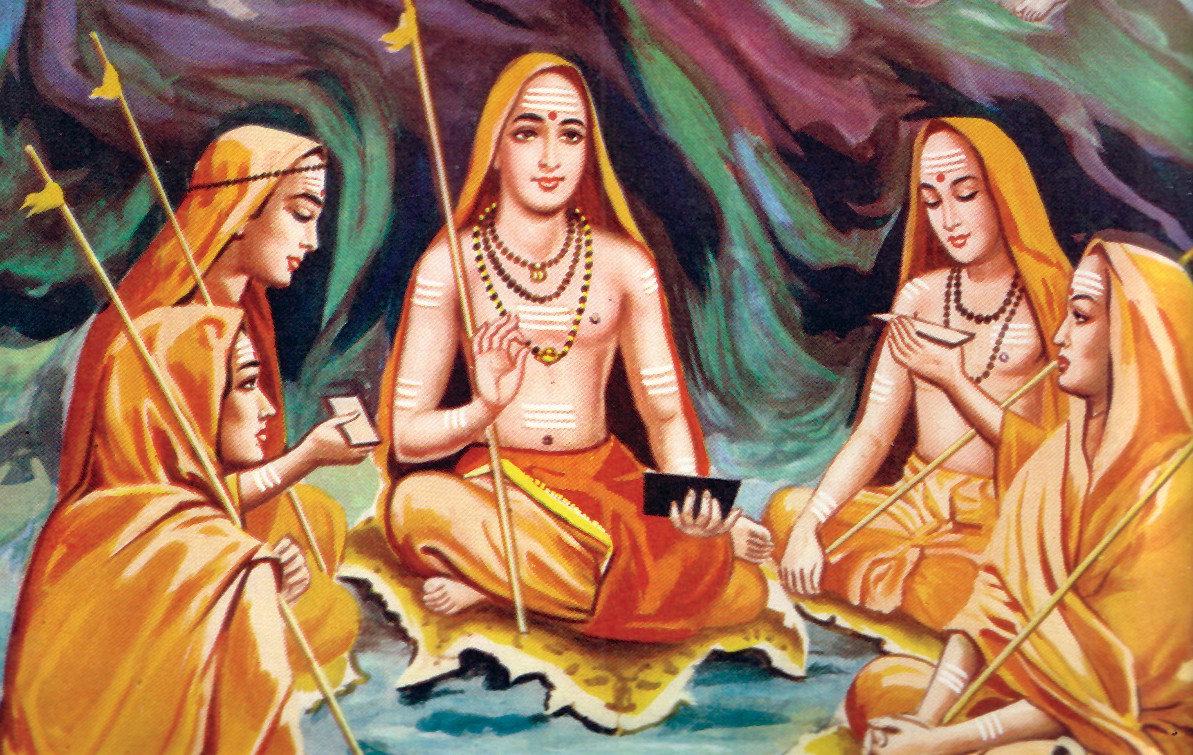
Sri Adi Shankaracharya or Shankara, for short was an Indian philosopher and saint. He was responsible for establishing the Hindu religious leadership of India and the Swami order. He systematized Indian learning and established the philosophical school which came to be known as Advaita Vedanta. He was most likely born in 788 B.C. in present-day Kerala, India, in a settlement called Kaladi near the River Purna. Although there are many texts containing details of his life, one would be hard-pressed to find a more mysterious biography than his. There is traditionally more than one individual known as Shankara and the word “acharya” refers to a title that often misleads researchers. The word “adi” means that he was the first of the shankaracharyas. According to certain researchers he lived for 32 years, however, the works attributed to him – which could easily fill an entire library – could hardly have been written within that short span of time. He was most likely born into the high caste of the Brahmans. His father died early, and the fatherless Shankara set out on his travels at the age of 8. He walked more than 600 miles before finally becoming a disciple of Govinda, one of the widely known masters of his age. Govinda’s teacher in turn was Gaudapada who is thought to be the author of the first work on Advaita philosophy. The young man imbibed spiritual wisdom like a sponge absorbs water and though he had the body of a child, he became a great teacher. The first disciples joined him in Benares. He walked with them to the sacred city of Badrinath in the Himalayas, where at the age of 12 he wrote his famous commentary on the Brahma Sutras, and later on on the Upanishads, the scriptures preserving the traditions of ancient India.
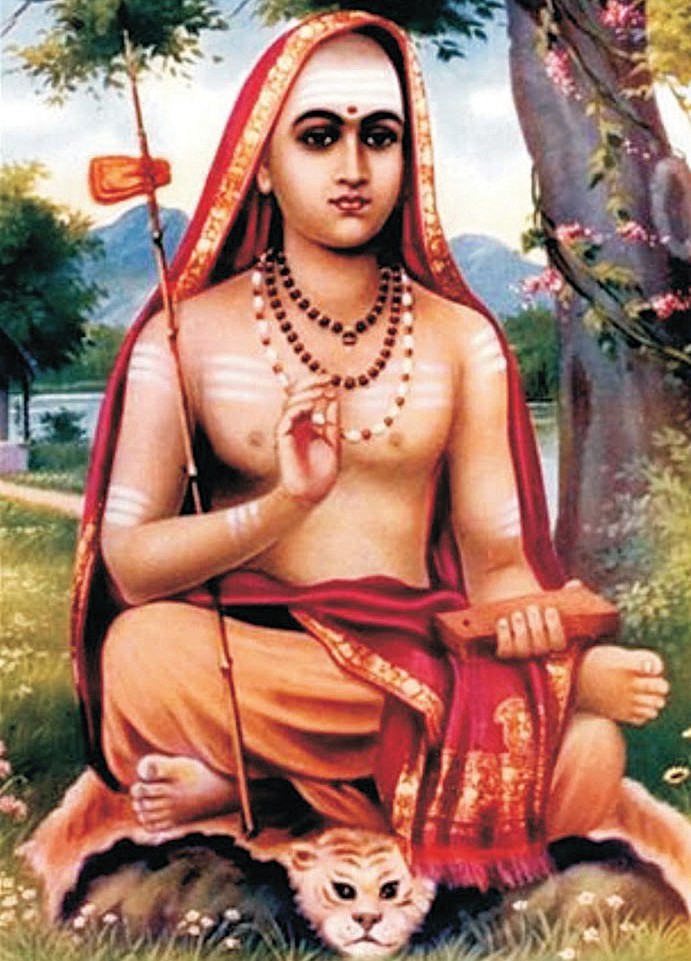
He later returned to Benares where he was teaching and proselytizing for some years before departing on yet another long journey. During his journeys he experienced a number of miraculous events. For example, following the death of his beloved mother he cremated her body with the fire gushing forth from his own palms. He had perfect control over himself, and according to tradition he also possessed so-called Siddhi powers or ‘special abilities’. Certain teachers regard him as the incarnation of Shiva. He converted people in a surprising way: according to the practice at the time, if someone lost a debate on spiritual matters he or she automatically became the disciple of the winner. Shankara entered into debate with every important philosophical movement of his age so as to renew the ways of people’s thinking. He tried to consolidate Buddhism and Hinduism, which means that he made every effort to make the doctrines of Buddha accessible to the children of the Hindu culture. Furthermore, he tried to explain with human concepts and put into linguistic form spiritual teachings which were difficult to comprehend. He founded the school of Advaita Vedanta (literally, non-duality) which taught that the principle of the world is spiritual, unanimous and without duality; that is, everything is one. Everything originates in the One, the World Spirit, the Brahma. Our innermost essence, our self is the Atma, and this spiritual core does not cease to exist with our death since it is one with the Brahma.
Shankara founded the monastic order on which the 10 branches of the swami order is based, and he founded four Mathas (monasteries) in the four corners of India thus dividing the country into 4 religious regions. He selected the leaders of this centers from this circle of disciples. The monasteries are located at Sringeri in Kerala, Dwaraka on the Kathijavar peninsula, Puri, and Badrinath in the Himalayas. Shankara died in Kedarnath, a sacred city of the Himalayas at the age of 32. His vast body of work is studied by innumerable scholars. His influence on Indian culture and thinking is invaluable.
“Of the ways leading to liberation it is only knowledge that is direct – and it is as important as fire for cooking. Without it liberation is not attainable…”
“Knowledge eliminates non-knowledge as surely as light does darkness… As the husking of rice reveals the kernel, thus you have to separate with consideration the Self from the shell that covers it…”
“We have to know the Self within the intellect as the witness of the works of the body which differs from the body, the senses, the mind, the intellect and the nature as the king is different from his subjects… Since the highest Self is the same as the consciousness-salvation, in it there is no difference between subject, cognition and object: It shines in Itself…”
– Extracts from Shankaracharya’s Atma Bodha, translation by Sri Ramana Maharshi.