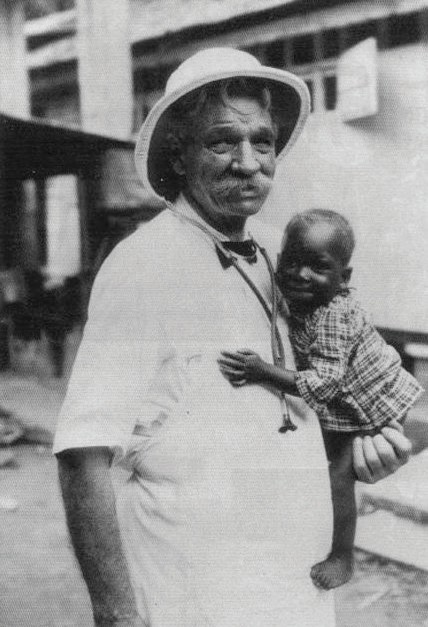
Albert Schweitzer
1875, present-day France – 1965, Gabon
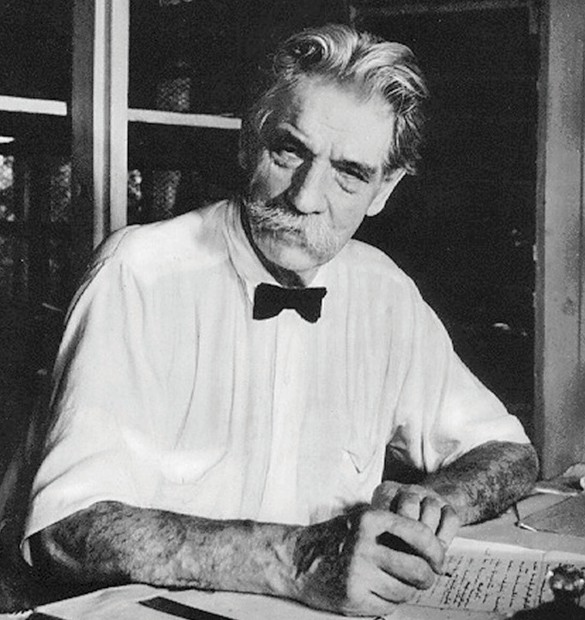
Albert Schweitzer, the peaceful campaigner for the “reverence for life”, Lutheran-Evangelical pastor and physician – known as the “conscience of the 20th century” – was born on 14 January 1875 in Kaysersberg, Alsace-Lorraine. His father and his maternal uncle were both pastors. As a child, he displayed exceptional musical talent by complementing Bach chorales with his own melodies. He studied theology, philosophy and music theory at the best universities at the time in Strasbourg and at the Sorbonne in Paris, also taking lessons from world famous master organist Charles-Marie Widor.
At the peak of his career, at thirty years of age, he decided to give up his previous plans and instead go to Africa to work as a doctor. He forsook his career, comfortable life and position: he started realising his seemingly mad plan when he was already an internationally renowned theologian, assistant pastor, recognised Bach scholar, successful organist, pipe organ builder and professor of philosophy. Allegedly, he read a call for volunteers that featured the following passage: “Lord, here I am. Send me!” Schweitzer left everything behind and consciously started preparing for helping the needy as best as he could. In 1906, he enrolled as a student at the same university where he previously worked as a professor, finally earning his M.D. in 1913. He married in the same year and set out with his wife to Gabon, Africa to the town of Lambaréné. At the time, Gabon was supposedly the most depopulated country of Africa.
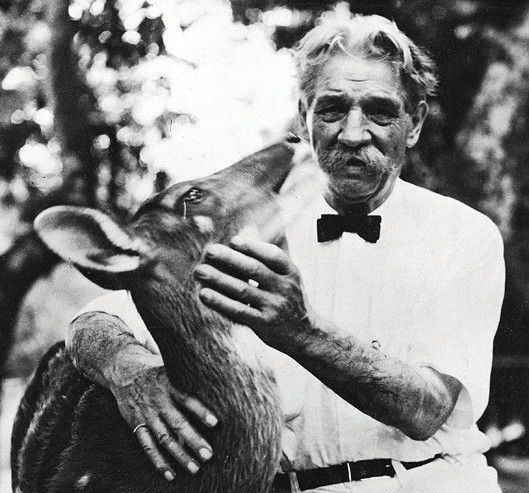
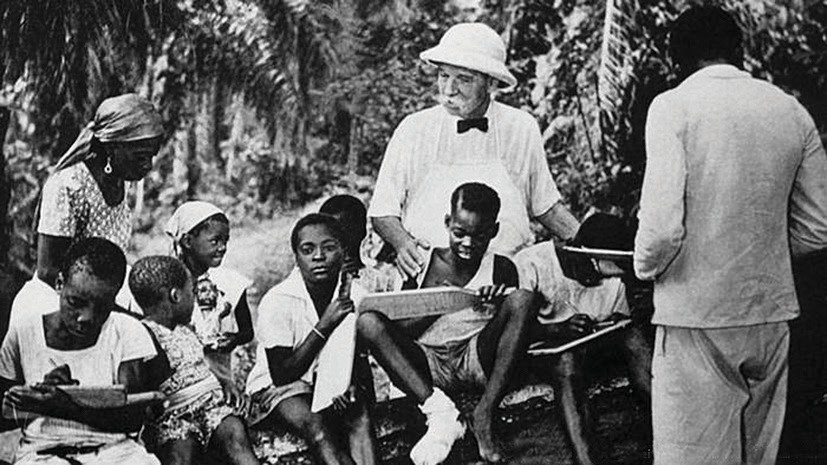
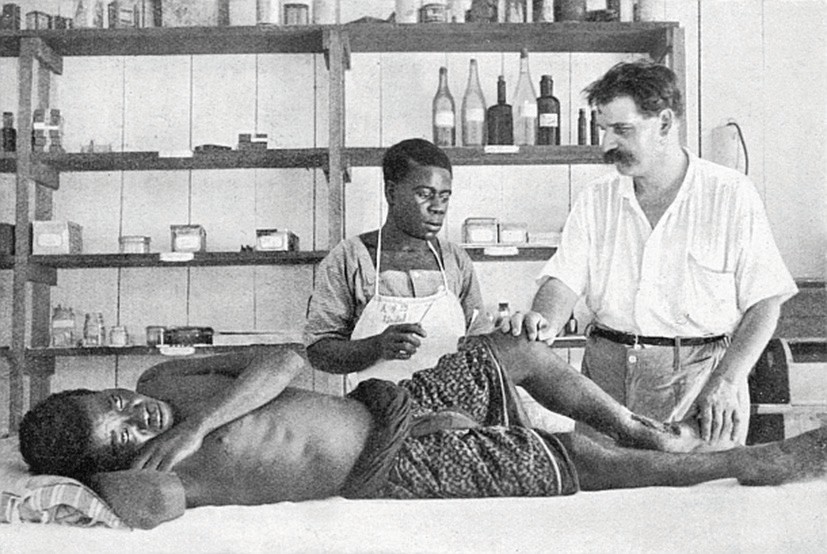
He began his work as a physician in an office converted from a chicken hut and as it was hard to find workers, he built his first hospital himself from wooden and grass huts. He was working as the sole physician in a country with a population of three hundred thousand at the time, even though the African population was inflicted with severe diseases. Although he lacked professional experience, he often had to perform major surgeries himself, while the feeding of hospital patients was provided for through the donations of the poor local population. His first period in Lambaréné lasted until 1917, when he was deported from Africa by the French due to the First World War, returning to his home country as an exchange prisoner. He later went back to Lambaréné on fourteen occasions throughout his life.
He used this six-year forced sabbatical to go on fundraising speaking and concert tours and write books about his ethical views. His daughter was also born in this period. When he finally managed to return to Gabon in 1924, he could barely find the remains of the hospital in the undergrowth. Still, he went back to work: in the morning he worked as a physician and in the afternoon, as an architect, while he gradually started receiving grants from the west. He was in great need of all the money he could get as the widest range of human suffering was manifested in Gabon. Yet it was precisely this suffering that led him to develop his ethical philosophy on life, the theoretical background of the reverence for life. This realisation is based on one’s personal responsibility: it calls on everyone – regardless of their calling and work – to devote a part of their life to others. Schweitzer pointed out that in the spirit of compassion and humanity, we have an ever-growing responsibility to alleviate the suffering of others.

As the news of his Sisyphean struggle reached more and more people, his writings and philosophical views spread throughout the world. He began traveling more and more and found many admirers wherever he went. Allegedly, his friend, Albert Einstein made him promise to double his efforts to fight against the use of nuclear weapons even after he passes away. A number of societies and groups were formed in the spirit of Schweitzer. Oddly enough, however, he only had a handful of practical followers: even at the peak of his activities, there were only six other doctors working at his hospital.
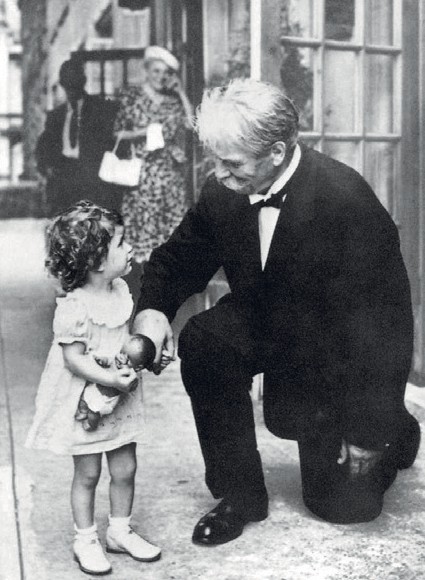
Schweitzer’s literary output was also outstanding: his autobiographical, philosophical, cultural, theological and other works are all of lasting significance, yet despite these great achievements, they are eclipsed by his humanity and the example he set to others with his life and his over fifty year-long sacrifice, in recognition of which he received the Nobel Peace Prize in 1952. He used the prize money to establish a colony for patients suffering from leprosy. He passed away on 4 September 1965 in Lambaréné. As an old monastic tradition, his grave is marked by a simple self-made wooden cross. The hospital in Lambaréné continues to operate to this very day. Schweitzer’s life and work continues to speak to people’s conscience throughout the world.
“A man is ethical only when life, as such, is sacred to him, that of plants and animals as that of his fellow men, and when he devotes himself helpfully to all life that is in need of help.”
“I am convinced that thinking can lead one to ethical conduct and piety (…) if one’s thinking reaches the point of respect for life and recognizes it as one’s duty to maintain and promote life, as well as to avoid destroying and harming life.”
“The ethic of Reverence for Life prompts us to keep each other alert to what troubles us and to speak and act dauntlessly together in discharging the responsibility that we feel.”
“Those who are so favoured as to be able to embark on a course of free personal activity must accept this good fortune in a spirit of humility.”
“I don’t know what your destiny will be, but one thing I know: the only ones among you who will be really happy are those who have sought and found how to serve. Life becomes harder for us when we live for others, but it also becomes richer and happier. Man can no longer live for himself alone. We must realize that all life is valuable and that we are united to all life. From this knowledge comes our spiritual relationship with the universe. As we know life in ourselves we want to understand life in the universe in order to enter into harmony with it.”