Albertus Magnus
around 1200–1280, present-day Germany
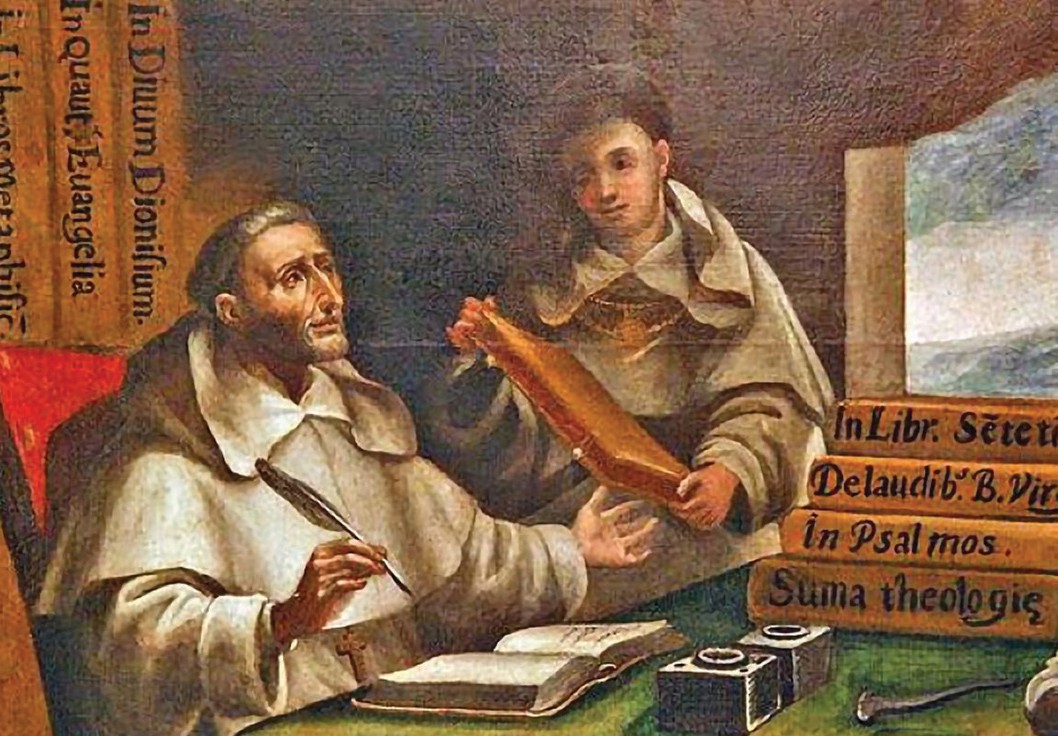
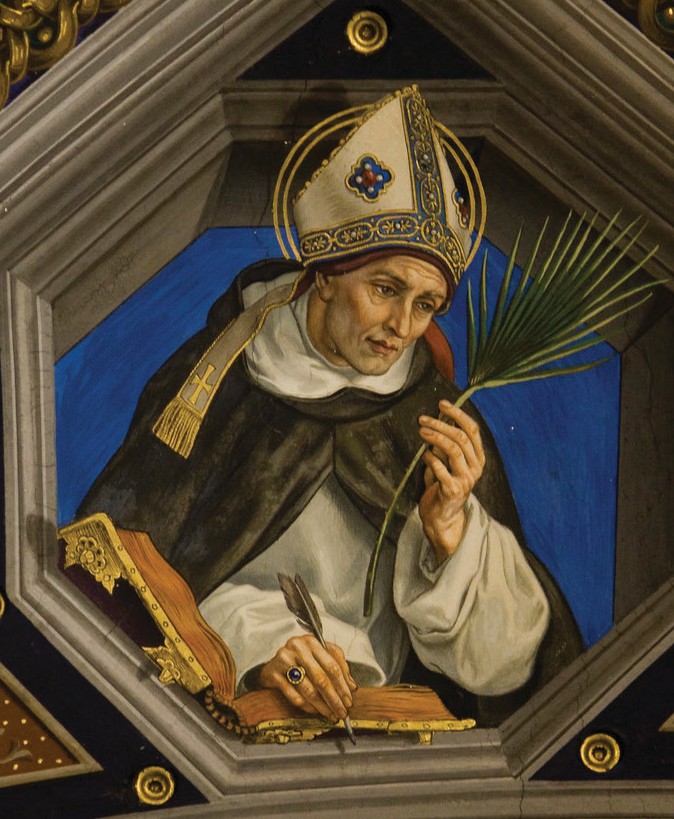
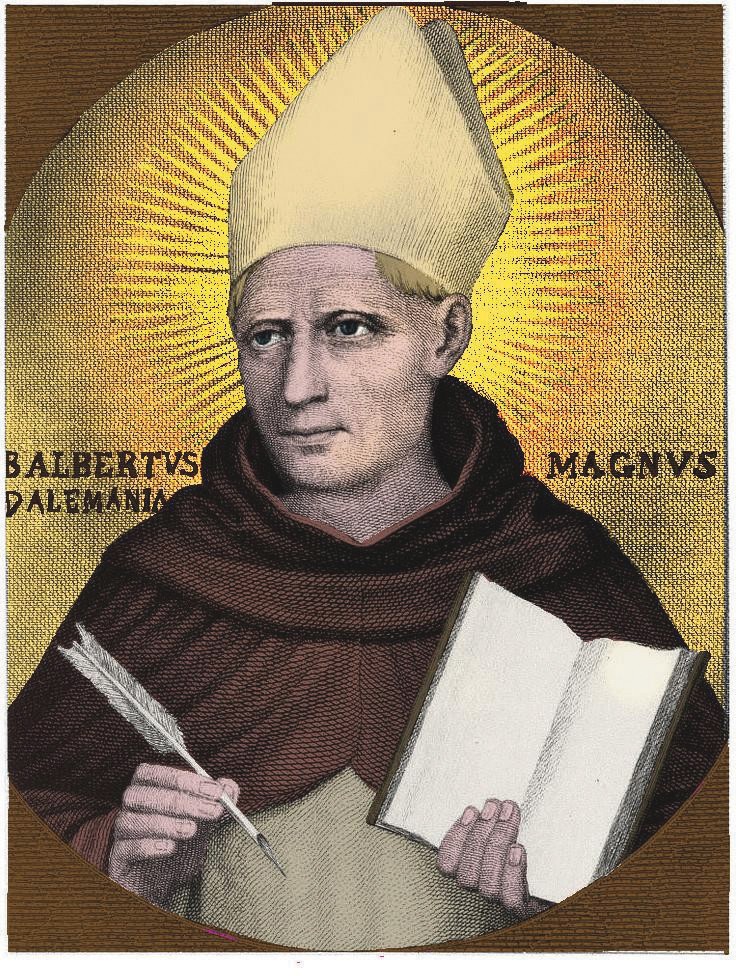
Albertus Magnus, one of the greatest thinkers of the Middle Ages, polymath genius, who was known as Doctor universalis due to his wide-ranging work, was born Albert Graf von Bollstädt around the year 1193 in Lauingen, Bavaria. Apart from many other things, he was a Dominican friar, bishop, theologian, scientist, writer and philosopher as well as a scholar of magical plants and minerals and was referred to as the Aristotle of the Middle Ages. As a master builder of his age, he accumulated the experiences of antiquity, including the knowledge of Arab and Jewish cultures, philosophy and civilization and made a comparative study of them.
He was the first to produce a treatment of the works of Aristotle in the spirit of scholasticism. He was a proponent of Aristotelian natural sciences and way a thinking and attempted to distil these ideas and incorporate them into Christian philosophy. In this manner, he established the foundation of the work of his famous disciple, St Thomas of Aquinas. He was most probably one of the most mysterious men of the Middle Ages, yet he was also a torchbearer who was far ahead of his time. However, the knowledge and productive life of this great master was based on divine providence and the pious life of a contemplative, deeply religious man. Thomas of Cantimbré, who knew Albertus Magnus well, said the following of his inner life: “I have seen and noted that almost every day for many years when Master Albert was regent of theology, he so devoted himself to prayer, day and night, that he recited the 150 Psalms of David every day.”
Little is known of his childhood, apart from the fact that he travelled a great deal. In 1223, he was a university student in Padua before joining the Dominicans due to the influence of Iordanus Teutonicus. Legend has it that he progressed slowly in his studies and monastic practices until the Virgin Mary appeared to him and granted him the gift of his intellectual knowledge. From 1228, he was particularly active in German territory. He organised Dominican collegiate education in several cities, and taught at the University of Paris and in Cologne, amongst others. He was surrounded by the intellectual elite of the age. His students included the famous Dominican mystic, Meister Eckhart and he had close ties with St Thomas of Aquinas, and as his master, he bowed to his greatness. Supposedly he said the following of his disciple: “We call him the dumb ox, but in his teaching he will one day produce such a bellowing that it will be heard throughout the world.”
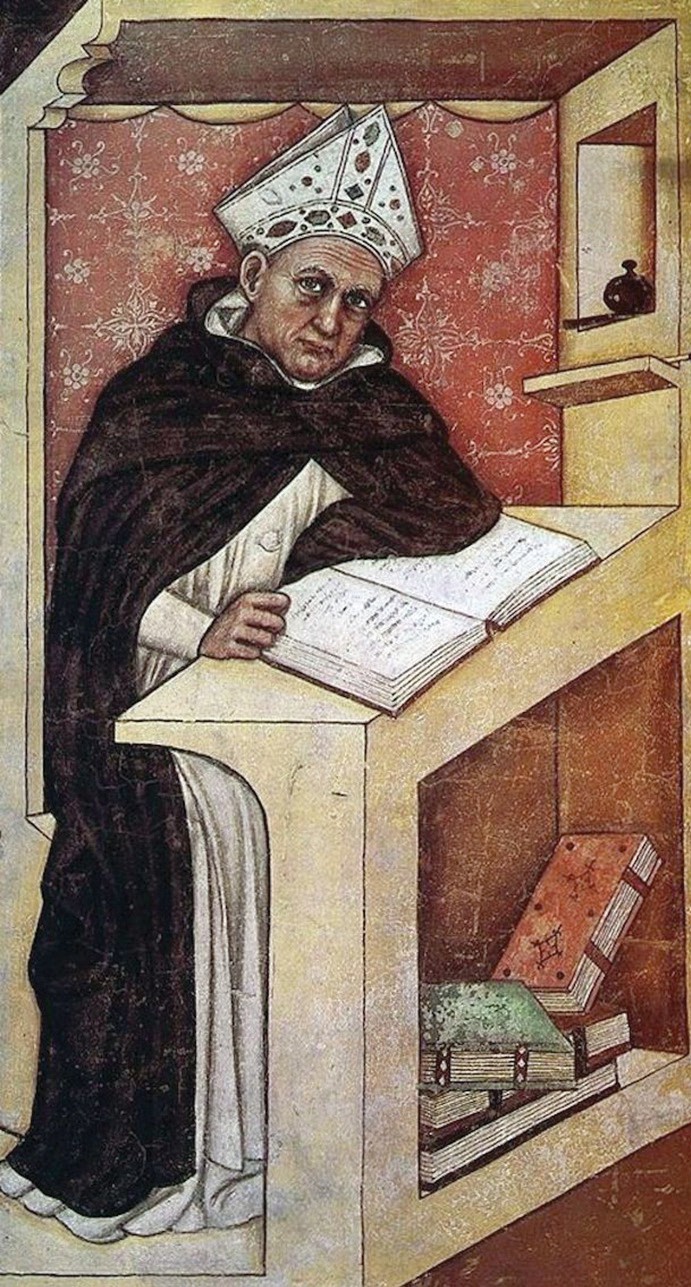
As a naturalist, Albertus Magnus dealt with all branches of science: medical science, physiology, biology, botany, physics, chemistry, geology, mineralogy, astronomy as well as alchemy. He had unparalleled knowledge of the flora and fauna of the world and his powers of observation were coupled with scientific rigour. He was frequently associated with magic and it is true that he wrote on many subjects related to magic. He stressed the importance of collecting empirical data. Dante relied on his books on geography when writing the Divine Comedy. Prior to the invention of the printing press, he manually wrote over 800 works, forty of which are still in print today. He is considered one of the fathers of the city of Cologne. Some sources claim that the Cologne Cathedral was constructed based on his visions and designs, yet he was also responsible for establishing the University of Cologne.
From 1263, at papal orders, he was involved in the recruitment of crusaders in the German provinces and Bohemia, usually traveling on foot along the dangerous roads of the German countryside. Throughout his life was often involved in brokering peace. Apart from settling disputes between the Archbishop of Cologne and the city, he also helped resolve conflicts between the cities of Wurzburg and Strasburg and the cardinals. His attitude to life is captured in this short motto: “It is good for me to adhere to my God.” When the Pope called on the elderly Albertus Magnus to assume the duties of the Bishop of Regensburg, he was reluctant to say yes, but the Pope’s word conveyed God’s will to him. In 1277, he even journeyed to Paris to defend the teachings of St Thomas of Aquinas. It is said that nearly three years before his death, his memory became so impaired that he lost practically almost all his knowledge, and from lived out the rest of his days in seclusion. He passed away on 15 November 1280 at the Dominican friary of Cologne. Albertus Magnus was beatified in 1622 and canonized in 1931.
“In the divine sciences, more can be achieved through prayer and piety than by study.”
“If one wishes to know the mystery of God, they must ask the poorest man, who is joyfully poor out of love for God. They know more about the mystery of God than all the scientists on earth.”
“Go to God yourself. This will do more good than to send all the saints in heaven to Him.”
“We must become like kings and administer the kingdom entrusted to us in such a way as to be worthy for God dwelling in us. The kingdom he has entrusted to us is our soul. We must rule over our souls in truthfulness, joy and peace in the Holy Spirit. Then Christ will also rule within us.”
“Patiently enduring a harsh word for the love of the Lord is more pleasing to God than to have as many brooms broken on your back as are produced by an acre of land.”
“Man is at the centre of creation, between matter and spirit, time and eternity.”
“The sun is darkened when the likes of popes, cardinals, archbishops and bishops go into the dark, as they should be shining light all over the world.”
“The argument from authority is the weakest of all arguments.”