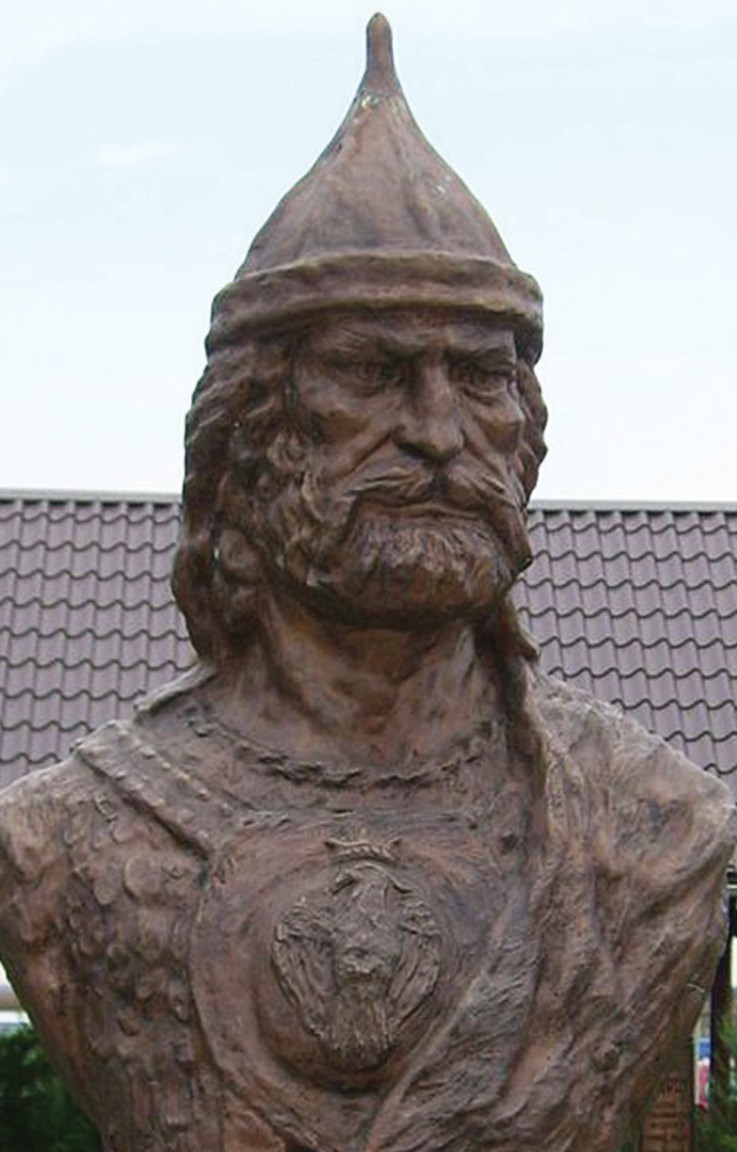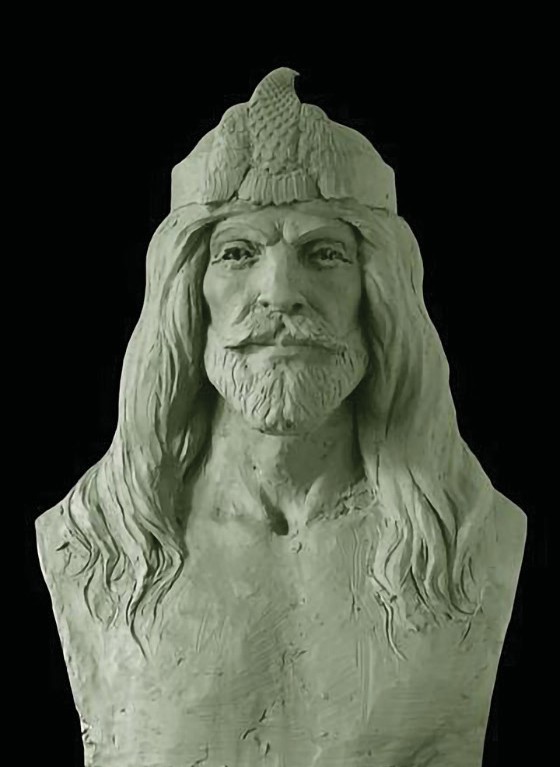
Atilla, King of the Huns
Approx. 407, Engadi, present-day Israel – 453, present-day Hungary
Atilla was the sacred king of the Hungarian people and the great Scythian Christian initiate, born around the year of 407 in Ein Gedi, capital of the Adiabene Kingdom, on the northern shores of the Dead Sea, in the area of present-day Israel. It is said that the táltos priests foretold his birth. They knew when and where he would be born and they visited the new-born baby and brought him various gifts. Atilla deeply venerated his forefathers: he could trace back his ancestors through three generations, all the way to Nemrót (Nimród), the patriarch of the Hungarian people. Ein Gadi is known as a settlement that was frequented by Jesus and the apostles, functioning as a commercial as well as a spiritual, sacred centre. Atilla spent his childhood in these surroundings and received a good upbringing.
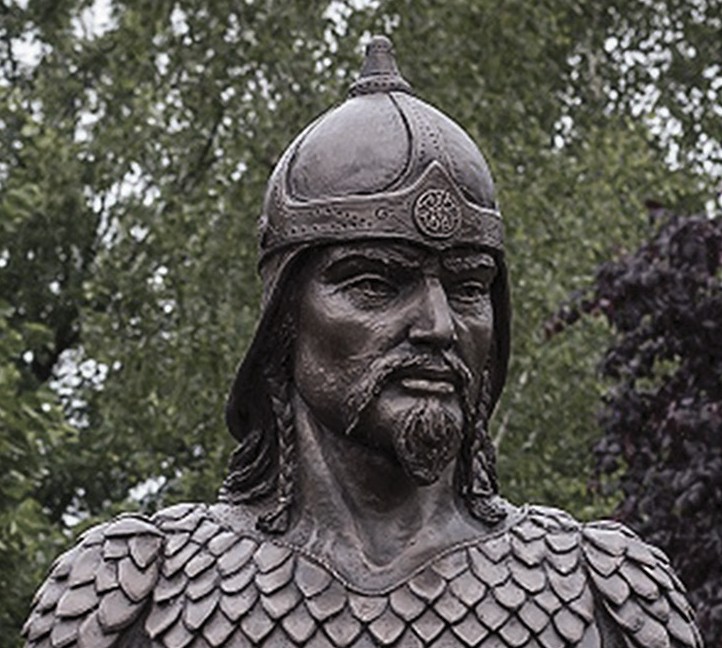
The prince of the Huns and Aetius, heir to the throne of the Roman Empire were switched for some time, thus the Roman boy was raised by the Huns for some time, while Atilla spent his youth in the Roman Empire. Some historians and religious scholars consider him as the first initiated sacred king of the Huns – the kindred people of the Hungarians. Prior to Atilla’s reign, the Huns lived in independent tribes without forming a unified nation. Atilla realised that by uniting the scattered tribes, he could establish a vast, unified Hunnic Empire – which he managed to achieve. He emanated such power that it could be felt by those who stood in his presence. Wherever he went, the atmosphere was sure to change. In war, he rode at the frontlines of his army on his black war-horse, Villám.
There are a large number of accounts proving that the Huns were familiar with Christian teachings and Atilla lived according to these tenets. For example, Saint Jerome wrote that the cold air of the Scythian county was filled with “the warmth of faith”. Atilla’s coat of arms and banner both bore the symbol of the mythological Turul bird – this was the name the Huns used to refer to the Messiah. Many researchers agree that Atilla’s plan was to establish a commonwealth of people based on Christian principles that also venerated the Divine Mother of God. As a fierce enemy of Rome and the Byzantine Empire he was the subject of many false and fabricated allegations during his lifetime: he was depicted as barbaric, bloodthirsty and cruel leader, yet in reality, he had a progressive spirit and was an excellent general and diplomat, with a deep social sense.
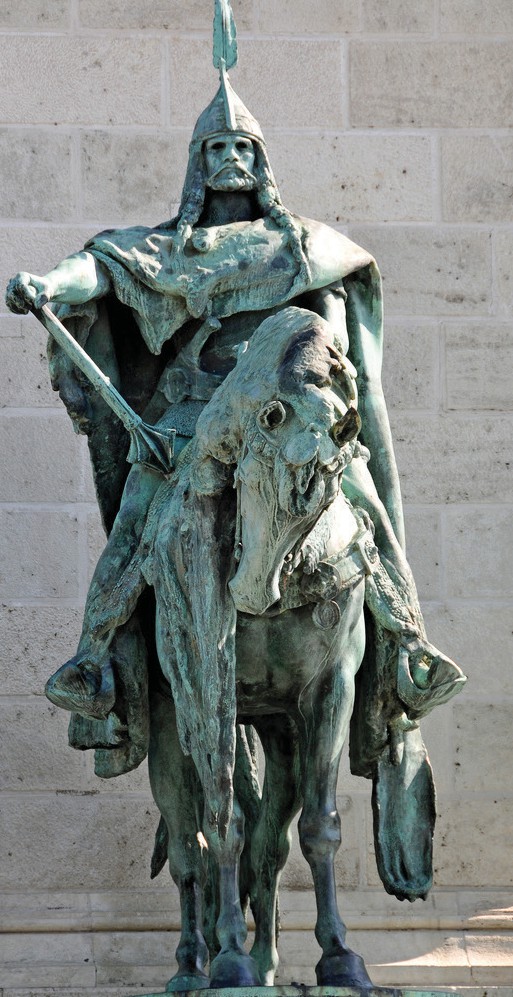
Despite his vast wealth, he lived a simple life: whilst others drank from golden cups at feasts, he always wore simple attire and preferred using a wooden cup. He spoke in four languages and was one of the wisest rulers of his age, establishing the mighty Hunnic Empire that stretched from China in the east to the Atlantic Ocean in the west. Tradition has it that – similarly to King Arthur – he also had a round table made of pure gold that symbolised the sun and he made alliances with the rulers of conquered lands at the table. Despite his virtuous nature, they spread untruthful rumours about him, including that he murdered his beloved brother, Buda. (According to what historians know today, Buda fell in one of the battles against the Thracians.)
Atilla is considered one of the great sacred rulers of mankind: not only was he the chosen one of the people, he was also venerated as a priest-king who fulfilled the divine will of the heavens. Of all the authentic accounts of his life, the Arvisura is of particular importance as a chronicle that tells the ancient history of the Hungarian people. This volume also contains the account of one of Atilla’ greatest Christian deeds: when he gathered his army on the borders of conquered Rome, and could have overthrown the entire empire, he instead renounced his claim to rule the world, and at the request of the Pope at the time, he spared the city as well as the papal foundation of Christianity itself.
King Atilla died in 453; tradition has it that he was poisoned by his political opponents. The Hungarian folk traditions regard his death as a sacrificial act. He was buried at the River Tisza: the body of the deceased king was placed in a huge coffin and the tomb was flooded with water. This unique ceremony took place at sunset, by torchlight, accompanied by drums and trumpets, as kings and lords paid respect to the mighty ruler. Atilla’s work was carried on by his children – the best known amongst them was King Csaba, about whom legends are told to this very day.
“King Atilla was in possession of the twelve traits of initiated kings, including courage, inner strength, decisiveness, foresight, self-confidence, responsibility, authenticity, steadfastness, reliability, wisdom, loyalty and compassion.”
“Among the ancestors of the Hungarian people, one of the most important tasks was the so-called PATESI, in which PA meant that knowledge should not be kept, but passed on, TE meant the preservation and cultivation of knowledge, and SI referred to the power of knowledge of celestial origin. The oldest, greatest and holiest of all secrets was that of Salvation, of which the ancient Hungarians, even in the Atlantean times, had been taught by Anyahita on the isle of Atais. Therefore, summarised in a single sentence, PATESI means the preservation, cultivation, expansion, transmission and dissemination of divine knowledge of celestial origin. This sacred mission was regarded by King Atilla and all his people as their solemn duty.”
“Atilla was the greatest individuality of his time, but in many ways his life remains a mystery to this day. His successes and achievements are well known by all, yet this does not apply to his true vision. According to authentic contemporary sources, he spoke Latin and Greek and was open and curious. He was the polar opposite of a primitive and brutal man. … he persecuted no one for their beliefs and respected all religions. Was he a great politician? That is not an adequate description of his exceptional personality. He was a charming, irresistible negotiator. At the same time, he was capable of uniting, organising and managing people even when thousands of kilometres away from them, people that thirsted for independence, leading them to victorious campaigns against the great powers of the age, from Asia to Europe. This feat was never to be surpassed by any other person in later years.”