Atisha
982, India–1054, Tibet
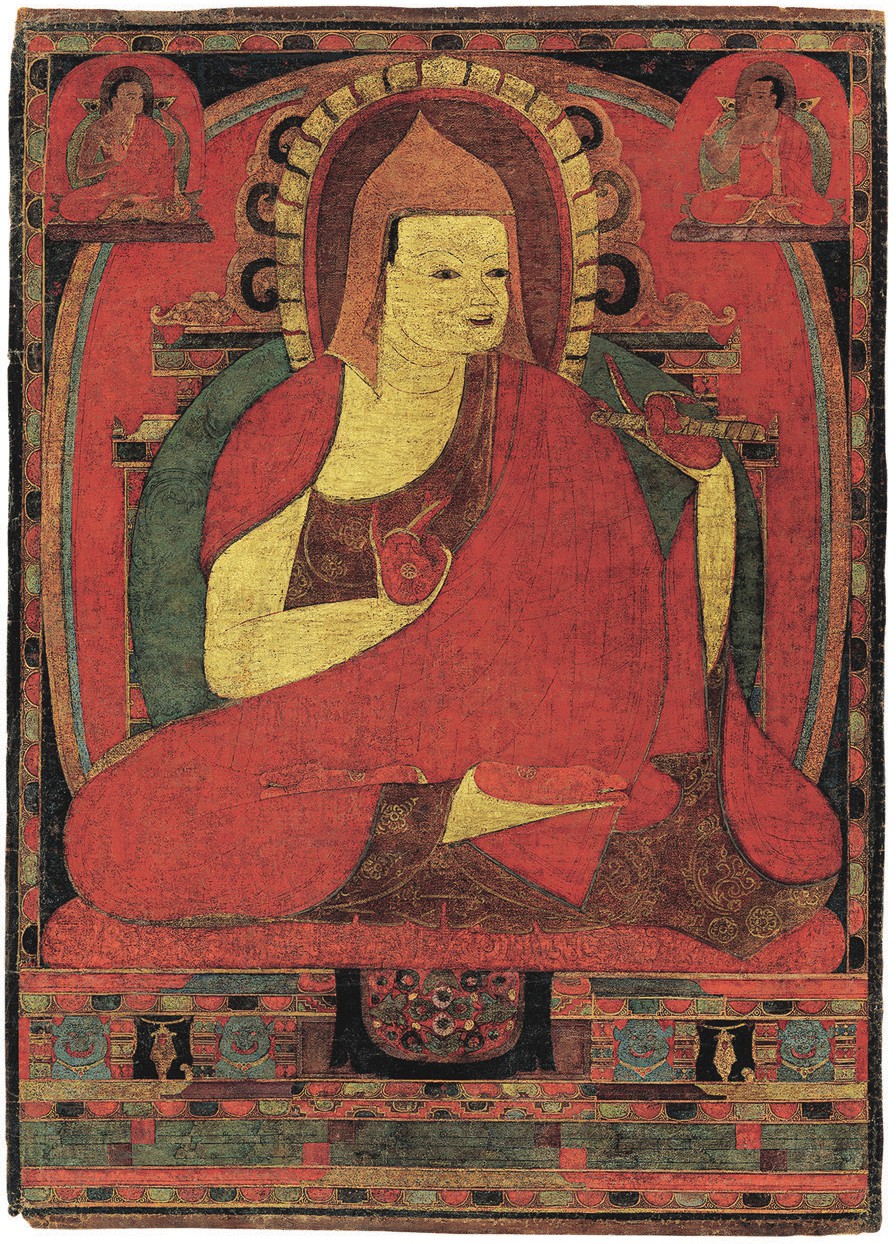
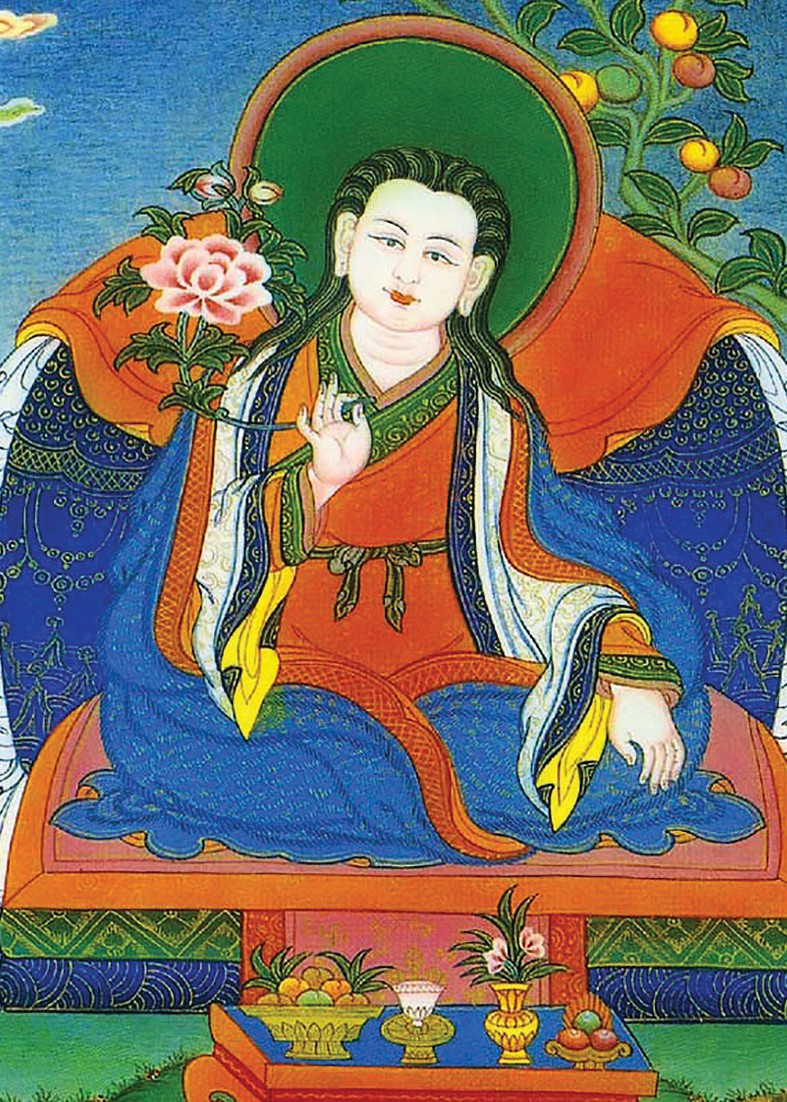
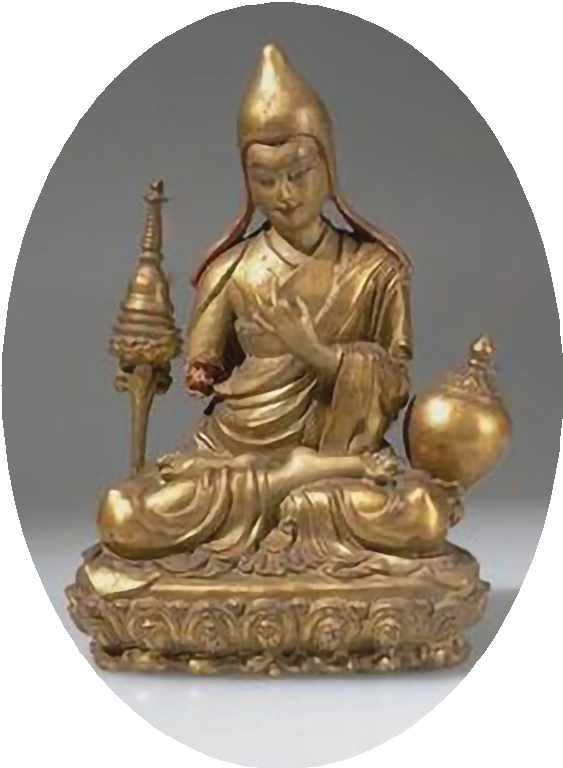
Atisha, founder of the Tibetan Kadam school and the great Buddhist teacher and master, was born to a ruling family in the East Indies in 982 AD as the second child of King Kalyanasri and Queen Prabhavati Sri. Atisha was one of the most erudite religious scholars of his time, and through his outstanding work and writings he established a tradition of commentary that has survived to the present day. However, Atisha was also a yogi with an excellent understanding of the tantric system, emphasizing the careful theoretical foundation and gradualness of tantric practice in his teachings.
According to contemporary writings, as a child, Atisha asked in prayer to never be arrogant and always remain compassionate and loving. He intended to be a beggar monk, yet his parents intended him to be a royal successor. Guided by a strong impulse, he left the palace at the age of 11. In the jungles of India, he first met a holy Buddhist hermit named Jethari and took his Bodhisattva vows with him. Atisha studied with many masters over the decades. In total, he studied from 157 great teachers and synthesized their teachings. For example, he studied at the famous Nalanda Buddhist University under Master Bodhibhadra, and was introduced to the practice of Hevajra by Rahulagupta. At 29 years of age, he received from Silarakshita the cloak of the seeker who has forsaken family life, receiving the name of Dipamkara Srijnana, which meant He Whose Deep Awareness Acts as a Lamp.
He learnt the text of the Tibetan meditation system of lodzhong – the development and purification of the mind – at the monastic university in Odantapuri, while tradition has it that he stayed in Sumatra (known as the Golden Isle at the time) for 12 years and also studied with three enlightened masters. From Dharmakirtti (Dharmapala), one of the most famous Buddhist teachers of his time, he received the complete teachings of Bodhichitta, the development of enlightened consciousness and thoughtlessness. He predicted that Atisha would “tame the minds of the people of the northern Land of Snow (Tibet)”. Dharmarakshita taught him the practice of compassionate love and a yogi named Maitreya taught him to accept the suffering of others and become a teacher of active kindness.
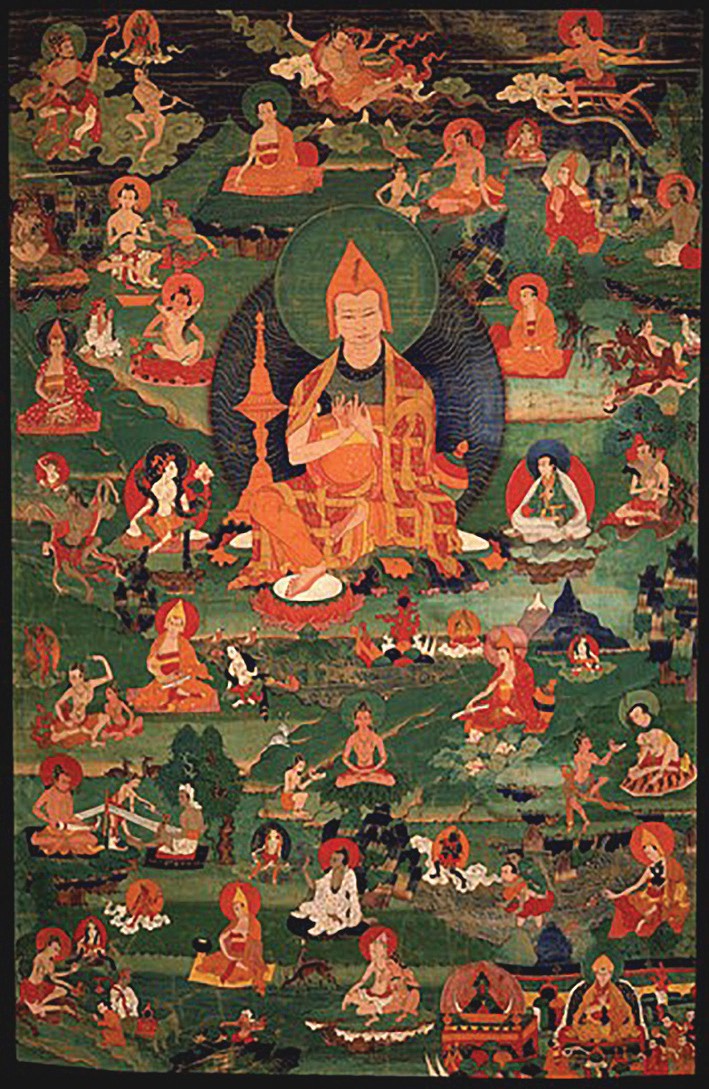
He studied until the age of 45, after which he spent most of his time at the monastic university of Vikramasila, whilst also traveling extensively. He established several schools in India and, in light of the inaccurate and confused practices, initiated a number of reforms. There was a bustling spiritual scene in India in this period. Numerous masters were active, keeping the teachings alive. In contrast, Tibet was faced with a deep spiritual crisis. King Yeshe-Ö of Tibet wanted to invite an authentic Buddhist master to Tibet to help develop the foundations established by Padmasambhava, yet this idea was fiercely opposed by others. Finally, Atisha was chosen for this role, yet it nearly required a military operation to get him into Tibet. According to various sources, this involved Avalokitesvara, the Buddha of Compassion himself, who appeared first as a boy and later as an old man. It is said that no one could keep up with the old man, despite the fact that he walked slowly and with a cane. King Yeshe-Ö was captured by his enemies during all this and ultimately sacrificed himself for Atisha. He decided that the vast amount of money that was set aside for his ransom should be used to send Atisha to Tibet instead.
The king was informed through various prophecies that if the renewal of spiritual life in Tibet would not take place, the country and its people would suffer greatly. Atisha set out at the age of 53 and arrived in Ngari, the capital of the Kingdom of Yeshe-Ö, after a two-year journey. He spent a total of 17 years in Tibet, including three years in Ngari, nine years in Nietang near Lhasa and five years in other places. He died at precisely 72 years of age in 1054, as foretold by Tara (the goddess of mercy in Tibetan Buddhism). His embalmed body was laid to rest in Nyetang. Atisha’s work in Tibet restored balance and revived the pure teachings of Buddhism. Among his many works, one of the most significant is The Lamp to the Path of Enlightenment and its commentaries.
His great disciple, Dromtonpa, helped disseminate his master’s works. Atisha established the famous monastery of Reting (Radreng) as well as the Kadampa school, which presented a summary of the revivalist Buddhist teachings in the teachings of the gradual path, or lamrim. The kadam teachings later spread to countless countries around the world, mainly through the efforts of Tsongkhapa and other Tibetan masters.
“Friends, the things you desire give no more satisfaction than drinking sea water, therefore practise contentment.”
“The best spiritual friend is one who attacks your hidden faults. The best instructions are the ones that hit those faults. The best friends are mindfulness and vigilance. The best incentives are enemies, obstacles, and sufferings of illness. The best method is not to fabricate anything.”
Once someone said: Atisha, give me your teachings! Atisha replied: Ha! Ha! That sounds very nice! But to give you the essential guidance, I need only one thing from you: faith, faith!”
“When the world is filled with evil, transform all mishaps into the path of Bodhi. Drive all blames into oneself!”