Blessed Gerard
1040, present-day Italy –1120, present-day Israel
“Our fraternal community will not pass away as the earth on which it stands is rooted is the misery of the world, and because, God willing, there will always be people who will work to reduce suffering and make man’s misery more bearable.”
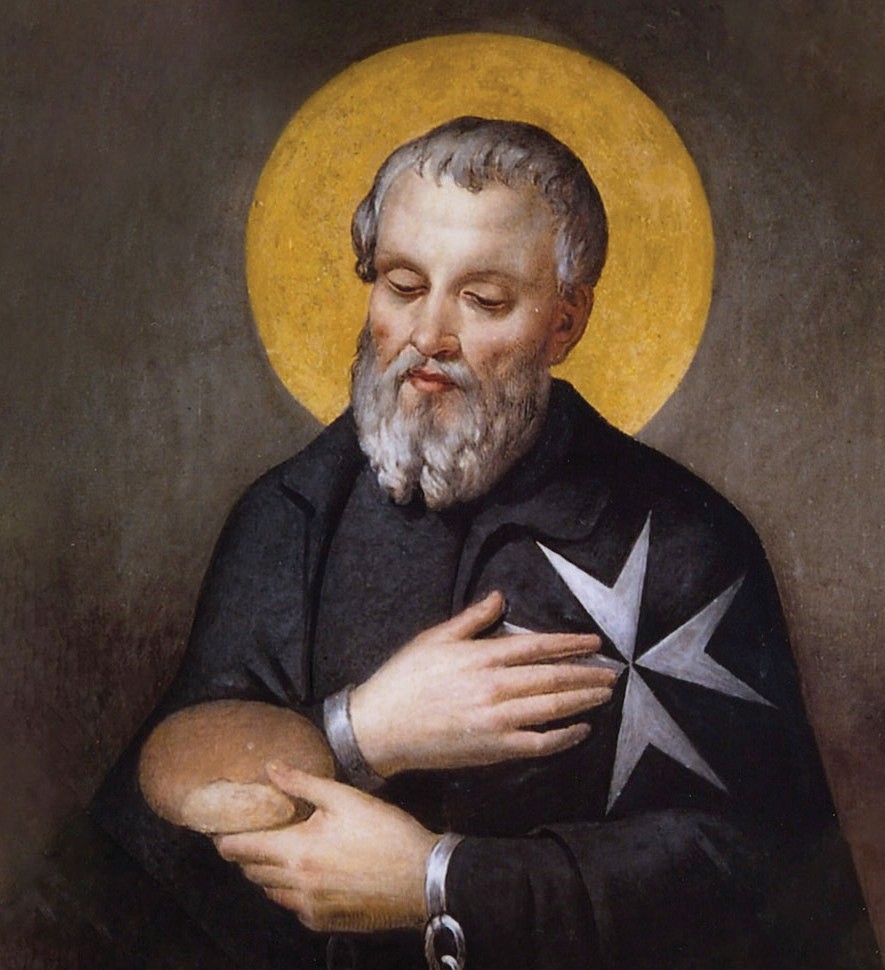
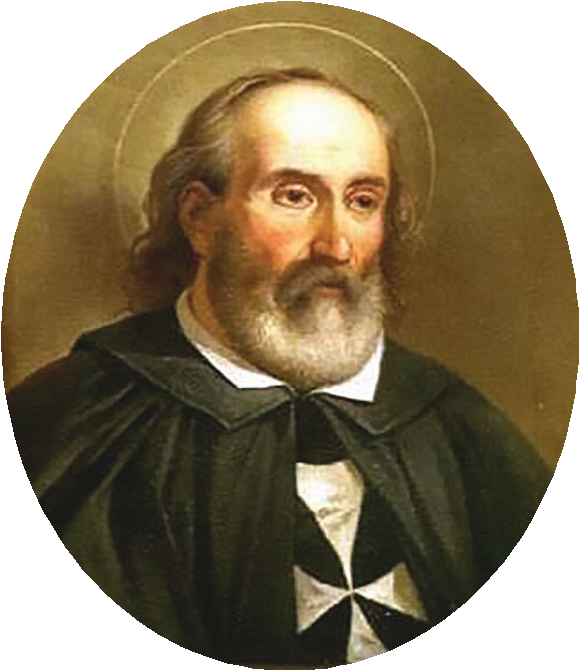
Blessed Gerard, or Gerardo Sasso in Italian, one of the outstanding examples of a life dedicated to the service of the needy and founder and first Grand Master of the Knights of Hospitaller, now known as the Order of Malta, was born as a child of a noble family around the year 1040 in Scala, Italy. The first military orders were established during the Crusades, primarily to protect pilgrims in the Holy Land. These orders mainly offered hospital and other auxiliary services, and only provided military services in exceptional cases. The best known orders include the Knights Templar (Poor Fellow-Soldiers), the Knights of St Lazarus, the Knights of the Holy Sepulchre, the Teutonic Knights, the Order of St Stephen of Hungary and the Order of Knights of the Hospital of Saint John (subsequently known as the Sovereign Military Order of Malta).
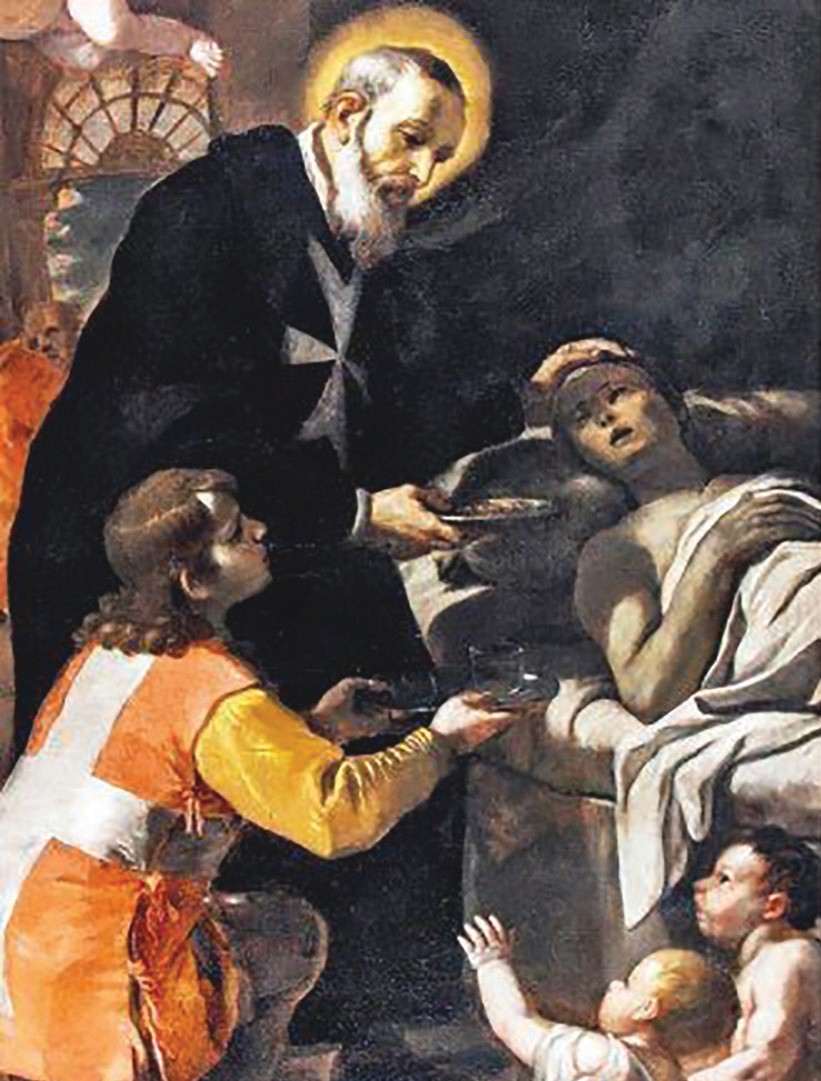
Gerard was originally a Benedictine monk, yet there are few authentic sources about his early years. Initially, he was active in Italy before going on a pilgrimage to Jerusalem in the Holy Land. At the time, life was extremely difficult for Christian monks and pilgrims. To alleviate their suffering, they maintained a pilgrimage house from donations. Gerard began serving at the abbey of St Mary of the Latins established in honour of John the Baptist and was shortly put in charge of the monastery. He tended to all matters: organisational duties, food supply, religious and spiritual assistance and the care of the sick and poor. At first, the donations of enthusiastic traders were enough to maintain the shrine, but as the number of pilgrims and people in need increased, the financial means became increasingly scarce.
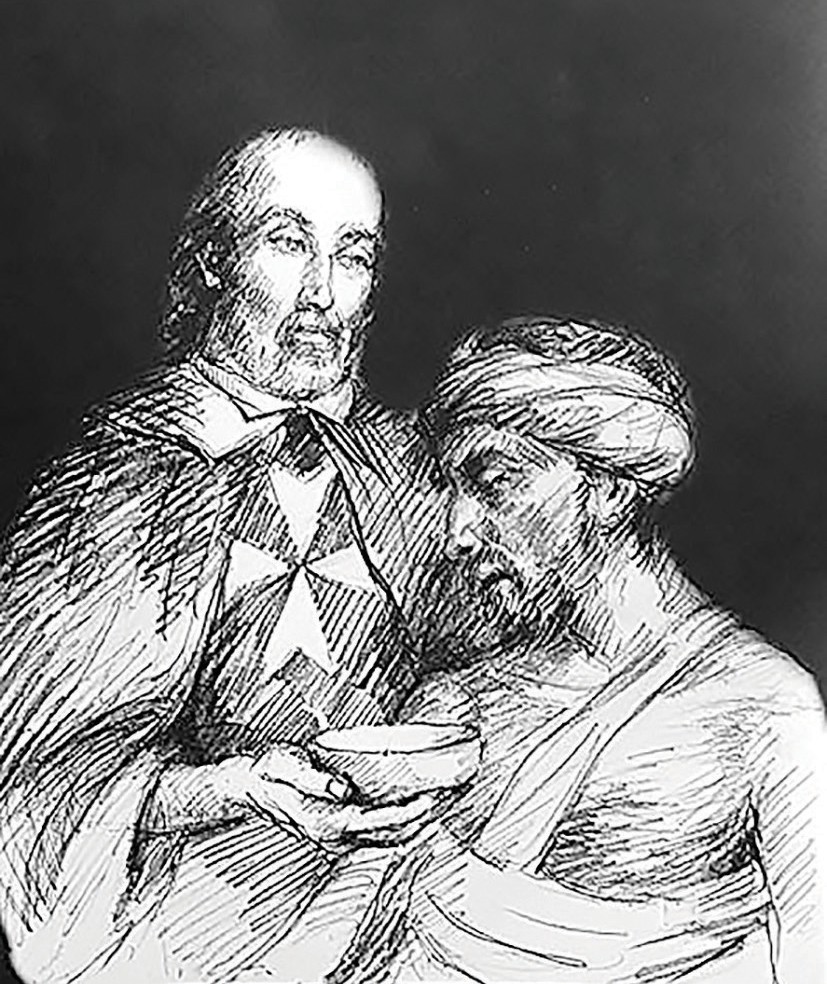
In order to remedy the situation, Gerard travelled to Provence in France to collect donations. His personality and willingness to help deeply moved the locals who provided him with all the support they could muster. Legend has it that in 1099, crusaders besieged Jerusalem, which was previously occupied by the Saracens. Gerard threw food down from the ramparts to the starving knights while they fought their desperate struggle. He was eventually captured by the Saracens, yet when they asked him to show them the bread he had on him, it miraculously turned to stone. Following the victorious battle, the Crusaders, who held him in high esteem, found him in a miserable state.
A community of monks soon came into being around him, dedicating their lives to alleviating the suffering of pilgrims, the poor and the sick. As a result of Gerard’s influence, many of the sick stayed on to tend the sick after their recovery, or supported him with donations once they returned home. Gerard received permission from the Pope to establish a Christian order of hospitalers. The Knights of Saint John of Jerusalem was placed under the protection of the Church, thus ensuring its right to carry out its activities independently of civil and religious influence.
Their symbol consisted of an eight-pointed cross, representing the eight beatitudes as well as the eight-pointed star in the coat of arms of Amalfi, which appeared twice in the sky over the sailors of Amalfi. The first sites where the order appeared, Rhodes and Malta, later became the centres of the Johannites.
The first rulers of the Kingdom of Jerusalem, established as a result of the First Crusade, also supported the order, and their donations enabled Gerard to establish hospitaler institutions in many locations in Europe. Gerard died in Jerusalem around the age of eighty. His beatification process began in 1747, and he was finally beatified by Pope John Paul II in 1999, on the 900th anniversary of the establishment of the Order. His remains are kept in multiple sites throughout Europe, including Valletta, Manosque in France, and also in Germany, Great Britain, Sicily and Rome. The figure of Blessed Gerard stands before us as an example of tireless sacrifice rendered in love for the needy. The Order he established has two branches: the Order of St John and the Order of Malta. Both are present and carry out important charity work in numerous counties of the world.
At the end of the 11th century, under the leadership of Blessed Gerard, shelters were established in Jerusalem for the sick and the pilgrims, who were often in danger and fell victim to violence. This facility, the so-called Domus Hospitalis, was established for the operation of the Order of Knights of the Hospital of Saint John of Jerusalem, which can be considered the beginning and certainly the most important precursor to the Sovereign Military Order of Malta. The order was dedicated to the patronage of St John the Baptist. Subsequently, the Order launched charitable activities in numerous countries and functioned in many different forms.
As well as being charged with defending the faith, the members of the Order of Malta are also called to serve, and service cannot exist without love. “To love as God loves is a primary requirement and the commandment of love.”