Camillus de Lellis
1550–1614, present-day Italy
Saint Camillus of Lellis, patron saint of the sick, the dying and hospitals, was born in Bucchianico on 25 May 1550, on Pentecost Sunday. Prior to his birth, his mother had a dream in which her son was standing at the head of a group of boys with a red cross on their chest. His father was a military officer who was rarely at home, and having lost his mother at the age of 12, he had little education and was always fighting and playing cards. When the Republic of Venice was recruiting mercenaries to fight the Turkish armies threatening Europe, his father decided to enlist with his son who was 18 years old at the time. On the way, they were afflicted with a high fever, which resulted in his father’s death while Camillus suffered an incurable leg wound that would stay with him for the rest of his life.
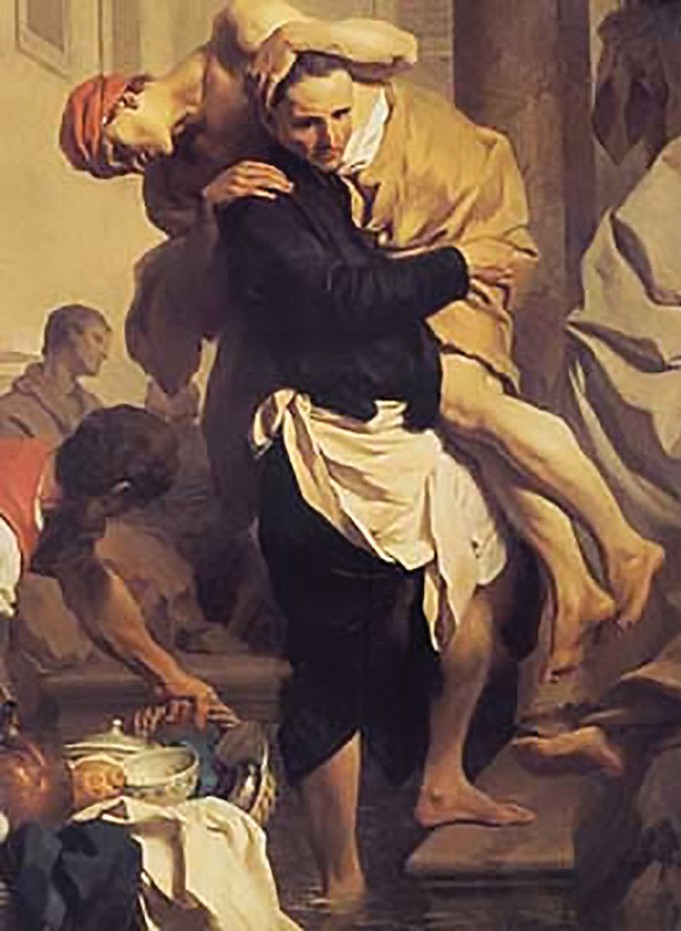
Yet it was this festering, painful wound that led him to his true mission in life. He was treated at Saint James Hospital in Rome (which became one of the main sites of his life), where he was confronted with the unworthy living conditions of the sick and dying. He became a nurse, yet his passion for card games led him to neglect his duties and he was soon dismissed. An important, forward-looking event in his life was certainly his meeting with the outstanding saint of his time, Philip of Neri, who was also his confessor for a time. In February 1575, he began working on the renovation of a Capuchin monastery. This was where he had another fateful encounter with the Franciscan Prior of San Giovanni Rotondo, Father Angelo, with whom he had a conversation in a cell that lasted until dawn (Father Pio later lived in the same cell for many years).
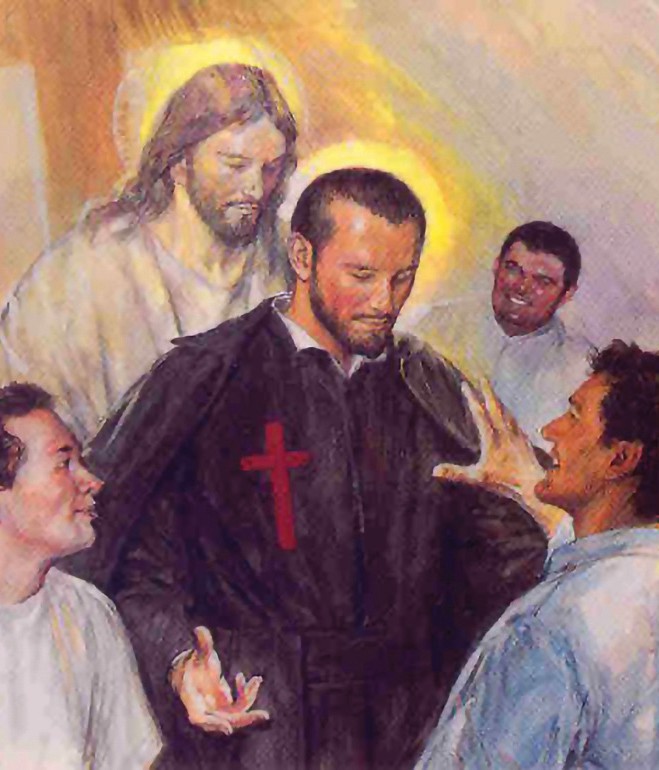
It is said that from that day on, he no longer sinned intentionally. His leg wound recurred, and he was again taken to the hospital in Rome, which served as a shelter for the blind, beggars, orphans and the homeless. The converted Camillus cared for the sick with profound love – for the patients, he appeared as a unique expression of the Lord’s presence. So strong was his conviction that he saw and served Jesus in the sick and performed certain services kneeling by their bedsides. The Order of Camillians that he established is said to have originated from a night-time tour he made of the hospital wards in the summer of 1582. He heard the wailing of patients on all sides, yet there was no sign of a nurse.
It then occurred to him that there must be some Christian men with whom he could begin to remedy this sad situation. Although he found only five enthusiastic companions, they were all ready to devote their lives to caring for the sick. Initially, the hospital did not look kindly on his efforts and those of his companions, nor on the fact that he was not a priest, so at the age of 32 he went to school and two years later was ordained a priest. One night, while praying, the image of the crucified Jesus came to life: he removed his hand from the crucifix and gave strength and courage to the despondent Camillus. He moved out of the hospital with his companions, first to the Church of Santa Maria dei Miracoli, also in Rome, and then to the Church of St. Mary Magdalene – the latter of which still serves as the centre of the Order’s operations.
They tirelessly visited hospitals, slums, prisons and the dying, to help everywhere and everyone. On some occasions, they lived solely on bread so as not to waste precious time cooking. The “community for the sick” is how they referred to themselves. The red cross on the habits of the members, symbolising blood, suffering and mercy, set them apart from other priests and monks – thus his mother’s dream came true. Subsequently, when Rome was ravaged by the plague and famine, they tried to help all those who were suffering. In 1591, the Pope formally recognised the establishment of the Order of Ministers of the Sick. Apart from the three basic vows of other monastic orders, they also volunteered to take a fourth vow to help all the sick, even when this puts their own lives and health at risk. As they supported the dying, they referred to them as “the Fathers of a Good Death”.
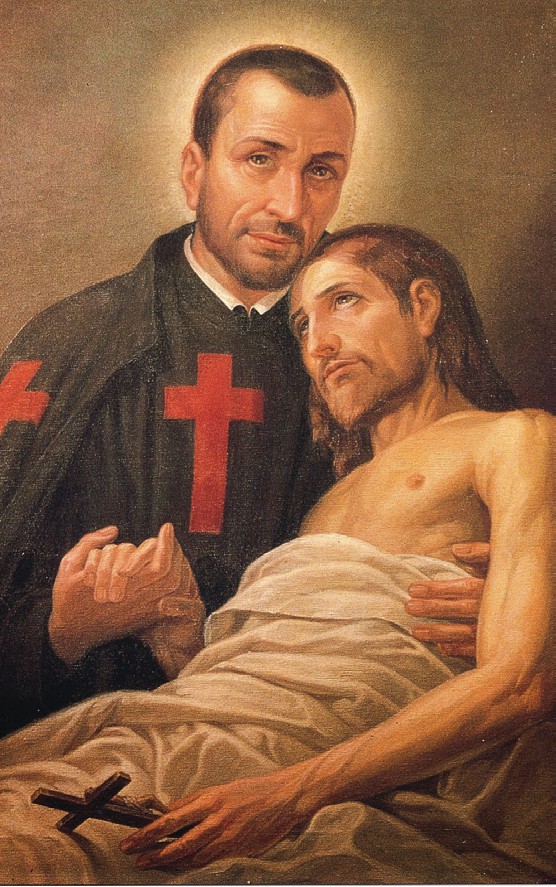
Even in the midst of his great pain and illness, Camillus would still tend to the sick or had himself carried to them on a stretcher. Over time, his strength left him. Prior to his death, he asked some of his companions to paint for him the image of the crucified Jesus, shedding his blood. He locked his gaze on this image as he gave back his soul to the Creator on 14 July 1614. His canonisation took place in 1746. Camillus left behind a flourishing community: in addition to the monks, the Order of the Camillian Sisters and the families of the third order continued to work in the spirit of their founder.
“How can I not feel comfortable in places where I can help others? At the hospital, I am in a place of paradise on earth, and at the same time I have a guarantee that I will reach heaven. Would to God that I might die among the poor fellows. I pray God I may.” And then he added: “The good soldier dies in battle, the good sailor on the sea, and the good Servant of the Sick in the hospital.”
“This is our India!” said Camillus to those who wanted to go to India on mission work.
In response to a patient’s request, Camillus once said: “God forgive you, brother! You beg me! Don’t you know yet that you are to command me, for I am your servant and slave.”
“Blessed are the merciful, for they will be shown mercy. Blessed are ye also, if ye die for the poor of our Lord, for ye shall rejoice in his presence for ever. Blessed is he who has compassion on the poor and the outcast, for in the day of trouble the Lord will deliver him. Blessed are you who have such a great opportunity to serve God in the poor sick. Come blessed of my Father, for I have been sick and you have visited me. Blessed is the servant of the sick who devotes his life to this holy service.”
Excerpt from the papal bull of the canonization of Camillus de Lellis: Filled with this heavenly and supernatural spirit, Blessed Camillus de Lellis mercifully took upon himself the care of all those in need, especially the sick, and took upon himself the task of welcoming and comforting them, not for reasons of blood or nationality, but, driven by the charity of Christ, with services that were more than paternal and fraternal.