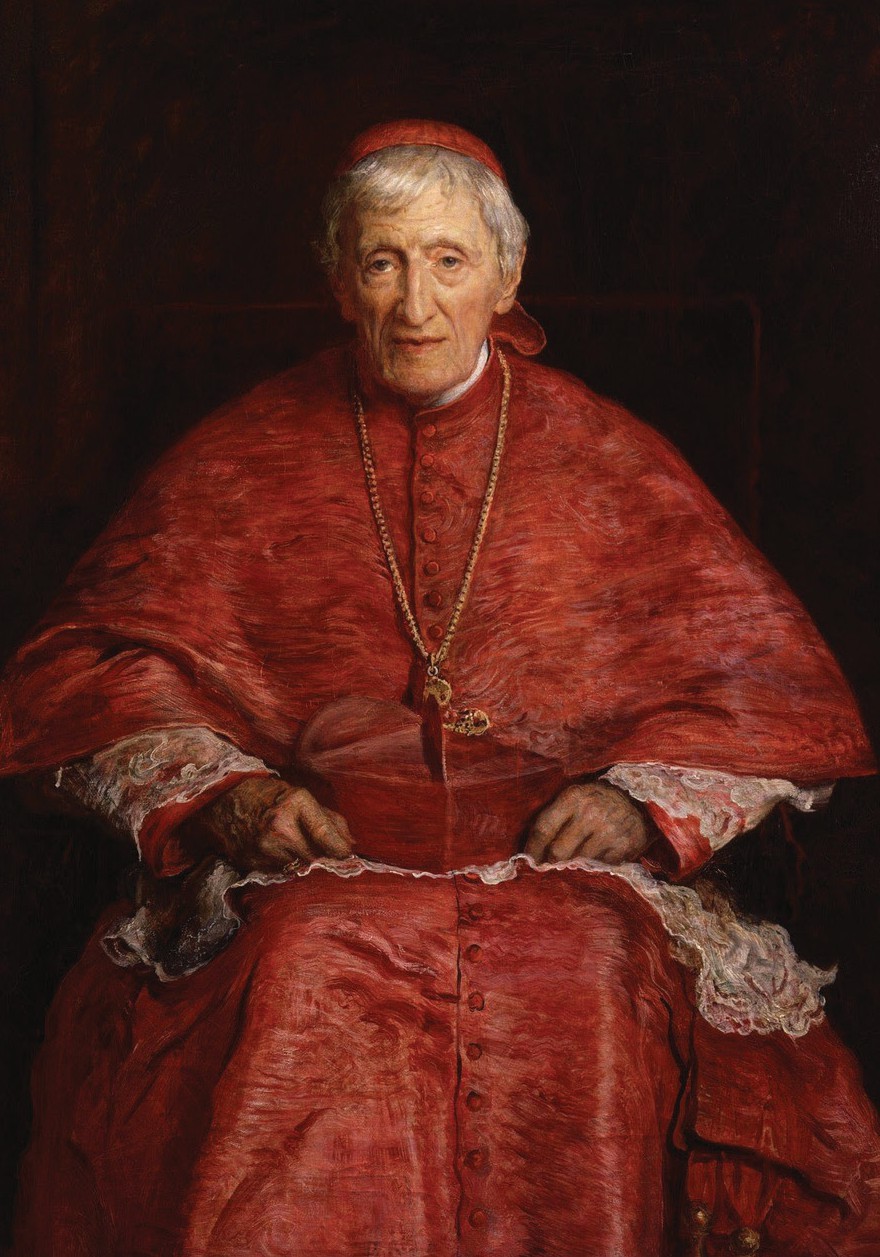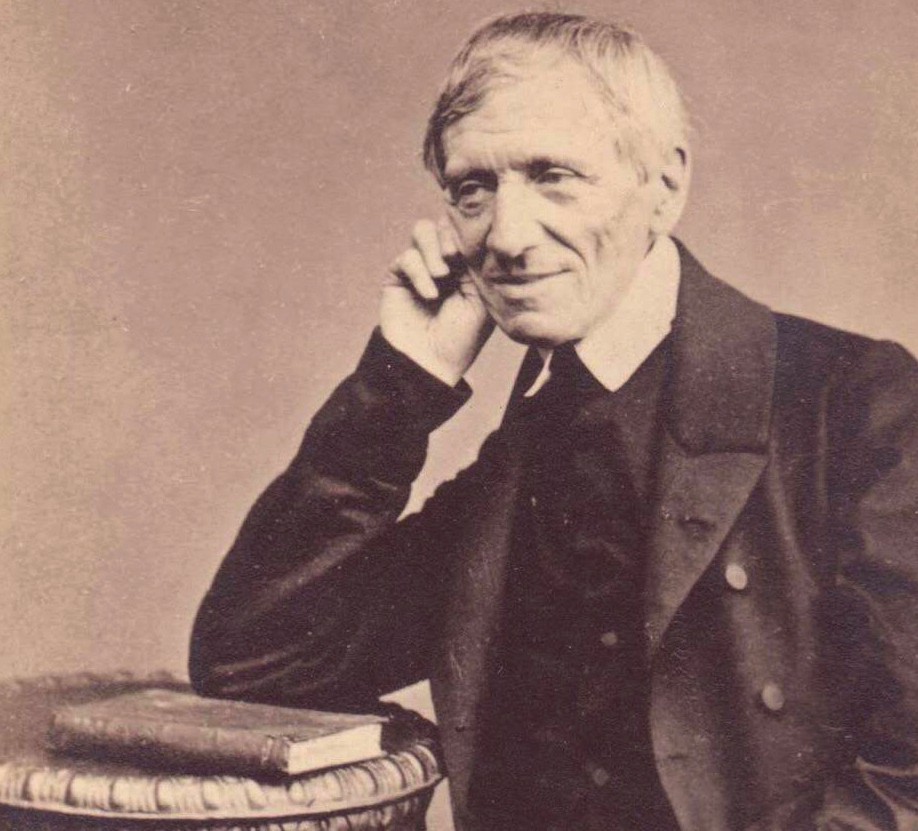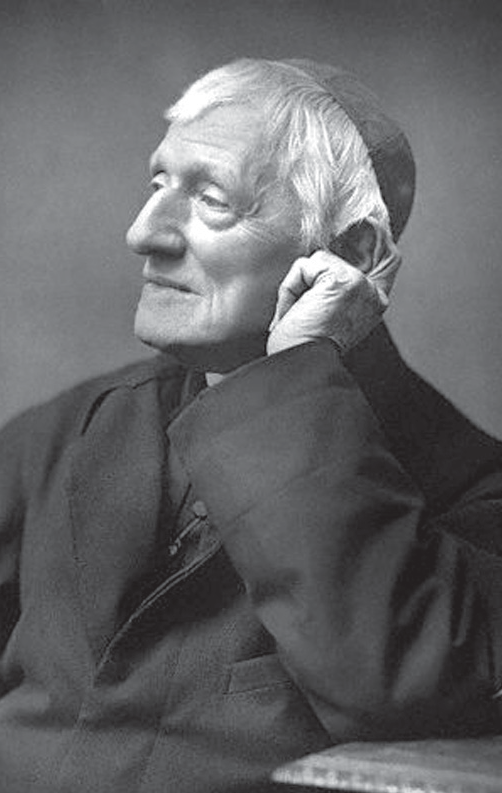
Cardinal Newman
1801–1890, England
John Henry Newman, or Cardinal Newman, is a prominent figure in 19th century English church history and an important ideologue of modern Christianity, who was also known as the apostle to the doubters. He was born on 21 February 1801 in London in a family of six as the eldest son of an Anglican English banker and a French-born Huguenot mother. He was one of the most influential converts (a believer who converted from another denomination to the Catholic Church). His life’s work and thoughts were decisive for the Christian thinkers who followed him. The 37-volume collected edition of his works, along with his numerous diary entries and correspondence have led him to be referred to as the ‘father of the modern church.’
He was only fifteen years old when his family’s financial situation deteriorated, and he himself went through serious illnesses. These events, along with the sudden death of his sister, Mary, resulted in profound changes in his relationship with religion and God. At the age of 21, he moved to Oxford, one of the centres of science at that time, and the spirit of this city had an impact on his subsequent work. Even at a young age, he had a deep conviction that it was God’s will for him to live in celibacy. There was no doubt in his mind what path he would choose in life. At 24, he became an Anglican priest, and three years later, he was appointed the vicar of St. Mary’s University Church.
Newman combined immense knowledge with a sense of purpose regarding the renewal of the church, which did not allow him to rest. Yet the more he studied the early Christian faith and the Christological roots of Christianity, the more doubts he had regarding the operation of the Anglican Church at that time. For a while, he defended his own church and even established a well-known theory called ‘via media’ as a notion of a middle way between Protestantism and the Roman Catholic Church. He was also involved in the Oxford Movement, which called for the renewal of Anglicanism, and later became a spiritual mentor of this group.
In 1839, Newman was still a highly popular Anglican priest whose personality and sermons had such a strong appeal that people flocked to him from far and wide. From 1840, he began attending the church in Littlemore for shorter and longer retreats, and he came to the conclusion that the ancient church continues to live on in the present Catholic Church. Finally, in October 1845, after lengthy deliberations, he made a decision that would have far-reaching effects, asking a holy monk, Father Domenico Barberi, in Littlemore to hear his confession and receive him into the Catholic Church, followed by a confession of his faith. In parting, he asked his Anglican congregation to “pray for him, that in all things he may know God’s will, and at all times he may be ready to fulfill it”.
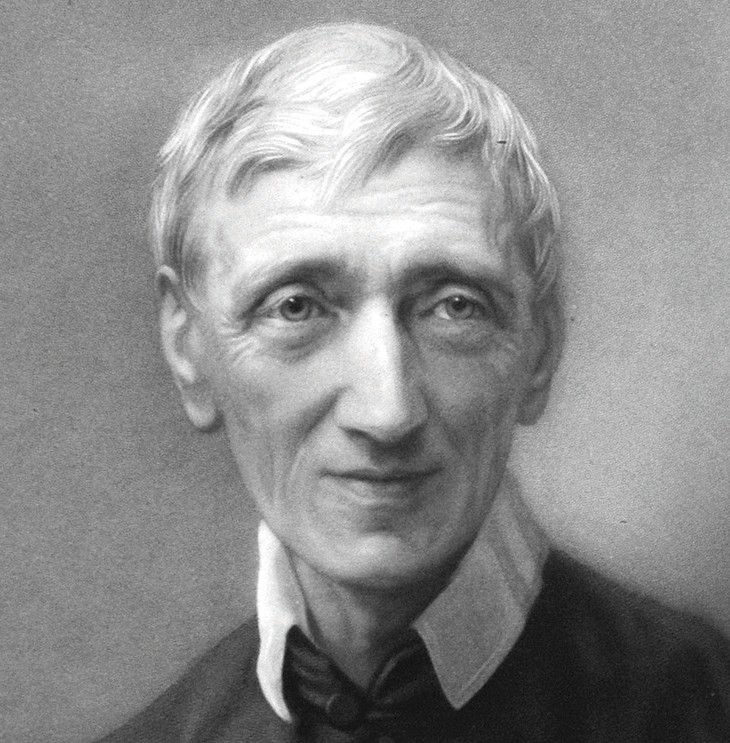
In his autobiographical work entitled Apologia pro vita sua (“A defence of one’s own life”), which many religious scholars consider to be as of equal importance as Saint Augustine’s Confessions, he provided a detailed description of his conversion to Catholicism. As a result of his decision, he was ostracized by many of his old friends and family members. Newman and his fellow converts first went to Old Oscott, near Birmingham, before Newman set out for Rome, where he continued his studies and was finally ordained a priest. After returning to his home country, with the support of Pope Pius IX and following in the footsteps of Philip of Neri, he established an oratory in Birmingham, and he was also the founder of the Dublin Irish Catholic University.
He delivered many lectures that resulted in many people converting to Catholicism. His influence changed the negative prejudice against Catholics in his homeland. This later served as the foundation for the ecumenical reconciliation between the various churches in England. From 1854 to 1857, he served as the rector of Dublin University. In 1879, he was elevated to the rank of cardinal. He spent the last ten years of his life at the Birmingham Oratory. People flocked to him for advice until his death on 11 August 1890. A Boston deacon, who was paralyzed due to a spinal disease, and a pregnant American mother requested his ‘intercession,’ leading to medically inexplicable, miraculous healings. Following his death, the Archbishop of Canterbury said of him “…in his person, the founder of the English church in its current form has left us. We can only vaguely imagine what the Anglican Church would have been without the Tractarian movement, of which Newman was the sustaining spirit and inspiring genius.”
“Holy the womb that bare Him, holy the breasts that fed, but holier still the royal heart that in His passion bled.”
“Ten thousand difficulties do not make one doubt, as I understand the subject; difficulty and doubt are incommensurate.”
“O God, the time is full of distress, the cause of Christ is like in agony. And yet – never did Christ walk more powerfully through this time on earth, Never was His coming clearer never His proximity more noticeable, never His service more precious than now.”
“God has created all things for good; all things for their greatest good; everything for its own good. What is the good of one is not the good of another; what makes one man happy would make another unhappy. God has determined, unless I interfere with His plan, that I should reach that which will be my greatest happiness. He looks on me individually, He calls me by my name, He knows what I can do, what I can best be, what is my greatest happiness, and He means to give it me. God knows what is my greatest happiness, but I do not.”