Charles de Foucauld
1858, France – 1916, Algeria
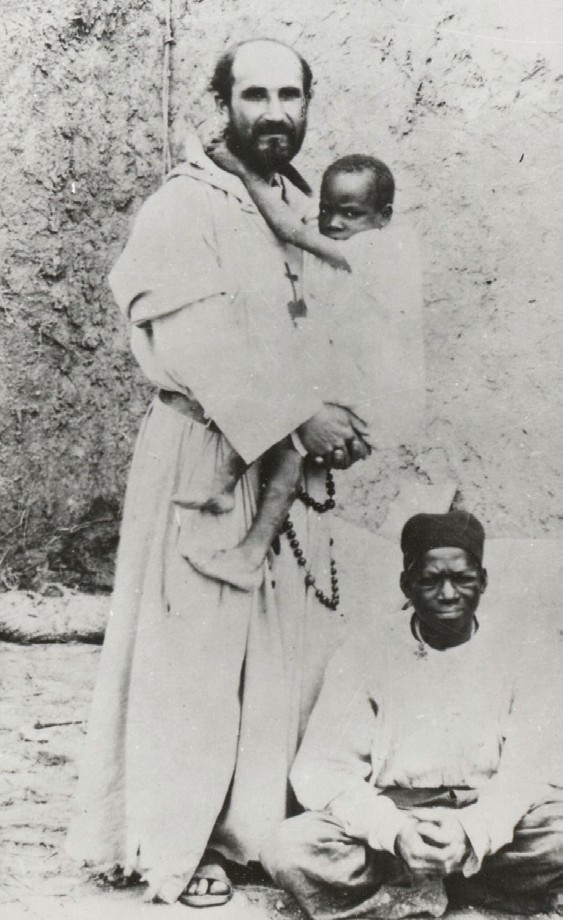
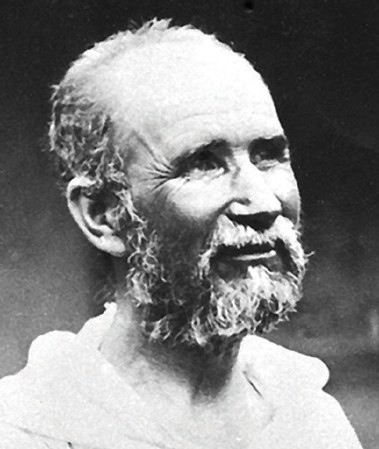
Charles de Foucauld, ‘The Heart of the Sahara’, the originator of the Little Brothers of Jesus and countless other communities and monastic orders opting for poverty and a simple life, who simply referred to himself as Charles, little brother of Jesus, was born in a rich, aristocratic family on 15 September 1858 in Strasbourg, yet lost his parents by the time he turned six. Due to a lack of a forceful upbringing, he squandered a fortune worth of money in his youth. At twelve years of age, the Franco-Prussian war broke out and he was shocked by the tragedy of his home country. He lost his faith and joined the army and after extensive preparations, at the age of twenty-five, dressed as a Jewish rabbi, he set out on an expedition to Morocco under the name of Joseph Aleman. He received an award from the Societe de Geographie de Paris, yet no amount of travel could sate his anxiety. He lived in Paris for a while and studied the Islam, yet his spiritual crisis deepened until he underwent a conversion experience at twenty-eight years of age, thanks to his niece, Marie and a Trappist monk, Father Huvelin. In the same year, in 1886, Thérèse of Lisieux – who is considered by religious scholars as Charles’ spiritual kindred – had a similar experience. Neither of them were interested in half-heartedly following the lives of saints and instead, they chose complete devotion, love and separation from all worldly attachments.
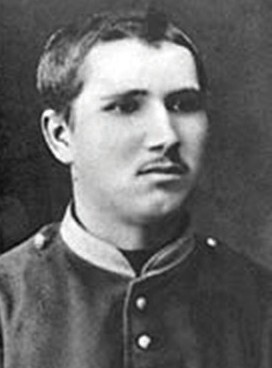
Huvelin abbot put the fierce young man, who immediately wanted to enter the strictest possible order, to the test for three years and sent him on a pilgrimage to the Holy Land to better acquaint himself with the life and ordeals of Jesus Christ. That was when Charles realised that instead of following a comfortable path to Jesus, he was more interested in following the humiliated, despised and scorned Jesus. He set himself the goal of living in humility, ignored and despised, as one of the lowliest of all, and in light of his determination he consciously sank deeper and deeper. He himself referred to this process as his ‘descent’. As a novice, he assumed the name of Brother Marie-Alberic and was sent to a Trappist monastery in Northern France, before being sent to Syria and Rome for theological studies. The fasting, the cold, sleeping on the ground and a vow of silence caused him no difficulties at all and he was dissatisfied by the lack of true hardship. He waited for years for his superior’s permission to leave the monastic lifestyle behind and set out on his own path.
In 1897, he first went to Nazareth and after three years of monastic service, he followed an inner calling and moved to the Tuareg people in the Moroccan desert to live an eremitical life. That was when he formulated his ideas for a new order of monks, the Little Brothers of Jesus, with an even stricter set of rules than the original Franciscan order, yet he was unable to find others to join him in this poverty and renunciation of life and his ideas were not recognised by the Vatican. Although he visited France on several occasions to recruit people for his mission, he was unable to find anyone to join him. The only applicant to join him became ill and went home after three months, therefore Foucauld continued his mission on his own. He established three separate hermitages distanced from one another, one in Béni Abbes in Algeria, one in the inner-Saharan Tamanghasset and a third in Assekrem, at two thousand meters of elevation.
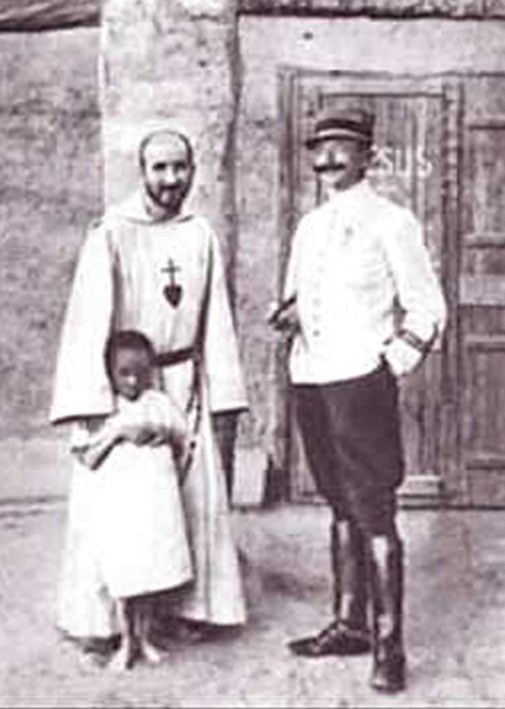
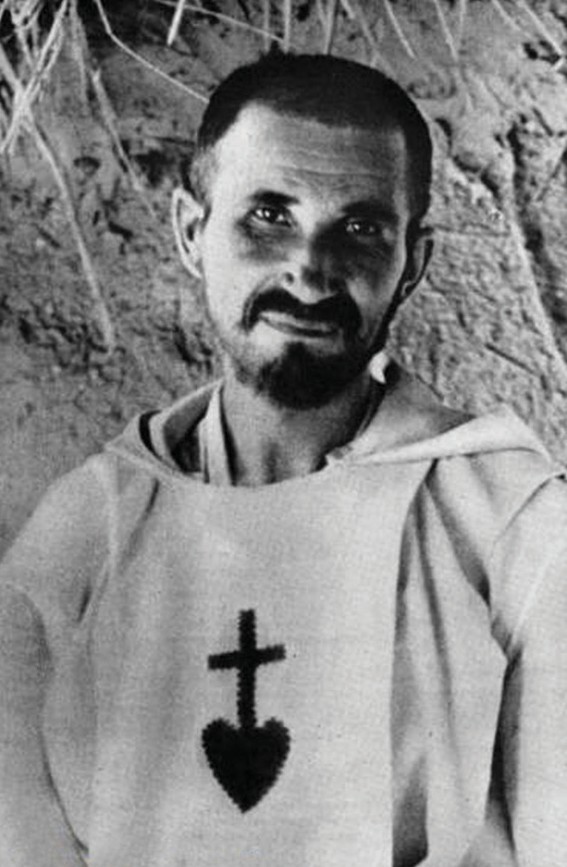
On his door, which was open to all, he wrote the inscription ‘Jesus Caritas’, referring to his hermitage as khaoua (brotherhood) and wearing a heart on his clothes with a cross over it: all that mattered to him was love. When he saw that the letters he had written on behalf of the slaves were not being taken seriously, he decided to become a servant of the slaves himself. He took his meals with them, washed their clothes, helped and taught them and even wrote the catechisms for the poor of the Sahara. He was an incredibly versatile personality: he tended to the health needs of the local people, wrote a Tuareg-French dictionary, worked on the translation of the Tuareg Gospel, collected folk songs and poems to preserve local traditions, and even helped set up a meteorological observatory. Towards the end of his life, when the First World War broke out, he converted the hermitage of Tamanghasset into a small fortress to protect the poor. This is where he died on 1 December 1916, all alone, just as he carried out his mission: a young looter panicked and shot him in the head. Although he did not live to see the founding of his order, his spiritual legacy after his death led to the creation of numerous monastic congregations, lay and clerical communities and associations, which have been operating with the approval of the Church since 1968. Charles De Foucauld was beatified in Rome on 13 November 2005.
“The means that Jesus used lying in the manger, living at Nazareth, on the Cross are: poverty, humiliation, abandonment, renunciation, persecution, suffering. These are our weapons.”
“As soon as I believed that there was a God, I understood that I could do nothing other than to live for him.”
“My sacrifice, my only true sacrifice is separation.”
“To receive the grace of God you must go to a desert place and stay a while. There you can be emptied and unburdened of everything that does not pertain to God. There the house of our soul is swept clean to make room for God alone to dwell… We need this silence, this absence of every creature, so that God can build a hermitage within us.”
“Jesus has taken the last place so utterly that no one can ever take it from him… I cannot travel first-class while the one I love went through it in the last.”
“There is a God! God is saving love! This is the gospel you must proclaim with your lives.”
(Foucauld on the saints)
“Charity, which is the heart of religion, obliges every Christian to love his or her neighbour. (The first duty is to love God, the second like the first, is to love one’s neighbour as oneself). That is to say that one should make the salvation of one´s neighbour like one´s own, the important business of life. Every Christian, then, must become an apostle. This is not just advice, it is a commandment, the commandment of love.”
“Every Christian must look on every human being as a beloved brother or sister… To love, to love God and our neighbour, to arrive through that to the love of God, are the two loves that cannot exist one without the other. To grow in one is to grow in the other.”