Chiara Lubich
1920–2008, Italy
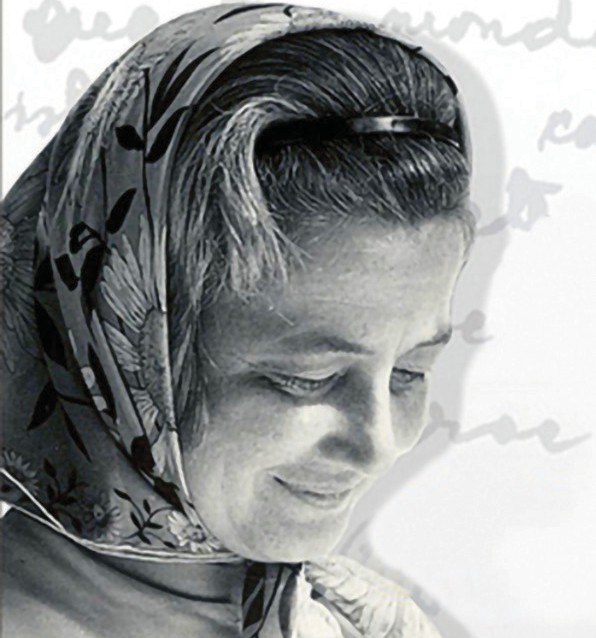
Chiara Lubich, originally known as Silvia Lubich, founder of the Focolare movement, a great figure of ecumenism and one of the most outstanding individuals of the Catholic world was born in Trento, Italy on 22 January 1920. As a true initiator, her reform efforts deeply impacted ecumenical religious discourse. Silvia studied philosophy in Venice – which she was forced to interrupt due to the war – and she worked as a teacher at an orphanage. In 1939, she went to a retreat for Catholic girls in Loreto, where she reportedly spent all her free time at the church – tradition has it that the local church houses a part of Jesus’ childhood house. This place had a huge impact on Silvia. Upon leaving, a thought passed through her mind: ‘I will be followed by a host of virgins.’ In 1943, she entered into church service, adopting the name of Chiara in the Third Order of Saint Francis before launching the Focolare movement in the same year.
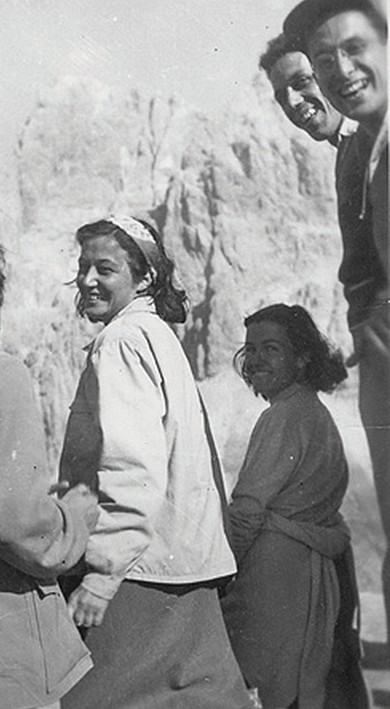
In her words, she felt the calling to take on the pain of humanity. The joy of her new life slowly spread to others and was noticed by her pupils and acquaintances. Even during the heaviest bombing in Trento, she stayed in the city to help the needy. The war slowly led to the destruction of everything they devoted their lives to. Yet God planted a question in Chiara’s heart, along with the answer: “Is there an ideal that does not die, that no bombs can destroy, an ideal we can give our whole selves to? Yes, there is. It is God.” Accordingly, she decided to wholeheartedly choose God. Together with her fellow companions, she rented an apartment, which they referred to as the “little house”. This was the first Focolare or “family fireside”, a place where the fire of love would warm the heart and soothe the mind. They invited the local poor and needy here for spiritual conversations and the first volunteers left from here to visit the poor of Trento.
The movement was specifically based on a communal spirituality, on the idea that all our brothers and fellow human beings are a way to God. With the values of the Gospels in mind, it highlighted the similarities and common values of people of various religions and cultures. The movement’s supporters committed themselves to various areas of society: politics, economy, arts, education, etc. as the animators of the New Humanity envisioned by Chiara. In 1949, the first Focolare priests set out on their way, and the movement’s first town, Loppiano, was also established in the same year. From 1960, the movement operated illegally for some time, yet the Focolare volunteers still managed to spread their message to the countries beyond the Iron Curtain.
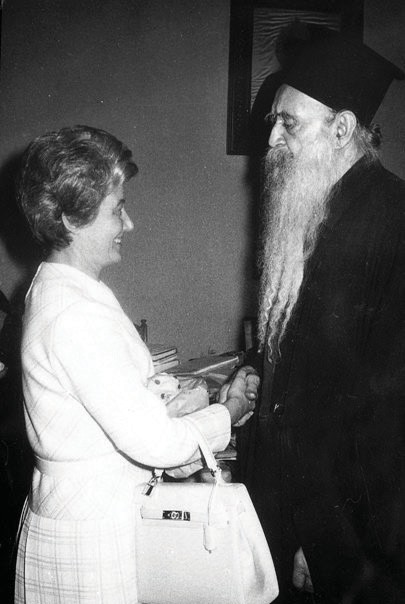
Following its pontifical approval in 1962, Chiara devoted the movement to ecumenical service. She established contact with people of other religions and was invited to visit places all over the world to share her experiences. Chiara spoke of the unity of people, encouraging everyone to transcend the borders of their country and love other countries just as their own. It was important for her to find common ground and values with the Church, other denominations and religions, as well as non-religious people. She was the first Christian woman to be invited by Buddhist monks, Muslims and Jewish communities alike to share her experiences. She established the New Families Movement, the Gen (New Generation) Movement as well as the Teens for Unity movement.
She was also one of the initiators of the Abba school, which focused on the synthesis of science and religion. Shortly before her death, she served as one of the initiators of the Together for Europe meeting of Christian movements and communities and the International Family Festival, which was created to promote the cause of families. In recognition of her work, Chiara Lubich received sixteen honorary doctorates between 1996 and 2008, a Prize for Peace Education from UNESCO in 1996, followed by a Human Rights Award from the European Council in 1998. Due to her condition, she retired from public life in 2004. On the day before her death, she asked to be taken home from the Gemelli Hospital. In her final hours, she opened wide the doors to her house and her heart and hundreds of people visited her in her home to bid her farewell. She left this world on 14 March 2008, leaving Focolare as her legacy. The movement has spread to 182 countries with millions of followers.
“‘May they all be one’ – that is why we were born to help this be realised in the world.”
“Nothing is more orderly than that which is ordered by love, and nothing is freer than that which is bound by love.”
“We can re-experience Mary on Earth by living the Word of God, by showing love and reciprocating love. This is how we can spiritually give Jesus to the world as Mary gave Jesus physically to the world.”
“If we observe people who live the Word of God, we immediately notice the different effects the Word has on them. Every soul is like a polished crystal, which the light of the Word lends different shades wherever it is touched. People can find themselves in an infinite variety of situations, and the Word of God can produce an infinite array of effects in all of them.”
“Lord, may I ever speak as though it were the last word that I can speak. May I ever act as though it were the last action that I can perform. May I ever suffer as though it were the last pain that I can offer. May I ever pray as though it were for me on earth the last chance to speak to you!”
(Chiara Lubich’s prayer)
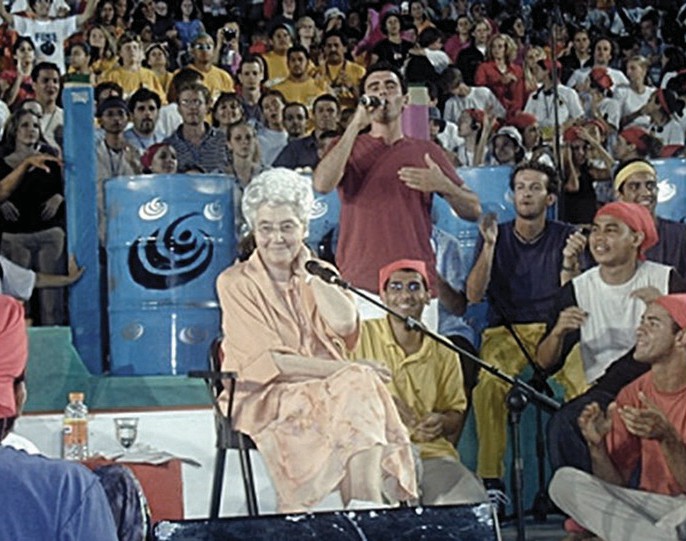
“As a regular annual event, GenFest was born from Chiara’s idea: a meeting of young people who want to show the world that universal brotherhood is an ideal worth living for. She herself referred to it as a „divine waterfall”, inspired by the spark of the notion that „God is love.”