Desmond Tutu
1931–2021, Republic of South Africa
Desmond Mpilo Tutu Anglican priest, human rights activist known as the consciousness of South Africa who played a key role in the non-violent opposition to apartheid was born on 7 October 1931 in the town of Klerksdorp, South Africa in a family of seven. His life is a shining example of how to remain humble and blameless in the world of politics and religious leadership. He later described his first eleven years as a period of visceral fear of death at the hands of his abusive father. As a young child, he was hospitalised with tuberculosis – in this period, he was frequently visited by the Reverend Huddleston, a well-known anti-apartheid campaigner. Although Tutu wanted to be a doctor, he chose a career in teaching for financial reasons. He first taught at a secondary school, yet resigned in protest of the Bantu Education Act, which compromised the quality of education for black students.
He decided to become a priest and began his theological studies at King’s College, London. In 1975, he returned to the troubled Republic of South Africa, where he was soon appointed Bishop of Lesotho. His name became known worldwide after the Soweto massacre of 16 June 1976. He heavily criticised the apartheid regime, comparing them to Nazis. He boldly preached the inherent equality of men, yet always with the peace and the gentle power of the Gospel. He led protest marches, and although he faced death threats on several occasions, he remained steadfast in his faith in God and the truth of his mission. Wherever he went, he reminded people of God’s love for them and gave them hope that by God’s grace and love, they would one day be free. “You are the rainbow people of God,” he said frequently. He encouraged his followers to resort to non-violent means.
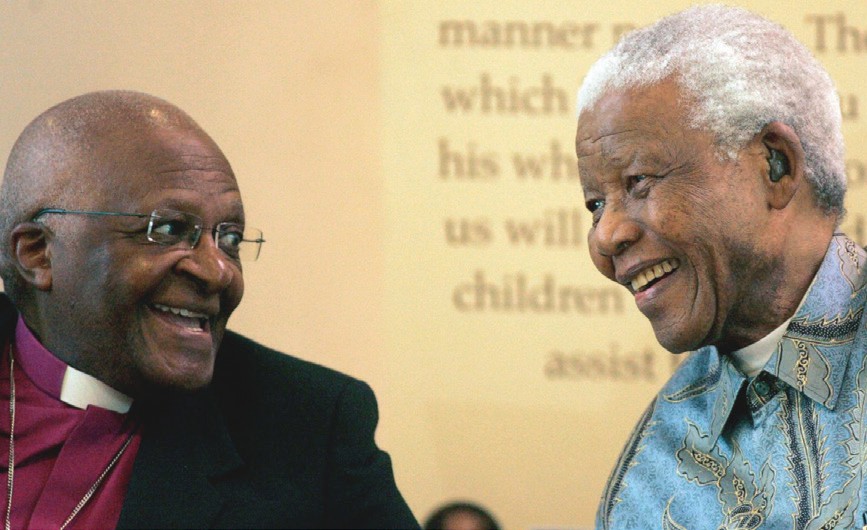
By the end of the 1980s, as Archbishop of Cape Town and later Johannesburg, he was appointed General-Secretary of the South African Council of Churches, making him one of the most influential church leaders in his country. Following the elections, President Nelson Mandela appointed him chairman of the Truth and Reconciliation Commission to shed light on the crimes of the apartheid regime. During the interrogations, he was often seen burying his face in his hands and weeping as he listened to the harrowing and shocking stories. His outspokenness made him unpopular amongst the government: he criticised corruption, elite privilege and the failure to eradicate poverty.
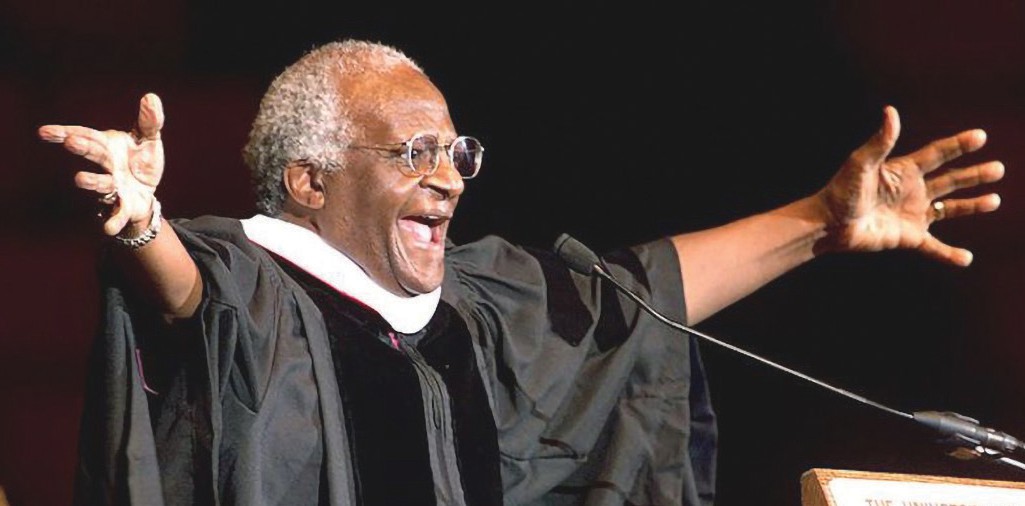
Tutu was almost always smiling, yet he also showed determination in the fierce debates. He had a great sense of humour and moral determination. For decades, he accompanied his sermons with strong gesticulation, often introducing his sermons and speeches with jokes. He often went down from the pulpit to embrace the faithful. He read the Gospels every day and he expected the same from those around him. Once, he was seen wearing a t-shirt with the inscription “You can call me Noah’s Ark!” He used his travels and fame to fight for human and civil rights. He spoke out against poverty, child marriage, racism and discrimination of all kinds. He was a founder of several international organisations. Together with key public figures, he established the group known as The Elders to help resolve conflicts in world politics and fight for human rights.
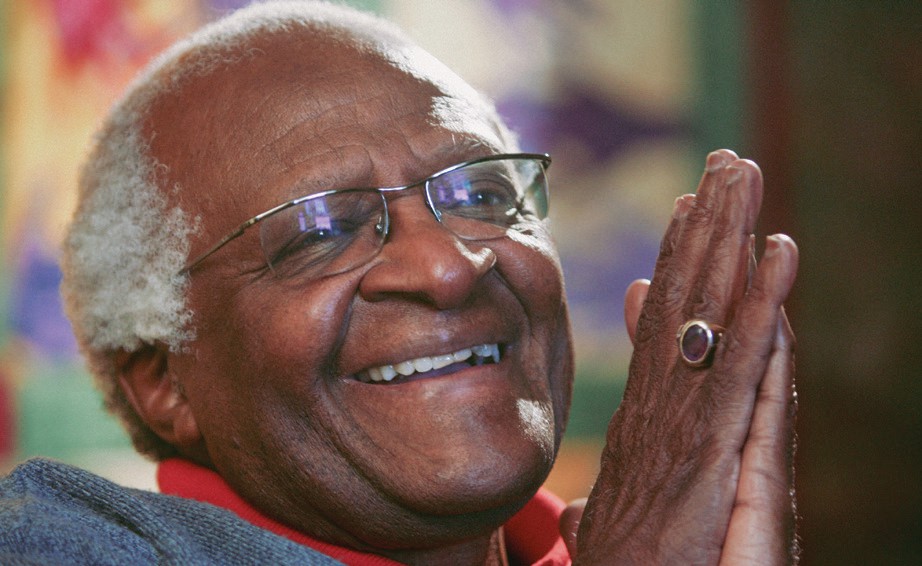
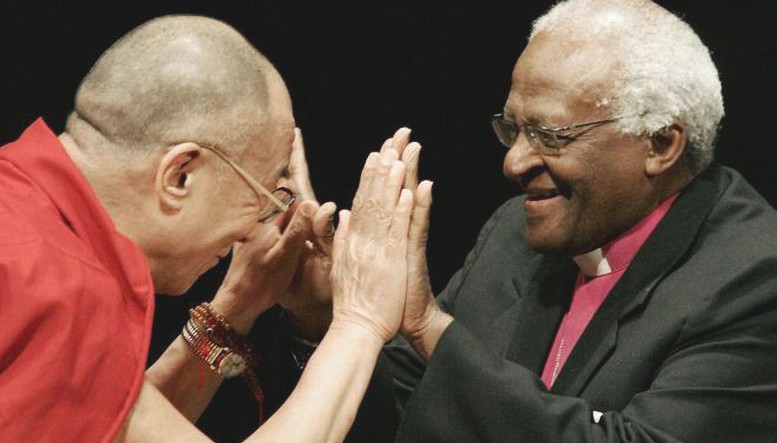
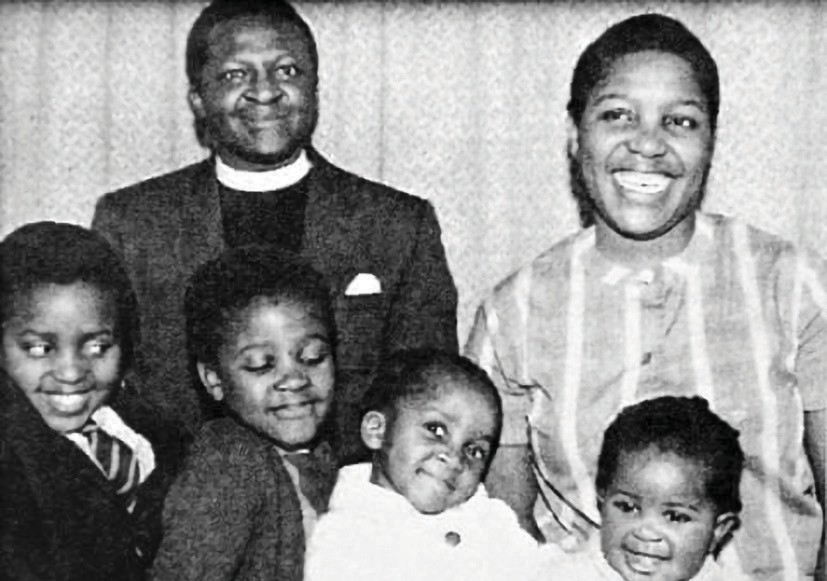
His wife was his lifelong supporter and loyal helper, and together they had four children. In addition to winning the Nobel Peace Prize in 1984, Tutu received numerous awards. Sri Chinmoy personally presented him with the U Thant Peace Award. Tutu was also a prominent figure in interfaith dialogue. They published a book of his conversations with the Dalai Lama and he was also involved in the writing of numerous other books. Together with his daughter he wrote the Book of Forgiving, which through various examples shows that understanding the other person, seeing their wounds and recognising the source of a common wound can lead to healing of one’s own wounds and those of others.
When he had a brush with death in relation to the recurrence of his cancer, he humorously said that when they heard he was coming in heaven, they shook their heads to say thank you, but go back, they don’t need any people like him. When they asked him how he wished to be remembered, he said: “He loved. He laughed. He cried. He was forgiven. He forgave.” He passed away on 26 December 2021 at 90 years of age. His remains were laid to rest at St George’s Cathedral in Capetown.
“The quality of human life on our planet is nothing more than the sum total of our daily interactions with one another. Each time we help, and each time we harm, we have a dramatic impact on our world. Because we are human, some of our interactions will go wrong, and then we will hurt or be hurt, or both. It is the nature of being human, and it is unavoidable. Forgiveness is the way we set those interactions right.”
“Without forgiveness, we remain tethered to the person who harmed us. We are bound to the chains of bitterness, tied together, trapped. Until we can forgive the person who harmed us, that person will hold the keys to our happiness, that person will be our jailor… There is nothing that cannot be forgiven, and there is no one undeserving of forgiveness.”
“When we are uncaring, when we lack compassion, when we are unforgiving, we will always pay the price for it. It is not, however, we alone who suffer. Our whole community suffers, and ultimately our whole world suffers. We are made to exist in a delicate network of interdependence. We are sisters and brothers, whether we like it or not.”
“A person with Ubuntu is open and available to others, affirming of others, does not feel threatened that others are able and good, for he or she has a proper self-assurance that comes from knowing that he or she belongs in a greater whole and is diminished when others are humiliated or diminished, when others are tortured or oppressed.”