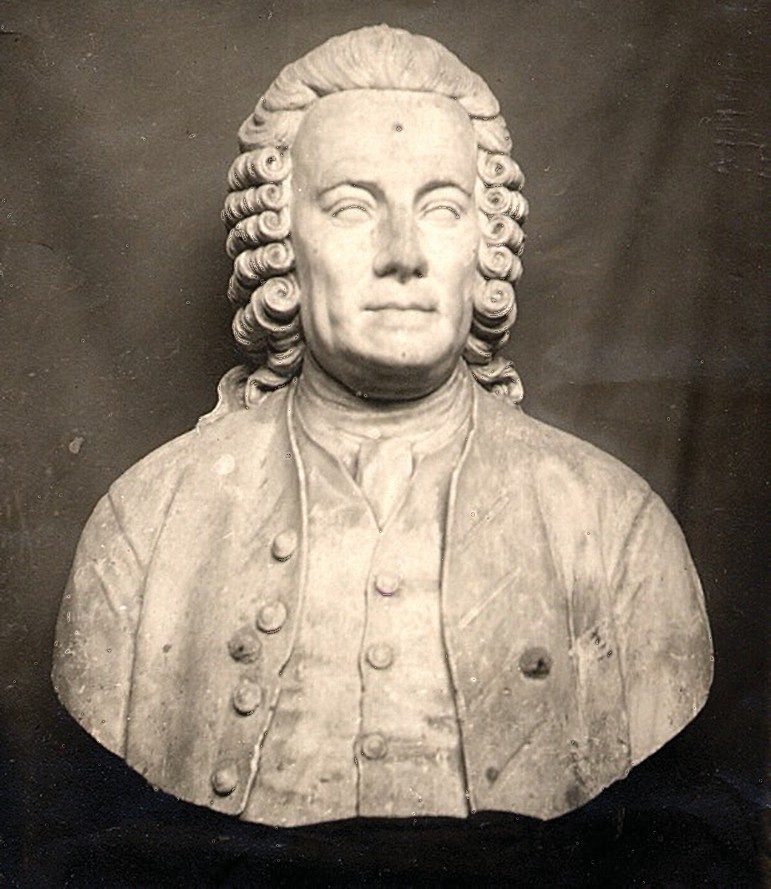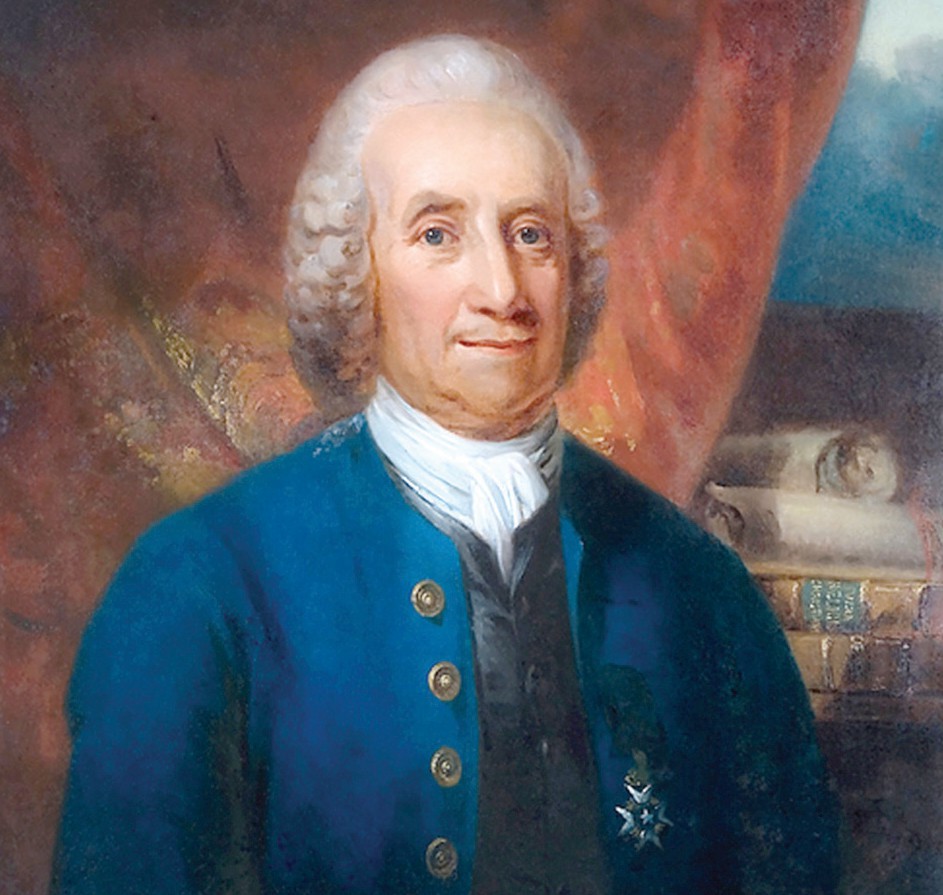
Emanuel Swedenborg
1688, Sweden – 1772, Great Britain
Emanuel Swedenborg, the great Swedish scientist and Christian mystic and one of the most defining visionaries of his age was born Emanuel Swedberg in Stockholm on 29 January 1688. The most important traits of his extraordinary being was that he was at once a polymath scientist, a mystic who led a pure life and a man of the Spirit. Apart from earning a doctorate in philosophy, he was also well-versed in natural sciences. In 1710, he visited a number of key scientific centres in various countries of Europe, including Hungary. He visited London from 1710 to 1714, where he studied physics, mechanics, philosophy and even poetry at one of the most vibrant scientific centres of the world. This is where he sketched out his first designs for the submarine and the airplane, as a genius far ahead of his time. As a scientist, he also excelled in practical fields: for example, he was skilled in lens grinding and bookbinding. On return to his homeland, Swedenborg published Sweden’s first scientific journal together with naturalist Christopher Polhem before writing the first Swedish algebra textbook. In 1715, during the Swedes’ conflict with the Norwegians, he arranged for the transport of eight Swedish ships over a distance of one hundred and forty kilometres with the use of a technical solution he devised, thus contributing to their victory – as a result of which he and his family members were made members of the House of Lords by the Queen in 1719, allowing them to adopt the noble name of Swedenborg.
In recognition of his merits, the Swedish monarch Charles XII appointed him President of the Swedish Mining Council from 1716. He published a number of scientific works in this period, and some of his insights – for example, on the theory of atoms and the origin of the solar system – were years ahead of his contemporaries. Following the death of his father, he began examining the relationship between matter and spirit. He studied the body as the temple of the soul, and although his investigations resulted in a book on glands and the workings of the brain, he was no closer to his fundamental goal. Despite his failure, he continued his work with even greater determination. From 1741, he occasionally experienced lights flashing before his eyes from time to time, while his dream life increasingly intensified. At Easter of 1744, he experienced a vision, followed by a mystical experience a year later: Christ himself appeared to him and charged him with the task of providing people with a deeper, spiritual understanding of the Bible.
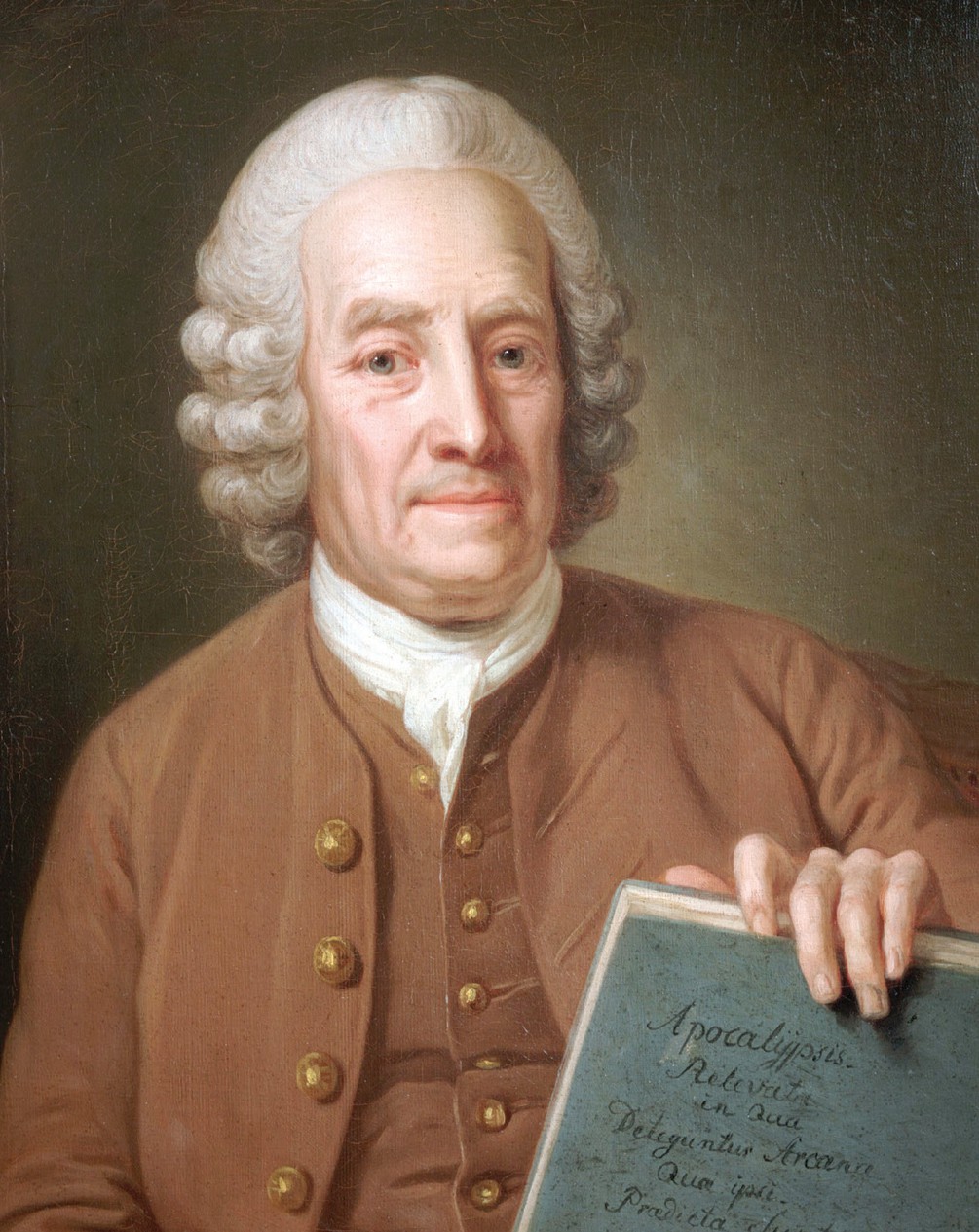
His writings indicate that from this point on, he had access to heaven and hell, and was in daily contact with spirits and angelic beings. Swedenborg set to his work like a scholar: he learned Hebrew and refreshed his knowledge of Greek to eliminate distortions in the translations, and with the use of his own Bible guidebook, he wrote commentaries on the Book of Genesis word by word. He continued this work until 1758, and published his research in eight volumes under the title of Arcana Coelestia (Celestial Secrets), which served as the foundation of his future theological works. He went on to research a number of further fields. He published books on topics such as The Final Judgement, and Heaven and Hell, a work in which he describes the workings and structure of the spirit world based on his own experiences. Following this spiritual exploration, he returned to the Bible – on this occasion, by interpreting the Book of Revelation, and exploring themes such as divine love, wisdom and providence. He maintained his restraint and scientific mindset throughout his spiritual research. He avoided and despised spiritualism, mysticism and secret societies.
He never boasted of his abilities, yet he occasionally spoke to the spirits of the deceased when asked, and convinced notables such as Queen Louisa Ulrika of the truth of his words. On one occasion, he gave an hour-by-hour account of the Stockholm fire that broke out four hundred kilometres away from him. His book on marriage, published at the age of eighty, was based on his reflections of the male and female gender in the spiritual world. Subsequently, he still wrote three more volumes during his time on earth: the first was a critique of traditional Christian theology, the second outlines the doctrines of a future new church, while his final work was simply entitled True Christian Religion. He precisely predicted the time of his death. With his final words, he blessed his servants before finally departing to the spirit world he knew so well on 29 March 1772, in London. Based on his commentary of the Bible, his followers established a new Christian movement and church known as the New Church or Swedenborgianism. His theological works greatly influenced spiritual life on Earth.
“From this it is evident that in man life is nothing else than love and wisdom, and that there is life in man in the degree in which he receives these.”
“…For the Lord cannot enter into a man and do any good from Himself through him, before the devil, that is, evil, is cast out, but rather after he is cast out..”
“The soul is charged with the task of desiring good and the body with the task of doing good.”
“When we are thinking well about the Lord and about matters that involve the Lord and when we are thinking well about our neighbour and about matters that involve our neighbour, and when we are intending well toward them, we are thinking and intending from our spiritual inner nature. This is because our thought is based on a belief in what is true and a love of what is good, and is therefore coming from heaven. However, when we are thinking badly about these things and intending badly toward them, then we are thinking and intending from our earthly inner nature because our thinking is based on belief in what is false and love of what is evil, so our thinking is coming from hell. In short, to the extent that we are caught up in a love for the Lord and in love for our neighbour we are in our spiritual inner nature. We are thinking and intending from that nature and are speaking and acting from it as well.”
“The life which leads to heaven is not a life withdrawn from the world, but one lived in the world. A life of piety without a life of charity or goodwill to others does not lead to heaven. But a life of charity does if it consists in acting sincerely and justly in every duty, engagement and is from a heavenly motive.”