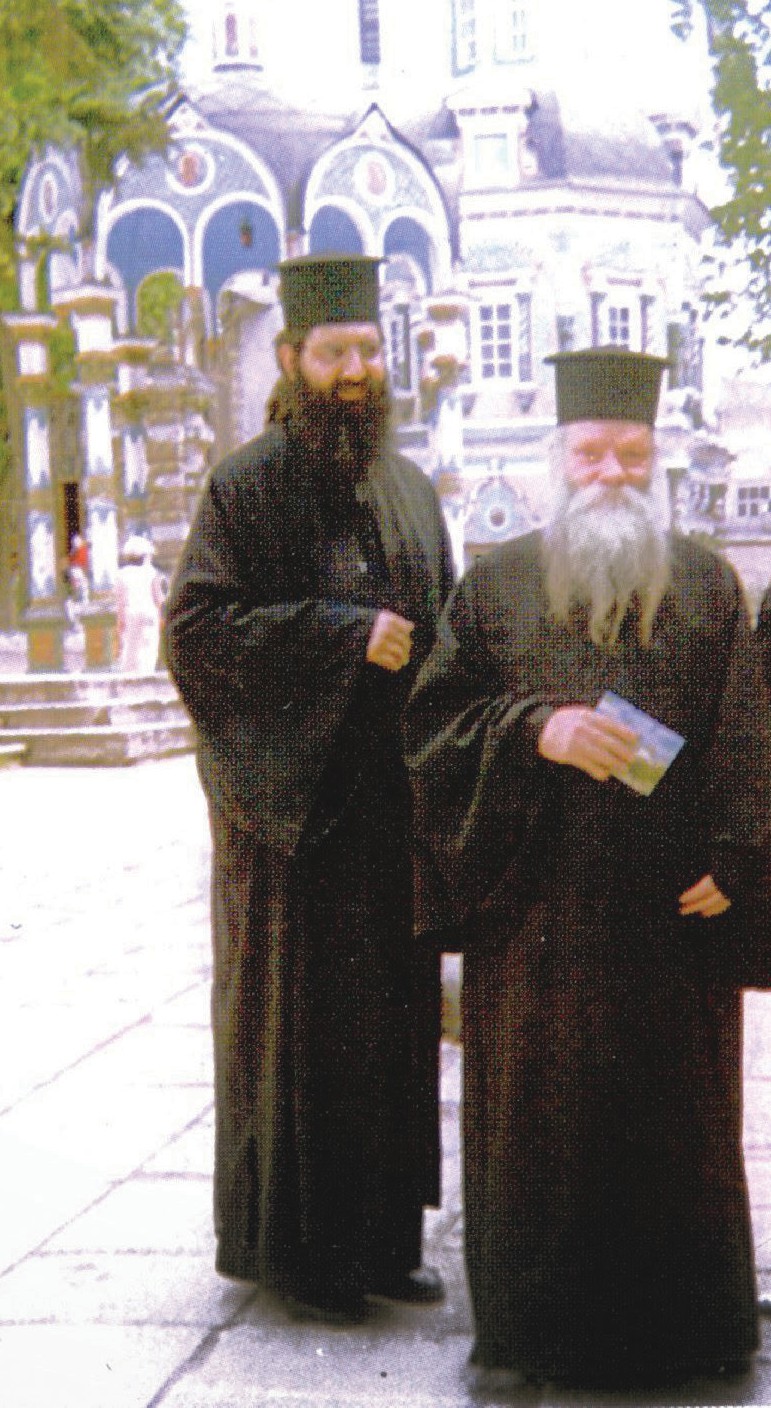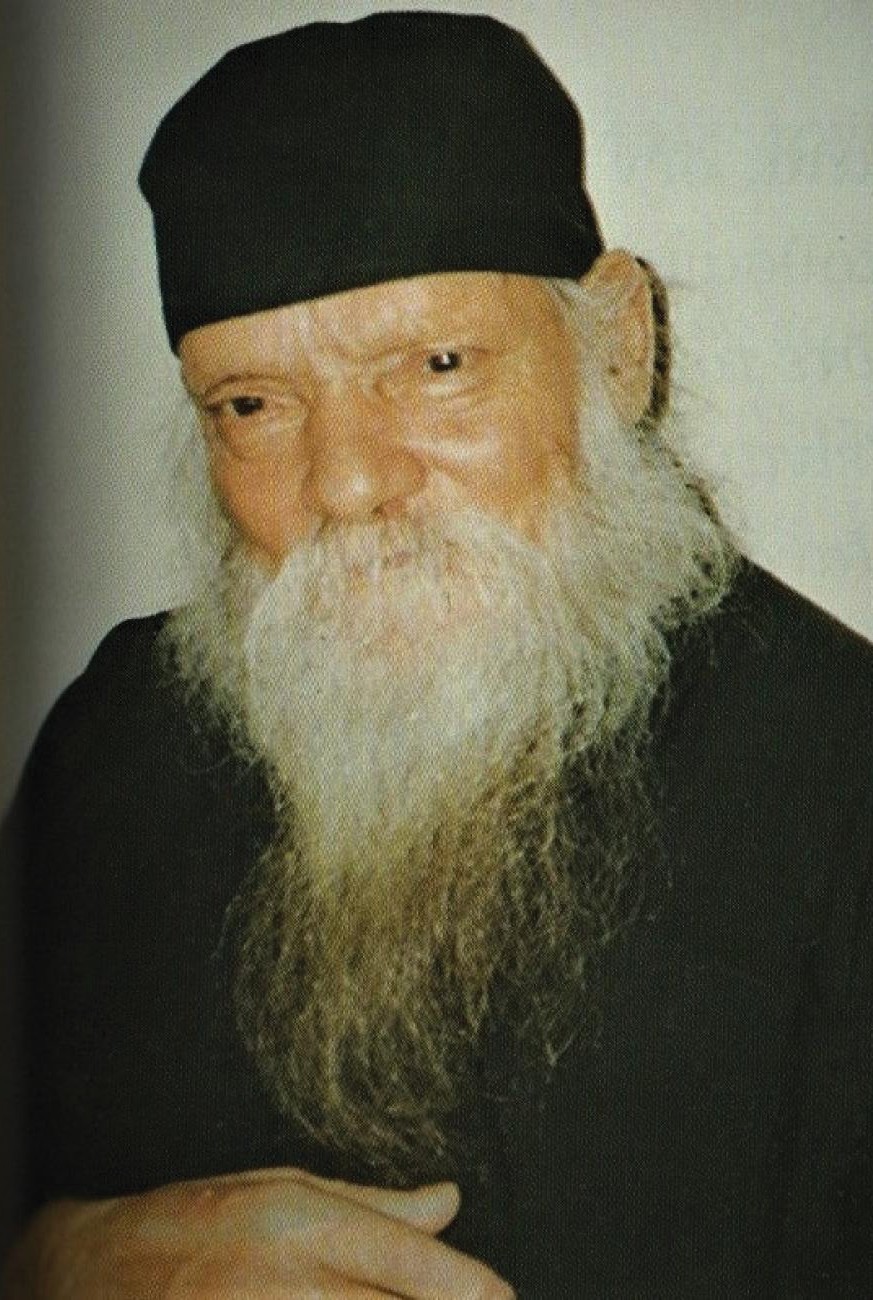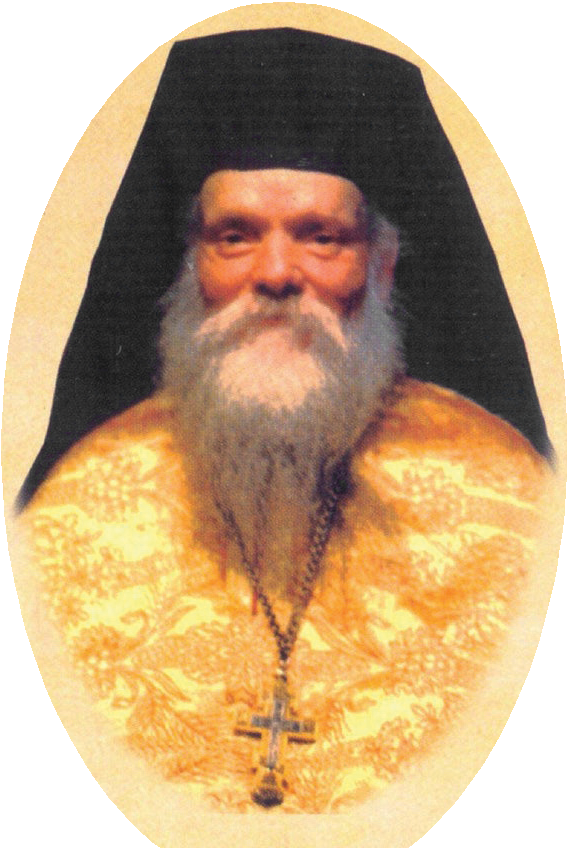
Evmenios Saridakis
1931–1999, Greece
The ideals of modern Orthodoxy have an increasing influence on the spiritual life of the world. A number of the Greek Orthodox saints and spiritual fathers of the twentieth century are also familiar in the west (such as Silouan the Athonite, John of Kronstadt and Paisios of Mount Athos). In the churches of Greece, they venerate a number of priests and monks who were “enlightened by God” – men and women alike. These include Evmenios Saridakis.
Father Evmenios Saridakis, known as the “friend of lepers” and “the laughing saint” was born Konstandinos Saridakis on the 1 January 1931 in Crete, in the southern Asterousia mountains in the village of Efia, as the eighth child of a disadvantaged family. In his hometown, there were two churches. Legend has it that in one of these, dedicated to Lady Theokos (the Mother of God), the Virgin Mary appeared to him and said to the child who was lighting the candles at the time: “one day, you will become a priest”.
At seventeen years of age, he decided to become a monk as a result of an experience he had four years earlier. He had just returned home from church work and settled down to eat when, in his own words, he saw a radiance he had never experienced before that came over him and he knew in that moment that he was going to be a monk. He became a novice at the monastery of Great Martyr Niketas in southern Crete, close to his village, where at the time there were only two elderly monks living along with the abbot. The young candidate looked after them and bore the lion’s share of monastic tasks. Since all his day-time hours were spent with practical work and services, he only found time for his spiritual pursuits at night – which he maintained until the end of his life.
After three years as a novice, he was made a monk and given the name Sophronius. He served for a time in one of the most important Orthodox monasteries in Crete, the Koudoumas Monastery, before being conscripted into the army in 1954. At the time, monks were not exempt from military service. During his time in the army, he suddenly contracted a disease that they were unable to identify. He had a high fever accompanied by strange attacks, which would not subside despite the doctors’ best efforts.
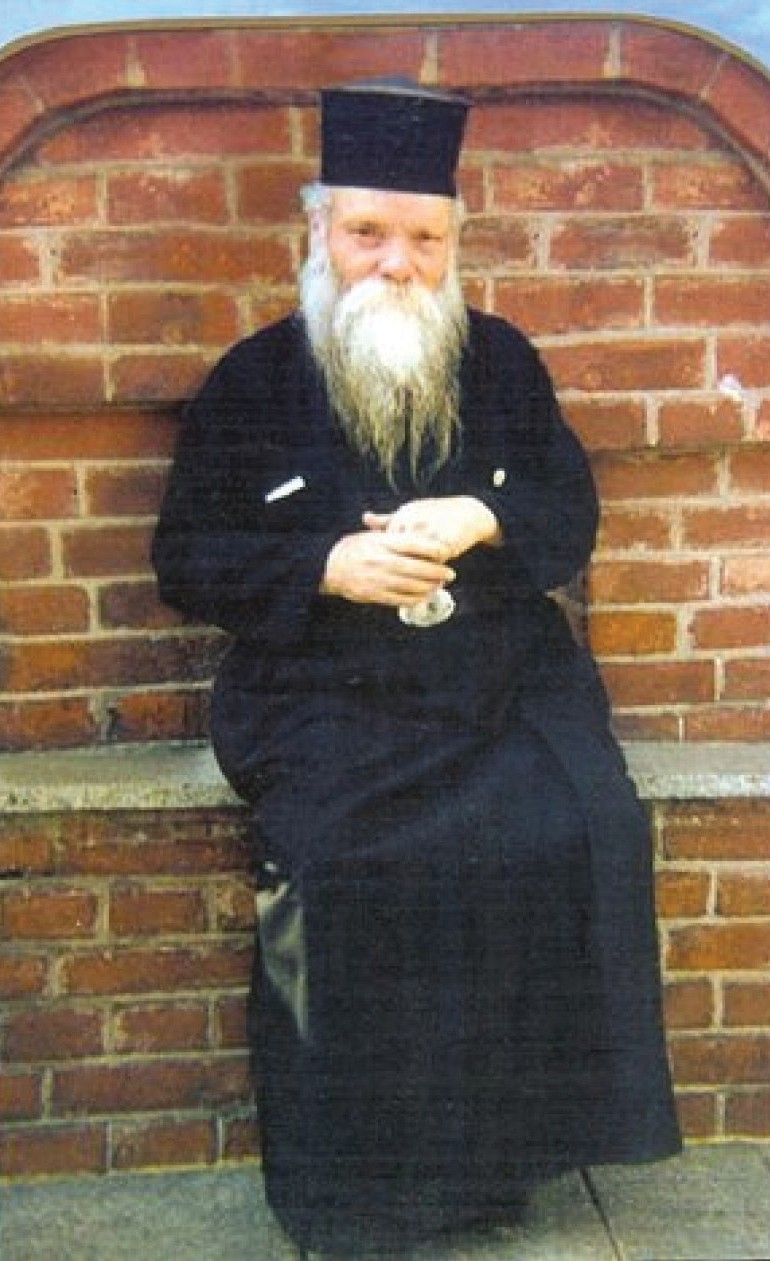
He was taken to Thessaloniki, where after a lengthy examination, they determined that he was suffering from leprosy. From there, he was taken to the hospital for infectious diseases in Agia Varvara in Athens, where he was successfully cured of the disease, without any visible trace on his body. However, sensing the immense suffering of the others, he decided to remain at the hospital to care for the sick. There were at least five hundred people in the hospital of lepers. From this point on, he lived for more than 40 years in a simple hut near the hospital, continuing his devoted work. He heard confessions, provided counselling and cured physical and mental illness.
At the beginning of his ministry, another great saint was brought to the hospital, St Nikephoros the Leper, who was blind and almost completely disabled at the time – he contracted the disease at a very young age and had lived in the leper colony in Chios for almost 43 years. He became the spiritual adviser to Sophronius, who tended to him for nearly seven years. Sophronius was finally ordained as a priest in 1975 and given the name Evmenios. He did not disclose much about his inner life. He continued his struggles in silence, not wanting to burden others with his suffering. He was also subjected to violent demonic attacks which greatly tested him. His sufferings were alleviated not by psychiatric treatment, but by fasting, vigils and prayer.
Although the liturgies caused him to shudder and often cry, he smiled and frequently laughed, often during masses, which is why he is also known as the “laughing saint”. He radiated the joy of Christianity to those around him. He believed that Christ died for the people, partaking in our fate, and his presence is the guarantee that we can draw closer to God. In the presence of old Father Evmenios, people were recharged as they felt the light that emanated from him. Although he tried to modestly remain in the background throughout his life, in his final years more and more people came to him for help. He spent the last two years of his life in a seriously ill condition at the Evangelismos Hospital in Athens, where he passed away on 23 May 1999. His final resting place is located in his hometown of Efia, where miraculous events continue to take place to this day.
“I was overjoyed when I found out that I had leprosy! The greater the illness, the greater the cross, the greater the Resurrection! I said to myself: Oh God, what a gift You have given me! Thank You, Christ, for giving me a great cross. I have benefited more from Your sufferings, and I have benefited more from Your resurrection!”
“If your heart becomes one with Christ’s heart, you feel what He feels.”
Those who came to him saw a priest, a monk, with a look of joy on his face. This joy often took the form of laughter, sometimes mingled with his words, or, when he was silent, bursting from his lips. There could be no doubt that it was the laughter of a man full of grace, of a heart full of divine peace and joy, which gushed forth, astonishing and refreshing those around him.
Porphyrius of Kafsokalyvia – who often confessed to Father Evmenios – said the following of him: “Go and receive the blessing of Elder Evmenios, because he is the hidden Saint of our days. You can find someone like Elder Evmenios only every two hundred years”.
His followers said the following of him: ‘Our beloved priest laughed; he used to laugh a lot. He would laugh together with us people and would infect us with his joy. He would laugh together with the saints, with the angels, and would again infect us, with the joy of the saints and of the angels. Which is why, whenever we paid him a visit feeling sad and tired in body and soul, we would depart with spirits… flying high. Father Evmenios also often laughed during the course of services – sometimes while reading the holy gospel or while censing the icon of Our Lady during the chanting of the hymn in her honour.”