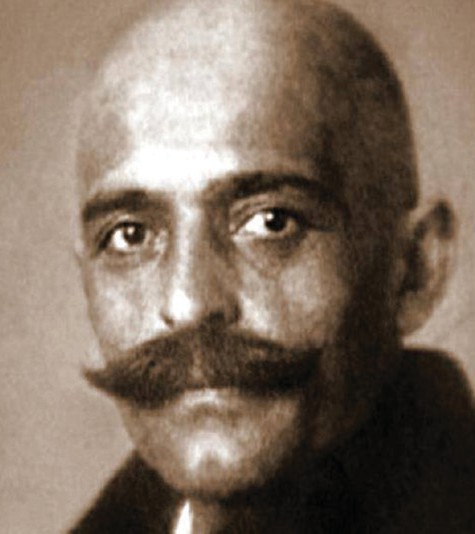
George Gurdjieff
1872–1949, Armenia
Gurdjieff, the founder of the spiritual path known as the Fourth Way is one of the most acknowledged and mysterious western teachers of the 20th century. He was most likely born in Alexandropol, Armenia in 1872. His father was Greek and his mother was of Armenian descent. The first section of his biography is full of contradictions; it is widely known that he modified a number of his personal data himself. For example, he wrote an autobiographical volume entitled “Meetings with Remarkable Men” in which fictitious elements are mixed with reality. He presented some of his knowledge in the form of blurred mosaics in order to make sure that only truly dedicated disciples, who are willing to devote time and energy to his studies could truly attain his esoteric wisdom. He had been dealing with spiritual matters since his adolescence before deciding to leave his home behind to travel the world at the age of 15, visiting the major sites and teachers on the planet. This educational trip lasted for approximately 20 years, which included locations such as Tibet, Mount Athos, Egypt, Caucasus, the Gobi Desert and the holy sites of Sufi training. Gurdjieff himself claimed that he studied the teachings of over 200 religions. He began his work as a teacher in Moscow, in 1912. He practically lured people to himself with his magical nature. According to accounts, no one could lie in the peculiar atmosphere of his home, since all forms of falsehood were instantly revealed. They noted that he was surrounded by a peculiar force, which filled the people around him with energy.
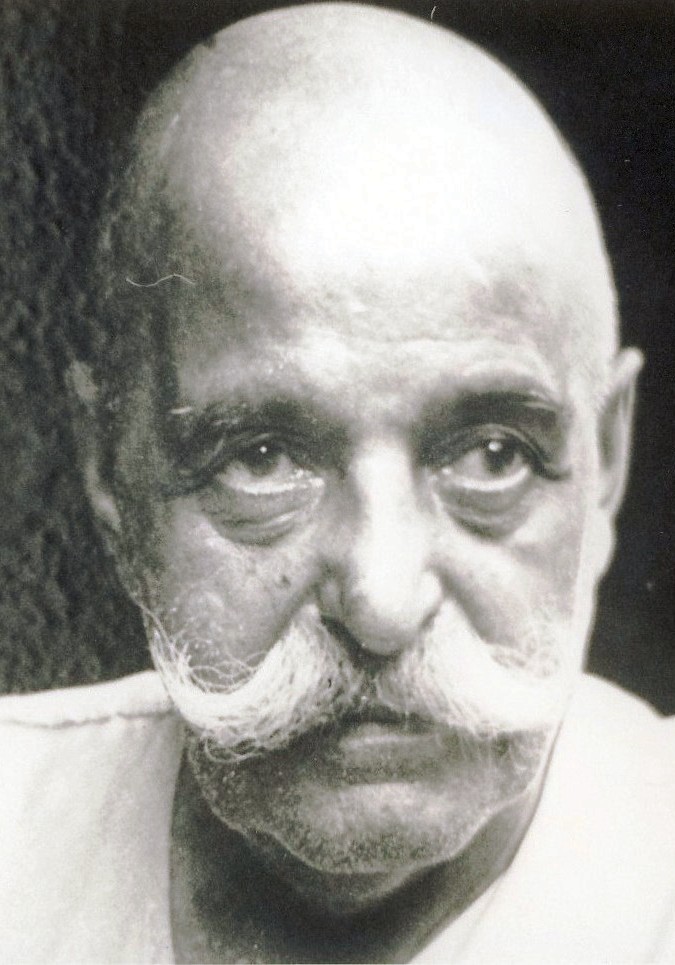
His first establishment, the “Institution for the Harmonious Development of Man” was formed in the Georgian city of Tbilisi in 1919. He urged his mainly intellectual disciples to pursue exercises of self-discipline and physical fitness. He instructed them in a system of movement (the so-called Gurdjieff-movements), that brought them into harmony with the cosmos; he spread the ritual of the frequency-lifting holy dance he learned from the Sufis and wrote unique musical pieces. For example, his method is perfectly suited for treating addictions as well as awakening the human consciousness. He created a spiritual school known as the Fourth Way, in which he united actions, prayer, and knowledge – thus the paths of the Fakir, the Monk and the Yogi – allowing this path to be followed even amongst worldly circumstances. He felt that every man must develop themselves in two regards: in existence and knowledge. The essence of the former is consciousness and love, whilst the latter revolves around understanding and wisdom. Through these two approaches, one can develop any virtue and achieve anything that was given to mankind. Gurdjieff himself regarded man as a kind of robot, who acts according to automatic patterns and schemes. The goal of his work was to awaken people: in order to achieve his goal, he performed a number of unusual, stirring events. Very few of his disciples understood the conscious decisions behind his odd actions. He referred to man as a legion, in which many different “selves” are competing with each other and in which the person in question slips from one “self” to the next. He also elaborated a 7-staged theory of creation. Within this system, the path of release leads through the liberation from the determining factors on each level.
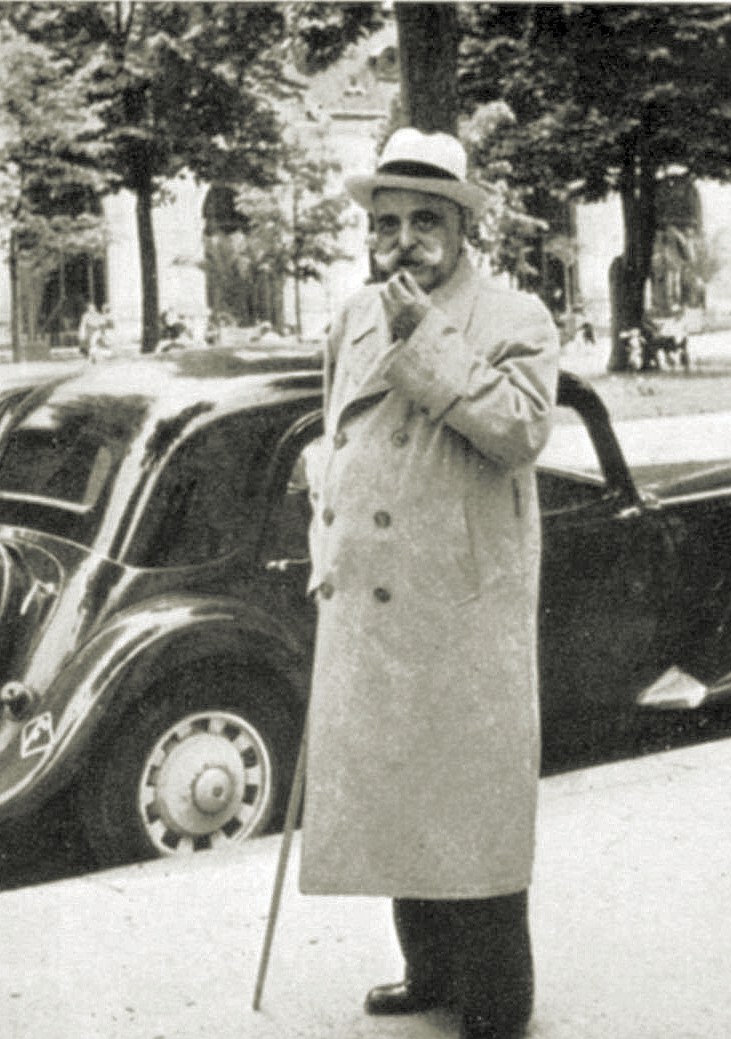
The concept of the Fourth Way, the adjustment of the spiritual knowledge to the physical world, and the countless exercises presented by Gurdjieff all served to shape the spiritual life of the 20th century. Gurdjieff settled in France in 1912, in the Chateau Prieuré next to Fontainebleau. Here he perfected his system of movement and dance, and established a community which consisted of his circle of disciples.
During this period, he suffered two severe car accidents in 1924 and 1948. This was a great ordeal for his disciples, since Gurdjieff slipped into coma for several months. After his second accident, when he was hit by a drunken driver, he was unable to recover from his injuries. He died in Paris on the 29th of October, 1949 after deciding who should continue the work he started. Gurdjieff-centers appeared in a number of different countries and they established the Gurdjieff Foundation to manage his spiritual legacy and also his Institute remains active to this very day.
“Wish is the most powerful thing in the world. With conscious wish everything comes.”
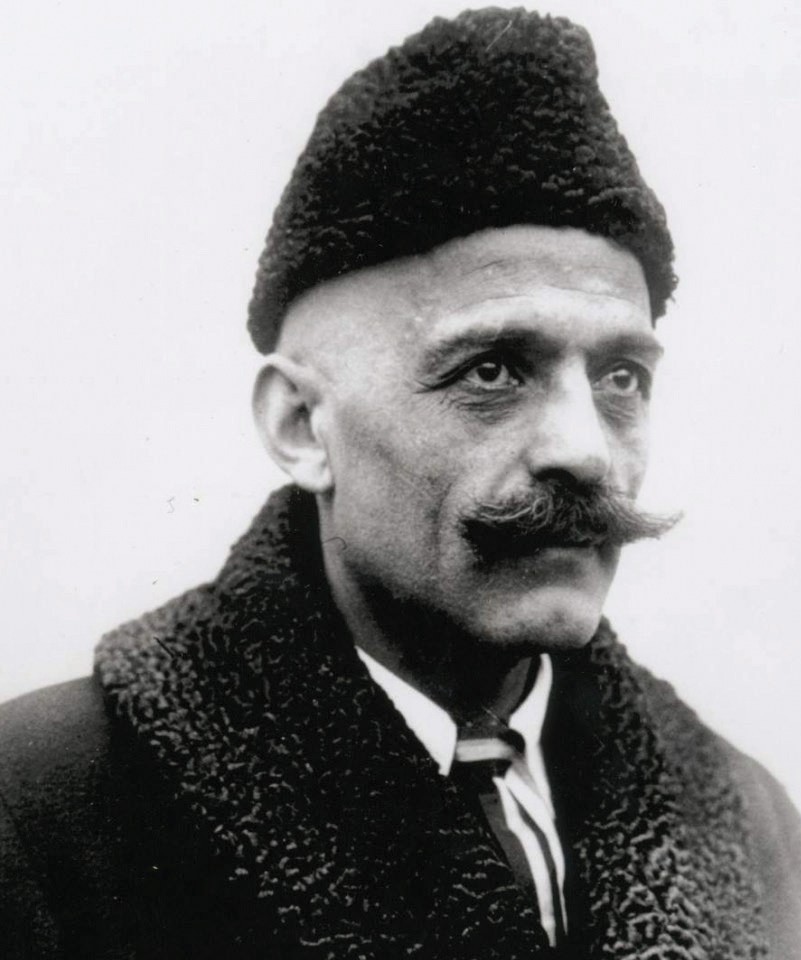
“Since there is constant tension between man’s conscience and the automatic manifestations of his nature, I attempted to establish conditions which continuously remind everyone of the meaning and goals of our human lives.”
Gurdjieff had a great sense of humor. According to an account, these were his final words to his disciples: “So, I am leaving you in a fine mess.”
“Our development is similar to that of a butterfly. We must die and be reborn, just like the egg dies before becoming a caterpillar. The caterpillar then dies and becomes a pupa. The pupa dies, allowing a butterfly to be born.”
“We can only be fair by putting ourselves in the other person’s place.”
“…He is a machine, everything with him happens. He cannot stop the flow of his thoughts, he cannot control his imagination, his emotions, his attention. He lives in a subjective world of ‘I love,’ ‘I do not love,’ ‘I like,’ ‘I do not like,’ ‘I want,’ ‘I do not want,’ that is, of what he thinks he likes, of what he thinks he does not like, of what he thinks he wants, of what he thinks he does not want. He does not see the real world. The real world is hidden from him by the wall of imagination. He lives in sleep. He is asleep. What is called ‘clear consciousness’ is sleep and a far more dangerous sleep than sleep at night in bed.”
“Let us take some event in the life of humanity. For instance, war. There is a war going on at the present moment. What does it signify? It signifies that several millions of sleeping people are trying to destroy several millions of other sleeping people. They would not do this, of course, if they were to wake up. Everything that takes place is owing to this sleep…”
(excerpt from P. D. Ouspensky’s Fragment of an Unknown Teaching)