
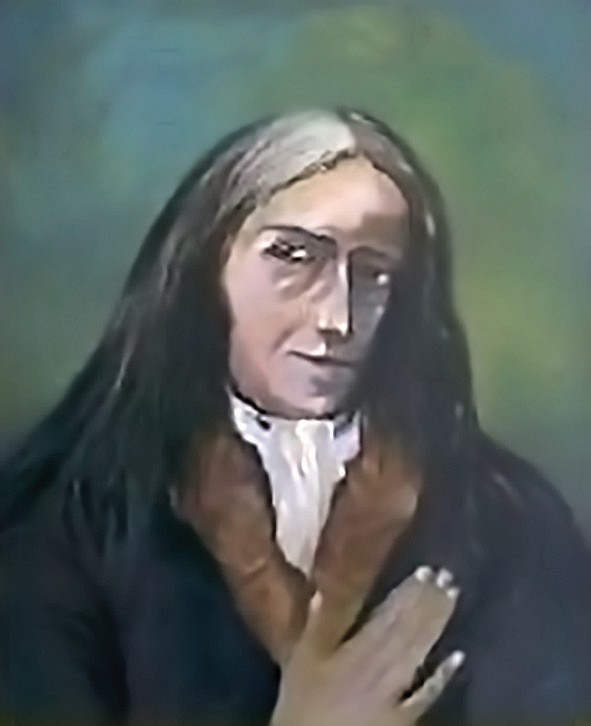
Gerhard Tersteegen
1697–1769, present-day Germany
Gerhard Tersteegen was born in Moers in Lower Rhineland, on the German-Dutch border, in a merchant family of eight on 25 November 1697. He was a Pietistic priest, theologian, preacher and writer, one of the most important hymn writers in the Reformed Church, yet most people know him as a mystic of the 18th century Reformation. Some religious scholars say that his work is significant because he was an ecumenical Christian ahead of his time, a man who managed to break free of the bonds of tradition. He learned Hebrew and Greek at an early age and spoke and wrote French, Latin and Dutch. The early death of his father meant that the talented boy’s university education was not provided for.
He stayed with his brother-in-law in Mülheim while he learned to be a trader, which was not his ambition: in his heart he had always wanted to be a preacher. He spent his nights reading and praying, seeking the company of believers. He came into contact with Pietistic circles and became actively involved in their gatherings. The movement focused on the renewal of the Protestant Church and a return to the early Christian way of life. The main aspirations of Pietism included the pursuit of a simple Christian way of life, piety, gentleness, benevolence and piety. The promotion of the Bible, pastoral care, the revival of confirmation and faith education were also important aspects of their work.
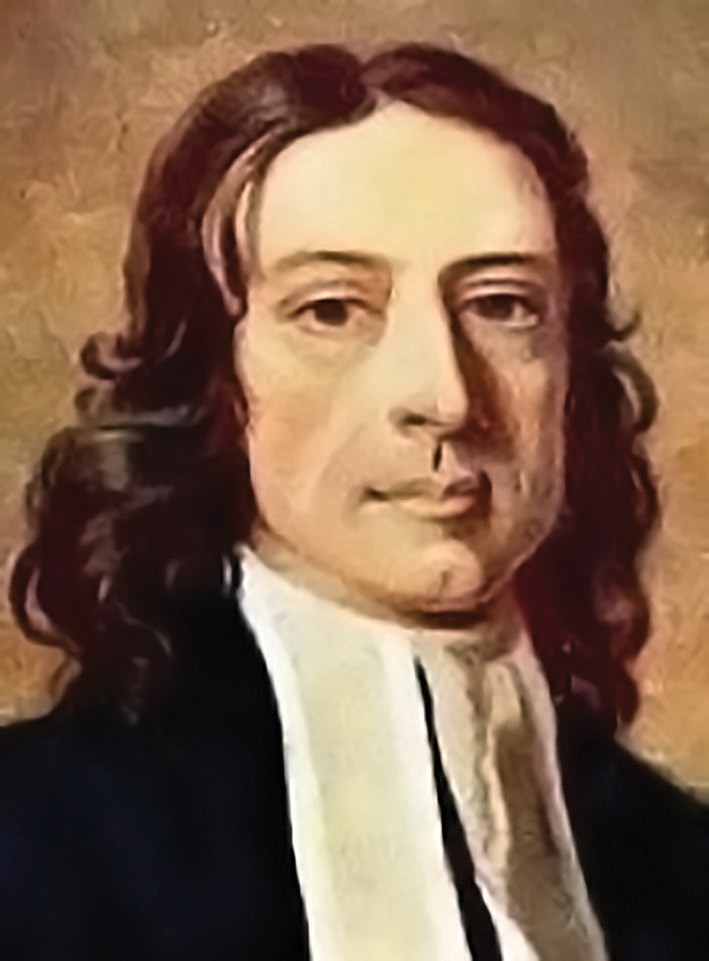
In Gerhard’s life, this was reflected in the way that, following the death of his mother – to the dismay of his family – he gave his entire inheritance to the poor, as well as his meagre earnings, which he accumulated over the years that followed as a ribbon-maker. For many years he lived in chosen solitude and thus when ill, he was left for weeks without help, completely alone. He managed to get through this period, as was not opposed to this lifestyle and he usually ate only once a day. In the evenings, he read and translated the writings of the great figures of Christianity and prayed late into the night. He regarded the Bible as God’s love letter to man.
On the evening of Holy Thursday 1724, he took his conversion to a new level and committed himself to Christian life in a letter written in his own blood. From this point on, his desire for solitude was replaced by a desire for community: he organised meetings and his sermons were attended by growing numbers. Many people owe their conversion to these occasions. In 1727, he set up a so-called ‘Pilgrim’s Hut’ in the mountains where he attempted to establish a fraternal community. The daily life of the people living there was characterised by uninterrupted prayer, tranquillity, cleanliness, a modest lifestyle and manual labour.
His deeply spiritual sermons and interpretations of the Bible attracted enormous interest, and his preaching filled halls in numerous countries. It was second nature for him that God is always present – the problem is that we live our lives as if we wouldn’t need him. His teachings touched on the subject of the way man lost his dignity through the Fall and how this could be regained. He spoke of the need to purify our hearts and sanctify them, so that they might become a worthy dwelling place for God. With his heartfelt words, he was capable of providing faith and hope to those living in hopeless circumstances, giving them the strength to bring out the best of their situation and themselves.
Gerhard himself made medications for the needy and helped young people by writing textbooks and setting up private schools. He was open to Catholic faith and wrote a three-volume biography of Catholic saints entitled The Outpouring of the Holy Spirit, which he researched for almost twenty years. More than a hundred religious hymns, a thousand poems and nearly one thousand and two hundred sayings of his have been recorded. In his will, written while seriously ill, he expressed his gratitude to God for all his mercy. Gerhard Tersteegen died in Mülheim an der Ruhr on 3 April 1769, aged seventy-two. His life and spirituality still stand as a shining example to many seekers and Christians today. He has been rightfully called the only saint of the Reformed Church as he combined the Reformed tradition and the veneration of Catholic saints, while his life gave credibility to the purity of his writings.
“God’s presence and inward comfort can make a sickbed a Paradise.”
“For me, O Lord, the world is all too small. For I have seen Thy face.”
“Do not think ahead and do not look back! Both bring unrest and are harmful to you in your present condition. The present moment must be your dwelling place.”
“The secret of God’s presence is actually believed by very few, but are you aware, that if each one truly believed it, the whole world would at once be filled with the saints, and the earth would be truly Paradise?”
“Let none, however difficult the circumstances, consider himself as debarred from the way of holiness.”
“A God comprehended is no God.”
“The heart, which ought to be the temple and habitation of God, and was destined for that purpose, has, alas, made room for sin and Satan, and would continue for ever in their possession if God in Christ had not again compassionated the sinner.”



