Giuseppe Moscati
1880–1927, Italy
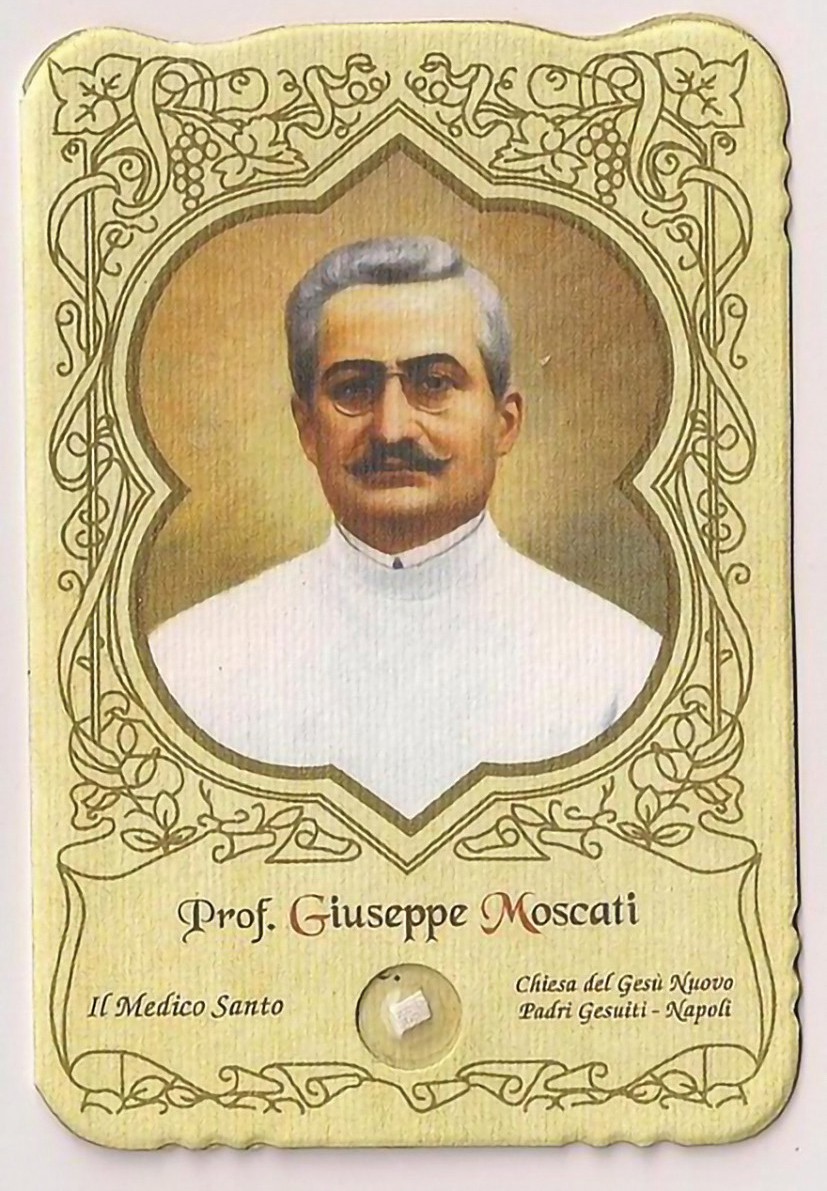
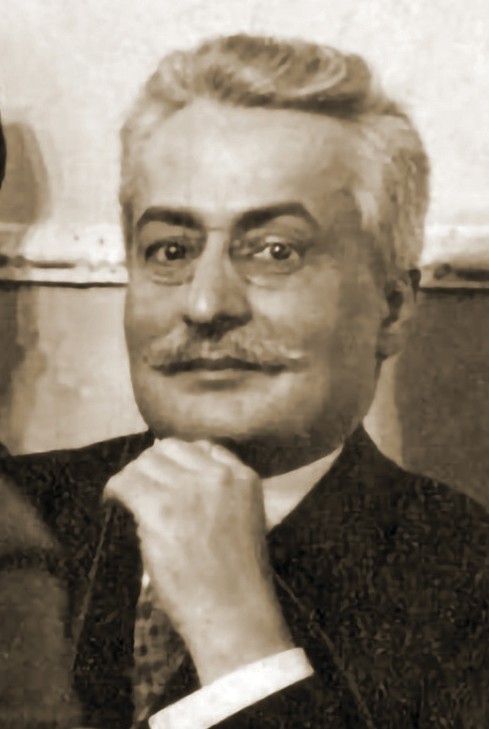
Giuseppe Moscati, the first doctor, scientist and university professor to be canonised in the 20th century, the “doctor of the poor”, a self-sacrificing healer who approached the suffering with the healing power of love, was born in Benevento, Italy, on 25 July 1880, into a wealthy Christian family. His approach to his patients as a doctor is a model for all modern doctors and healers. His parents, Francesco and Rosa De Luca gave their nine children a loving, religious upbringing, including Giuseppe, who was the seventh child of the family. A hard-working child, he inherited the talents of his father, who worked as a lawyer and served as an altar boy for the Poor Clares in his spare time who, just as his son, stood out not only for his intelligence but also for his piety.
When his brother Alberto, a gunnery lieutenant, suffered an incurable head injury in a riding accident, he nursed him for years in their home. That was when he decided to become a doctor. In 1897, he enrolled in the Medical School at the University of Naples, where secret societies were flourishing at the time, yet he concentrated on his studies and graduated with honours. As a young man, he was faced with a choice between building a career and attending functions with his distinguished colleagues, or spending his time in the world helping the suffering instead of relaxing. He ended up working at a hospital for the terminally ill, where he was soon appointed chief physician, while maintaining a private practice in his home.
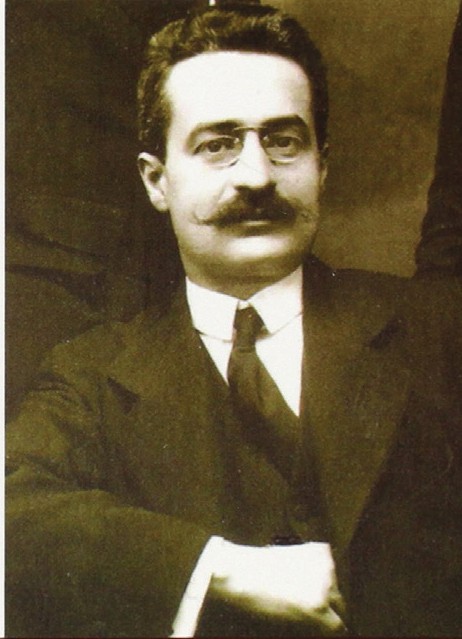
He healed and comforted the needy without remuneration at both the hospital and in the slums. He was deeply religious, and believed that if he did not attend daily Holy Communion he would not be able to care for the sick properly, even though he had a reputation as an excellent diagnostician. One of his colleagues said that he was often in a ‘state of grace’ when diagnosing his patients. His intuition revealed the cause of illnesses in a miraculous way. He saw his medical work as a kind of lay apostolate: he never focused merely on the ailing body, but also on the person pleading for love and mercy, and through him, ultimately, the suffering Jesus Christ.
Before examining someone, he placed himself in the presence of God and turned to him with love from the depths of his heart. Many people were cured simply by his presence and his words of hope and encouragement. During the cholera outbreak, he not only helped eradicate the epidemic through research, but also worked continuously at the sickbeds and treated more than three thousand soldiers during the First World War. When Mount Vesuvius erupted in 1922, he rushed to the scene and took part in the rescue operations. As he had no family of his own (he had taken a vow of chastity at the age of 34), he took over from the director of the hospital in Torre del Greco – who had a family – to manage the evacuation, and with a handful of nurses, he personally attempted to evacuate the elderly, infirm and disabled patients to safety. Just as the last patient was evacuated, the building collapsed.
As a doctor, he acquired extensive expertise in almost twenty different specialties in addition to his work as a healer, teacher and researcher, so that no patient would be left without relief from suffering, although he always considered the sacraments to be the primary remedy. Renowned physicians and authorities consulted with him for advice and reports on his research were regularly published in peer-reviewed journals. One of these led to the discovery of insulin injections for the treatment of diabetes. He did not neglect his training, and felt a conscientious duty to share his knowledge and practical experience with others. He donated his earnings, and when all his financial reserves were exhausted, he cashed in what was left of his assets so his needy patients could buy the medications they required. However, his intense, highly active life quickly took its toll on his health and he passed away at 47 years of age on 12 April 1927. Through a curious combination of faith and the practice of his vocation, the doctor – who was canonised during the pontificate of John Paul II – became a mediator of the healing power of charity in service of a higher purpose, as attested by the miraculous recoveries reported after his death.
“A doctor can feel truly privileged, as he is often approached by souls who, despite past mistakes, are finally surrendering and wish to return to the principles they inherited from their ancestors; they are in need of comforting and are suffering from pain. Blessed is the doctor who understands the secret of these hearts and can rekindle them.”
“Know that you can ease the pain of a patient with a gesture, a few kind words or a hug, not just a cold prescription. You can feel the divine energy of which you are the transmitter, and you can hear the beating of the heart, the rhythm of the breath. When we find this power, our intuition is heightened, which helps us to better diagnose the patient.”
(excerpt from Giuseppe Moscati’s letter written to his disciples)
“We must be guided by Christian charity transcending all forms of discord, gossip, and envy.”
“Pain is not to be treated as a tic or a muscular contraction, but as the cry of a soul to which another brother rushes with the fire of love and mercy.”
“My success is never my victory, but the victory of a community of close friends. Today, an individual can only have a chance of success if they understand that they have to become a link in a chain – all they did is that they have chosen the right chain in which they are but a simple link.”