Guru Nanak
1469–1539, India
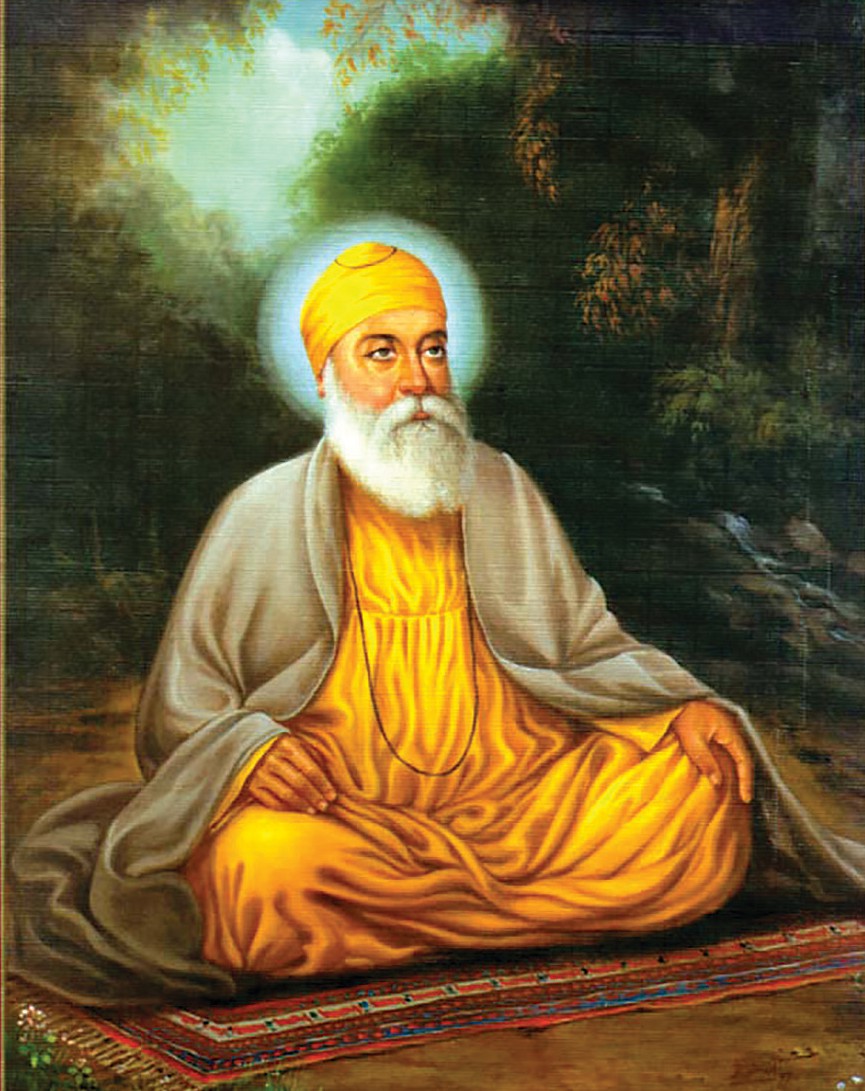
Sri Guru Nanak Dev Ji, the founder of the Sikh religion was born on the 15th of April, 1469 in Punjab, India in the village of Talwandi. His father, who was a governmental clerk, wanted his son to be a businessman or a clerk, yet the young boy was already interested in religion at an early age. He was a child blessed with exceptional abilities, who soon began dealing with the basic questions of life. As customary at the time, the boy of thirteen took part in a religious ceremony during which a Hindu priest wished to wrap a blessed cotton shawl around his neck, when the young Nanak protested and said the following: “Let mercy be the cotton, contentment the thread, continence the knot and truth the twist. O priest! If you have such a thread, do give it to me. It’ll not wear out, nor get soiled, nor burnt, nor lost. Blessed are those who go about wearing such a thread!” He married at sixteen years of age and his wife bore him two sons. He worked as a clerk for some time, since he thought that married life and religious activity would fit side by side. He worked during the day while meditating early in the morning and late at night, as well as singing hymns which were accompanied by his best friend, Mardhana. After some time, he was surrounded by an increasing number of people who were interested in him. When he turned thirty, something happened that changed his life forever. He suddenly sank into the river during his early morning bathing and since he didn’t resurface, they assumed he drowned. According to contemporary accounts, he miraculously reappeared at the exact same spot three days later. His eyes had a divine glow to them and for a long time, he remained in a silent, trance-like state. When he broke his silence, the first thing he said was: “There are no Hindus, neither Muslims” This thought defined his life for years to come, since Guru Nanak made many efforts to reconcile the followers of these two religions, helping them develop understanding and acceptance towards each other. They claim that during the three days that reshaped Guru Nanak, he experienced internal enlightenment through unity with God and received answers to questions that had concerned him for a long time.
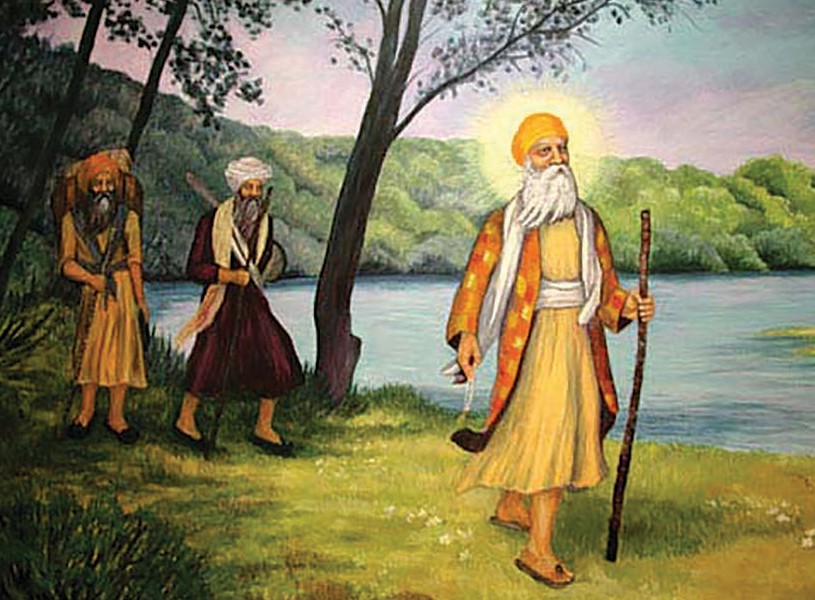
He then departed on a lengthy journey, during which he spread the message of God throughout the world. His main messages included that there was only one God and that the various religions didn’t venerate individual Gods. He stressed the fraternity and universal nature of mankind. He traveled all throughout the Indian subcontinent and even beyond, reaching Ceylon in the south and Tibet in the north. During his travels he established a number of communities for his followers. He also created so-called langars or common kitchens, which kings and beggars, people from without the caste system and those from higher castes alike could share a meal at the same table. This was a great accomplishment, since this wasn’t allowed in the caste system that Guru Nanak wished to abolish. He proclaimed a caste-free society in which there are no birth rights or prerogatives, nor any other forms of distinction. He stressed that instead of the caste, a person’s internal purity is what truly matters.
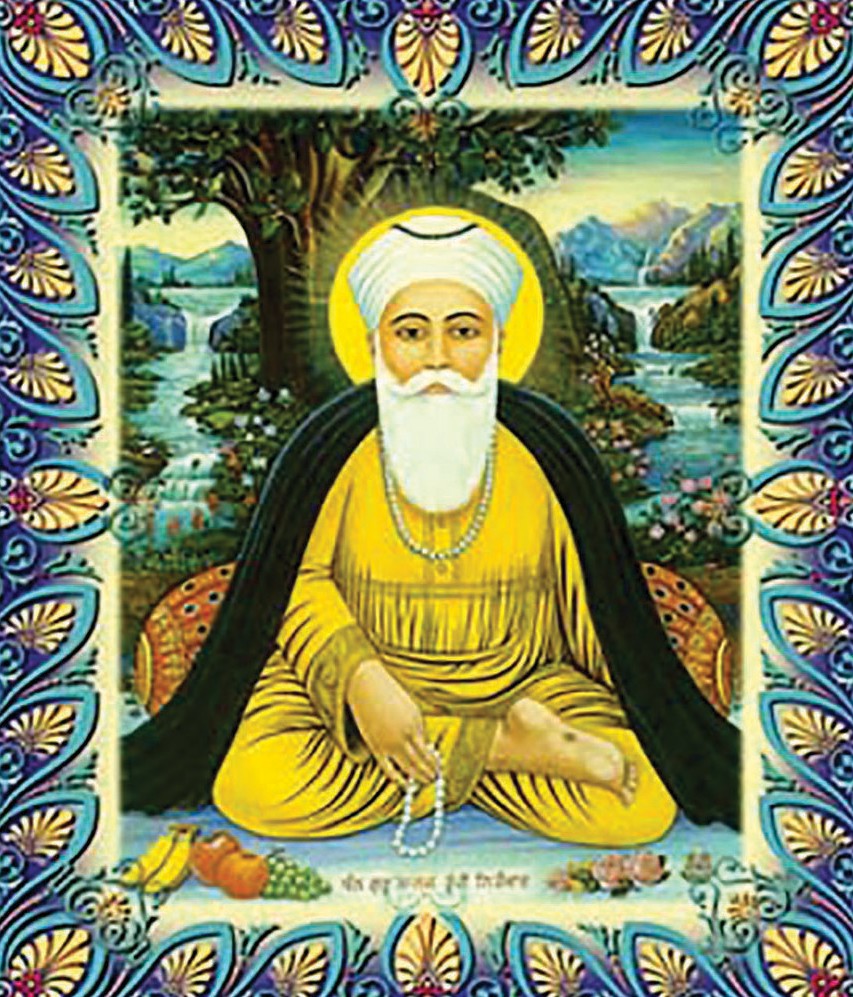
After his journeys that spanned several decades, he finally settled in Kartarpur, a town which he established himself in his youth. He put his disciples to the test in order to temper their character. His teachings were summarized in the collection of the Adi Granth, which established the foundations of Sikh theology. It is said that Guru Nanak proclaimed the Adi Granth to be his official successor, which the faithful venerate as a living being and a master, showing their respect for it in the course of huge ceremonies. Guru Nanak’s work gave rise to the Sikh faith, which became a significant world religion. Before his death on the 22nd of September, 1539, he entrusted his disciple, Guru Angad with the duty of continuing his work. The Hindus wished to burn his body, whilst the Muslims wanted to bury him. Guru Nanak himself placed flowers on his left and right sides and then covered himself with a blanket. Once he departed from his earthly existence, his followers lifted the blanket to find only flowers in place of his body.
“There is but One God, His name is Truth, He is the Creator, He fears none, he is without hate, He never dies, He is beyond the cycle of births and death, He is self illuminated…”
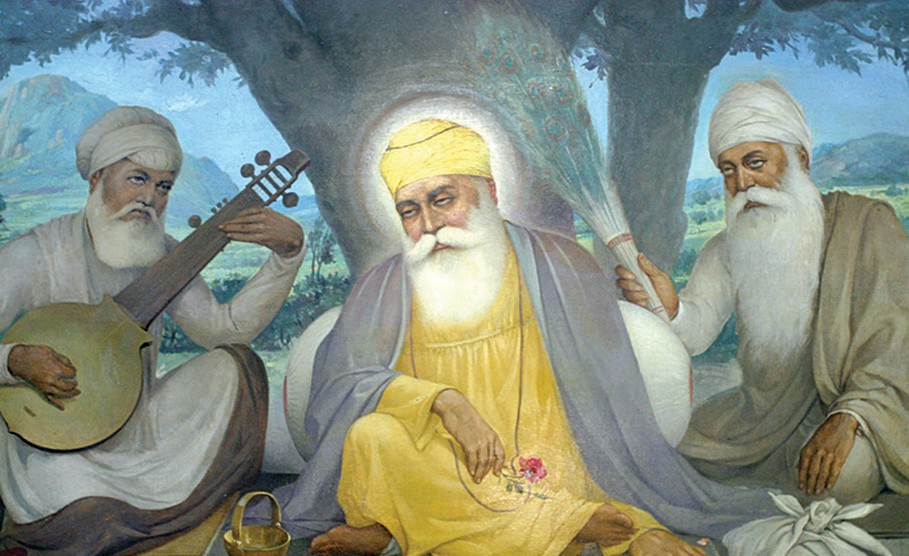
“Asceticism doesn’t lie in ascetic robes, or in walking staff, nor in the ashes. Asceticism doesn’t lie in the earring, nor in the shaven head, nor blowing a conch. Asceticism lies in remaining pure amidst impurities. Asceticism doesn’t lie in mere words; He is an ascetic who treats everyone alike…”
“Make mercy thy mosque, faith thy prayer-mat, what is just and lawful, thy Quran, modesty thy circumcision and civility thy fast. So shalt thou be a Moslem. Make right conduct thy Mecca, truth thy spiritual guide and pious deeds thy creed and prayer.”
(an excerpt from Guru Nanak’s first words after his experience at the Bein river)