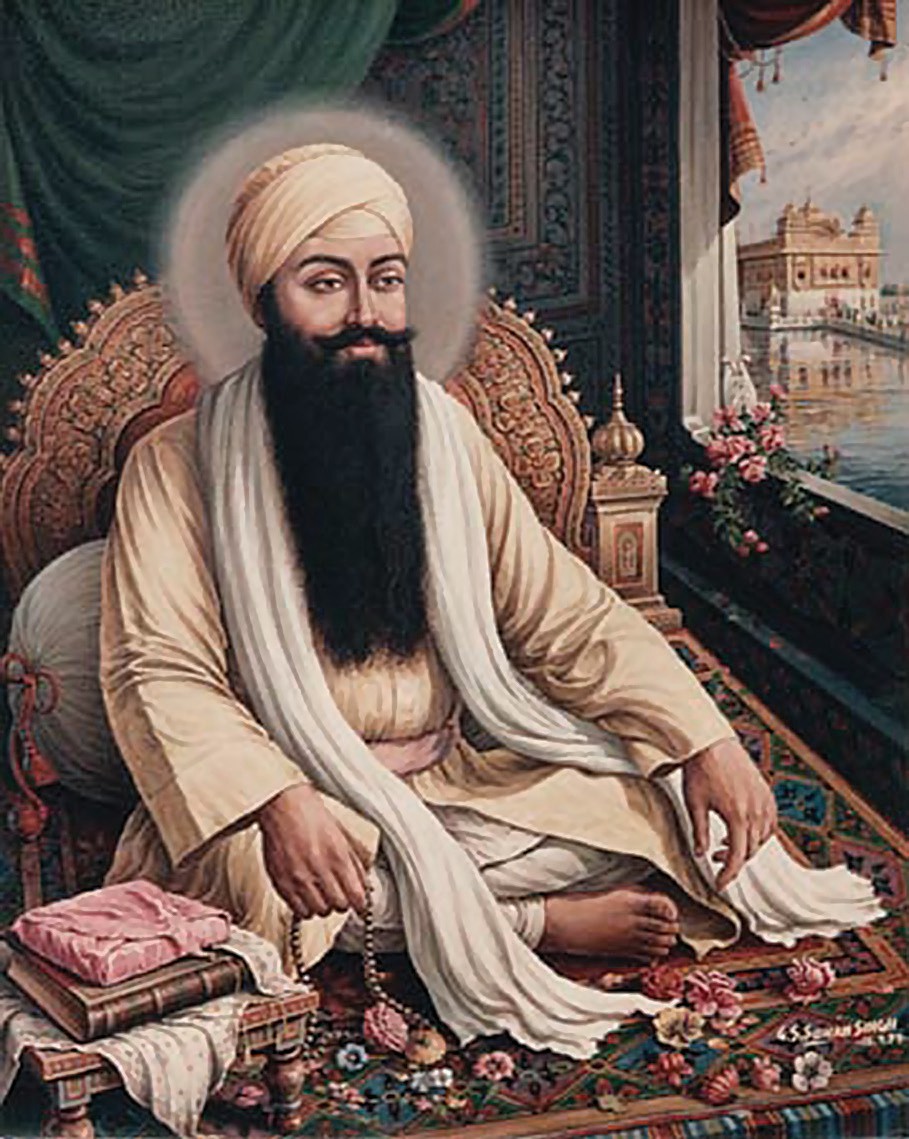
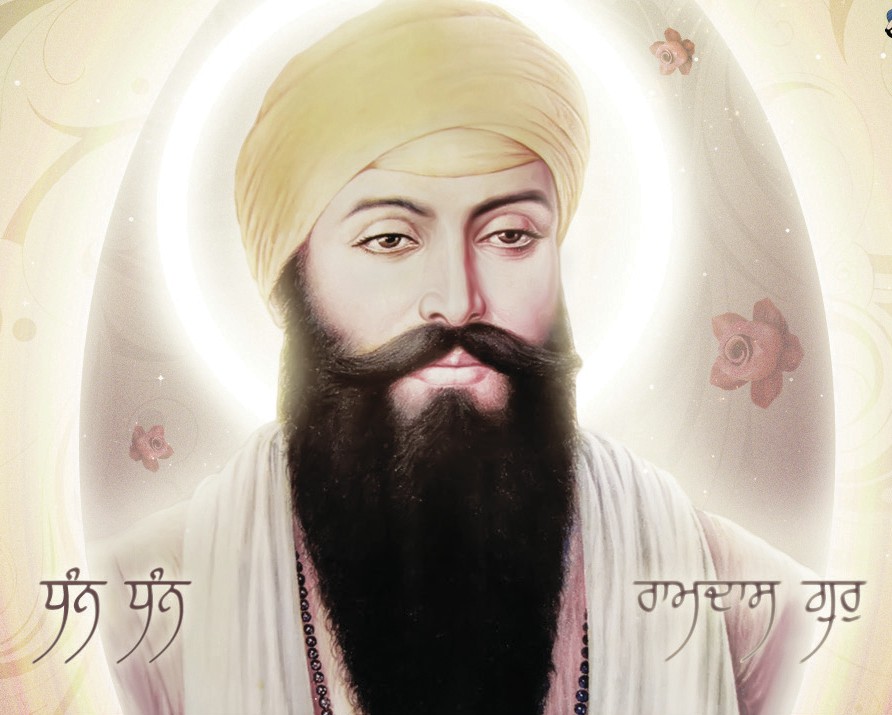
Guru Ram Das
1534–1581, India
Guru Ram Das, one of the great figures of the Sant Mat masters and the founder of the centre of the Sikh religion, Amritsar was born on 9 October 1534 in the Lahore province of India (in present-day Pakistan). The moniker Ram Das means “slave of God”. As a child, he was named Jetha, or firstborn. He received a religious upbringing from his parents and from his early childhood, he enjoyed the company of holy, religious individuals. He met his master, Guru Amar Das, the great teacher of Sikhism. This encounter had such a profound effect on him that he became a follower of Amar Das and moved to Goindval, the Sikh religious centre. He married one of the daughters of his master, with whom they had three children. Amar Das was the third master of the Sikh religion established by Guru Nanak and he played a key role in the spread of the religion. For example, he introduced the widespread adoption of langar, a communal meal, from which no one was excluded on racial, religious or other grounds. Sikhism, which adopted a number of the positive traits of Hinduism and Islam, preached equality and brotherhood among men, and its teachers openly opposed the caste system.
The innovative ideas of the Sikh teachers and their distancing from other religions did not please the Mughal rulers and Amar Das was faced with severe charges. He sent his disciple, the future Ram Das, to the Mughal royal court with these words: “If they ask you a difficult question that you cannot answer, think of your Master and you will be able to give the right answer.” Jetha managed to persuade the emperor with his answers, earning tacit acceptance for the Sikh religion. Amar Das then proceeded to put Jetha to the test before appointing him as his successor. According to a period account, the more time he spent in the service of the guru, the more Jetha’s love grew for his master and for all of humanity.
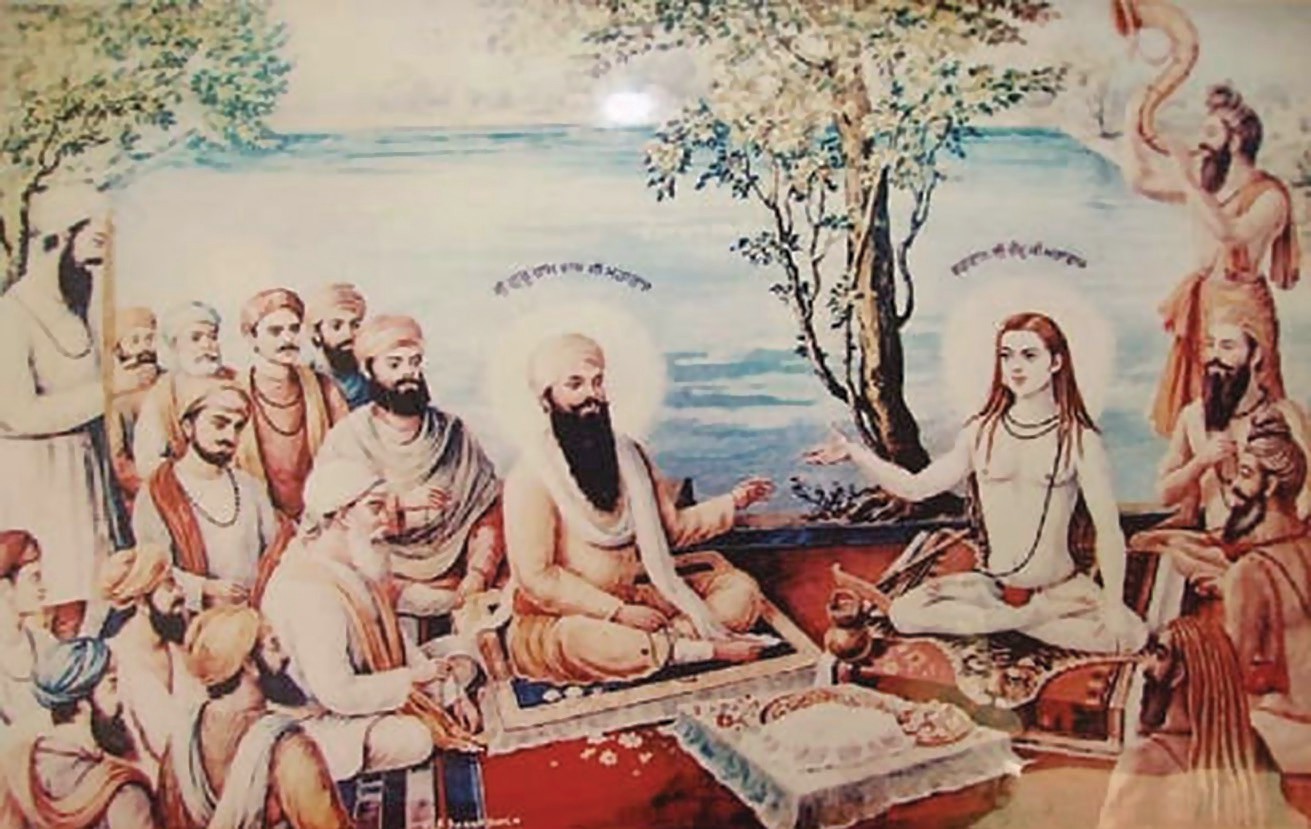
Ram Das worked tirelessly, and lived a devoted, loving and obedient life. At his master’s request, in 1577 he started designing and building Ramdaspur, the future city of Amritsar. Amritsar was named after the lake of the same name – an artificial, square-shaped body of water that represented the divine nectar of immortality – in the centre of which stood the centre of Sikh religion, Gurdwara Harmandir Sahib, the Golden Temple. Inside the temple was the Adi Granth, the holy book of the Sikhs, the Golden Book of God, which is about one by one-and-a-half metres in size and is considered by the faithful to be a living person. The Sikh priests take turns reading out loud from the book. Amritsar is to Sikhs what Rome is to Catholics, or Mecca to Muslims. For political and religious reasons, it was occupied on multiple occasions, yet despite the multiple attempts to break the power of the Sikhs, and although the independent Sikh state in Indian Punjab could not be consolidated, the religion survived and has continued to play a major role in the spiritual life of our world.
Teachers place particular emphasis on maintaining a clean diet and living moral lives. They believe that God is continuously manifested in all things. Sikh masters are not only teachers, but poets with a great sensitivity. Their religious poems praising God are some of the finest gems of world literature. Guru Ram Das composed 679 songs of praise that were included in the Golden Book. He departed from the earthly world on 1 September 1581. He was succeeded by his youngest son, Arjan Dev and in his time, the foundations of the Sikh empire were consolidated as he continued the construction of the Golden Temple. Today, the Sikh religion has millions of followers around the world, particularly in India.
“While you envision how things should be, you cannot see how they really are.”
“We’re here to awaken from the illusion of separateness.”
“The quieter you become, the more you can hear.”
“Suffering is part of training program to become wise.”
“I would like my life to be a statement of love and compassion – and where it isn’t, that’s where my work lies.”
“The most exquisite paradox… as soon as you give it all up, you can have it all. As long as you want power, you can’t have it. The minute you don’t want power, you’ll have more than you ever dreamed possible.”
“Liberation is not possible without the True Guru. (God).”
(excerpt from the Adi Granth, the Sikh scripture)
“The most important aspect of love is not in giving or the receiving: it’s in the being. When I need love from others, or need to give love to others, I’m caught in an unstable situation. Being in love, rather than giving or taking love, is the only thing that provides stability. Being in love means seeing the Beloved all around me.”
“We’re fascinated by the words, but where we meet is in the silence behind them.”