
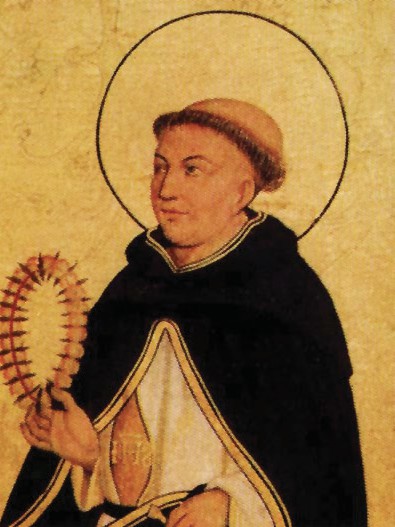
Heinrich Seuse
1295 (?), present-day Germany – 1366, present-day Switzerland
Heinrich Seuse, or more widely known as Henry Suso was a Dominican monk and visionary poet, one of the great figures of Christian mysticism. Religious scholars refer to him as one of the three stars of mysticism: he was one of the three Dominican figures of mysticism born in the darkest period of the Middle Ages, alongside Meister Eckhart and Johannes Tauler. Heinrich Seuse was born Heinrich von Berg in the late 13th century, on the feast day of the great founder of the Benedictine Order, Saint Benedict of Nursia in Konstanz. Thanks to his mother, he was admitted to the local priory in Constance, which became a key site in his life. This is where he experienced his first enraptured vision at the age of eighteen. In the words of Padre Pio, it was as if “he could see God’s hand of cards” all the while remaining fully conscious. This was a powerful, life-changing experience and from this point on, spiritual experiences, insights and visions of the future accompanied him throughout his life.
These experiences influenced his subsequent marvellous works of poetry and prose, which are considered the gems of mystical literature. Following his vision, he underwent a sixteen year-long period of intensive asceticism and mental purging. He continued these practices until a divine messenger indicated that God no longer expects him to carry himself in this way. It is a testament to Suso’s wisdom that he never told his fellow monks about his spiritual experiences – it is a minor miracle in itself that the Inquisition did not imprison him, despite the fact that he recorded his teachings on subjects such as the mysticism of the Word which, even on a cursory reading, would be tantamount to a self-accusation.
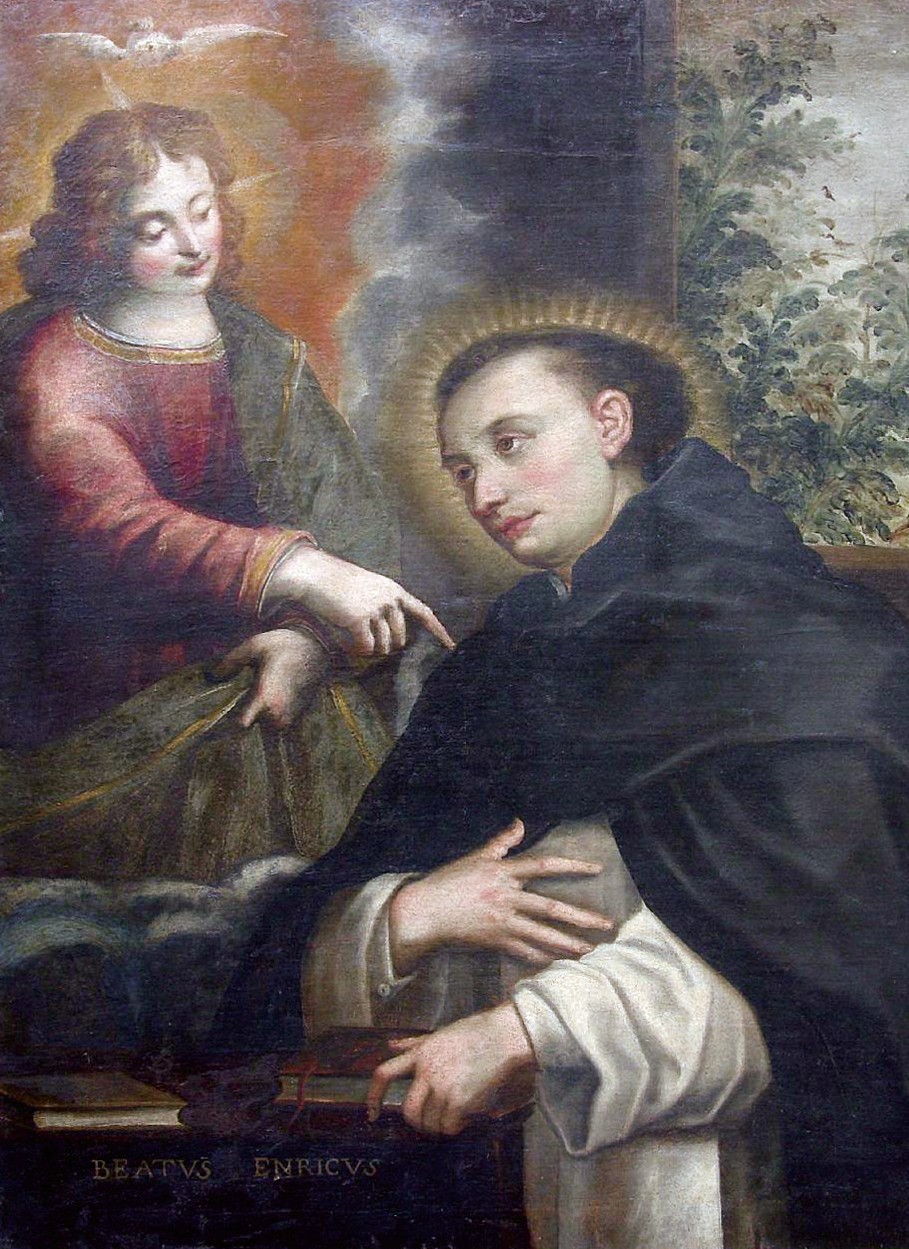
While the personality of Meister Eckhart proved to be too much for the dogmatic Catholic followers, Suso was somehow accepted. When Eckhart was imprisoned, Suso professed his support for him in his Little Book of Eternal Wisdom, for which he was banned from teaching. While still a promising novice, Suso met the great preacher Eckhart of Thuringia during his studies in Cologne, who became his teacher – as well as that of the other great contemporary mystic, Tauler. Suso eagerly clung to his master’s words, yet – just like other great minds – he transfused them with his own ideas. Another fateful intertwining of life’s paths led to his encounter with Elsbeth Stagel, prioress of the Dominican nuns in Töss – where Suso later served as abbot – and at her encouragement they jointly recorded Suso’s autobiography, entitled Vita.
Suso’s mystical writings are the outstanding jewels of his body of work, which included prose, philosophical and lyrical works. He was poetically inclined to revel in the metaphors of the rose – which carried within them the imprint of folk religion – as flowers that represent Christian commitment, directing attention to the principles of life that encourage and reward asceticism and bring one closer to Christ. Just as St John of the Cross, Thomas a Kempis and Angelus Silesius, he was a minstrel of “divine love”. For example, in the Little Book of Eternal Wisdom he gives a compelling account of teachings on understanding the role of suffering in life.
Suso most certainly had an important encounter with the spiritual being referred to in esoteric literature as Sophia, the personification of higher wisdom. The “underground currents” of Christianity all mention Sophia, about whom Suso also wrote with great enthusiasm: he referred to the “Heavenly Sophia” as his sweetheart, discussing his tender relationship with her, as well as the connection between wisdom and love. Towards the end of his life, he was forced to leave Konstanz, as he was unjustly accused of having intimate relations with a woman. He experienced this as a terrible blow and a deep humiliation, and although the charges were later dropped, the false accusations stayed with him for the rest of his life. He spent his final years in Ulm, where he recorded his key writings in the work entitled The Exemplar. He died in Ulm on 25 January 1366, where he was buried in the local Dominican church. Following his passing, he became the most widely read author in ecclesiastic circles for some time, and still has many admirers among both esoteric and exoteric Christian believers and lay people. He was later beatified in 1831 by Pope Gregory XVI.
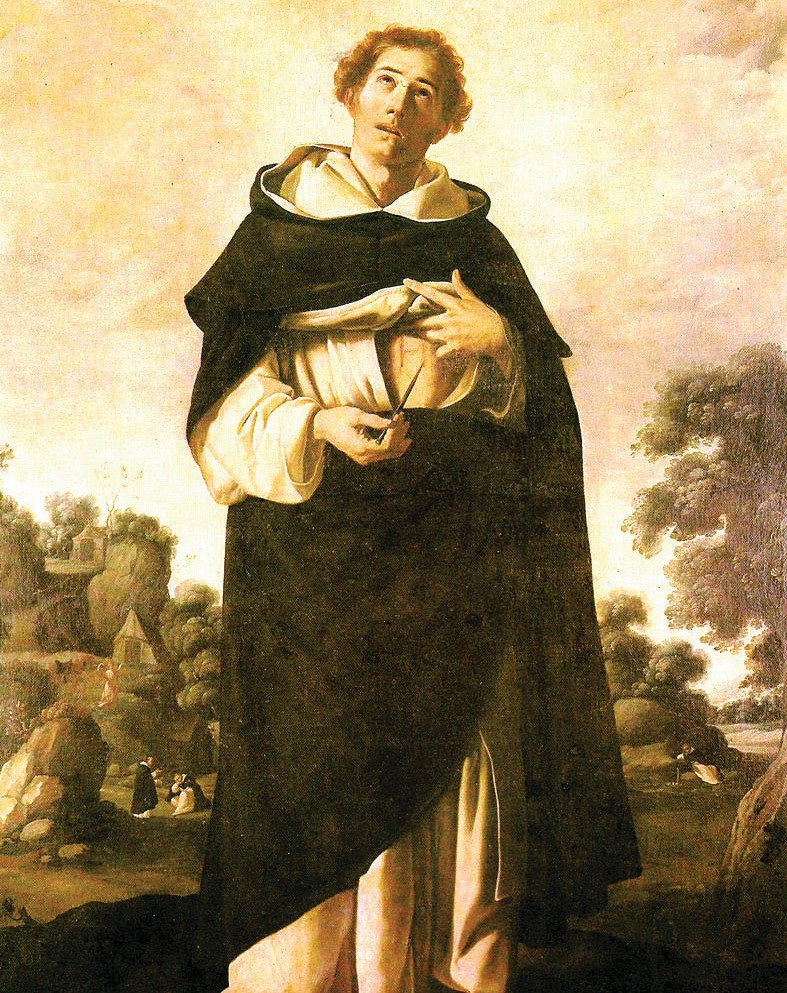
“In the eyes of the world suffering is repugnant, but in my sight it is something immeasurably valuable. Suffering quenches my anger and wins my favor. Suffering makes a person worthy of my love because a person in suffering resembles me. Suffering is a hidden good that no one can buy. It turns an earthly man into a heavenly man. Suffering estranges one from the world, but it affords constant intimacy with me. If I am to become someone’s friend, he must be completely rejected and forsaken by the whole world. This is the safest and shortest path, and the most perfect. Suffering forces a person to know himself, to be self-reliant and to believe his neighbor. Suffering keeps the soul humble and teaches it patience. It is a guardian of purity and brings the crown of eternal happiness. There is hardly anyone who does not receive something good from suffering. Suffering removes sin, shortens purgatory, repels temptations, causes faults to vanish and renews the spirit. It brings true confidence, a pure conscience and a constant positive feeling. I would prefer to create unnecessary suffering rather than let my friends go without suffering, because in suffering all virtues prove themselves, a person is adorned, one’s neighbor is improved, and God is praised. The path of your suffering is a sure path through the way of truth to the highest pinnacle of all perfection.”
“Suffering save us from the fall, urges us to acquire self-knowledge and to rely on ourselves.”
“Behold, the noble soul blooms by suffering even as the beautiful rose by the fresh dews of May! Suffering makes a wise mind and an experienced man. A man who has not suffered what does he know?”
“For it is false and deceitful, more than I will tell thee. It promises much and performs little; it is short, uncertain, and changeable; to-day much joy, to-morrow a heart full of woe. Behold, such is the disport of this scene of time.”
(excerpts from the Little Book of Eternal Wisdom)
“I am the throne of delight, I am the crown of salvation, my eyes are so clear, my mouth so tender, my cheeks so radiant and blooming, and all my figure so fair and ravishing.”



