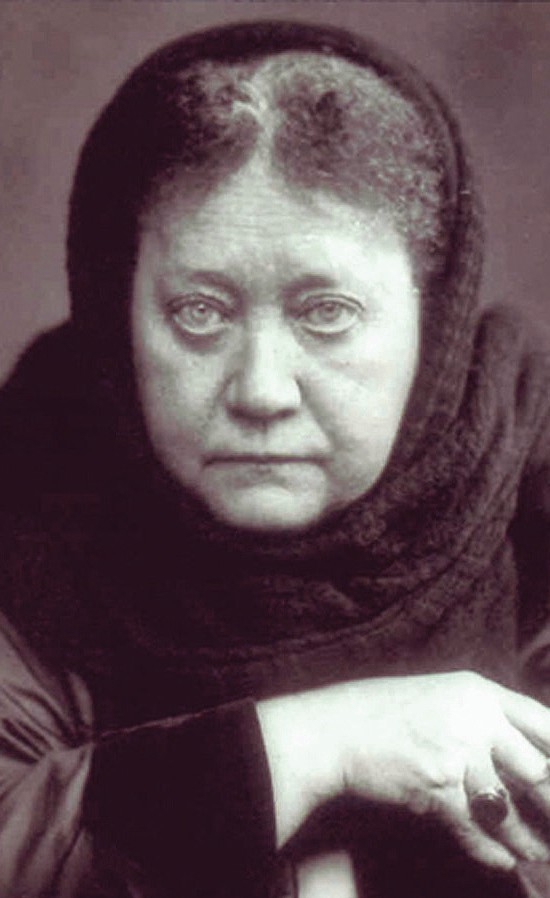
Helena Petrovna Blavatsky
1831, present-day Ukraine – 1891, Great Britain
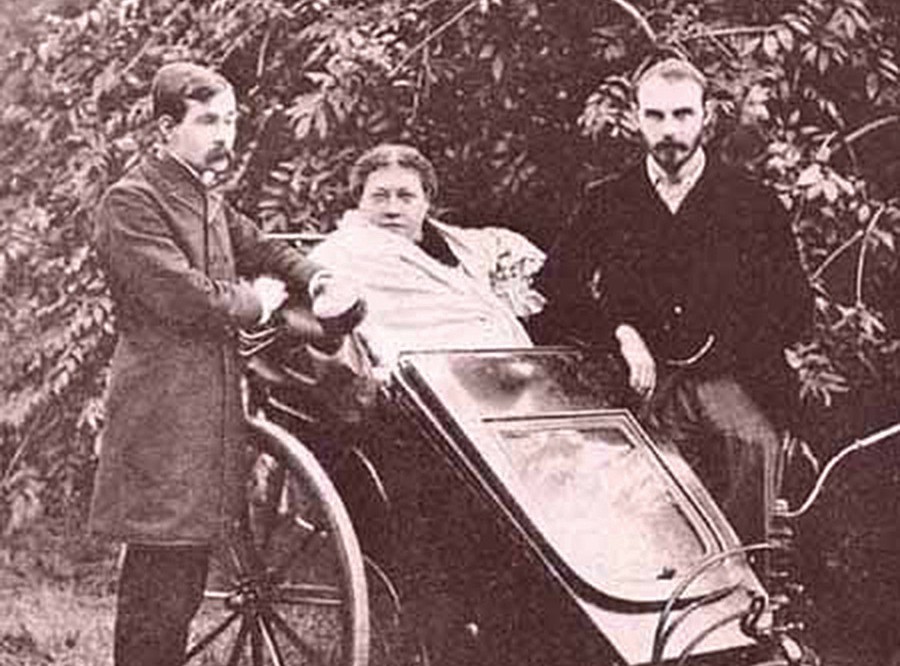
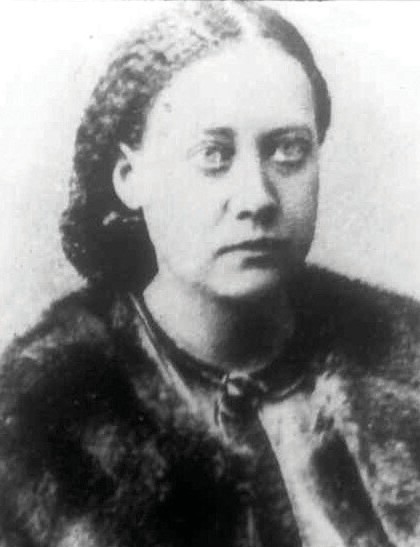
As one of the most charismatic women of the 19th century, Helena Petrovna Blavatsky (also known as Madame Blavatsky) was the founder of the Theosophical Society and responsible for launching a number of spiritual currents in the modern age. Her activities helped the adoption of oriental wisdom as well as the dissemination of esoteric teachings. The establishment of the Theosophical Society was undoubtedly one of the most important spiritual events of the modern age. The society helped launch the spiritual development of many individuals and the members of the society went on to establish Anthroposophy as one of the most important spiritual movements of the modern period.
Blavatsky was born in a noble family as Helena Petrovna Hahn in Yekaterinoslav (present-day Dnipro, Ukraine) on 31 July 1831. Her strong-willed nature and unique skills were evident from a very young age. The authorities relied on her psychic abilities in resolving a number of crimes. There is a wealth of contradictory information about her adventurous life, which she seems to have deliberately spread herself. As a child, she had already read hundreds of occult books in the family library. At seventeen years of age, she married a sixty-year-old general, the Vice Governor of Erivan Province, Nikifor Vladimirovich Blavatsky, yet she escaped three months later and set out on a trip around the world. Dressed as a sailor, she worked as a ship stoker, finding passage to Constantinople before traveling to Egypt, Greece, Paris and London, followed by North America and Peru.
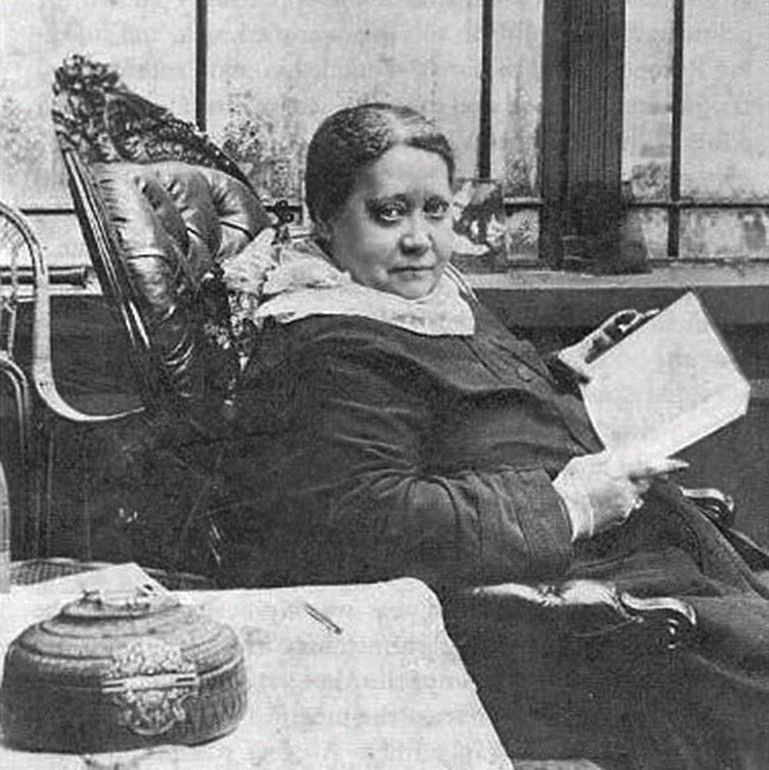
She lived in India for several years, as well as allegedly spending time in Tibet amongst the Mahatmas. This was supposedly when she met her spiritual mentor, El Morya, considered as one of the Masters of the Seven Rays. Wherever Blavatsky went, she absorbed the teachings and wisdom of the various cultures. She was considered by many to be a medium or spiritualist in line with the trends at the time, yet she later wrote the following about her abilities: “In the case of Theosophy, this works very differently – one can willingly create various phenomena with the involvement of the ‘Higher Self ’”. She displayed a wide range of unique abilities: she was a successful business woman, as Madame Laura, she performed concerts in Russia and Italy, she fought at Garibaldi’s side, and worked as a painter and caricaturist in Paris.
Still, her life was chiefly devoted to her spiritual activities, the defining event of which was the establishment of the Theosophical Society in New York in 1875, with a threefold purpose: to establish a nucleus of universal brotherhood of mankind without regard to nationality, religion, social class, sex or race; to promote the comparative study of religions, philosophies and sciences; and to explore the as yet unrecognized laws of nature and the powers inherent in man. She published her first major work, Isis Unveiled, in 1877, the first edition of which was sold out in ten days.
In 1879, together with the co-founder of the Theosophical Society, Henry Steel Olcott, she moved her base of operations to Bombay (present-day Mumbai), where she even published her own magazine, The Theosophist, and her efforts soon grew into a huge movement. Blavatsky’s work clearly went against the materialistic and dogmatic religious beliefs, and faced with many attacks, with people doubting her clairvoyance. After several tours in India, her health deteriorated by the 1880s and she returned to Europe. She settled in London, where she lived in seclusion, working on her main work, The Secret Doctrine, which was finally published in 1888. In the view of her disciples, the book’s true authors are the masters who collected the material and revealed it to Blavatsky’s ‘inner vision’.
The work is based on the concept that there is a form of ancient wisdom that manifests itself in the various religions and philosophies of the world. Blavatsky’s adventurous life, ideology and work had a great impact on her contemporaries, particularly on the development of various esoteric groups, yet she was also involved in politics through the Indian National Congress, as well as having an impact on the arts and even the current times through the New Age movement. Her work has influenced, directly or indirectly, a number of famous people – Gandhi, Einstein, Edison, Yeats, Kandinsky, Joyce, T. S. Eliot, and Rudolf Steiner. Blavatsky passed away on 8 May 1891 in London.
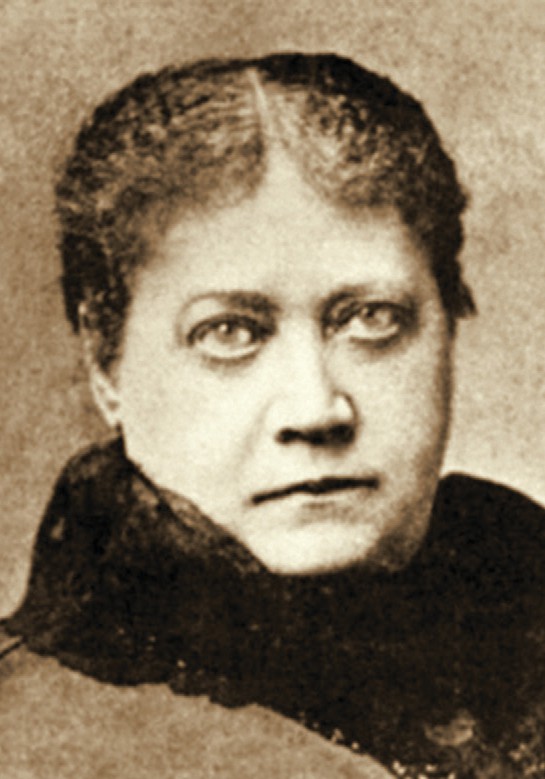
“These ‘Teachers’ are subject to the same inviolable law. From the moment they begin really to teach, from the instant they confer any power — whether psychic, mental or physical — on their pupils, they take upon themselves all the sins of that pupil, in connection with the Occult Sciences, whether of omission or commission, until the moment when initiation makes the pupil a Master and responsible in his turn.”
“Put without delay your good intentions into practice, never leaving a single one to remain only an intention – expecting, meanwhile, neither reward nor even acknowledgment for the good you may have done.”
“Reflect upon the defects of your character: thoroughly realize their evils and the transient pleasures they give you, and firmly will that you shall try your best not to yield to them the next time.”
“We must not sit idle and make no attempt to advance because we do not feel ourselves pure. Let everyone aspire, and let them work in right earnest, but they must work in the right way, and the first step of that way is to purify the heart.”
“I never questioned whether I could write about certain things or if I was ready to do so. I just sit down and write. Why? Because there is someone who knows everything, dictating to me.”
“There is but one road to the Path; at its very end alone the „Voice of the Silence” can be heard. The ladder by which the candidate ascends is formed of rungs of suffering and pain; these can be silenced only by the voice of virtue. Woe, then, to thee, disciple, if there is one single vice thou hast not left behind. For then the ladder will give way and overthrow thee; its foot rests in the deep mire of thy sins and failings, and ere thou canst attempt to cross this wide abyss of matter thou hast to lave thy feet in Waters of Renunciation.”