Hermes Trismegistus
12th millennium BCE, Egypt
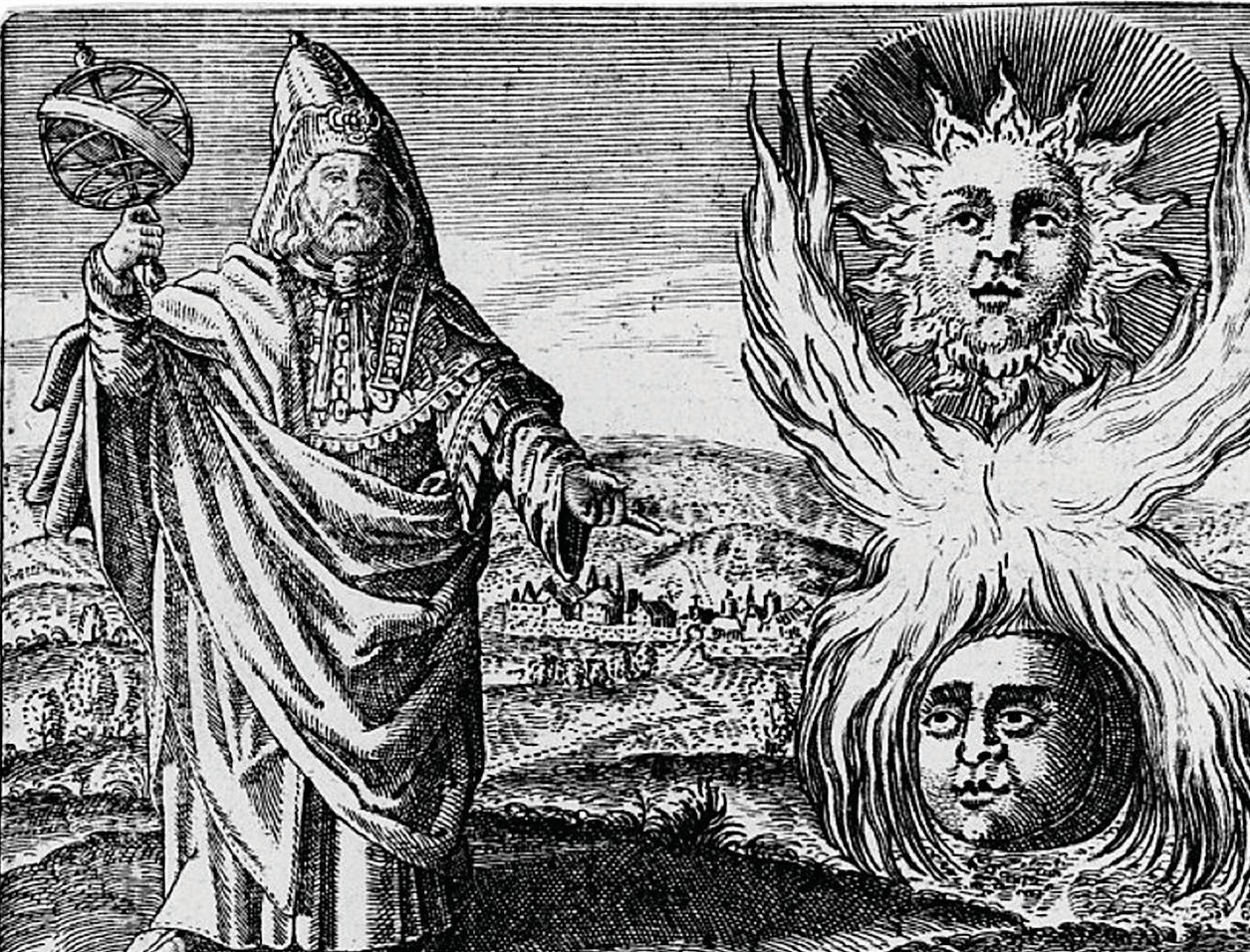
Hermes Trismegistus, the great founder and teacher of the Egyptian culture and the originator of esoteric wisdom lived in Egypt in the 12th millennium BCE. He is considered to have been one of those who conserved humanity’s ancient knowledge after the Great Flood of Atlantis. As the life of Hermes Trismegistus is greatly distanced from our current culture, few authentic records of his life have survived. The name Trismegistus denoted a degree of initiation at the time, therefore several teachers were called by this name, while on the other hand, the name Hermes also refers to several different things and persons. Yet, his work is undoubtedly one of the most important events that have shaped the culture of humanity, therefore practically all major religious scholars deal with his life. Some researchers identify Hermes with Thoth, the Egyptian deity of wisdom. According to ancient traditions, Thoth is the protector and lord of the law, the deity of spiritual power, the master of ceremonies and the supreme guardian of all sciences and art. The Egyptians credit him with not only the invention of writing, but also with establishing the foundation of all sciences. Legend has it that it was Thoth who personally noted all the achieved of mankind upon the Atlantean catastrophe in the 12th millennium BCE.
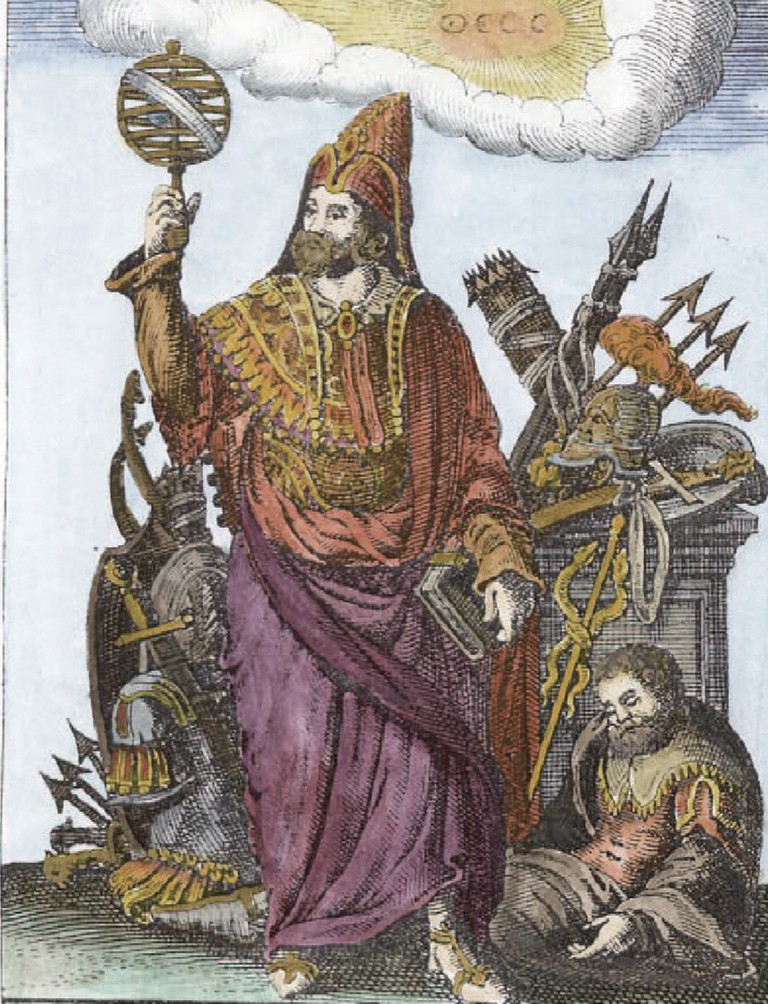
This work, written in an ancient tongue, was translated after the Flood and inscribed with hieroglyphics, serving as the basis of the sacred books of Hermes, compiled in 3000 BCE. These volumes were safeguarded in the inner sanctums of the temples and no one could access them with the exception of the highest ranking priests. (Hence the expression ‘hermetically sealed’.) The four books consisted of forty-two volumes, just as the Indian Vedas – there are also a number of similarities in the contents of the two teachings. Ten volumes concerned the revelations of the gods, the origins of the world and the heavenly laws promulgated in connection with the ordinances of the priesthood, four on astronomy and astrology, while two volumes contained hymns to the gods and the principles of rulership. A further ten volumes covered the forms of prayers, the rules of offerings, feasts and processions, and the remaining volumes were devoted to Hermes’ writings on philosophy, medicine, anatomy and other sciences.
According to research, the tomb of Hermes Trismegistus was discovered at the time of Alexander the Great, and the legendary Emerald Tablet was clasped in the hands of his mummy, featuring the secret of the Philosopher’s Stone written in cryptic language. As the secret teachings also dealt with alchemy, the Roman Emperor Septimus Severus ordered for the collection of all his mystical writings and had them buried in the tomb of Alexander the Great. Thus the mythical books of Hermes disappeared for centuries. What survived of the original Egyptian texts was incorporated in their final form into the hermetic writings from Alexandria, which emerged in the 2nd and 3rd centuries CE. This collection of eighteen chapters spread throughout the world through Greek and Arabic sources and is often referred to as the Poimandres (Shepherd of Men) after the name of its first chapter, with Hermes Trismegistus listed as its author. The ‘thrice great’ Hermes is also referenced in a number of major works on philosophy, theology and alchemy. Plato wrote of the hymns of the sacred volumes that the Egyptians attributed them personally to Isis and believed them to be ten thousand years old. The Hermetic writings were later regarded as the ancient source of alchemy and are also known to have been used in the production of the Philosopher’s Stone. Subsequently, the Rosicrucian movement of the 15th and 16th centuries also attributed great importance to the writings of Hermes Trismegistus. Rudolf Steiner, one of the great figures of the modern era, also highlighted the connection between Hermes and Zarathustra.
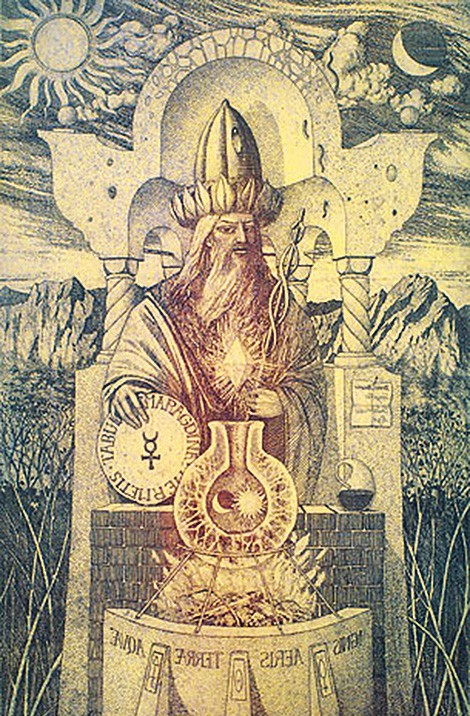
“It ascends from the earth to the heaven and again it descends to the earth and receives the force of things superior and inferior. By this means you shall have the glory of the whole world and thereby all obscurity shall fly from you.”
(excerpt from the Emerald Tablet)
“If then you do not make yourself equal to God, you cannot apprehend God; for like is known by life. Leap clear of all that is corporeal and make yourself grown to a like expanse with that greatness which is beyond all measure; rise above all time and become eternal; then you will apprehend God! Think that for you too nothing is impossible; deem that you too are immortal, and that you are able to grasp all things in your thought, to know every craft and science; make yourself higher than all heights and lower than all depths; bring together in yourself all opposites of quality, heat and cold, dryness and fluidity; think that you are everywhere all at once, on land, at sea, in heaven; grasp in your thought all of this at once, all times and places, all substances and qualities and magnitudes together; then you can apprehend God.”
“Tis true without lying, certain and most true. That which is below is like that which is above and that which is above is like that which is below to do the miracle of one only thing. And as all things have been and arose from one by the mediation of one: so all things have their birth from this one thing by adaptation”
(excerpt from the Emerald Tablet)