Jadwiga of Poland
1374, present-day Hungary–1399, present-day Poland
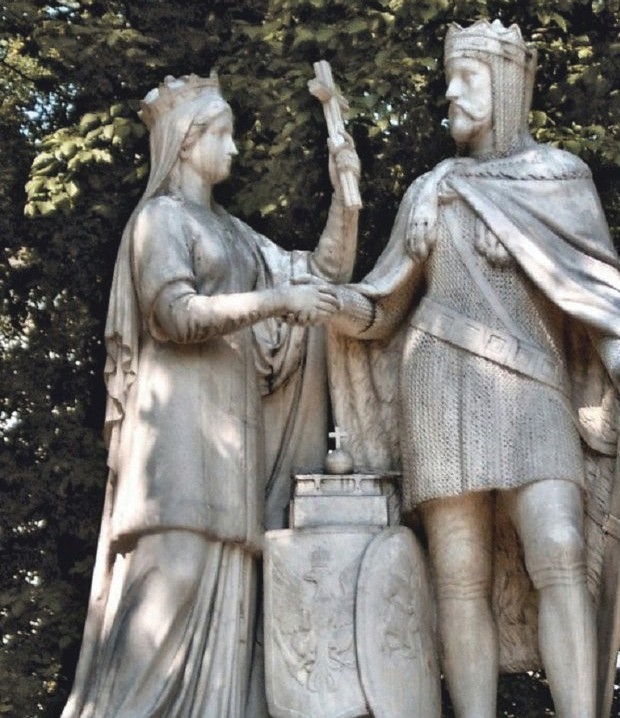
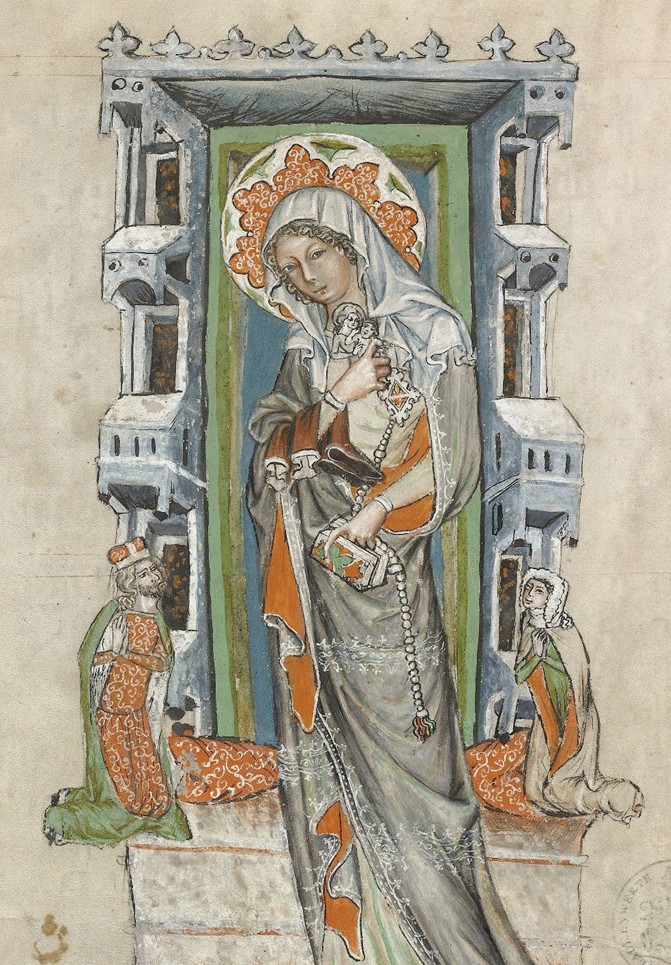
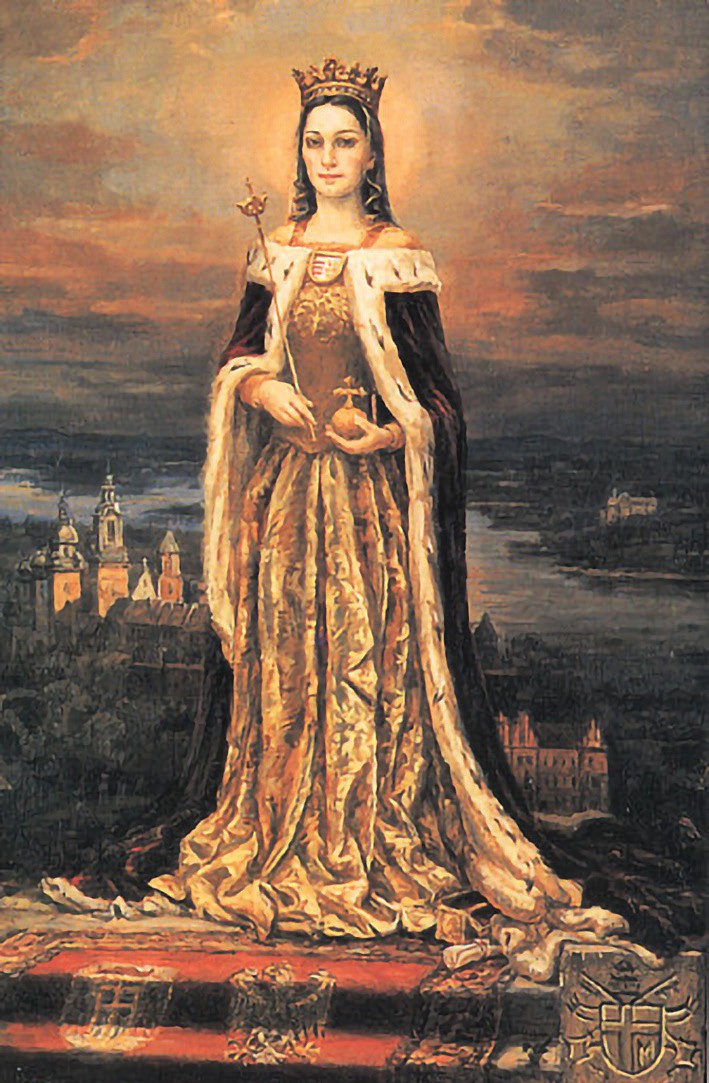
Saint Jadwiga, beloved Queen of the Poles and revered as a saint in her lifetime, was a ruler of exceptional culture and wisdom. As the youngest daughter of Louis I of Hungary and Poland and Elizabeth of Bosnia, she was born on 18 February 1374 in Buda, in the Kingdom of Hungary. Her great-grandmother was the daughter of King Béla IV, Queen Maria of Naples, making Jadwiga a descendant of the Árpád dynasty on her mother’s side. Following the death of her father, the Hungarian throne was inherited by her sister Mary, and the ten-year-old Jadwiga was crowned Queen of Poland in 1384.
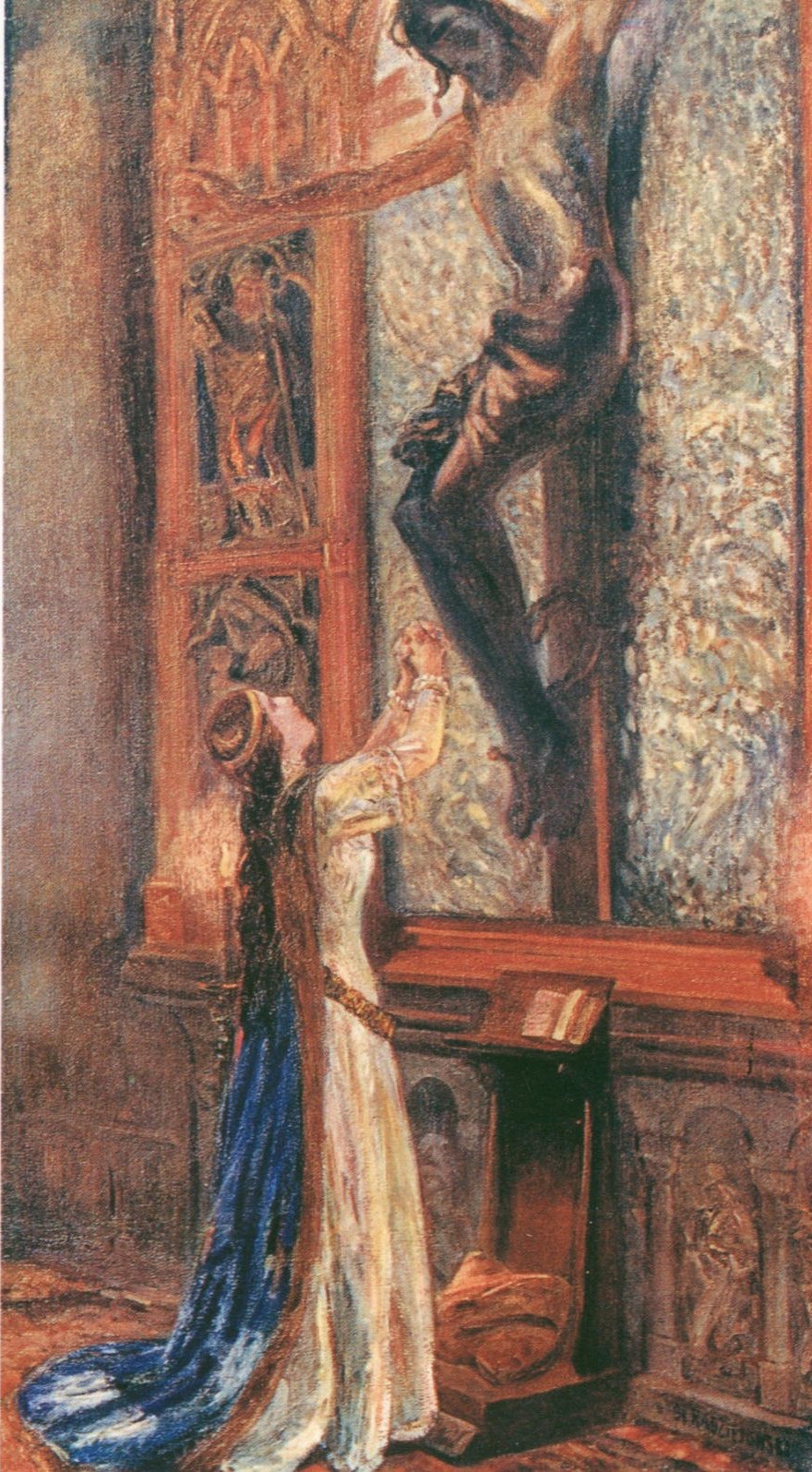
It was well known that even as a child her favourite pastime was to pray before the crucifix. The kingdom of Poland was constantly threatened by the pagan Lithuanians, so the Polish lords called on their queen to marry Jogaila, the Grand Duke of Lithuania, who promised to convert his people to Christianity. Jadwiga was distraught, for she was already engaged to the Austrian Prince William of Austria. Jadwiga turned to Christ for guidance. Tradition has it then while kneeling before the crucifix in Wawel Cathedral, she heard a strange voice: “Do what you see! See me, behold my love and you will know what to do.” The priests in the temple were astonished to see the Queen surrounded by a divine halo.
Jadwiga accepted the Lithuanian Grand Duke’s proposal and her engagement to William was annulled. When she married Jogaila in 1386, she was only 12 years old. With this decision, Jadwiga became the founder of the Jagiellonian dynasty, determining the development of Polish and Lithuanian Christianity and subsequently dedicating Poland to the Heavenly Mother. Through her marriage, the former pagan enemy became a Christian ally, and Jadwiga’s kind love emanated throughout both countries. At the age of thirteen, she lost her mother and soon afterwards her sister. Although her soul was filled with grief, she remained active in the matters of the country. Her husband often asked for and received Jadwiga’s wise advice and helped implement the reforms she proposed.
Jadwiga reclaimed Halych for Poland and did much to convert the breakaway region of Ruthenia. As a patron, she supported a number of scholars and artists, restored the University of Cracow, and donated all her jewellery to cover the costs. She provided for missionary training to educate the Lithuanian clergy, had the Bible translated into Polish, and tried to bring the Word of God closer to her people. Jadwiga directed the attention of her people to Częstochowa and the Black Madonna. Her emblem consisted of two intertwined letters M, representing the contemplative Mary and the active Martha. Following their example, she prayed and worked, achieving a balance between devout and active engagements and is therefore rightly called “the apostle of active charity”.
She took to heart the plight of the poor, the needy and the sick, and established churches and hospitals. The chronicler Jan Długosz wrote of her: “Through her virtues and intercession with God, the dead were raised, the lame walked, the blind saw, the deaf heard, the dumb regained the power of speech, and those suffering from a wide variety of ailments were healed and comforted.” Her acts of kindness are recorded in countless legends. During one of the processions on the Solemnity of the Body and Blood of Christ, a young boy fell into the River Vistula and perished by the time he was saved from the currents. Jadwiga then wrapped her cloak around the boy’s body, and the child stirred and woke up. During a visit to the monastery she had established in Biecz, she noticed that one of the patients was left unattended. The old man was covered with wounds all over his body and he exuded such a stench that no one dared approach him. Jadwiga went to him, cleaned and dressed his wounds. Legend has it that the old man’s body began to glow, emitting more and more light, and after a while he disappeared, leaving only the bandages behind.
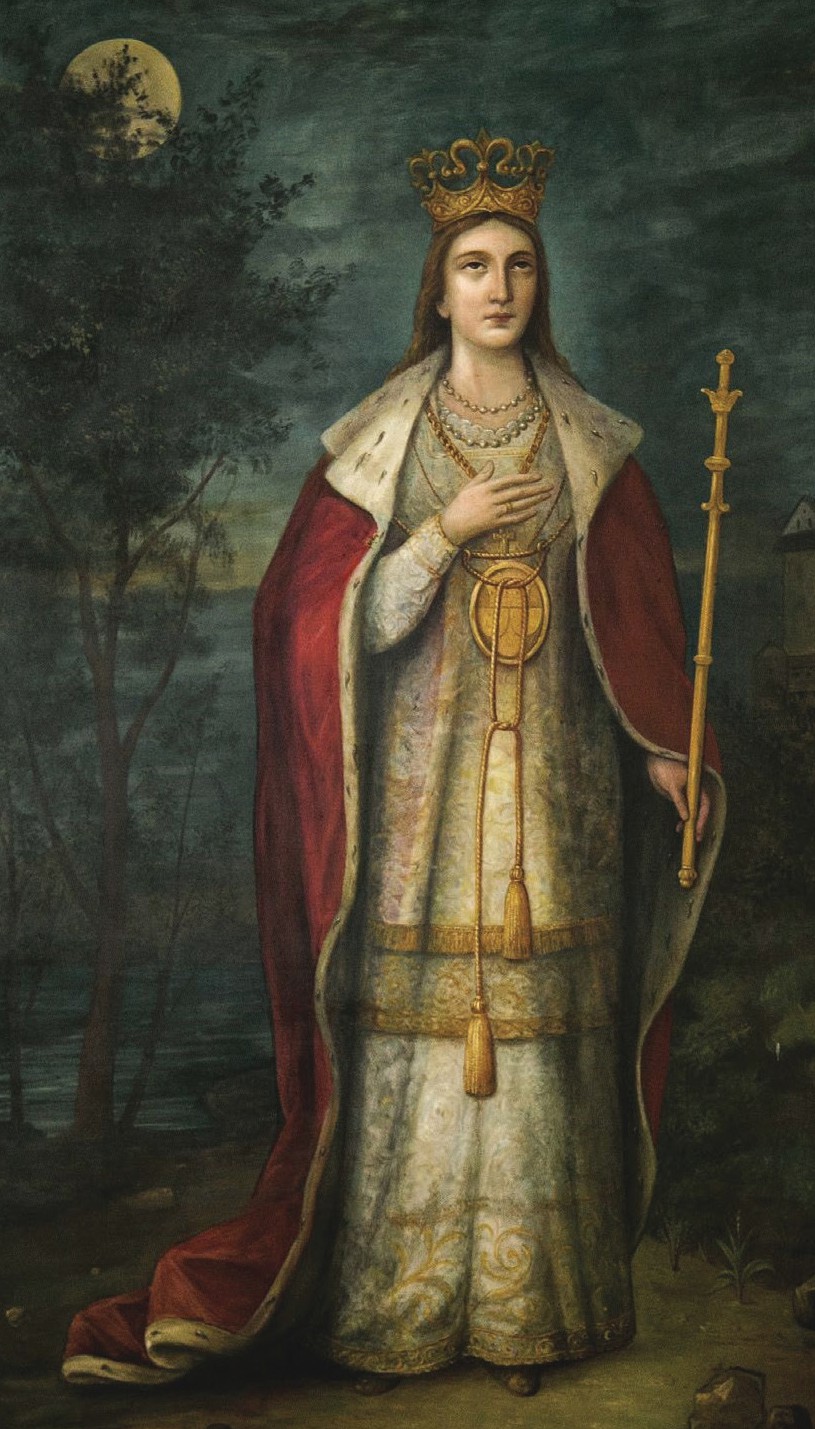
Jadwiga passed away at the age of 25 on 17 July 1399, four days after the death of their premature daughter. Her husband and the entire country were consumed in mourning. Her body was buried in Wawel Cathedral and for a month people continued to flock to see her. A series of miraculous healings took place among the crowds. On 15 August, the feast of the Assumption of the Virgin Mary, she was buried under the high altar of the Wawel Cathedral. With the canonisation of Jadwiga by Pope John Paul II on 8 June 1997, she became a saint shared by the people of Lithuania and Poland.
“Hedwig, you have long awaited this solemn day. Almost six hundred years have passed since your death at a young age. Loved by the whole Nation, you who are at the beginning of the era of the Jagiellons, the foundress of the dynasty, foundress of the Jagiellonian University in the oldest part of Krakow, have long awaited this day of your canonization – the day on which the Church would solemnly proclaim that you are the holy Patron of Poland in its hereditary line – of the Poland by your efforts with Lithuania and Rus’: the Nation of three nations.”
(excerpt from the speech of Pope John Paul II on the occasion of the canonization of Saint Jadwiga)
“The Polish people have always had, and still have, the certainty of the sanctity of Queen Jadwiga, and that God has heard, and still hears those who implore Him through the intercession of the holy Queen.”
(From the report of the committee responsible for the preparations of the canonization of Saint Jadwiga)
“Dignify me, most Holy Queen of Heaven, to be Queen of the Polish people.”
(The words of Saint Jadwiga addressed to the Virgin Mary)
“It is only right and proper to return the stolen belongings of those who have been wronged, but who can repair their tears?”