Jiddu Krishnamurti
1895–1986, India
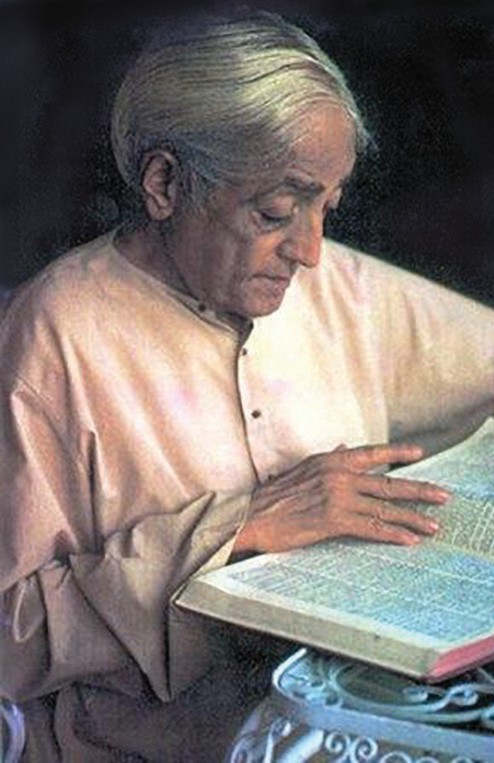
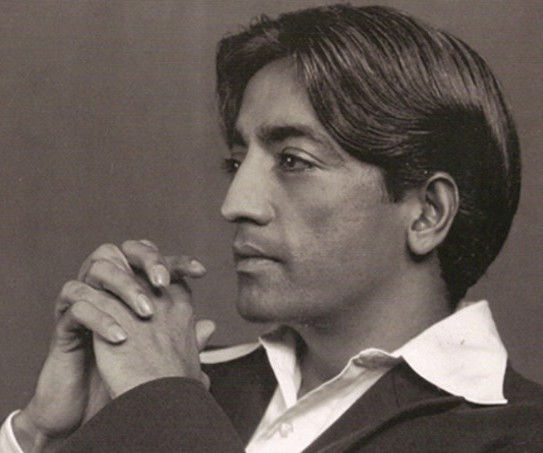
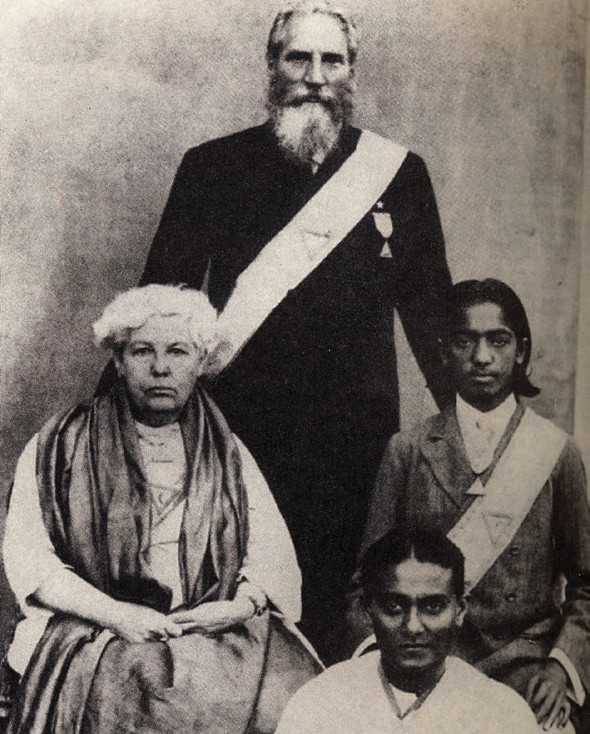
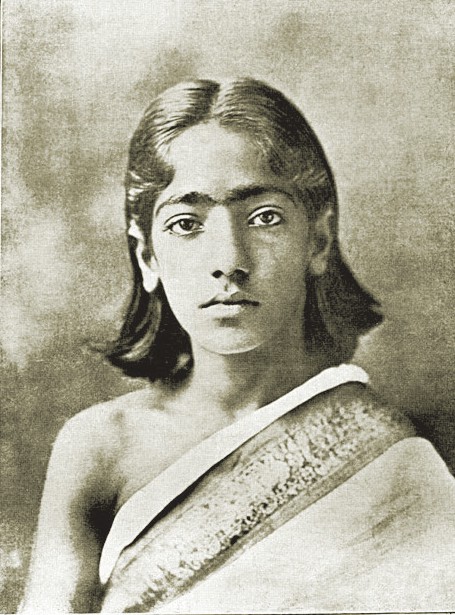
Jiddu Krishnamurti, the living manifestation of human freedom and free thinking was one of the most significant spiritual teachers of our age. He was born in the South Indian village of Madanapalle on the 11th of May, 1895, as the son of Brahmin parents. Supposedly, the previously unknown boy was discovered by the leaders of the Theosophical Society, Annie Besant and C. W. Leadbeater. According to a theosophical document, Leadbeater was attracted by the boy’s special aura. Leadbeater and his circle were awaiting the new physical incarnation of the Messiah and felt that the boy was simultaneously a manifestation of both Christ and Maitreya. They began instructing the boy, who had a number of special abilities even at an early age, and they generated a huge publicity around him and even introduced him to western aristocratic circles. They even entrusted him with the leadership of the esoteric Order of the Star, which had over a hundred thousand members by 1923, as well as giving him a number of worldly positions. The Theosophical Society announced at their world congress in Adyar – in the presence of the representatives of a number of different religions – that Krishnamurti is the new Messiah, the Savior of the World. At the conference, they selected twelve apostles for him, whom he later sent out into the world.
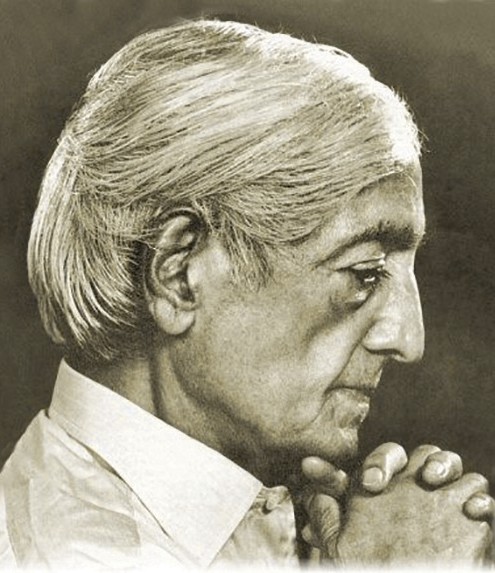
The idea was that great changes would take place once the new World Teacher begins his work. At first, Krishnamurti accepted the offices they entrusted to him, until shortly thereafter he attained enlightenment while sitting under a pepper tree, which clearly revealed his true self and his task in life. He denied being the Messiah on several occasions, before giving his famous speech in August 1929 at Camp Ommen, publicly dissolving the Order of the Star and resigning from the Theosophical Society, as well as renouncing his worldly positions. This allowed the wonderful, free and thoughtful man to show his true nature, whose every manifestation was brilliant and relentlessly sincere. His legacy of lectures, diary entries and messages include some of the most inspiring sources of spiritual literature. He had a pure and straightforward nature and favored good behavior, order, arts and practicality. His style of speech was reminiscent of an endless poem and his voice was full of gentleness and deep, intuitive compassion. He gave advice to everyone and professed his idea of freedom wherever he went. In his teachings, he highlighted the fact that on the road to liberation, a person’s approach and conscious attitude has a great deal of importance.
He traveled throughout the world, yet his lifestyle was characterized by a strict, detailed schedule defined by the hour. Instead of gathering disciples around himself as a master, he prepared people for independence. His teachings help to separate people from others or their external opinions, views or habits. His favorite place was the Ojai Valley in California. Thanks to his influence, a number of meditative centers and new educational institutes were established in England, India and the United States of America. He is the author of over 200 books, of which his wonderful diary entries and his work entitled At the Feet of the Master stand out in particular, which he wrote at 13 years of age. His diary entries created an entire new genre of keeping a diary, since his writings were simultaneously literary, philosophical and spiritual works. Mary Lutyens wrote a highly detailed biographical account of his life.
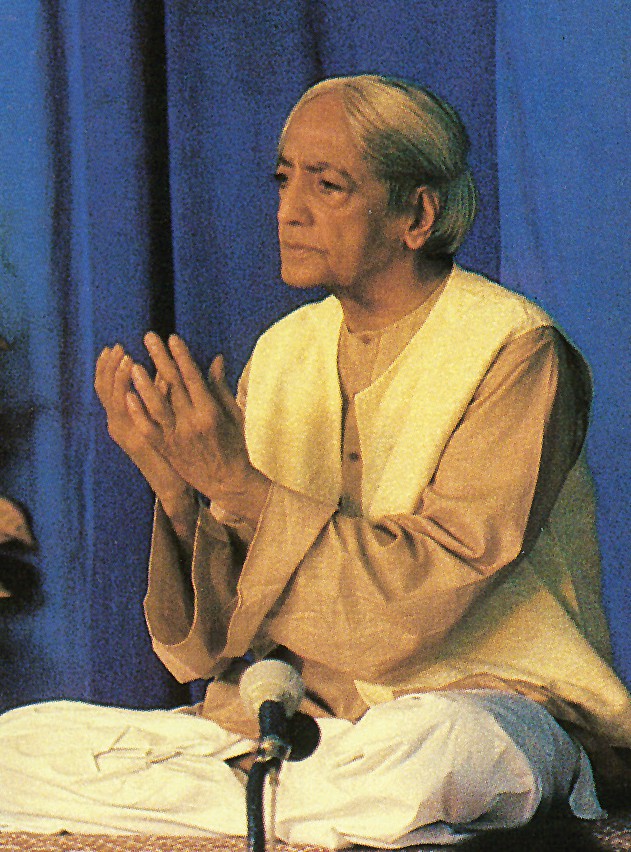
“You can’t find God; there is no way to it. Man has invented many paths, many religions, many beliefs, saviors and teachers whom he thinks will help him to find the bliss that is not passing. The misery of search is that it leads to some fancy of the mind, to some vision which the mind has projected and measured by things known. The love which he seeks is destroyed by the way of his life…”
(an excerpt from the collection entitled The Only Revolution)
“When the analyzer separates himself as something different from the analyzed, be then begets conflict, and conflict is the area of the unbalanced. The observer is the observed and therein lies sanity, the whole, and with the holy is love.”
(An excerpt of Krishnamurti’s diary, dated 20 September, 1973)
“You think and hope that another can, by his extraordinary powers – a miracle – transport you to this realm of eternal freedom which is Happiness. You want to have your own gods – new gods in- stead of the old, new religions instead of the old, new forms instead of the old – all equally valueless, all barriers, all limitations, all crutches. You have been preparing for me for eighteen years, and when I come I say all these things are unnecessary, when I say that you must put them all away and look within your- selves for the enlightenment, for the glory, for the purification, and for the incorruptibility of the self, not one of you is willing to do it… But those who really desire to understand, who are looking to find that which is eternal, without beginning and without an end, will walk to- gether with a greater intensity, will be a danger to everything that is unessential, to unrealities, to shadows .”
(excerpts from Krishnamurti’s declaration of 1929)