John Amos Comenius
1592, present-day Czechia–1670, present-day Netherlands
“Unfortunately, most schools have strayed far from their purpose, and do little more than play or rather wrestle clumsily with science: they do nothing coherently with the whole of life, but occupy minds with particular crumbs of science, the trivia of real life. One might say in this case: they know not what is necessary, for they learn what is unnecessary.”
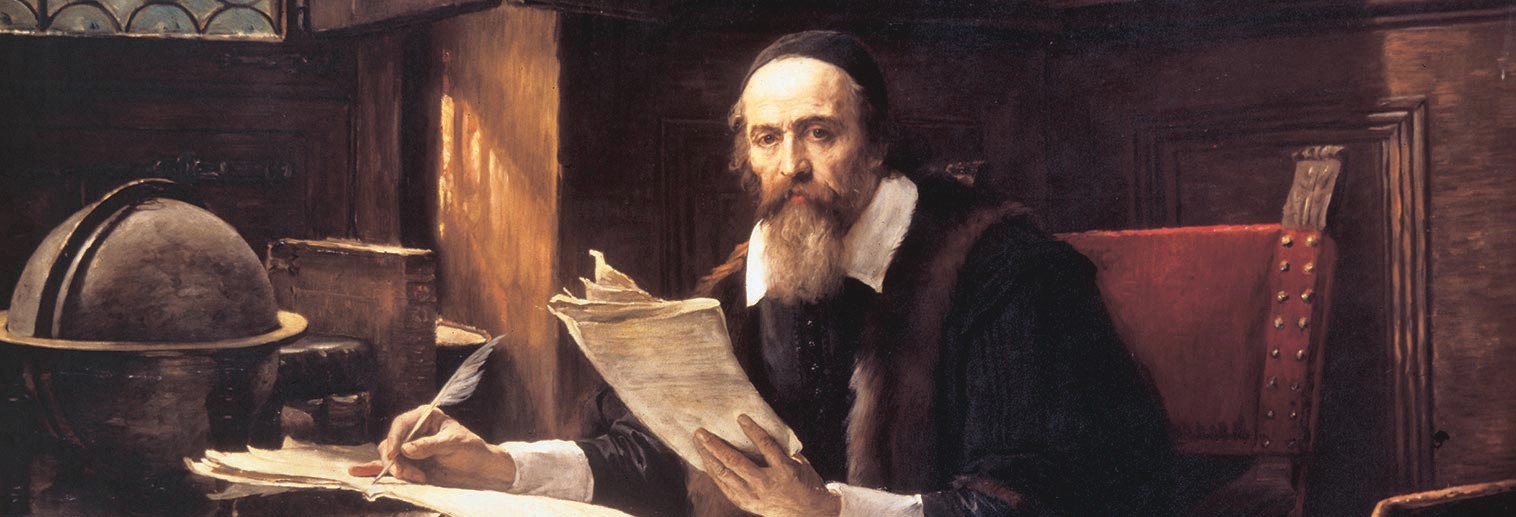
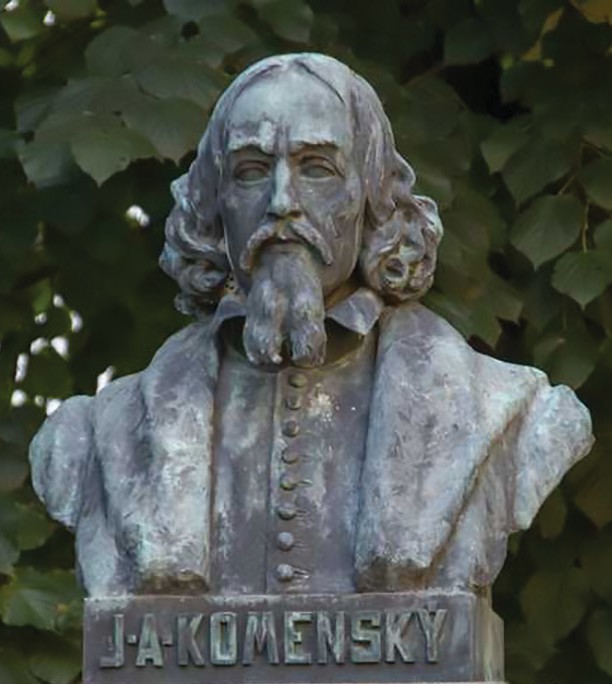
Jan Amos Komenský (John Amos Comenius), the great teacher of the Czech people, reformer teacher, writer and scientist who established the new European school system, was born on 28 March 1592 in the small village of Nivnice in the Moravian-Czech region. With his views on the organisation of educational work, the introduction of the school year, teaching hours and the class system, Comenius established the way school education is organised today and deservedly earned the title of “teacher of nations”. In his work he sought to integrate the scientific achievements of his time and introduced new pedagogical principles. Although it’s hard to believe, but his vast body of work was almost entirely carried out in a wartime environment, amidst dramatic battles. He did so while facing numerous difficulties because of his openly professed Rosicrucian and Hussite roots.
His parents were estate servants who settled in Magyargázló, Hungary. His father was a member of the Hussite-based Bohemian Brethren, so Comenius was brought up religiously from a very young age. He lost his parents early on in the persecutions and fighting that erupted due to the Hussite-Catholic conflict and was raised by his aunt with the help of the Brethren. After his elementary schooling, he was enrolled in the Latin school in Prerov. He began his theological studies at the Herborn Academy and continued at the prestigious University of Heidelberg, where he devoured books. At the time, he came into contact with Rosicrucian teachings, which he studied and followed for the rest of his life. He had a lengthy correspondence with Andrea Johann Valentin, author of The Chymical Wedding of Christian Rosenkreutz, yet some religious scholars believe that these two great minds may have met in Heidelberg.
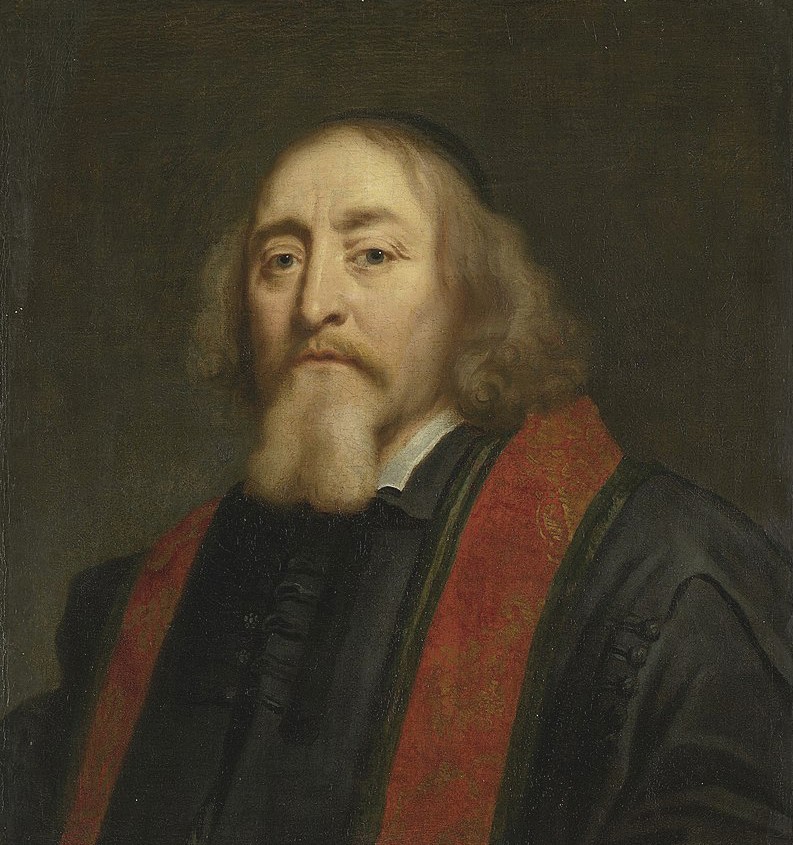
He returned to Prerov in 1614, where he was ordained a priest at a very young age and became bishop of the Bohemian Brethren while teaching in the town’s grammar school. He subsequently moved with his wife to the town of Fulnek, where in addition to his pastoral duties, he also served as school inspector. With the outbreak of the Thirty Years’ War, he lost his home and family and was forced to flee. The peculiar tragedy of his fate is that he suffered throughout war, which was no doubt deliberately instigated in order to plunge the entire continent into chaos. He spent several years in Leszno, Poland where he travelled with some of his brethren and then to Prussia, London, Sweden and Hungary.
He was already developing his educational reform at the time, while also working on the Czech religious revival and his plans for a Rosicrucian state, yet found himself in opposition to Habsburg policy and was unable to achieve these goals. During his teaching practice, he came to the conclusion that all knowledge should be based on the simplest principles with a strong emphasis on a system of interrelated concepts. Taking this further, he synthesised the educational methods of his time and established the approach of “Pansophism” (‘universal knowledge’), a scientific encyclopaedia of knowledge about nature and man. His reform efforts were not well-received and many opposed the idea of Pansophism. Comenius was summoned to a Church council, where he defended his teachings and was acquitted of his charges.
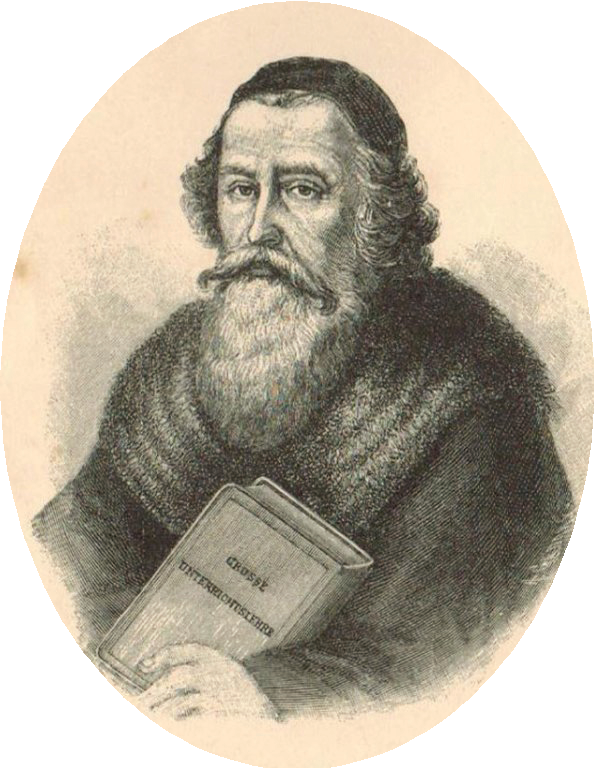
He came to Sárospatak, Hungary at the invitation of Zsuzsanna Lorántffy, the wife of George Rákóczi I Prince of Transylvania. He penned a large number of works, including the first illustrated textbook, Orbis sensualium pictus (“The Visible World in Pictures”) and during his time in Hungary, he developed his plans for a seven-class “Pansophism school”, the first three classes of which he personally initiated. He left Hungary after a four-year stay, returning to Leszno – following its pillage, he fled to Amsterdam in 1656, where he completed his work entitled General Consultation on an Improvement of All Things Human, as well as preparing his collection of writings on pedagogy entitled Opera didactica omnia. He worked tirelessly, even in the final years of his life. He died while working in his house in Amsterdam on 17 November 1670. The key works of his life were published by his son Daniel and his pupil Christian Nigrin, who arranged for their publication. Through his work, Comenius helped generations of students. His ideas brought renewal in almost all areas of culture.
“Books make many people knowledgeable outside school, but without books no one becomes a scientist, not even at school!”
“For I have seen and learned that no greater servitude exists anywhere, and none is more enslaved, if I may use the expression, than the man devoted to God: for he performs willingly and gladly even the lowest menial services which one intoxicated with the world despises.”
“Every school should be a workshop of humanity, a nursery of heaven and earth!”
“No one can be a righteous man without learning.”